






Yes, you can practice piano quietly with roommates. The reliable formula is straightforward: play through headphones, use the piano's own quiet features, agree on practice windows, and favor low-noise technique. Together those four habits let you keep a daily routine without turning your shared space into a source of tension.
Back-to-school living raises the stakes: thin walls, quiet hours, a roommate studying a few feet away, and a practice routine you actually want to keep. The goal is not a silent piano — key and pedal sounds still happen, and expectations matter — it's a routine that works with the people you live with instead of against them.

Why Piano Practice Bothers Roommates (and What Actually Carries)
Roommates usually are not bothered by the music itself — they're bothered by what carries. Speaker sound travels through shared walls, key and pedal noise passes through the floor, and even a quiet passage repeated for the tenth time can grate. The fix starts with knowing which of those you can control.
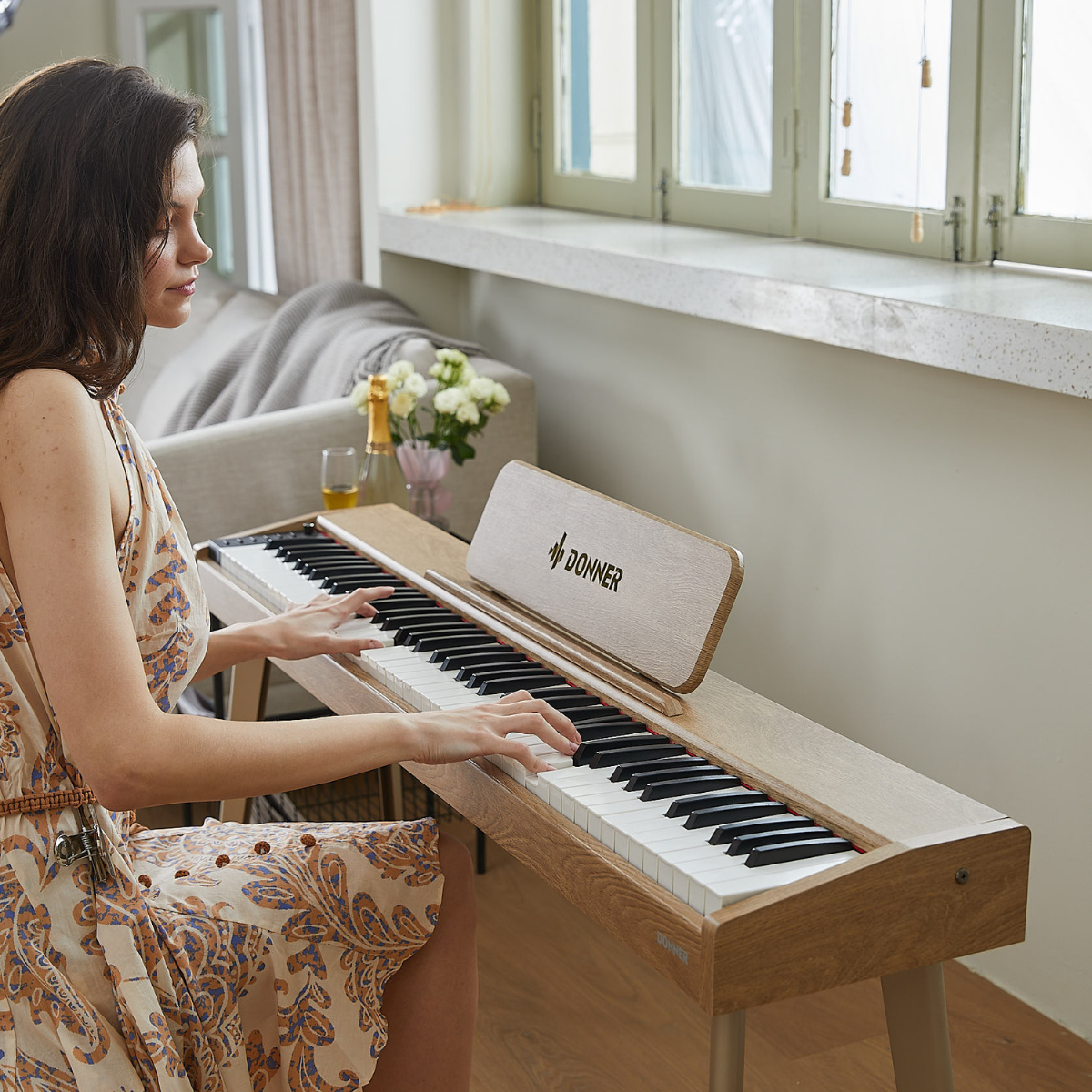
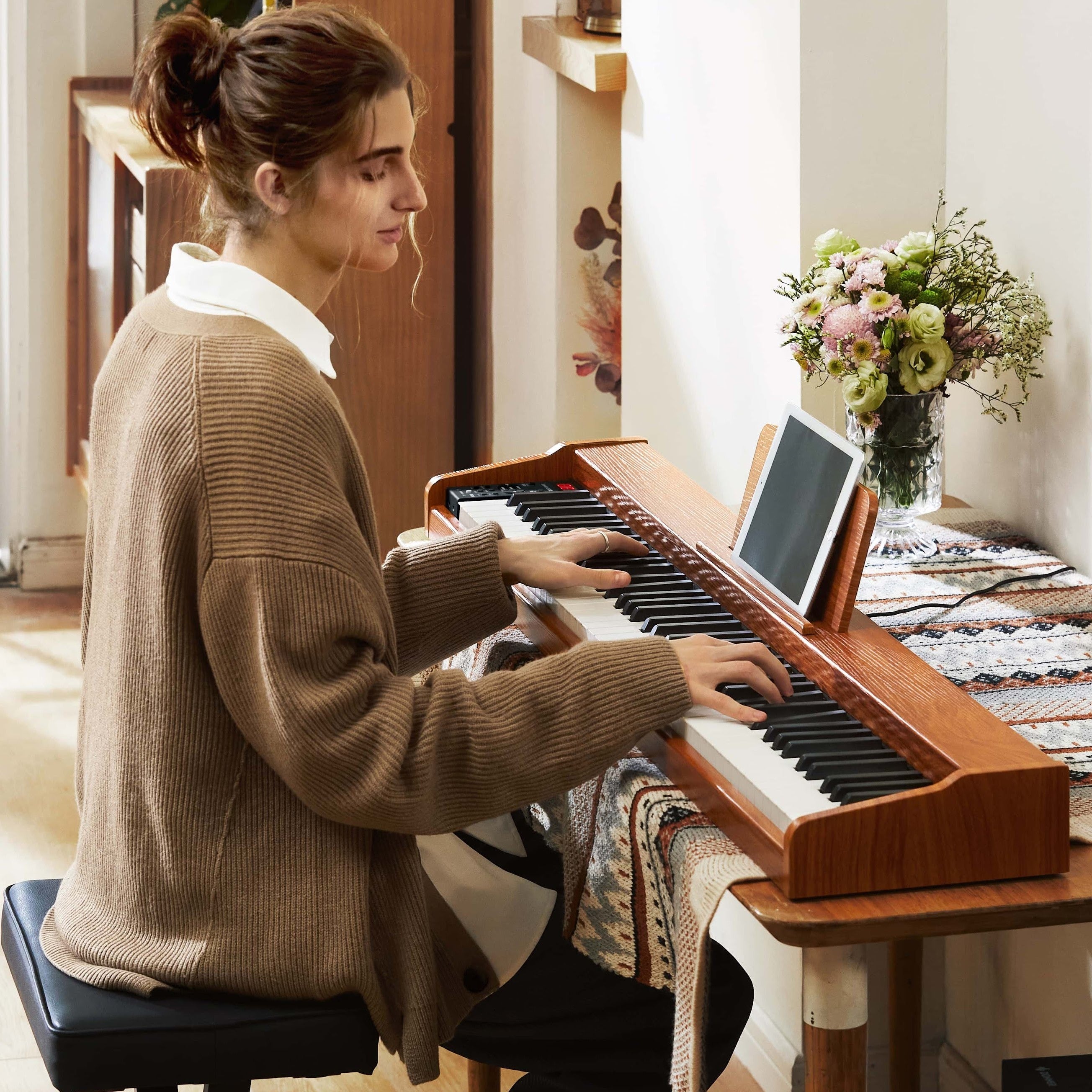
That is where a digital piano vs acoustic piano choice matters in shared housing. A digital piano with a headphone output and a volume control keeps practice private in a way an acoustic piano cannot, because the sound stays where you put it instead of projecting through the walls. Quiet still means agreed-upon and low-volume rather than completely silent, but a little planning removes most of the friction.
Headphones Are the Fastest Way to Practice Quietly
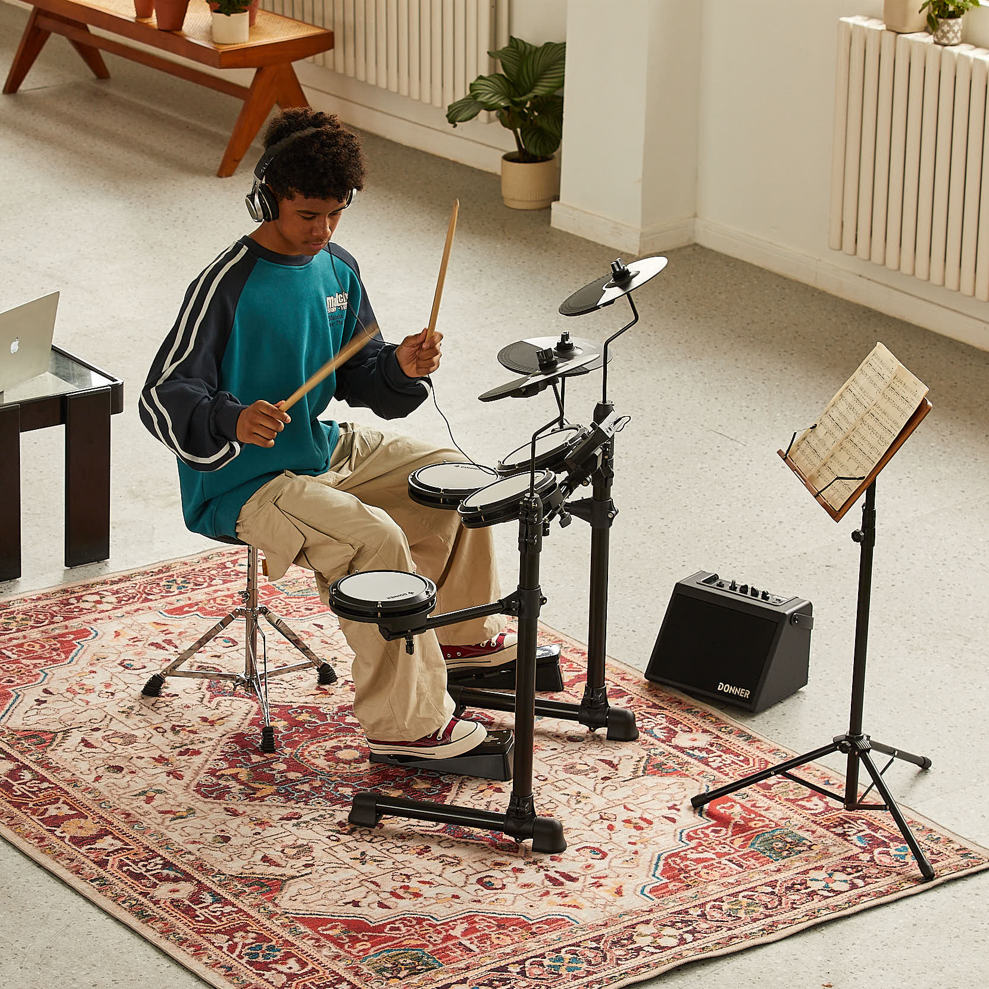
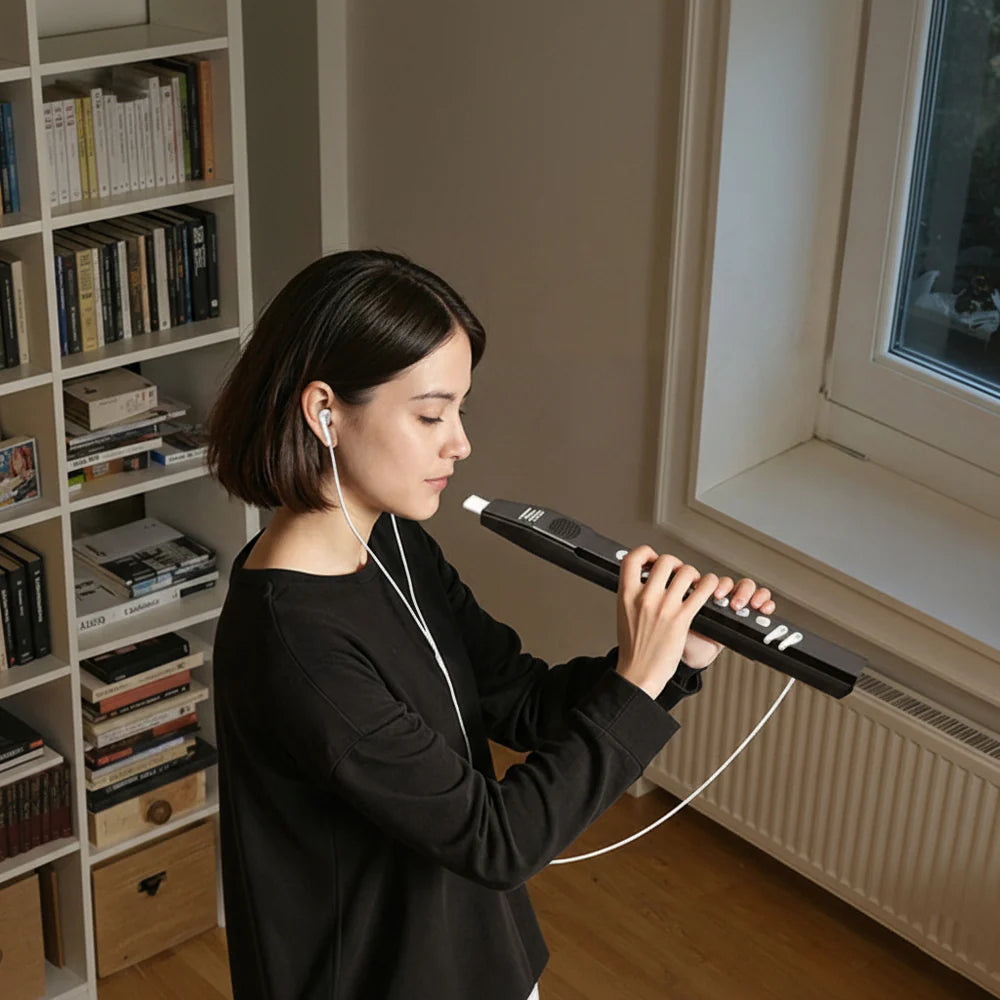
Plug in, and the piano's full sound reaches only you instead of the speakers — roommates hear nothing from the instrument, which makes late-night or early-morning sessions possible in most shared setups. Start at a comfortable volume and adjust from there.
If you are choosing a piano for this, the Donner DDP-60 offers two headphone jacks and the Donner DDP-80 offers one, so both support fully private practice straight out of the box. The second jack is a small but real convenience when a friend wants to listen in or you want to share a session.
One courtesy goes a long way: tell your roommates what headphone practice means. When they know you are still practicing, they just will not hear it — nobody mistakes your quiet routine for something to tiptoe around.
Use the Piano's Own Quiet Features
A digital piano lowers sound with its own controls before you change anything else. The headphone output is the biggest one, and lower speaker volume is right behind it: start low and raise only as needed, matching the room and the time of day.
Metronome work and play-along practice stay private too when they run through headphones. On the Donner DEP-1S, Bluetooth audio lets you stream practice tracks from your phone, and Bluetooth MIDI keeps connections wireless — handy for a setup you move around.
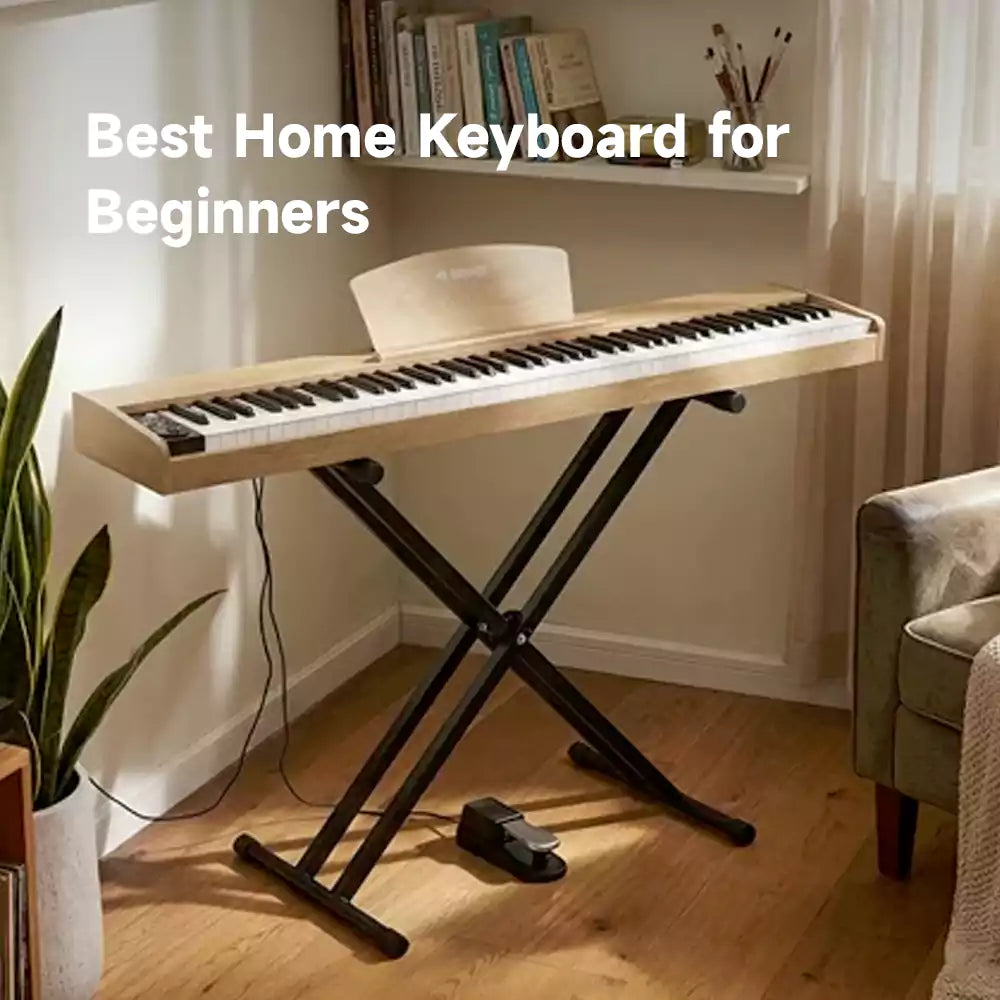
Portability is its own quiet feature. A compact kit like the DEP-1S sits on a double X-stand, so you can move it to a quieter spot for a session — the room farthest from a sleeping roommate, for example — and pack it away when space is shared. A piano that can relocate can find the quietest corner of the apartment.
Agree on Quiet Windows With Your Roommates
The fastest way to avoid friction is to agree on the terms before they become a problem. Sit down with your roommates once, set the routine, and revisit it when life changes.
- Agree on practice windows — the usual times you will play, so nobody is surprised.
- Make headphones the default for early, late, or study-heavy sessions.
- Do a quick noise check: play a passage at your normal volume while a roommate listens from their room, then adjust.
- Plan for exams or busy weeks — swap windows, skip a day, or switch to headphone-only practice.
Check in when the routine changes — a new class schedule, a new roommate, a big piece you are drilling — and renegotiate before tension builds. An agreement both of you are comfortable with is what makes practice sustainable.
Practice Techniques That Keep the Volume Down
Your technique can do some of the quiet work for you. Practicing hands separately halves the sound while sharpening your attention on each hand; soft dynamics train control that carries into louder playing later; and a slower tempo makes passages easier to shape at any volume. None of these are compromises — they are standard practice habits that happen to be quiet ones.
Silent practice deserves a special mention because it is not a workaround — it is a recognized practice method. Away from the keys, you mentally hear the music and study the score, mapping fingerings and phrasing in your head. Done well, it keeps your routine alive on nights when even key clicks would be too much, and it sharpens the listening side of playing.
The three Donner models below each support quiet practice in a different living situation: a compact portable kit for a room you share and pack up between terms, a slim furniture piano for a settled shared apartment, and a fully weighted model for players who want a more acoustic-like feel. Compare the full range of 88 key piano keyboard models, or start with these three.
Donner DEP-1S Beginner Digital Piano Kit Best budget movable setup

Features
- Portable digital piano with a double X-stand and included sustain pedal
- 88 semi-weighted, velocity-sensitive keys with five touch levels
- Bluetooth audio and Bluetooth MIDI for private play-along practice
- 30W built-in speakers
The Donner DEP-1S Beginner Digital Piano Kit fits a budget-conscious student who needs a compact setup that shares a dorm room and packs up between terms. The portable piano arrives with a double X-stand and an included sustain pedal, so you can set it up for a session and reclaim the floor when you are done. Its 88 semi-weighted, velocity-sensitive keys with five touch levels keep the feel close to a piano, and Bluetooth audio and Bluetooth MIDI support private play-along practice with tracks from your phone.
Donner DDP-60 Semi-Weighted Digital Piano Best slim shared-apartment setup

Features
- 88 semi-weighted keys with four-level touch sensitivity
- Two headphone jacks for private practice
- 128 sounds and 128-note polyphony
- 30W built-in speakers and a three-pedal unit
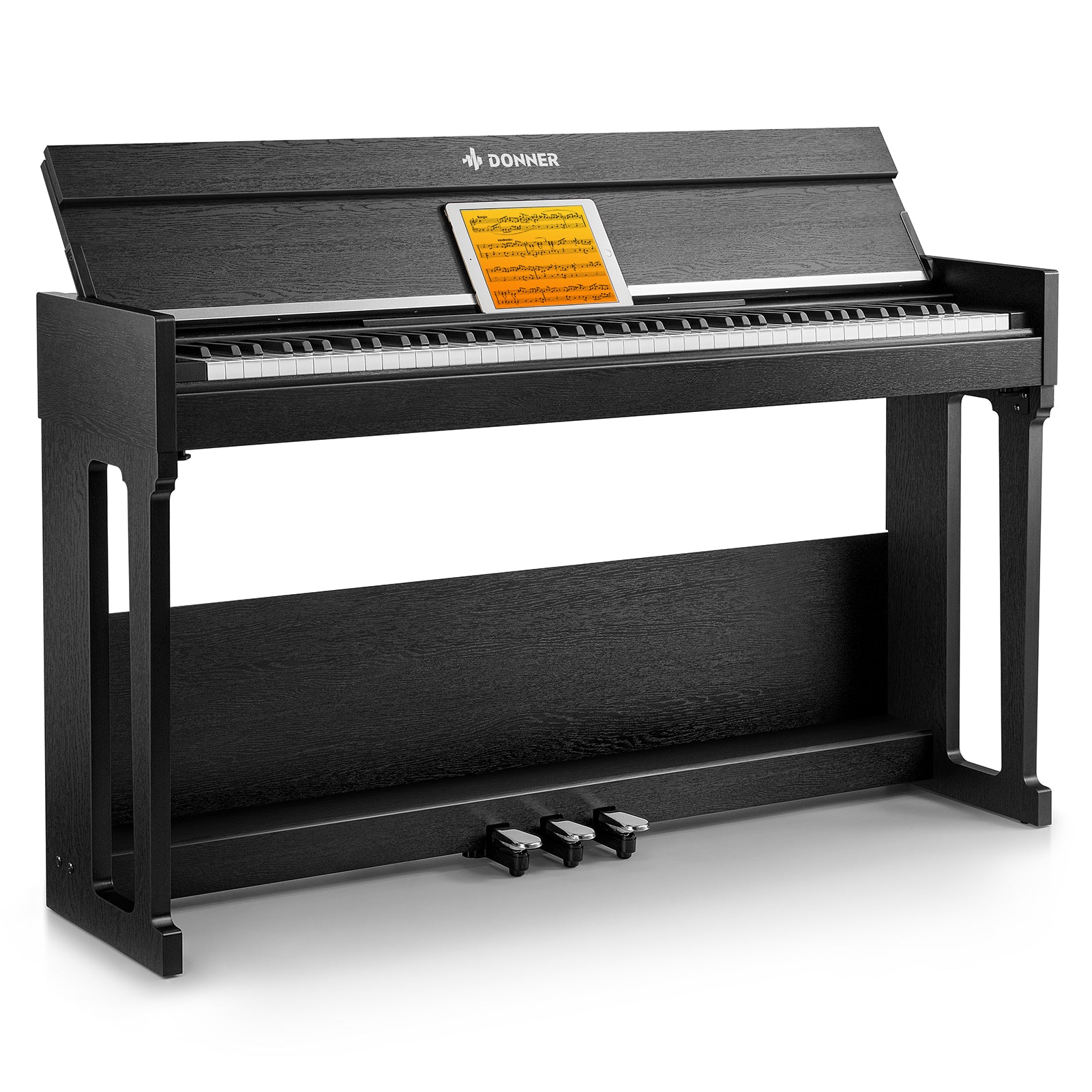
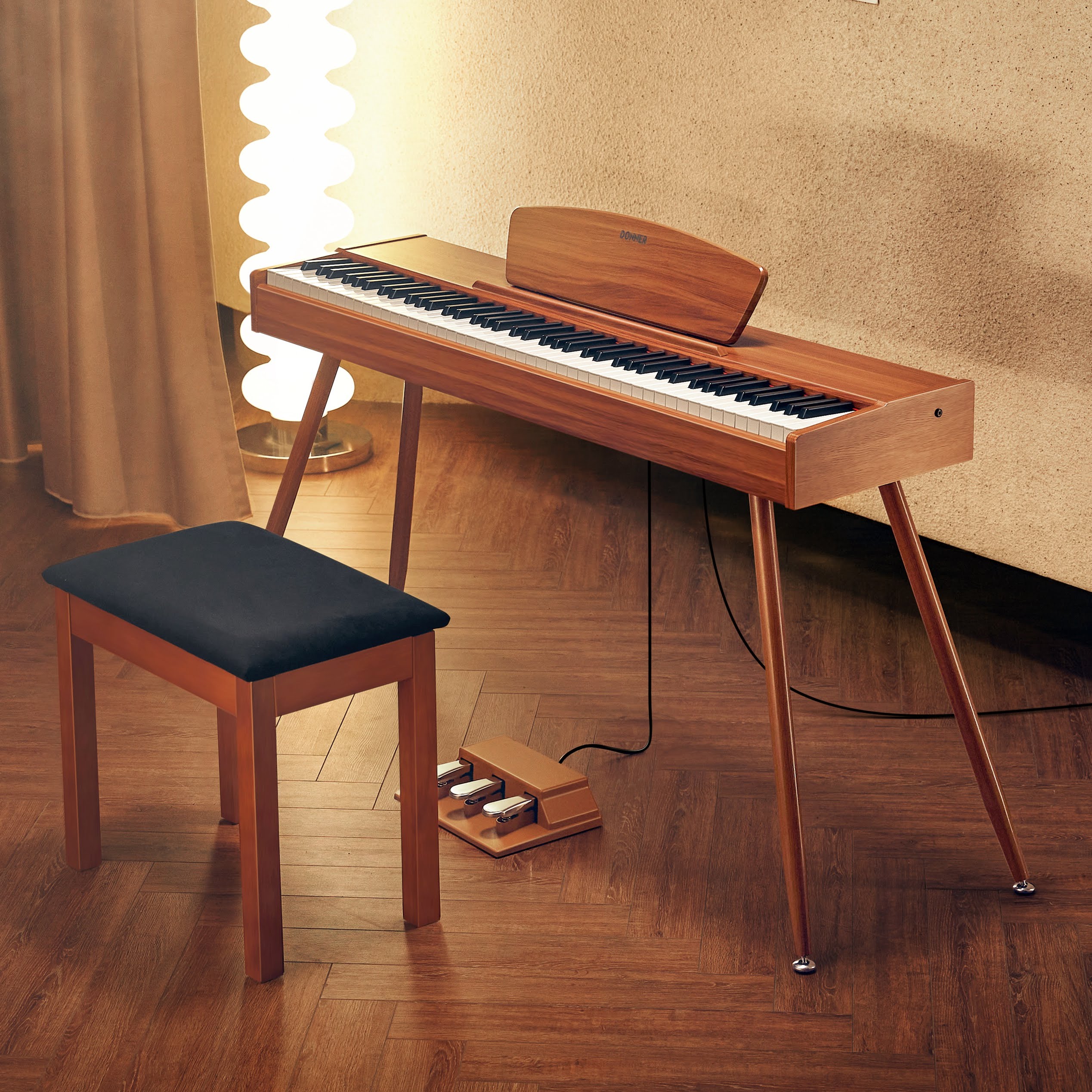
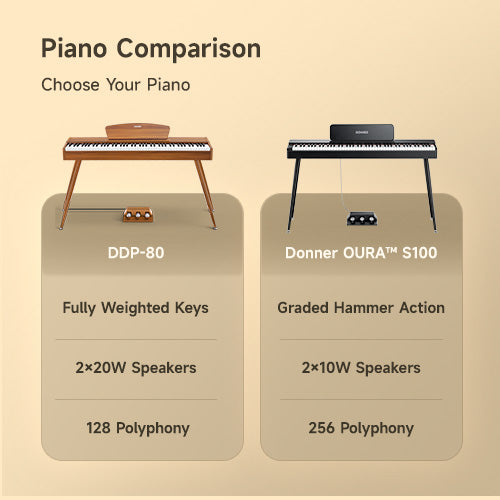
The Donner DDP-60 Semi-Weighted Digital Piano suits a player with room for a slim furniture-style piano who wants private practice to stay flexible. Its 88 semi-weighted keys with four-level touch sensitivity respond well for daily practice, and two headphone jacks mean two people can play at the same time without hearing each other. With 128 sounds and 128-note polyphony there is room to explore different styles, while the 30W built-in speakers and a three-pedal unit round out a furniture-style setup that stays assembled and ready.
Donner DDP-80 Wooden Digital Piano Best fully weighted feel

Features
- 88 fully weighted Hammer Action II keys
- Headphone output for private practice
- 128-note polyphony
- 40W built-in speakers and a three-pedal furniture stand
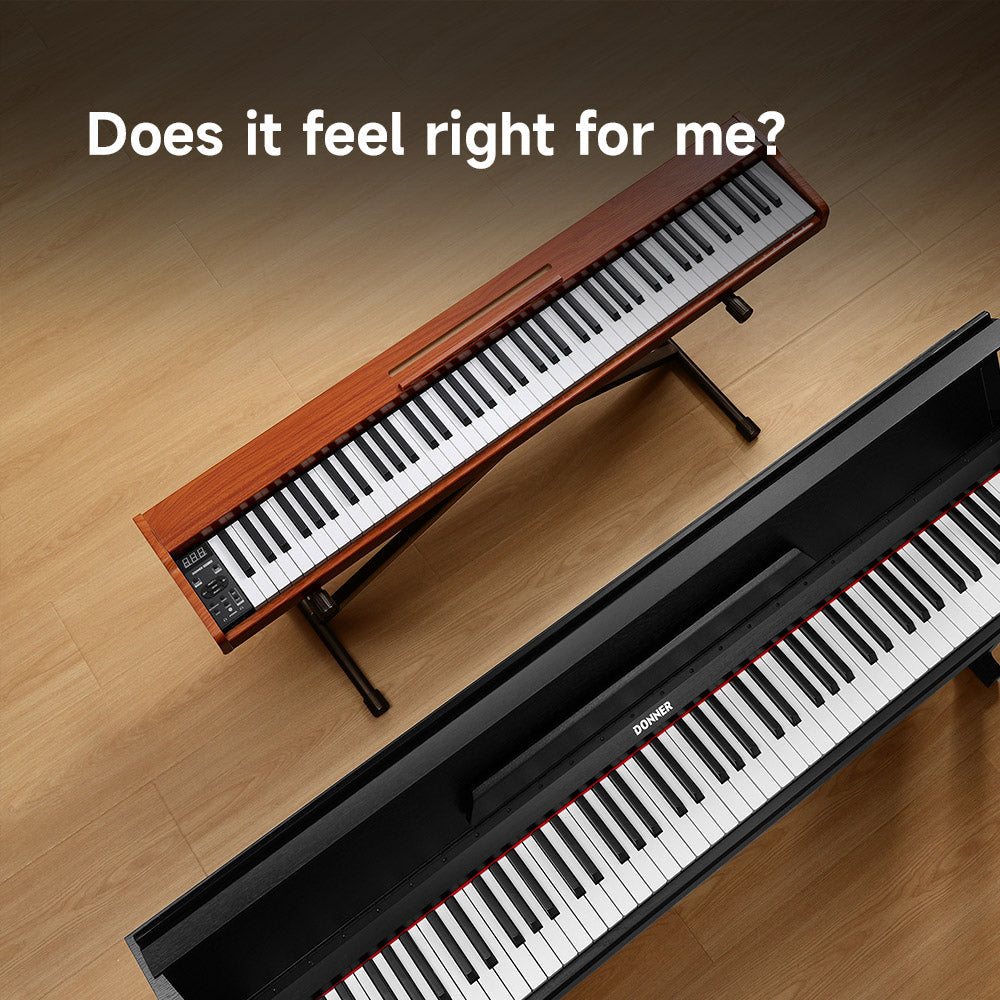
The Donner DDP-80 Wooden Digital Piano is for a player who wants a fully weighted, more acoustic-like action and can keep a furniture-style piano in one measured spot. Its 88 fully weighted Hammer Action II keys give the resistance you feel on an acoustic piano, which supports finger strength and control as you build technique. Headphone output keeps private practice straightforward, and the 40W built-in speakers plus a three-pedal furniture stand complete a setup that stays in place for daily sessions.
Start with headphones and agreed practice windows no matter which piano you choose — that combination solves most roommate friction on its own. Then pick by living situation: the DEP-1S if you move between terms, the DDP-60 if you want a slim permanent corner, the DDP-80 if you want the fully weighted feel. Before you buy, shop Donner's Back to School Deals to find a quiet-friendly model that fits your room.
Keep a routine that respects both your playing and your roommates — a few habits, one conversation, and a piano that fits the space are usually all it takes.