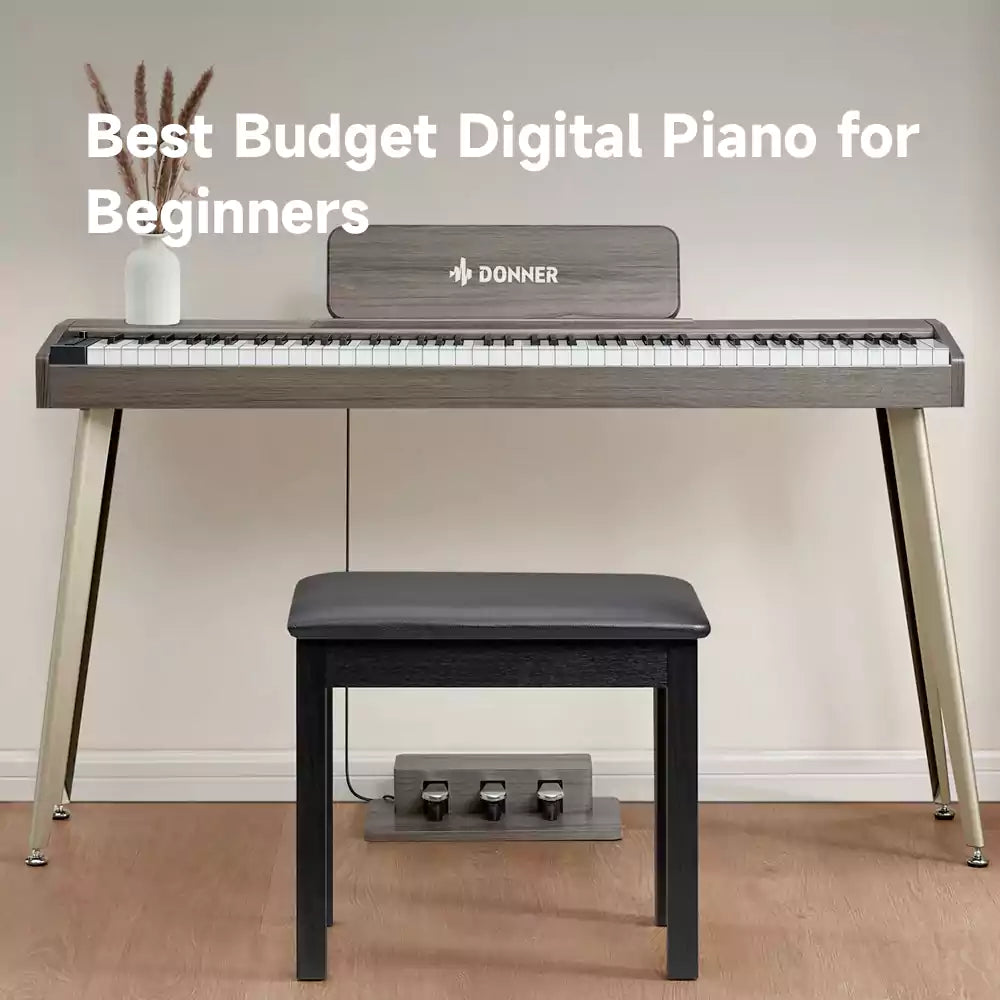

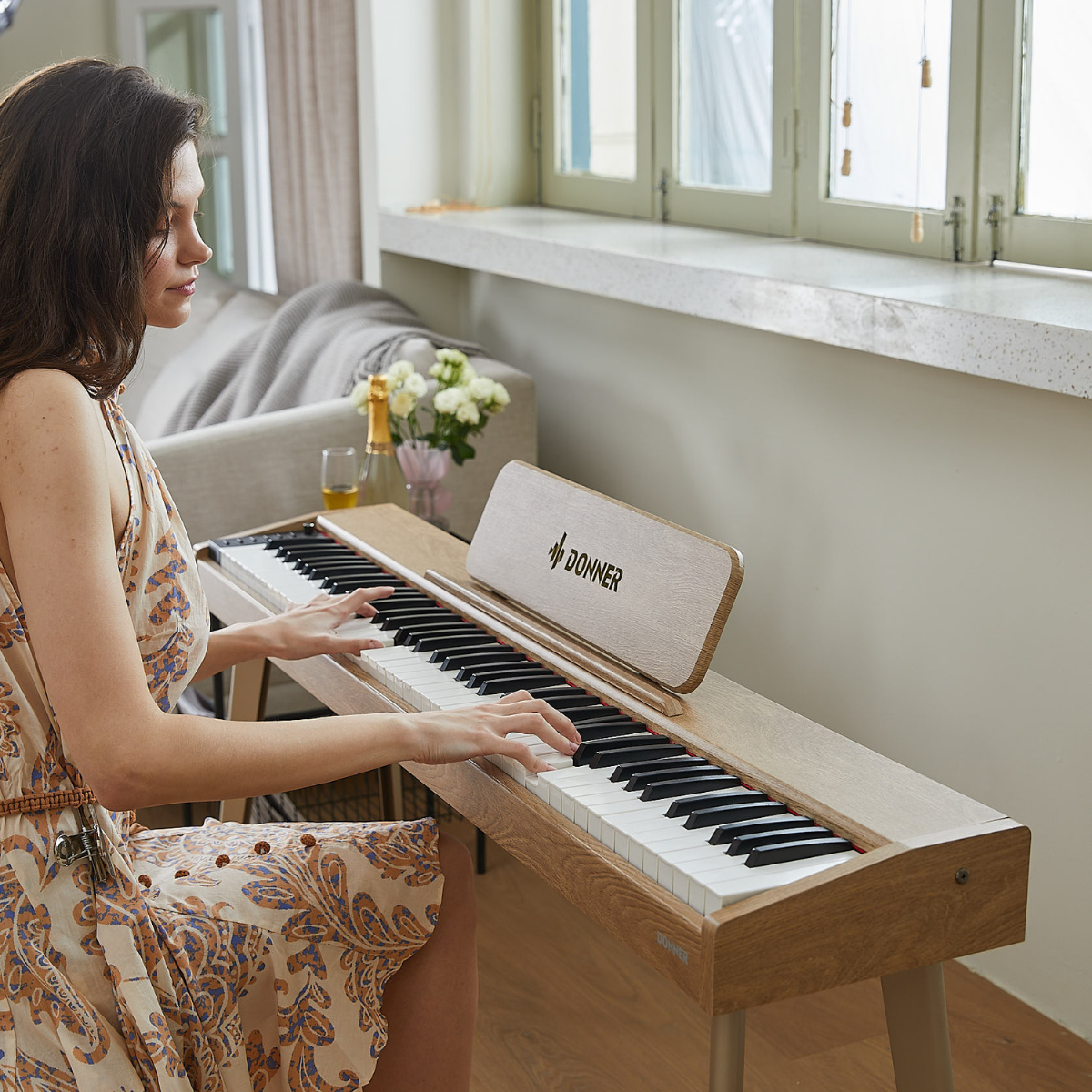
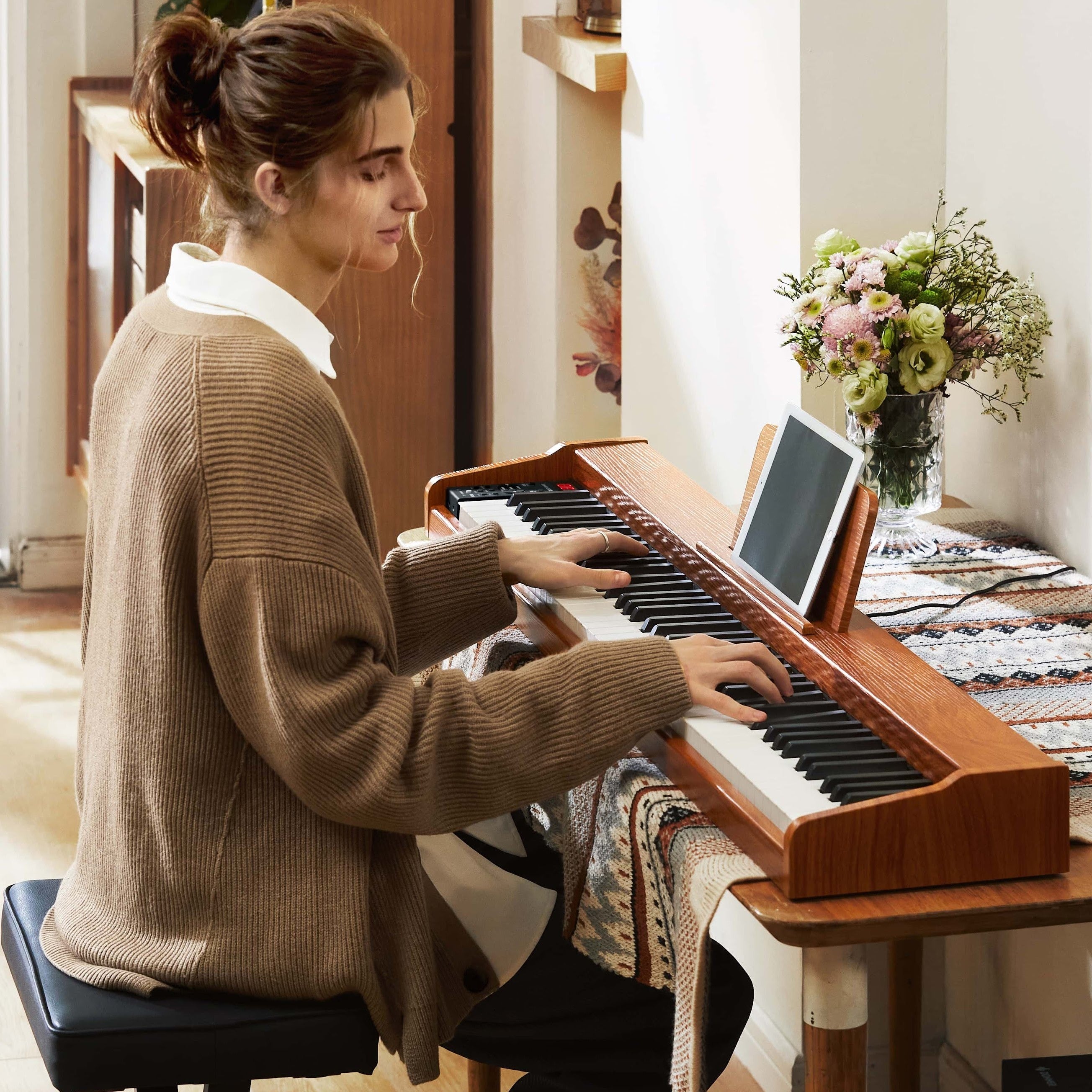






Choosing the best home keyboard for beginners means balancing key count, key feel, sound, size, and budget — and the options run from lightweight 61-key keyboards you can carry between rooms to full 88-key digital pianos that live on a stand. For most first-time players, the Donner OURA S100 Home Digital Piano takes the number-one spot: it pairs an 88-key graded hammer action with Bluetooth learning features in a furniture-style cabinet that fits a living room or bedroom.
The eight picks below are chosen for beginners practicing at home, and every one carries a best-for label so you can shortlist by your own priority. If you want something light and simple, start with the keyboard piano category; if you want the full piano experience, the digital piano keyboard for beginners collection is the place to compare. Think about where you will practice, how the keys should feel, and what fits your budget before you decide.
Best Home Keyboards for Beginners at a Glance
Here is the shortlist in one place, starting with the overall pick and ending with the sound-first model. The table keeps the key differences side by side; each numbered entry below has its own section with the full detail.
- Donner OURA S100 — Best Home Keyboard for Beginners Overall
- Roland FP-10 — Best 88-Key Digital Piano for Beginners
- Casio Casiotone CT-S1 — Best Lightweight Home Keyboard
- Yamaha NP-35 — Best 76-Key Home Keyboard
- Casio CT-S400 — Best Home Keyboard with the Most Sounds
- Korg XE20 — Best Home Keyboard with Auto Accompaniment
- Donner DEP-1S — Best Budget Home Beginner Keyboard Kit
- Kawai ES120 — Best Home Digital Piano for Sound Quality
| Model | Best For | Keys | Key Action | Bluetooth | Format |
|---|---|---|---|---|---|
| Donner OURA S100 | Beginners overall | 88 | Graded hammer | MIDI + audio | Furniture cabinet |
| Roland FP-10 | 88-key digital piano | 88 | PHA-4 Standard | Varies by region | Portable |
| Casio Casiotone CT-S1 | Lightweight home keyboard | 61 | Touch-responsive | Optional adapter | Ultra-light |
| Yamaha NP-35 | 76-key home keyboard | 76 | Touch-responsive | None | Lightweight |
| Casio CT-S400 | Most sounds | 61 | Touch-responsive | MIDI + audio | Home keyboard |
| Korg XE20 | Auto accompaniment | 88 | NH weighted | None | Ensemble piano |
| Donner DEP-1S | Budget beginner kit | 88 | Semi-weighted | MIDI + audio | Kit with stand |
| Kawai ES120 | Sound quality | 88 | Weighted | MIDI + audio | Portable |
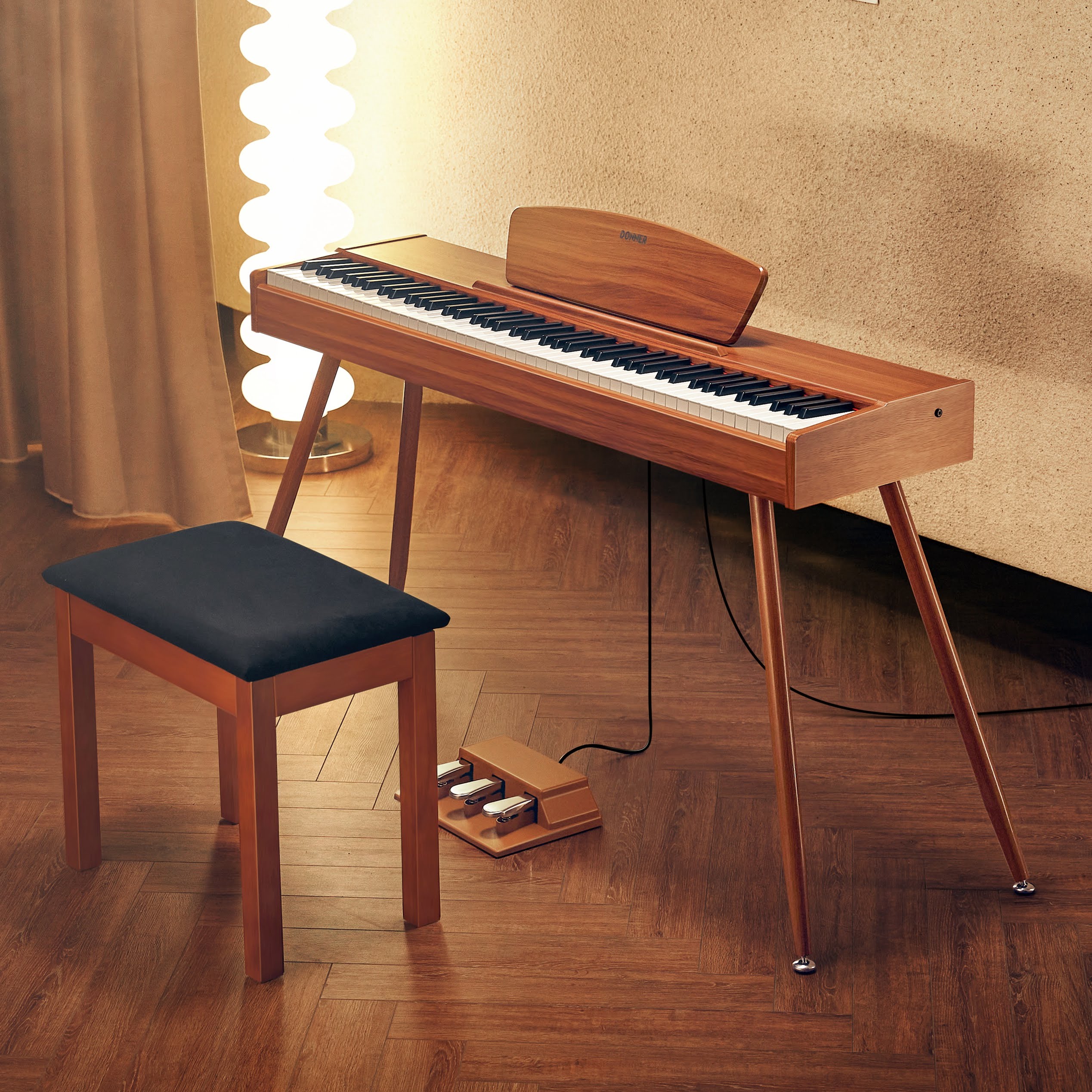
Donner OURA S100 Home Digital Piano Best Home Keyboard for Beginners Overall

Pros
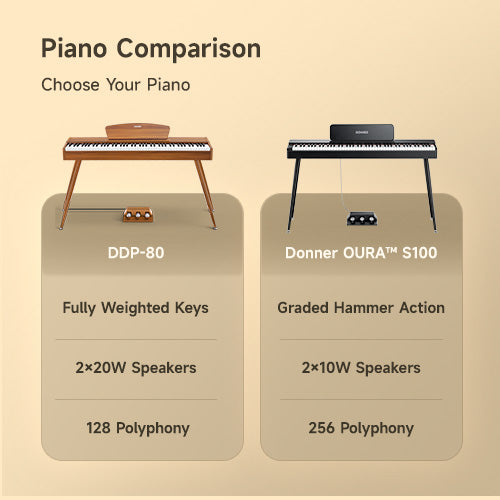
- 88 graded hammer-action keys (Graded Hammer Standard) give a realistic piano feel.
- 256-note polyphony keeps dense two-hand passages clean.
- Bluetooth MIDI and audio plus USB-MIDI connect lesson apps easily.
- Furniture-style cabinet with built-in speakers and a 3-pedal unit is a complete home setup.
Cons
- 15 onboard sounds is a smaller library than feature-heavy keyboards.
- The 20W speaker system suits a room rather than a large hall.
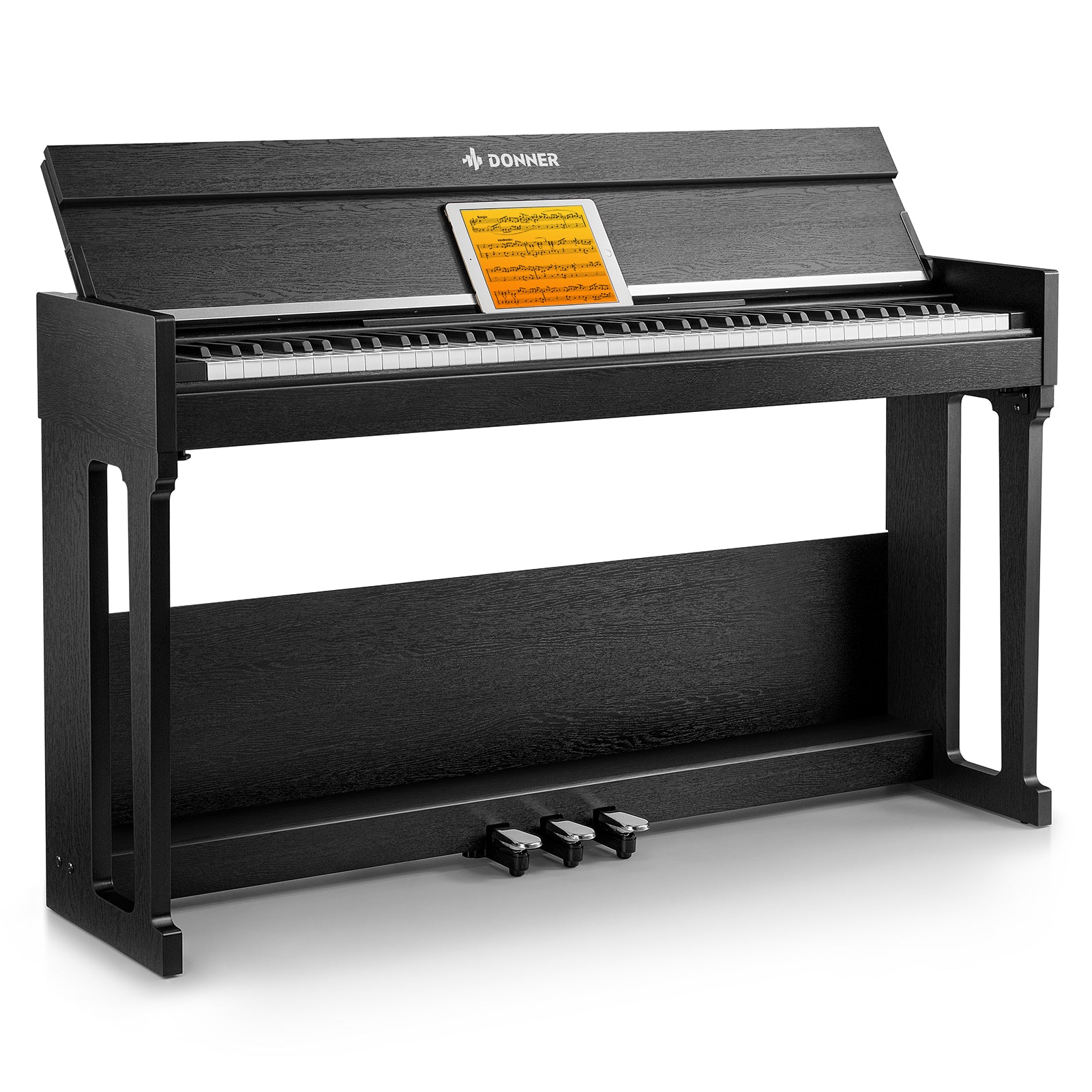
The Donner OURA S100 Home Digital Piano is the strongest overall starting point for a beginner who wants a complete 88-key instrument in the living room or bedroom: its 88 graded hammer-action keys (Graded Hammer Standard) give practice a realistic feel, while 256-note polyphony and 15 onboard sounds keep every session clean and simple to use.
Bluetooth MIDI and audio streaming plus USB-MIDI make it easy to follow lesson apps, and the furniture-style cabinet with built-in speakers and a 3-pedal unit means the piano arrives as a finished home setup rather than a project.
Roland FP-10 Digital Piano Best 88-Key Digital Piano for Beginners
Pros
- PHA-4 Standard action with escapement and an ivory-like feel is comfortable to learn on.
- SuperNATURAL Piano sound with 96-voice polyphony keeps the main piano voice expressive.
- Bluetooth (where available) and USB computer connection cover wireless and wired practice.
- Portable 88-key format moves easily between rooms.
Cons
- The 6W x 2 speaker system is modest for larger rooms.
The Roland FP-10 Digital Piano gives a beginner a realistic 88-key hammer action without taking over the room: its PHA-4 Standard keyboard adds escapement and an ivory-like feel, and the SuperNATURAL Piano sound engine keeps the piano voice expressive across 96-voice polyphony.
Thirty-six tones are built in, with 15 reachable straight from the front panel, and Bluetooth connectivity (where available in your region) plus a USB computer connection cover both wireless and wired practice setups.
Casio Casiotone CT-S1 Best Lightweight Home Keyboard
Pros
- Ultra-light 4.5 kg (about 10 lb) body runs on batteries or AC power.
- 61 touch-responsive keys with three sensitivity levels respond to playing dynamics.
- AiX sound source with 61 built-in tones and 64-note polyphony.
- The WU-BT10 adapter adds Bluetooth MIDI and audio when you want it.
Cons
- 61 keys limit access to the full piano repertoire.
The Casio Casiotone CT-S1 is the easiest keyboard in this list to live with: at about 10 lb (4.5 kg) it runs on batteries or AC power, so it can sit on a desk, a kitchen counter, or a bedroom shelf and move whenever you do.
Its 61 touch-responsive keys with three sensitivity levels respond to how hard you play, and the AiX sound source delivers 61 built-in tones with 64-note polyphony. Bluetooth MIDI and audio are available through the optional WU-BT10 adapter when you want to connect apps without cables.
Yamaha NP-35 Piaggero 76-Key Keyboard Best 76-Key Home Keyboard
Pros
- 76 touch-responsive keys with four touch settings widen the range beyond 61 keys.
- AWM Stereo Sampling sound engine with 64-note polyphony sounds clear and familiar.
- Twin 12cm x 8cm speakers give practice a full, present sound.
- Lightweight 6.0 kg (about 13 lb) body stores easily between sessions.
Cons
- 76 keys cover most beginner material but not every advanced piano piece.
The Yamaha NP-35 Piaggero 76-Key Keyboard is the pick for a beginner who wants more range than 61 keys without a big footprint: its 76 touch-responsive keys with four touch settings cover most beginner material, and the AWM Stereo Sampling sound engine delivers clear, familiar piano tones with 64-note polyphony.
Twin 12cm x 8cm speakers give practice a full, present sound, and the lightweight 6.0 kg (about 13 lb) body is easy to store between sessions.
Casio CT-S400 Best Home Keyboard with the Most Sounds
Pros
- 600 built-in tones make it the most sound-packed keyboard in this list.
- 3-level touch response keeps playing expressive.
- Bluetooth MIDI and audio connect the CASIO MUSIC SPACE app.
- Stereo mini audio input plays along with a phone or tablet.
Cons
- 48-note polyphony is lower than most rivals in this list.
The Casio CT-S400 is the sound library king of this roundup: 600 built-in tones give a beginner nearly endless variety, and the 3-level touch response keeps playing expressive across genres.
Bluetooth MIDI and audio connect the CASIO MUSIC SPACE app for wireless lessons, and the stereo mini audio input lets you play along with anything from a phone or tablet. The trade-off is 48-note polyphony, which is lower than most of the other keyboards in this list.
Korg XE20 Digital Ensemble Piano Best Home Keyboard with Auto Accompaniment
Pros
- 88-key NH natural weighted hammer action feels like a real piano.
- Over 64 automatic accompaniment styles make solo playing feel fuller.
- German and Italian grand piano voices with 184-voice polyphony.
- Bundled three-month Skoove Premium piano-lesson trial.
Cons
- No Bluetooth for app streaming.
- 11.4 kg body is heavier than compact 61-key keyboards.
The Korg XE20 Digital Ensemble Piano is for a beginner who wants solo practice to feel like a full band: its 88-key NH natural weighted hammer action feels like a real piano, and over 64 automatic accompaniment styles back up your playing with one press.
The German and Italian grand piano voices draw on 120 voices of a 184-voice polyphony engine, and the bundled three-month Skoove Premium trial gives you guided lessons from day one. There is no Bluetooth for app streaming, and at 11.4 kg the body is heavier than compact 61-key keyboards, so it suits a spot that stays put.
Donner DEP-1S Beginner Digital Piano Kit Best Budget Home Beginner Keyboard Kit

Pros
- Complete kit includes an X-style stand, sustain pedal, key stickers, and music clip.
- 88 semi-weighted velocity-sensitive keys with five touch levels.
- 128 sounds and a 30W speaker system fill a room.
- Bluetooth MIDI and audio plus USB-MIDI connect apps and lessons.
Cons
- Semi-weighted keys are a step below fully weighted for advanced technique.
The Donner DEP-1S Beginner Digital Piano Kit is the budget pick that removes the setup guesswork: it bundles an 88-key semi-weighted velocity-sensitive keyboard with five touch levels together with an X-style stand, a sustain pedal, key stickers, and a music clip in one box.
Its 64-note polyphony, 128 sounds, and 30W speaker system cover lessons and casual playing, and Bluetooth MIDI and audio plus USB-MIDI connect apps and online lessons without fuss.
Kawai ES120 Digital Piano Best Home Digital Piano for Sound Quality
Pros
- Harmonic Imaging (HI) sound engine with 88-key stereo sampling sounds realistic.
- 192-note maximum polyphony keeps complex playing clean.
- Bluetooth MIDI (5.0) and Bluetooth audio (5.1) cover apps and streaming.
- Portable 26.5 lb body is easy to move around the home.
Cons
- 25 voices is a small sound library.
- Weighs more than lighter 61- and 76-key portables.
The Kawai ES120 Digital Piano is the pick for a beginner who puts sound first: its Harmonic Imaging (HI) sound engine with 88-key stereo sampling reproduces the acoustic piano across 25 voices and up to 192-note polyphony.
Bluetooth MIDI (5.0) and Bluetooth audio (5.1) handle wireless apps and streaming, and the 12cm x 2 speaker system sits inside a portable 26.5 lb body that still feels at home on a stand.
How We Choose Home Keyboards for Beginners
Every pick below had to meet the same four checks. Each one is a real decision factor for a beginner practicing at home, not a spec-sheet checklist.
Key Count — How many keys a keyboard has sets the ceiling on what you can play. 61 keys suit casual play, young beginners, and small spaces, 76 keys cover most beginner material, and 88 keys cover the full piano repertoire. We looked for 88 keys on the picks built for piano technique, and 61 to 76 keys on the lightweight, budget-first models. If you are still deciding, how many keys on a beginner keyboard walks through the trade-off in more detail.
Key Action and Touch Response — Key action decides how the instrument feels under your fingers. Weighted keys build finger strength and technique, semi-weighted keys are a middle step, and touch-sensitive non-weighted keys are fine for casual playing. Every model in this list responds to playing dynamics, usually through three to five sensitivity levels. The practical difference between fully weighted vs semi-weighted keys shows up the moment you sit down to practice, so it is worth matching the action to your goals.
Sound, Speakers, and Practice Features — Sound quality decides whether practice feels rewarding, and speakers decide whether that sound reaches you across the room. We favored sampled piano voices with enough polyphony to keep chords and pedal notes clean, plus speaker systems sized to a bedroom or living room rather than a hall. Practice-friendly extras earned a place only when they sat on top of solid fundamentals.
Connectivity and Home Format — Connectivity shapes how easily a first keyboard fits into lessons: Bluetooth MIDI and audio, or a USB-MIDI link, let you follow apps and play along without cables. Format decides where the instrument lives: furniture-style cabinets stay put in a living room, while portable slabs move between rooms and store away. Every pick had to fit a realistic home setup, whether that meant an 88-key cabinet or a roughly 10 lb keyboard that can live on a table.
FAQ about Home Keyboards for Beginners
Should I buy a keyboard or a digital piano for home practice?
It depends on your goals and your space. A 61- to 76-key keyboard is lighter, more affordable, and easier to move, while an 88-key digital piano adds weighted keys and a fuller piano sound closer to an acoustic. If you want to build piano technique seriously, a digital piano is the better long-term fit. For casual play, young beginners, or tight spaces, a touch-sensitive keyboard is a fine place to start.
How many keys do I need to learn piano?
88 keys cover the full piano repertoire, 76 keys cover most beginner material, and 61 keys suit casual play and young beginners but limit repertoire. If your goal is to play standard piano pieces, start with 88 keys so you never run out of range. If you are learning casually or want the lightest, most affordable instrument, 61 keys are enough to begin.
Are weighted keys necessary for a beginner?
Not for every beginner. Weighted keys build finger strength and technique, semi-weighted keys are a middle step, and touch-sensitive non-weighted keys are fine for casual playing. Beginners focused on piano technique benefit from 88 weighted keys. Casual players can start on a touch-sensitive 61-key model and upgrade later when the feel starts to matter.
How much should I spend on a first home keyboard?
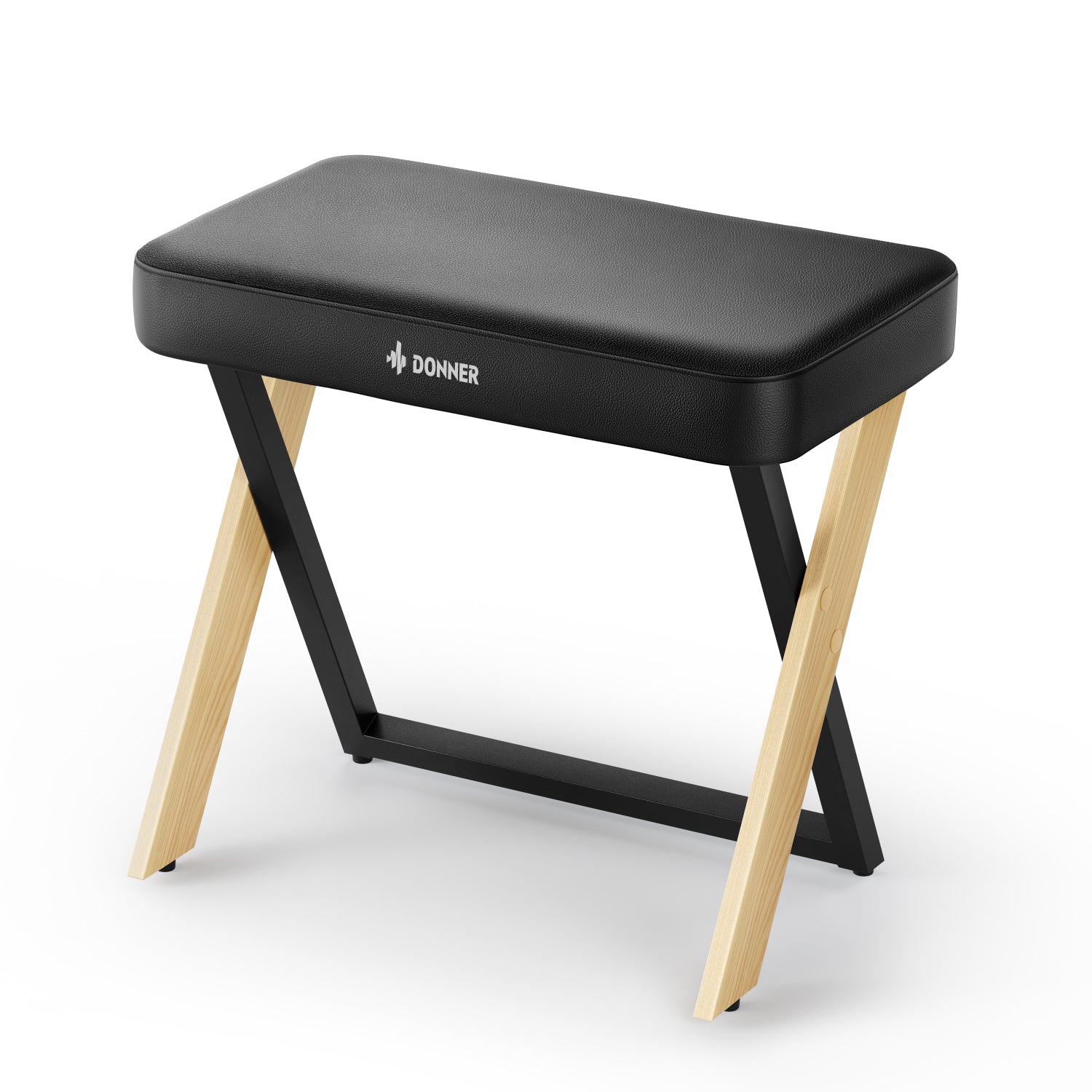
There is no single right number. Entry-level 61-key keyboards are the lowest-cost way to start, while quality 88-key digital pianos with weighted actions cost more. Remember that a first setup also needs a stand, bench, and pedal, so your total budget includes the instrument and its accessories — plan for the whole setup, not just the keyboard.
Find Your First Home Keyboard
Match the instrument to your space, budget, and goals, and the right choice usually becomes clear: a compact touch-sensitive keyboard if you want something light and affordable, a weighted 88-key model if you are serious about piano, and a furniture-style setup if you want the instrument to live in the room. Whichever direction you lean, a first keyboard should make practice something you look forward to.
Donner's mission is to make music-making accessible for players at every level, and the home digital piano collection brings that approach to furniture-style instruments for everyday practice. When you are ready to compare the full lineup, Donner Music is a good place to start.