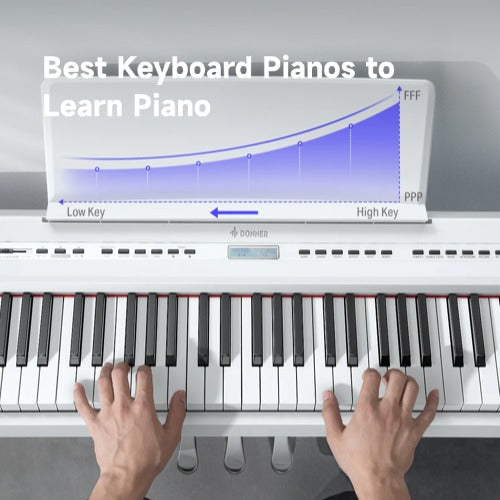






You want the feel of a real piano : but you do not have the space for a permanent 100-pound piece of furniture. Maybe you live in an apartment with thin walls. Maybe you move between gigs and need something that fits in a car. Maybe you are just starting out and the thought of committing to a full upright feels like too much, too soon.
A good portable keyboard piano solves all of this. And today's options are better than they have ever been : you can get fully weighted 88-key action in a slab that slides under a bed, or a foldable instrument that weighs less than a gallon of milk.
We picked eight instruments across four price brackets, each chosen for a specific player and a specific need. Here's the lists:
- Donner DEP-20 : Best Full-Size Portable Digital Piano for Serious Beginners
- Roland FP-30X : Best Premium Portable Digital Piano for Performing Musicians
- Korg Liano : Best Portable Keyboard Piano for Simple, Distraction-Free Playing
- Donner DP-10 : Best Foldable Portable Keyboard for Travel and Small Spaces
- Yamaha P-145BT : Best Beginner-Friendly Portable Keyboard Piano
- Kawai ES-120 : Best Premium Key Action for Home Players
- Donner DEP-1S : Best Complete Beginner Kit with Stand Included
- Casio CT-S1 : Best Ultra-Light Portable Keyboard with Premium Sound
- Comparison Table
- How I Selected These Portable Keyboard Pianos
- How to Choose the Right Portable Keyboard Piano
- Frequently Asked Questions
Donner DEP-20 : Best Full-Size Portable Digital Piano for Serious Beginners
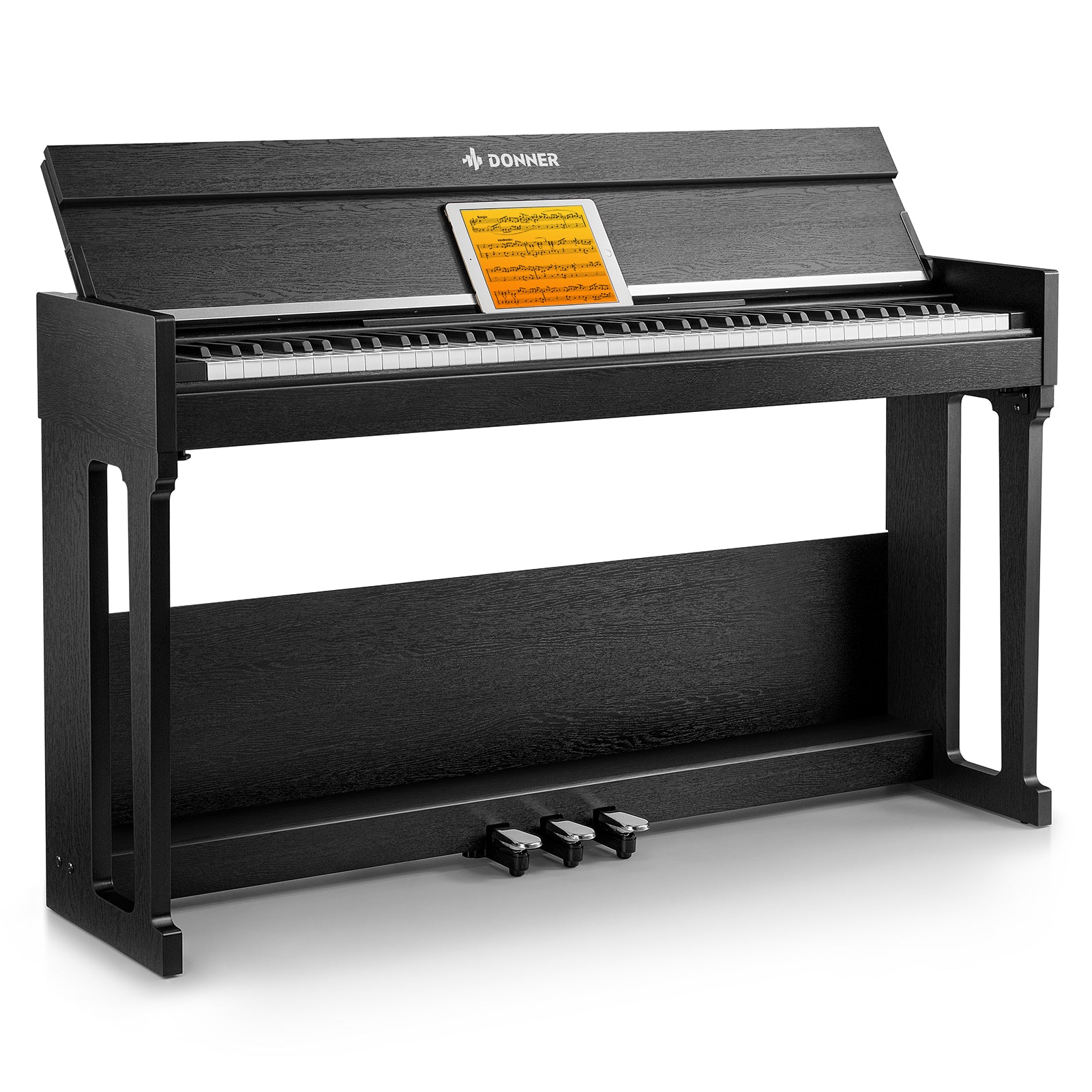
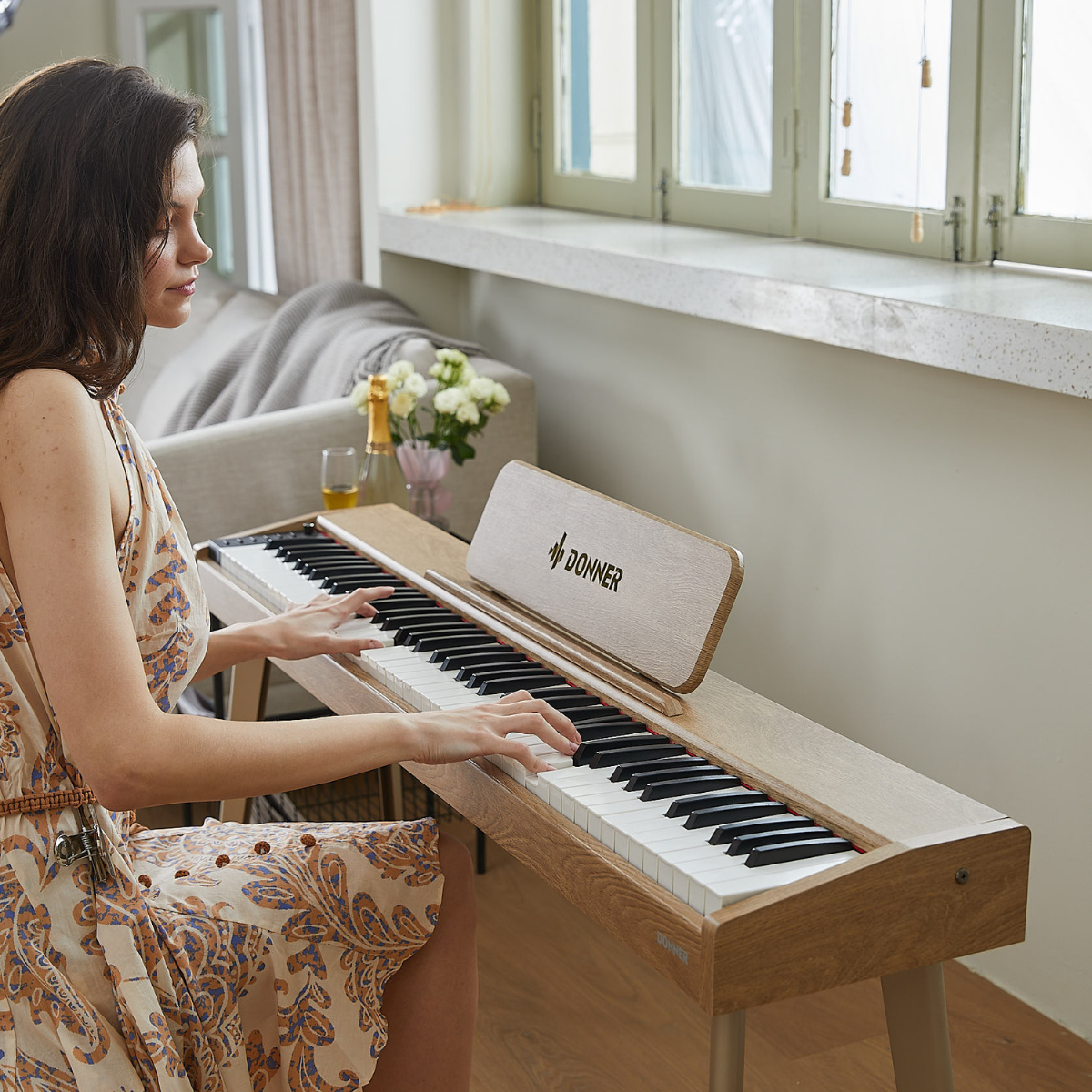
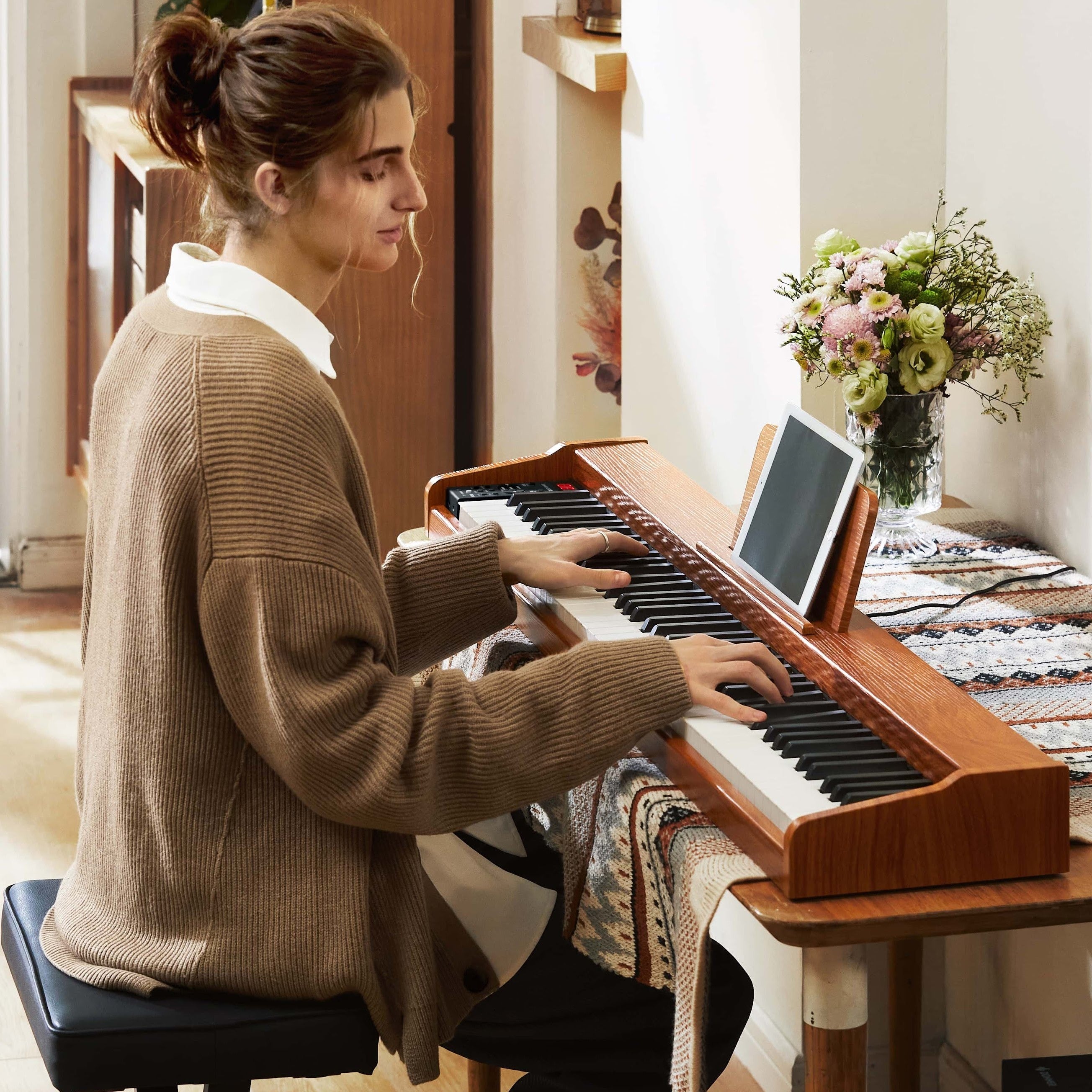
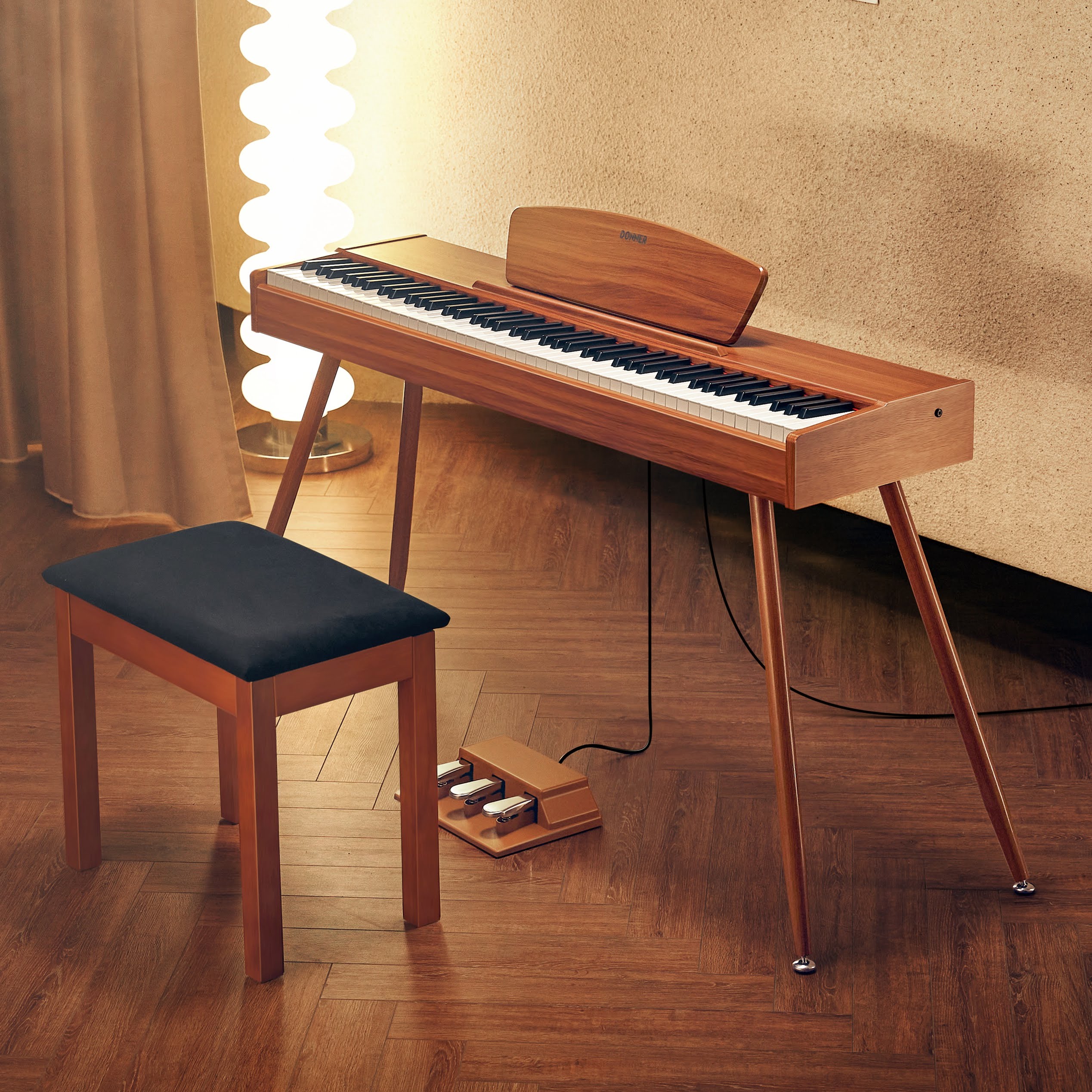
The Donner DEP-20 portable digital piano gives you the weighted-key experience of a home piano in a form you can actually move. It is the most complete package in this list: 88 fully weighted keys with graded hammer action, a wood furniture stand, and a triple-pedal unit : all included in the box.
Unlike most portable digital pianos that arrive as bare slabs, the DEP-20 comes ready to set up. The key action is heavier in the bass and lighter in the treble, matching the resistance curve of an acoustic grand. With 238 tones, 200 accompaniment rhythms, and 128-note polyphony, it offers more sonic variety than most instruments at this price. The dual 25W speakers fill a living room without an external amp, and the dual headphone jacks let two people practice silently side by side.
The tradeoff is weight. At 24.75 kg with the stand attached, this is not a grab-and-go instrument. The stand takes time to assemble, and breaking it down for transport is a weekend project, not a daily ritual. The main piano tone is clean and balanced for practice, though it leans more functional than expressive : you would not choose it for studio recording.
The DEP-20 works best for the beginner who wants an authentic piano feel without the cost and bulk of an upright. Set it up once, and it stays. Move it twice a year, and it moves. That is the right expectation.
Pros:
- Wood furniture stand and 3-pedal unit included : no separate purchases
- Dual headphone jacks for silent duet practice
- Split mode divides the keyboard into two identical zones for teacher-student work
- USB MIDI for connecting to learning apps and recording software
- 1/4-inch stereo outputs for external amplification
Cons:
- No Bluetooth audio or MIDI
- Included music rest is lightweight plastic
- With stand, too heavy for frequent transport
Best for serious beginners who want authentic weighted-key action in a movable form that doubles as furniture.

Buy DEP-20 portable digital piano now!
Roland FP-30X : Best Premium Portable Digital Piano for Performing Musicians
The Roland FP-30X is the instrument you buy once and keep for a decade. Its 88-key PHA-4 keyboard delivers hammer action with escapement : a mechanism that simulates the slight resistance you feel on an acoustic grand just before the hammer strikes. The key surfaces have an ivory-like texture that absorbs finger moisture during long practice sessions.
Roland's SuperNATURAL sound engine models every note with continuous variation, so the piano responds to the smallest changes in finger speed the way a real string does. Bluetooth audio and MIDI come built in : stream backing tracks through the FP-30X's stereo speakers while playing along, or connect wirelessly to notation apps and DAWs. The onboard speaker system is powerful enough for a small venue, and the balanced XLR and 1/4-inch outputs mean you can plug directly into a stage PA without a DI box.
At $699, the FP-30X costs more than anything else in this list. The slab weighs about 14.8 kg without a stand : portable by digital piano standards, but you will still feel it on a long walk from the parking lot. The control panel relies on key-combination shortcuts printed above the keys, which takes a few days to memorize.
Pros:
- PHA-4 hammer action with escapement and ivory-feel key surfaces
- SuperNATURAL piano engine with continuous velocity response
- Bluetooth audio and MIDI built in
- Balanced outputs for direct stage connection
- Stereo speakers with enough volume for small performances
Cons:
- $699 puts it at the top of this price range
- Stand and pedal unit sold separately
- Key-combination controls have a learning curve
Best for performing musicians and advanced students who need stage-ready sound and feel in a portable slab.
Korg Liano : Best Portable Keyboard Piano for Simple, Distraction-Free Playing
The Korg Liano takes the opposite approach from every other instrument in this list. Instead of piling on features, it strips them away. You get 88 semi-weighted keys, Korg's warm grand piano sound, a metronome, and almost nothing else : no screens, no menus, no layered modes to accidentally trigger mid-song.
At $329, the Liano sits in a unique position. It is not trying to compete on polyphony counts or rhythm patterns. Its thin, lightweight chassis : under 6 kg : and USB audio interface make it genuinely useful for a specific person: the player who wants to sit down and practice without navigating a control panel first. It runs on batteries or AC power, and the built-in speakers are surprisingly capable for the cabinet size.
The limitations are deliberate. If you want split mode, dual headphone jacks, or hundreds of sounds, look elsewhere. The Liano does one thing: it puts a pleasant, expressive piano tone under your fingers with zero friction. For a second instrument in the living room, a teaching piano for young children, or a practice keyboard that never distracts, that single-minded focus is its strength.
Pros:
- 88 semi-weighted keys in a chassis under 6 kg
- USB audio interface : record directly into a DAW
- Runs on batteries or AC power
- Zero learning curve : power on and play
- Warm, clean grand piano tone
Cons:
- No display, limited to a handful of sounds
- No split mode or dual headphone jacks
- Not for players who want layered sounds or accompaniment features
Best for players who want a no-fuss practice instrument that disappears into the background when not in use.
Donner DP-10 : Best Foldable Portable Keyboard for Travel and Small Spaces
The Donner DP-10 foldable portable keyboard solves a problem no other instrument in this list addresses: what if you need a full 88 keys that physically disappear when you are not playing? The DP-10 folds in half at the center hinge and fits into an included carrying bag the size of a large briefcase.
At 3.5 kg, it weighs roughly what a gallon of milk weighs. It runs on battery power with USB-C charging, so you can play anywhere : on a park bench, in a dorm room with no outlets nearby, in the back of a van between gigs. The 88 keys are semi-weighted with spring resistance that gives a more substantial feel than unweighted beginner keyboards, though it does not replicate the mechanical resistance of a graded hammer action.
With 128 tones, 128-note polyphony, built-in Bluetooth, and USB MIDI, the DP-10 covers practice, composition, and casual performance. The dual speakers produce enough volume for personal practice : you will want headphones or an external speaker for anything beyond that.
The semi-weighted action is the central tradeoff. If you are a classical pianist working on Chopin, this is not your instrument. But if you are a songwriter who needs 88 keys in a hotel room, a student whose dorm desk doubles as a keyboard stand, or a parent who wants piano at home without surrendering the living room, the DP-10's form factor has no equal at this price.
Pros:
- Folds in half; 3.5 kg; fits in an included carrying bag
- Battery-powered with USB-C charging
- 88 semi-weighted keys : no compromise on range
- Bluetooth for app connectivity and wireless audio playback
- 128 tones and 128-note polyphony
Cons:
- Semi-weighted action is not a substitute for fully weighted keys
- Built-in speakers are adequate for practice only
- Hinge mechanism is a mechanical point of wear over time
Best for travelers, dorm residents, and anyone who needs full 88 keys in a form that disappears when not in use.

Shop DP-10 foldable keyboard today!
Yamaha P-145BT : Best Beginner-Friendly Portable Keyboard Piano
The Yamaha P-145BT is the one teachers recommend when a student asks "what should I buy?" and the teacher does not want to spend 20 minutes explaining specs. It is the safe, reliable, no-surprises option : 88 graded hammer standard keys, Yamaha's CFIIIS concert grand piano sample, and Bluetooth for connecting to Yamaha's Smart Pianist app.
At about 11 kg, the P-145BT is among the lightest 88-key weighted digital pianos you can buy. The graded hammer action is lighter than the Roland FP-30X's PHA-4 : some players prefer this for longer practice sessions, while others find it less convincing as an acoustic piano stand-in. The single-button operation keeps things simple: power on, volume up, play. The built-in speakers are adequate for a small room, and the headphone jack produces a surprisingly spacious stereo image.
At $499, the P-145BT sits between entry-level weighted digital pianos and the premium FP-30X. The sustain pedal included in the box is a basic switch-style unit : functional, but you will want to upgrade to a half-damper pedal eventually. The stand is sold separately.
Pros:
- 88 graded hammer standard keys : authentic weighted feel
- Yamaha CFIIIS concert grand sample : a proven, widely loved piano tone
- Bluetooth for the Smart Pianist app
- Lightweight at ~11 kg : easy to move between rooms
- Single-button simplicity : zero learning curve
Cons:
- Included sustain pedal is a basic switch-style unit
- Stand sold separately
- Graded hammer action is lighter than competitors in this price range
Best for absolute beginners who want a trusted brand name and straightforward setup with no spec research required.
Kawai ES-120 : Best Premium Key Action for Home Players
The Kawai ES-120 carries a Responsive Hammer Compact action : the same keybed technology Kawai uses in its acoustic uprights, shrunk into a portable slab. If key feel is your top priority and you are willing to pay for it, this is the instrument that delivers.
At $899, the ES-120 is the most expensive option in this list. What you get for the premium is Kawai's 88-key graded hammer action with a textured key surface that feels closer to ivory than any synthetic material has a right to. The Harmonic Imaging sound engine uses 88-key individual sampling : each note was recorded from a Kawai concert grand at multiple velocities, rather than stretched or modeled from a handful of samples. The result is a piano tone that holds up under sustained listening in a way that modeled engines, however clever, sometimes do not.
Bluetooth audio comes built in, and the 20W speaker system is well-voiced for a practice room. The ES-120 weighs about 12.5 kg : lighter than the Roland FP-30X : but the included music rest and single pedal are entry-level accessories that feel out of step with the premium keybed underneath them.
Pros:
- Responsive Hammer Compact action with textured key surfaces
- Harmonic Imaging with 88-key individual sampling
- Bluetooth audio built in
- 12.5 kg : portable for a premium weighted digital piano
- Authentic acoustic-piano-like key feel at this price point
Cons:
- $899 is the highest price in this list
- Included pedal is a basic switch unit
- Stand and triple-pedal bar sold separately
Best for home players who prioritize authentic key feel above all else and are willing to invest in premium action.
Donner DEP-1S : Best Complete Beginner Kit with Stand Included
The Donner DEP-1S digital piano kit arrives with everything a first-time buyer needs: 88 semi-weighted keys, an X-stand, a sustain pedal, and a music rest : all in one box priced below most competitors' bare slabs. If the thought of shopping for a stand and pedal separately feels like one decision too many, the DEP-1S removes that friction entirely.
The 88 semi-weighted keys give you the full piano range with spring resistance that sits between unweighted beginner keyboards and fully weighted digital pianos. With 128 sounds, 64-note polyphony, and dual 15W speakers, the DEP-1S covers practice, exploration, and casual playing without overwhelming a beginner with features they will not use for years. USB MIDI lets you connect to piano learning apps, and the headphone jack keeps practice private.
The semi-weighted action is the main limitation. A beginner who practices exclusively on semi-weighted keys will need time to adjust when they eventually move to a fully weighted digital piano or an acoustic upright. For the first year or two of learning, this is a non-issue : the notes and finger positions transfer directly, and the spring resistance builds enough finger awareness to make the later transition manageable.
Pros:
- X-stand, sustain pedal, and music rest included : complete out-of-the-box setup
- 88 semi-weighted keys : full range with spring resistance
- 128 sounds and 64-note polyphony
- Dual 15W speakers with headphone output
- USB MIDI for app connectivity
Cons:
- Semi-weighted action means piano learners will eventually want to upgrade
- Speakers are adequate for practice but not room-filling
- No Bluetooth connectivity
Best for first-time buyers who want a complete setup in one box at an accessible price, without shopping for accessories.

Bring DEP-1S digital piano kit to home today
Casio CT-S1 : Best Ultra-Light Portable Keyboard with Premium Sound
The Casio CT-S1 weighs under 5 kg, runs on six AA batteries, and has a built-in carry handle : yet its AiX sound engine produces piano tones that embarrass instruments twice its size. This is a 61-key unweighted keyboard. But for a songwriter who needs something light enough to carry to a coffee shop session, or a producer who wants a compact MIDI controller that also sounds good on its own, the CT-S1 earns its place.
The AiX chip models string resonance, damper noise, and key-off samples : details most keyboards near $200 skip. The built-in speakers project surprisingly well given the chassis size, and the matte black finish with fabric speaker grille looks more like a design object than a budget keyboard.
The unweighted keys are the tradeoff. If piano technique is your goal, this is the wrong starting point. The 61-key range covers most pop, rock, and beginner repertoire, but classical pieces that use the lowest and highest octaves are out of reach.
Pros:
- AiX sound engine with string resonance and damper modeling
- Under 5 kg with built-in carry handle
- Runs on six AA batteries for cord-free playing
- USB MIDI for DAW and app connectivity
- Sleek matte design with fabric speaker grille
Cons:
- 61 unweighted keys : not suited for serious piano study
- No pitch bend or modulation wheel
- Limited to 64-note polyphony
Best for songwriters and music producers who want premium piano sound in the lightest possible package, and do not need weighted keys.
Comparison Table
| Product | Price | Keys | Key Action | Weight | Battery | Best For |
|---|---|---|---|---|---|---|
| Donner DEP-20 | $359.99 | 88 | Fully weighted, graded hammer | 24.75 kg (with stand) | No | Serious beginners wanting a complete furniture bundle |
| Roland FP-30X | $699 | 88 | PHA-4 hammer with escapement | 14.8 kg (slab only) | No | Performing musicians needing stage-ready sound |
| Korg Liano | $329 | 88 | Semi-weighted | 6 kg | Yes | Players wanting pure simplicity, no menus |
| Donner DP-10 | $159.99 | 88 | Semi-weighted, foldable | 3.5 kg | Yes | Travel and ultra-small spaces |
| Yamaha P-145BT | $499 | 88 | Graded hammer standard | 11.1 kg | No | Absolute beginners wanting a trusted brand |
| Kawai ES-120 | $899 | 88 | Responsive Hammer Compact | 12.5 kg | No | Home players prioritizing authentic key feel |
| Donner DEP-1S | $299.99 | 88 | Semi-weighted | Spec TBD | No | First-time buyers wanting a complete kit |
| Casio CT-S1 | $219 | 61 | Unweighted | 4.6 kg | Yes | Songwriters wanting premium sound ultra-light |
How I Selected These Portable Keyboard Pianos
I have spent years helping beginners and intermediate players find the right instrument : in music shops, in teaching studios, and through hundreds of conversations with students who showed up overwhelmed by options. Every instrument in this guide earned its place through the same four-part evaluation. These are not ranked : each one serves a different player and a different situation.
Portability. I looked at weight, checked whether a carrying case or bag was included, noted battery power options, and asked the question that matters most: can this instrument go where the player needs it to go? A 15-kg slab fits in a car. A 3.5-kg foldable fits in an overhead bin. Both are portable : for different lives.
Key action. Weighted, semi-weighted, or unweighted : I matched the action to the player. A graded hammer action matters for someone studying classical piano. Spring-loaded semi-weighted keys are fine for a songwriter who needs to lay down chord progressions. Unweighted keys belong on ultra-light travel keyboards where every ounce counts.
Sound quality. I evaluated tone engines, polyphony counts, speaker wattage, and headphone output. A great key action means little if the piano sound is thin or artificial. I listened for clean samples, realistic decay, and enough polyphony that sustained chords do not cut out mid-phrase.
Value. Features per dollar. Bundle inclusions. Warranty coverage. A $700 instrument that lasts 15 years is better value than a $150 instrument you outgrow in six months : but only if you have $700. I picked across the full price spectrum so every budget has a genuine recommendation, not a compromise pick.
How to Choose the Right Portable Keyboard Piano
Weighted vs. Semi-Weighted vs. Unweighted Keys
Key action is the single most important variable : it determines what the instrument asks of your fingers and what your fingers learn in return.
Fully weighted keys use a mechanical hammer system that mimics an acoustic piano : heavier in the bass, lighter in the treble, with a distinct feel as the key bottoms out. This builds finger strength and technique that transfers directly to an acoustic instrument. If traditional piano study is your goal, start here.
Semi-weighted keys use springs to add resistance, giving more substance than unweighted keys without the mechanical complexity of a hammer system. They are comfortable for chord work, songwriting, and casual practice. For the first year or two of learning, semi-weighted keys are perfectly adequate : the notes and finger positions transfer directly when you eventually move to a weighted instrument.
Unweighted keys press with almost no resistance : standard on keyboards priced under $150 and on ultra-portable instruments. They work for basic note input, synth lines, and young children exploring music. They do not prepare your hands for an acoustic piano.
Portability: What It Actually Means
Portability is not one thing : it is a spectrum. At one end, a foldable keyboard folds in half and weighs under 4 kg. At the other, a slab digital piano weighs about 15 kg and sits on a dedicated stand : portable in the sense that you can move it between rooms, but not something you would carry to a park.
When comparing weights, check whether the listed number includes the stand. A furniture-style digital piano weighs substantially more with its cabinet than the slab alone. Battery power is the gold standard for portability: instruments that run cord-free give you practice anywhere without hunting for outlets. If you plan to practice outdoors, in different rooms daily, or at venues without reliable power, battery capability matters more than a few kilograms of weight savings.
How Many Keys Do You Need?
Deciding how many keys a beginner keyboard needs comes down to what you plan to play. Eighty-eight keys cover every piece of standard piano repertoire. Sixty-one keys cover five octaves, which handles every beginner method book, most pop and rock songs, and the majority of jazz standards.
For the first two to three years of learning, 61 keys are sufficient. The limitation only appears in intermediate-to-advanced classical repertoire : Chopin nocturnes and Beethoven sonatas routinely ask for notes outside the 61-key range. Start with 61 if you are exploring whether piano sticks. Start with 88 if classical study is the plan from day one. Both paths are valid, and upgrading from 61 to 88 keys is a normal, expected progression.
Price Brackets: What You Get at Each Level
Under $200. Eighty-eight semi-weighted keys, basic tones, essential practice features. At this bracket, you sacrifice weighted action and speaker power, but you get a real instrument at a price that makes starting easy.
$200 to $400. The sweet spot for most beginners. You get 88 keys with semi-weighted or fully weighted action, a stand, and a pedal : often bundled in one box. These are instruments you can keep for years before feeling the urge to upgrade.
$400 to $700. Premium action, professional sound engines, stage-ready connectivity. You are paying for key action that will satisfy advanced players, tone engines that sound convincing through studio monitors, and build quality that handles regular transport. If you already know you are serious about piano, starting here saves the cost of upgrading later.
$700 and above. Top-tier keybeds from manufacturers with acoustic piano heritage, individually sampled sound engines, and build quality that lasts a decade or more. You are paying for key feel that mirrors an acoustic grand and tone that holds up under studio scrutiny.
Bundles vs. Bare Units
A bare slab digital piano is just the keyboard : you buy the stand, pedal, and bench separately. A bundle includes some or all of those accessories in the box. Bundles almost always save money over buying piece by piece, but only if you need everything in the bundle.
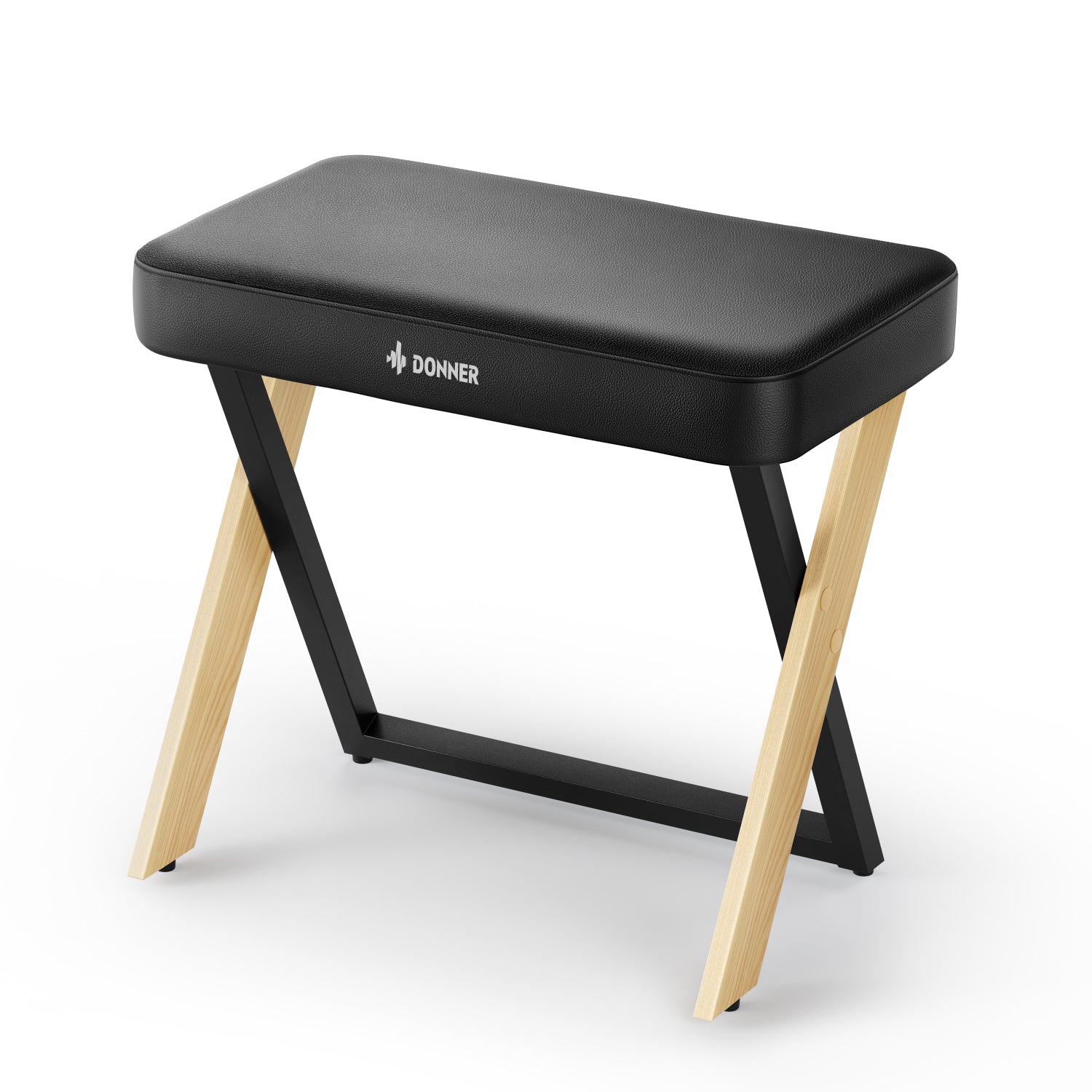
If you already own a stand and pedal from a previous instrument, a bare slab makes more sense. If this is your first instrument, a bundle removes the friction of accessory shopping and gets you playing the same day the box arrives. Look for bundles that include a furniture-style stand (wooden, stable) and a sustain pedal with half-damper support : basic switch pedals work, but you will want to upgrade within the first year.
Frequently Asked Questions
What is the difference between a portable keyboard and a digital piano?
Both are electronic keyboard instruments, and in practice people use the terms interchangeably. A digital piano typically has 88 weighted keys designed to replicate the feel of an acoustic piano. A portable keyboard is the broader category : it includes digital pianos, but also semi-weighted and unweighted instruments with fewer than 88 keys. For a deeper look at the differences, our comparison of digital pianos and keyboard pianos covers key action, sound, and learning path for both categories
Can I learn piano on a portable keyboard?
Yes : but the instrument you pick shapes what you learn. For traditional piano study, you need 88 fully weighted keys. Semi-weighted instruments teach you notes, chords, and basic technique, and the transition to a weighted instrument later is straightforward. Unweighted keyboards are not suitable for piano study as the primary instrument. The key action section above covers the tradeoffs in detail.
What should beginners look for in a portable keyboard piano?
Three things matter most: 88 keys (or at least 61 weighted ones), some form of touch-sensitive or weighted action, and a sustain pedal input. After those: built-in speakers, a headphone jack for apartment practice, and USB MIDI for connecting to learning apps. Bundles that include a stand and pedal save you from shopping for accessories separately and get you playing faster.
Are portable keyboard pianos good for gigging?
The right ones are. Stage-ready portables with professional sound engines, balanced audio outputs, and durable builds handle regular loading in and out. Battery-powered instruments add flexibility for outdoor gigs or venues with unreliable power. The main tradeoff is speaker volume : no portable keyboard matches a dedicated stage amp, so you will usually run through the PA regardless of which instrument you choose.
How do I know when it is time to upgrade from a beginner portable keyboard?
The signal is usually not the instrument breaking : it is you running into its limits. You hear notes cutting out when you hold a sustain pedal through a dense chord passage. You start a piece of classical repertoire and realize your keyboard does not have the low A or the high C the score asks for. Your fingers have developed enough sensitivity that the spring-loaded semi-weighted action feels vague under fast passagework. When any of those three things happens regularly, you have outgrown the instrument : and that is a good thing. It means you are progressing.
Find Your Perfect Portable Keyboard Piano
Portability is no longer a compromise. The instruments in this guide range from a 3.5 kg foldable keyboard that fits in a briefcase to a full weighted digital piano with a wood stand and triple pedal. Each one solves a different version of the same problem: how to make music in the space you actually have, with the budget you actually have, at the skill level you are actually at.
Ask yourself three questions. How important is weighted-key action to you? How much space can you really dedicate to an instrument? And what is your budget : not the aspirational number, but the real one? The answers point directly to one of the instruments above.
Donner has spent over a decade designing musical electric instruments for players at the start of their journey. Browse our keyboard pianos and find the one that fits your first note.