






You're ready to start playing an instrument. You've narrowed it down , but now you're stuck on the same question thousands of beginners ask on Reddit and Quora every month: should you get a keyboard piano or an acoustic piano?
This article compares keyboard piano vs acoustic piano. If you're deciding between a digital piano and an acoustic piano, read our digital piano vs acoustic piano comparison instead.
The short answer: neither instrument is universally better. An acoustic piano gives you authentic touch and rich sound that no keyboard can fully replicate. A keyboard piano gives you portability, headphone practice, and hundreds of sounds for a fraction of the price. Which one you should choose depends on your space, budget, and musical goals. Let's walk through every difference that matters.
At a Glance of Quick comparison of Keyboard vs Piano
| Feature | Acoustic Piano | Keyboard Piano |
|---|---|---|
| Key Action | Weighted, hammer-driven | Spring-loaded or synth-action |
| Number of Keys | 88 (standard) | 49, 61, or 76 |
| Sound | Acoustic strings + soundboard | Digital samples + built-in speakers |
| Portability | Stationary (300–500+ lbs) | Portable (5–20 lbs) |
| Maintenance | Tuning 2–4×/year | Zero maintenance |
| Entry Price | $2,000–$5,000+ | $100–$500 |
| Best For | Classical training, authentic touch | Beginners, small spaces, sound exploration |
Head-to-Head Comparison of Keyboard Piano & Acoustic Piano
Feel and Key Action
This is the difference you'll notice within the first five seconds of playing.
An acoustic piano uses a mechanical action: when you press a key, a felt hammer swings up and strikes steel strings. That mechanism creates natural resistance , the keys feel heavier in the bass register and lighter in the treble. This graded weighting is essential for building proper finger strength and dynamic control. Play a C major scale on an acoustic piano and you'll feel a physical conversation between your fingers and the instrument.
A keyboard piano uses springs or light sensors under each key. The resistance is uniform across all 61 keys, and the keys return to position quickly with almost no weight behind them. This makes keyboard piano keys significantly easier to press , which is great for young children or anyone with limited hand strength, but it won't teach the weight-sensitive technique that classical repertoire demands.
Winner: Piano for technique development. Keyboard for casual playing and accessibility.

Sound Quality
An acoustic piano produces sound entirely through physical means: hammer strikes string, string vibrates, soundboard amplifies. The result is a living, breathing tone with natural overtones, subtle harmonic interactions between strings, and a dynamic range that shifts character , not just volume , from pianissimo to fortissimo.
A keyboard piano plays digital recordings of real instruments through built-in speakers. The sound is clean and consistent, and the variety is the keyboard's strongest asset: beyond the basic piano voice, you get strings, organs, brass, synthesizer pads, drum kits, and often auto-accompaniment patterns that turn single-note melodies into full-band arrangements. But the speakers in a sub-$200 keyboard piano are small , typically 2 to 5 watts per side , and the digital piano tone, while recognizable, lacks the harmonic depth of vibrating steel and wood.
Winner: Piano for pure acoustic tone. Keyboard for versatility and creative experimentation.
Number of Keys
An acoustic piano has 88 keys , period. That's seven and a quarter octaves, and every piece of classical piano music ever written fits within that range.
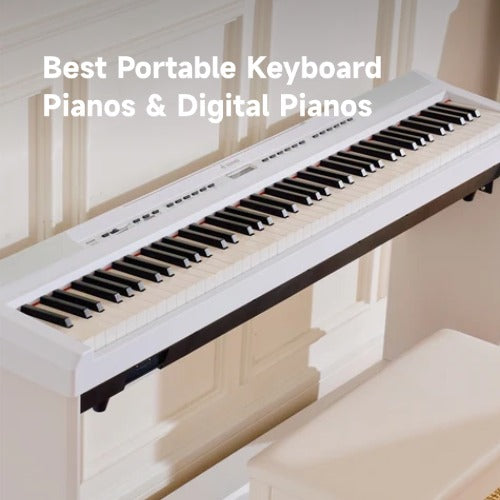
A keyboard piano typically comes with 49, 61, or 76 keys. The most common beginner option is 61 keys , five full octaves. For reference, most beginner method books and nearly all pop, rock, and folk music fit comfortably within 61 keys. You won't miss the extra octaves until you reach intermediate classical repertoire: Chopin nocturnes and Beethoven sonatas routinely use notes outside the 61-key range.
If you're unsure which size to start with, we've covered the decision in detail in our guide on how many keys a beginner keyboard needs.
Winner: Piano (unlimited range, no compromise). Keyboard (sufficient for most beginners at 61 keys, with a natural upgrade path).

Portability and Space
This is where the keyboard piano wins outright.
An acoustic upright piano weighs 300 to 500 pounds and needs a permanent spot against an interior wall , away from windows, radiators, and air vents. Moving one requires professional piano movers at $200–$400 per trip. If you live in an apartment, a rental, or a dorm, an acoustic piano is a major commitment before you've played a single note.
A keyboard piano weighs 5 to 20 pounds. It fits on a folding X-stand, packs into a gig bag, and slides under a bed or into a closet when you're done. You can practice at midnight with headphones without waking your roommates. You can take it to lessons, to a friend's house, or on a road trip.
Winner: Keyboard , by an enormous margin. No other instrument combines this much musical capability with this little spatial footprint.
Maintenance
An acoustic piano needs professional tuning two to four times a year, at $100–$200 per session. It's sensitive to humidity and temperature swings , too dry and the soundboard cracks, too humid and the action swells. In most climates, you'll want a room humidifier or dehumidifier running year-round, and even then, an acoustic piano will drift slightly out of tune between visits.
A keyboard piano needs none of this. Plug it in. Turn it on. Play. There are no strings to tune, no hammers to wear, no climate sensitivity. Over a five-year ownership period, the maintenance cost difference alone can exceed $2,000.
Winner: Keyboard , zero ongoing cost and zero effort versus hundreds of dollars and regular appointments.
Price and Long-Term Value
The numbers tell a stark story. A new entry-level upright acoustic piano starts around $2,000–$5,000. A quality grand piano begins at $10,000 and easily reaches $50,000 or more. Used acoustic pianos are cheaper , sometimes free on local listings , but "free" usually means moving costs plus several hundred dollars in tuning and regulation to make it playable.
A beginner keyboard piano costs $100 to $500. That's the entire instrument, ready to play out of the box , no movers, no tuners, no hidden costs.
However, value moves in the opposite direction over time. A well-maintained acoustic piano holds its value for decades. Some vintage instruments appreciate. A keyboard piano, by contrast, has a practical lifespan of 3 to 7 years before keys wear, speakers degrade, or technology moves on. Its resale value is minimal.
Winner: Keyboard for low entry barrier. Piano for lifetime investment value.
Learning on a Keyboard vs Piano , What Beginners Should Know?
If your goal is classical training , conservatory exams, competition repertoire, a career in performance , start on an acoustic piano. The weighted action, dynamic response, and pedal technique you develop on an acoustic instrument transfer directly to every piano you'll ever play. A keyboard piano's light springs won't prepare your hands for the real thing.
But here's what matters more than the instrument: consistent practice. A motivated beginner who practices 30 minutes daily on a 61-key keyboard piano will progress faster than someone who owns a grand piano and plays it twice a week. Early-stage musicianship , note reading, rhythm, basic theory, hand coordination , develops on any keyboard. The instrument-specific technique can catch up later.
If you're a parent deciding for a child, start with a keyboard piano. It removes the risk: your child can explore the instrument for a year before you commit thousands of dollars to an acoustic piano. If practice becomes a daily habit and the child outgrows the keyboard's range, you'll know the upgrade is worth it. If interest fades after three months, you're out $200, not $4,000.
When to Choose an Acoustic Piano?
- You're pursuing classical training or conservatory preparation
- You have a dedicated, climate-stable space for a permanent instrument
- You can budget for annual tuning and maintenance
- The authentic acoustic touch is non-negotiable , you want the instrument that composers wrote for
- You see it as a long-term family investment that will hold its value
When to Choose a Keyboard Piano?
- You're a beginner unsure about your long-term commitment to the instrument
- You live in an apartment, dorm, or shared space where volume and footprint matter
- Your budget is under $500
- You want to explore different instrument sounds , piano, organ, strings, synth , without buying multiple instruments
- You need portability for lessons, gigs, or storage
- You want to practice silently with headphones

Frequently Asked Questions
What is the difference between a keyboard and a piano?
An acoustic piano produces sound mechanically , felt hammers strike steel strings, and a wooden soundboard amplifies the vibration. A keyboard piano produces sound electronically , digital samples play through built-in speakers. Pianos have 88 weighted, hammer-action keys and require professional tuning. Keyboard pianos have 49 to 76 spring-loaded keys and require no maintenance. The piano offers authentic touch and acoustic resonance; the keyboard offers portability, headphone practice, and hundreds of instrument voices at a fraction of the cost.
Is a keyboard good enough for a beginner to learn piano?
Yes. For the first two to three years of learning, a 61-key keyboard piano covers every piece in standard beginner method books. The note layout, finger positions, and music theory transfer directly to an 88-key instrument when you upgrade. The practical limitation appears only in intermediate classical repertoire, which routinely uses notes outside the 61-key range. The bigger variable is key action , spring-loaded keys won't build the same finger strength as weighted keys, which matters if your goal is classical piano technique specifically.
Can you learn proper piano technique on a keyboard?
You can learn most of it. Note reading, rhythm, basic theory, and hand coordination develop identically on both instruments. What you won't develop is the weight-sensitive touch that acoustic pianos demand , the ability to control dynamics through finger pressure rather than a volume knob. This gap only becomes significant if you're pursuing classical training or planning to perform on acoustic pianos. For casual playing, songwriting, and most contemporary styles, keyboard piano technique transfers well enough.
How many keys do I need on a keyboard to learn piano?
Sixty-one keys , five full octaves. This covers every piece in beginner method books, most pop and rock repertoire, and all basic music theory exercises. Forty-nine keys will feel cramped within months. Seventy-six keys are a luxury upgrade that extends your range but doesn't change your learning experience. When you're ready for classical repertoire that needs the full 88, you'll know it's time to upgrade.
Is it better to buy a keyboard or a piano for a child?
For most families, a keyboard piano is the smarter starting point. It costs $100–$500 instead of $2,000+, requires zero maintenance, and lets your child practice silently with headphones. If your child practices consistently for a year and shows genuine interest, you can confidently upgrade to an acoustic or digital piano knowing the investment will be used. If interest fades, you've spent the price of a video game console instead of a used car.
Find the Right Instrument for Your Journey
An acoustic piano gives you an instrument with a century-long lifespan and a physical connection to every composer who ever wrote for the keyboard. A keyboard piano gives you an instrument that fits in your backpack, plays a thousand different sounds, and lets you practice at 2 a.m. without waking anyone. Neither is the wrong answer.
The instrument you practice on every day will take you further than the one that gathers dust in the corner. Start with what fits your life right now , the space you have, the budget you can commit, the sound that makes you want to sit down and play.
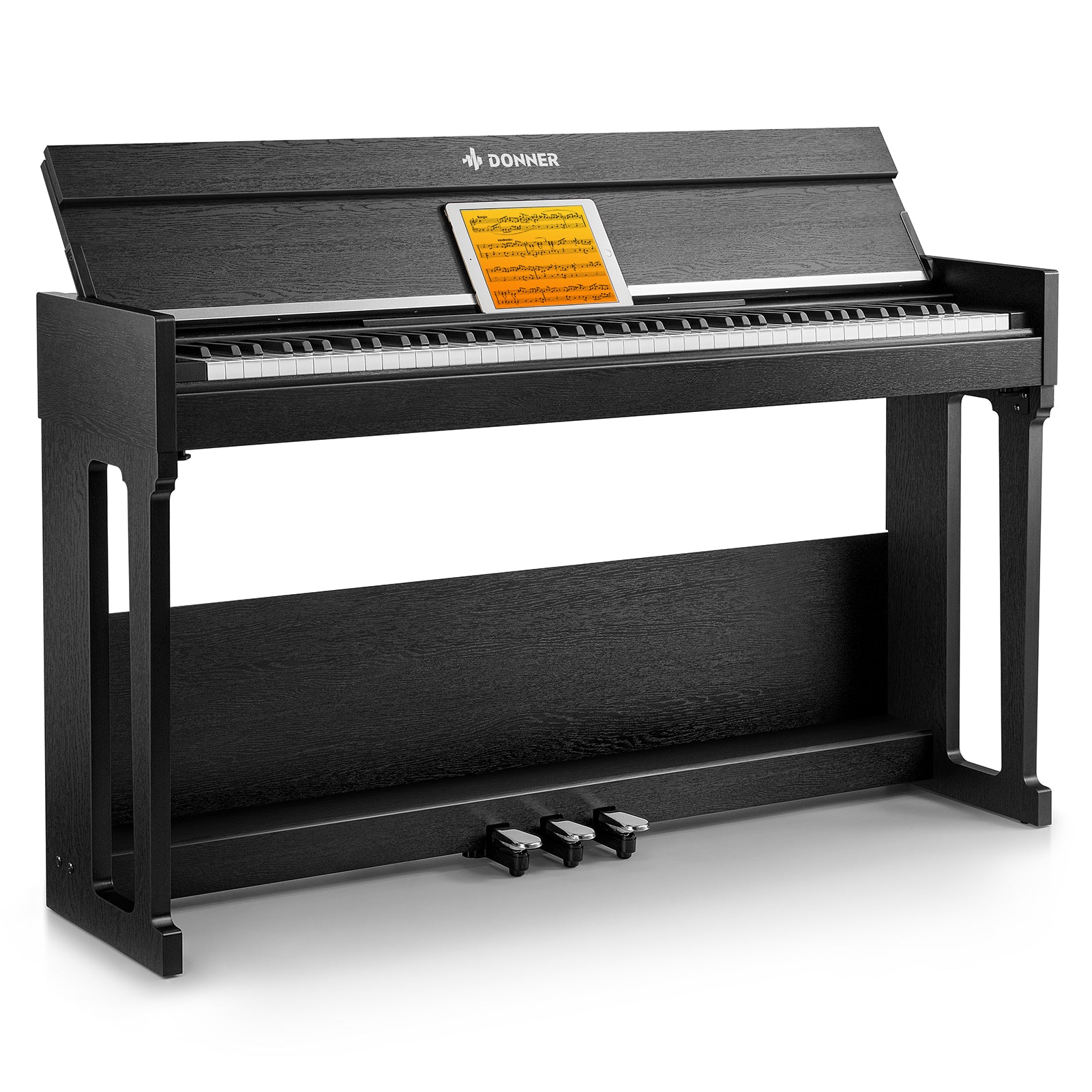
Donner has spent over a decade making digital musical instruments that help beginners take their first step into music. Browse our keyboard pianos to find the one that matches your first note.