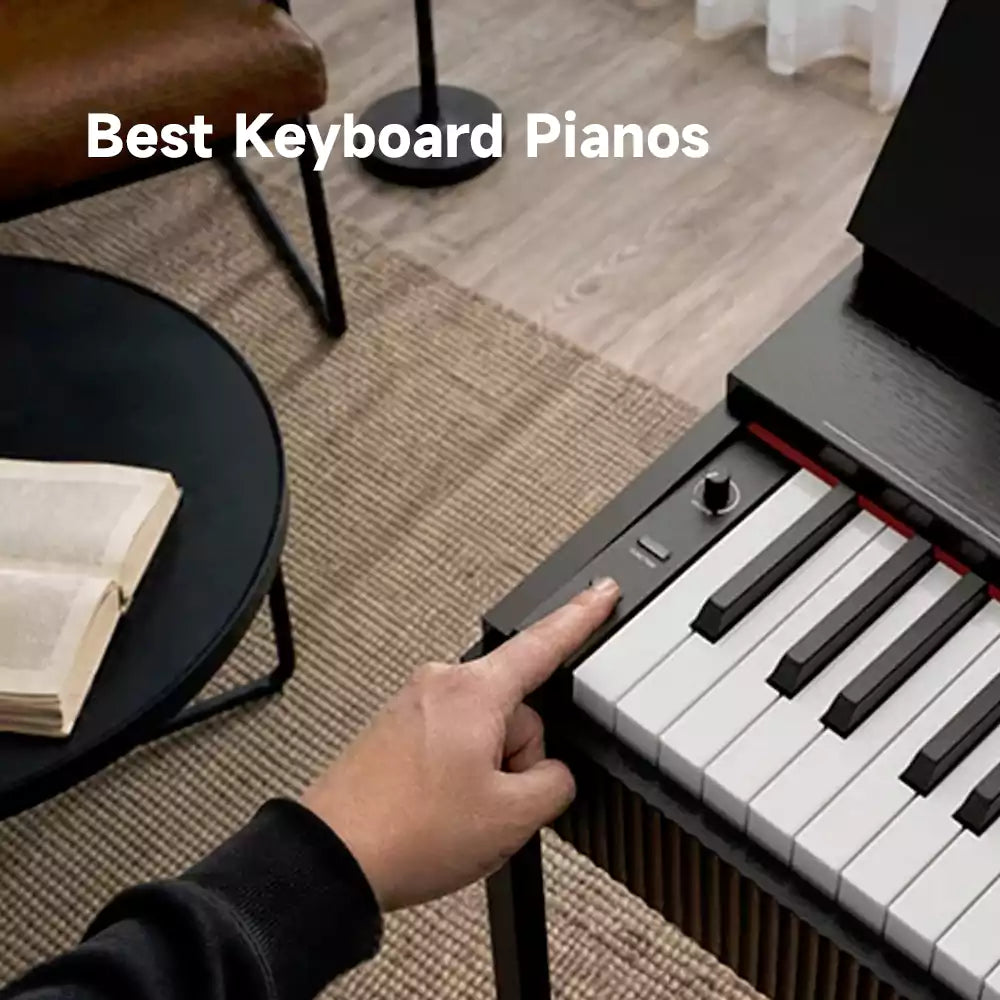

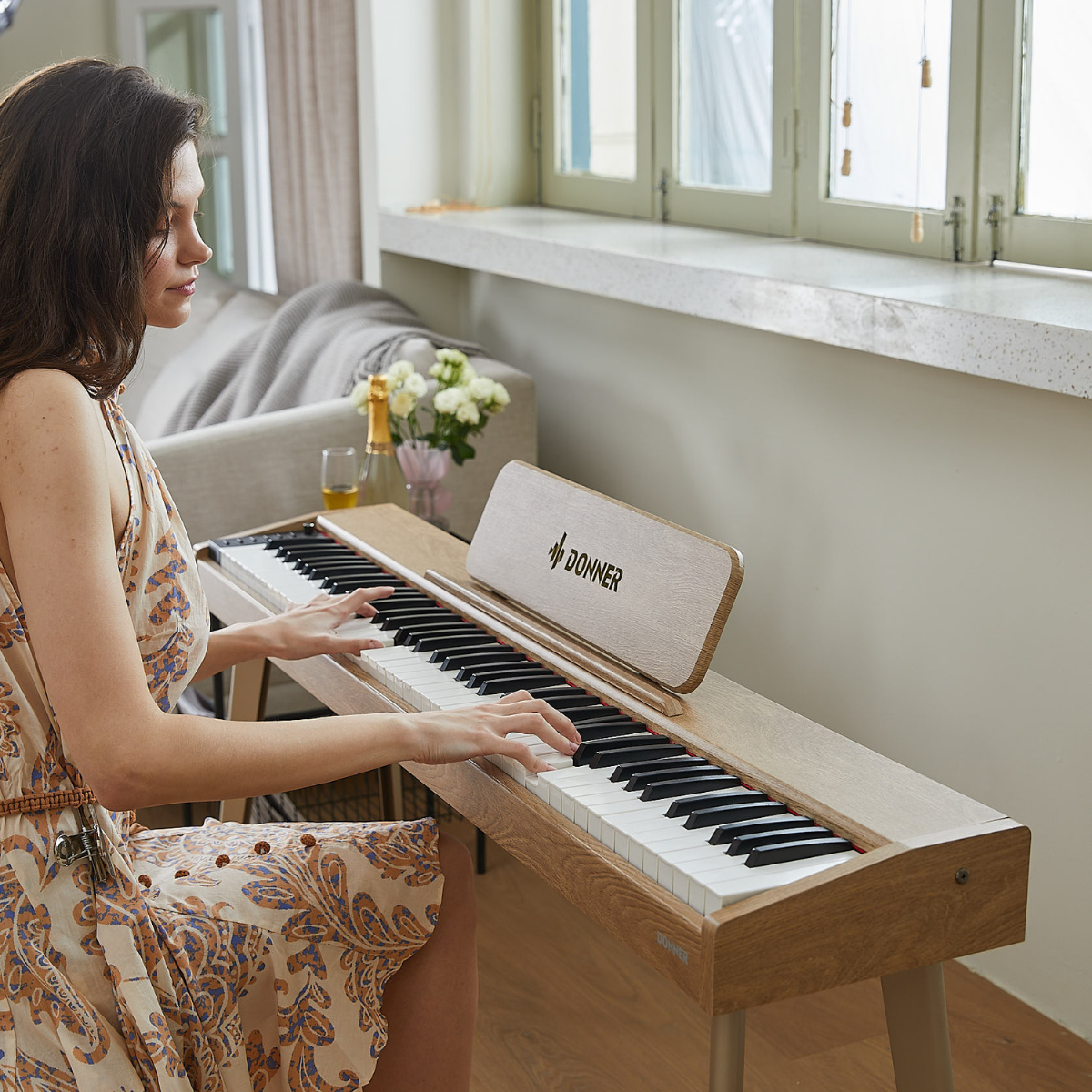
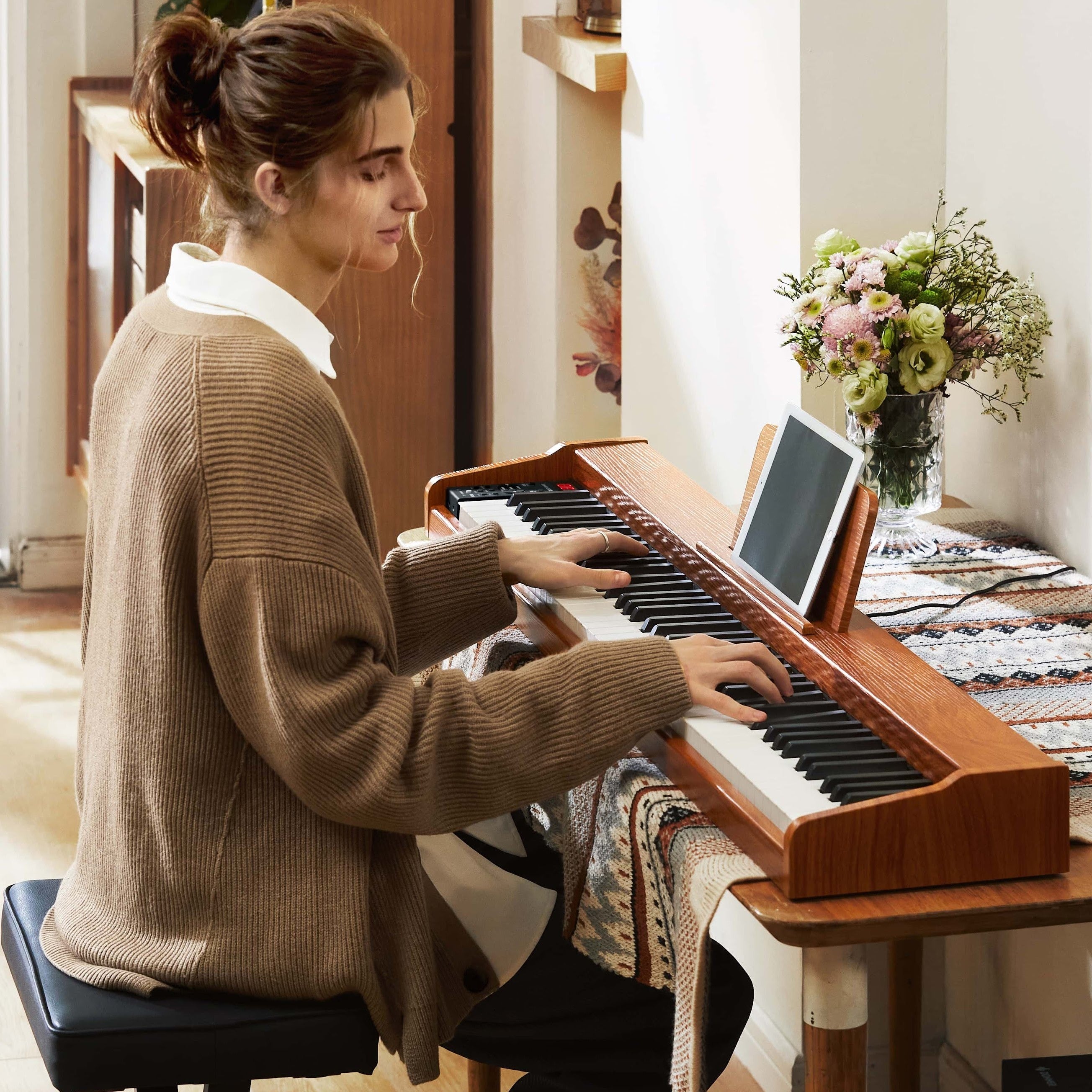






Choosing the best beginner keyboard for adults usually comes down to one question: what will you actually want to practice on a month from now? Between the sea of model numbers, the confusion over keys versus weighted action, and the worry about buying something you will outgrow, it is easy to stall before you ever sit down. The eight keyboard pianos below were screened on key action, key count, sound, connectivity, and setup — the factors that decide how a first instrument feels and whether it fits your space, budget, and practice routine.
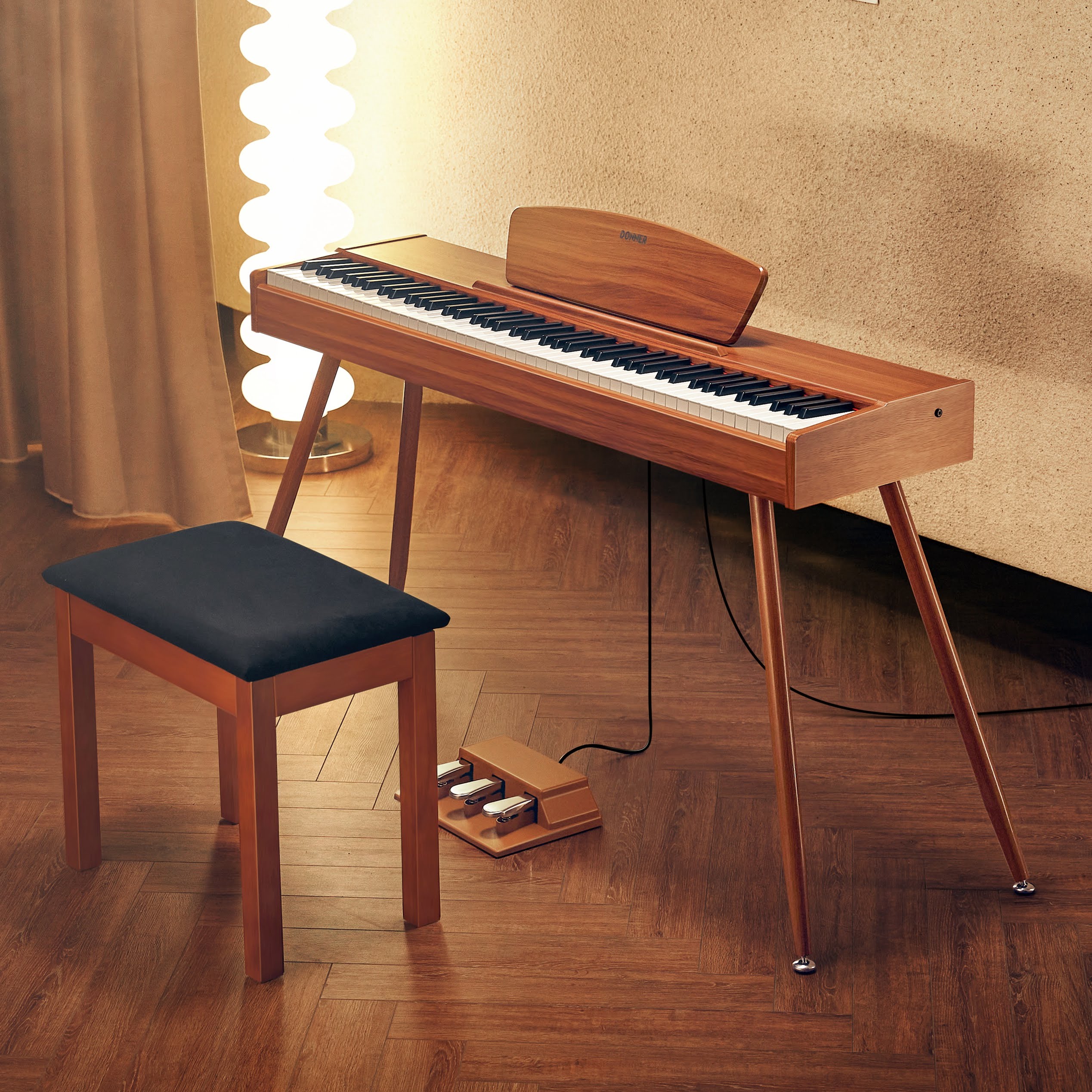
For most adult beginners, the Donner DEP-1S Beginner Digital Piano Kit is the number-one pick: an 88-key home setup that arrives as a complete kit, with the stand, sustain pedal, and practice extras included, so you can start playing the day it arrives. Every model below earned its place for a different reason — an action, a sound engine, a portable format, or a practice feature — rather than a rating. For the widest field of options, start with our keyboard piano lineup; if you already know you want a weighted 88-key instrument, the digital piano collection is where the serious comparison happens.
Best Keyboard Piano for Beginner Adults at a Glance
Every pick below solves a different first-piano problem, and each carries a best-for badge so you can shortlist by your own priority. Here is the lineup, followed by a table that lines up the deciding specs.
- Donner DEP-1S — Best Overall for Adult Beginners
- Yamaha P-145BT — Best App-Connected Beginner Piano
- Roland FP-10 — Best Hammer-Action Value
- Casio Casiotone CT-S1 — Best Portable for Small Spaces
- Donner DEP-16 — Best Weighted Upgrade for Beginners
- Kawai ES60 — Best Entry-Level Premium Sound
- Korg XE20 — Best with Auto-Accompaniment
- Williams Legato IV — Best Budget 88-Key Option
| Product | Best for | Keys & action | Sound & polyphony | Connectivity | Format & weight |
|---|---|---|---|---|---|
| Donner DEP-1S | Best Overall for Adult Beginners | 88 semi-weighted, velocity-sensitive | 128 sounds; 64-note polyphony | Bluetooth audio & MIDI; USB-MIDI | Complete kit with stand & pedal |
| Yamaha P-145BT | Best App-Connected Beginner Piano | 88 weighted (GHC) | 10 voices; 64-note polyphony | Bluetooth audio; USB MIDI & audio | Portable, 11.1 kg |
| Roland FP-10 | Best Hammer-Action Value | 88-key hammer action | 36 tones; 96-voice polyphony | Bluetooth MIDI; USB | Portable, 12.6 kg |
| Casio Casiotone CT-S1 | Best Portable for Small Spaces | 61 keys, 3-level touch | 61 tones; 64-note polyphony | CASIO MUSIC SPACE app | Ultra-light, 4.5 kg |
| Donner DEP-16 | Best Weighted Upgrade for Beginners | 88 fully weighted keys | 238 tones; 128-note polyphony | Bluetooth audio & MIDI; USB-MIDI | Portable, about 11 kg |
| Kawai ES60 | Best Entry-Level Premium Sound | 88-key weighted hammer action | 17 voices; 192-note polyphony | USB-MIDI | Portable, 11 kg |
| Korg XE20 | Best with Auto-Accompaniment | 88-key weighted hammer action | 705+ sounds; 184-voice polyphony | — | Portable, 11.4 kg |
| Williams Legato IV | Best Budget 88-Key Option | 88 graded weighted hammer action | — | USB MIDI; aux, headphone & line outs | Ultra-light, 9.4 kg |
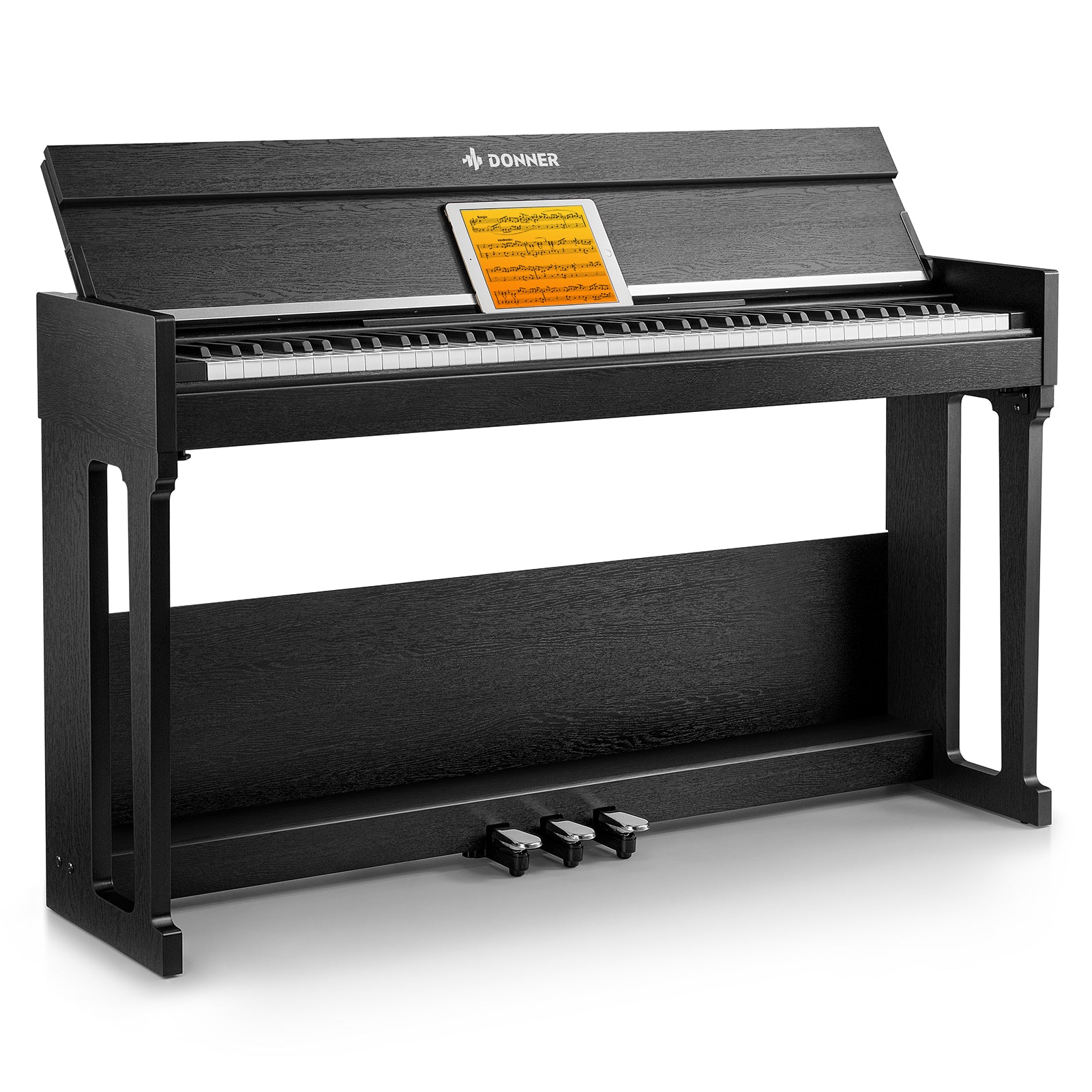
Donner DEP-1S Beginner Digital Piano Kit Best Overall for Adult Beginners

Pros
- 88 semi-weighted, velocity-sensitive keys with five touch levels respond to playing dynamics
- Complete kit: double X-style stand, sustain pedal, key stickers, sheet music clip, and AC adapter included
- Bluetooth audio and MIDI plus USB-MIDI for app lessons and computer recording
Cons
- Semi-weighted action is lighter than fully weighted keys, so it is a comfortable start rather than the closest acoustic feel
The Donner DEP-1S Beginner Digital Piano Kit is the number-one pick because it turns a first budget into a complete home setup rather than a long list of extras. Its 88 semi-weighted, velocity-sensitive keys respond to how hard you play across five touch levels, so you can build dynamics from the first lesson, and the box already includes a double X-style stand, sustain pedal, key stickers, a sheet music clip, and the AC adapter.
Behind the keys, 128 sounds and 100 rhythms leave plenty of room to explore, while 64-note polyphony keeps chords and held notes clean in beginner pieces. The 30W speaker system fills a bedroom or living room, and Bluetooth audio and MIDI plus USB-MIDI let you follow lessons on your phone or record into a computer. Split, dual/layer, metronome, and recording/playback functions cover the practice basics you will use most in the first year.
Yamaha P-145BT 88-Key Portable Digital Piano Best App-Connected Beginner Piano
Pros
- 88-key graded hammer action with matte keytops supports proper technique
- Smart Pianist app adds control, built-in lessons, and a sheet music reader
- Bluetooth audio for play-along tracks and USB to host for MIDI and audio
Cons
- 10 voices and 64-note polyphony are leaner than feature-rich rivals
The Yamaha P-145BT 88-Key Portable Digital Piano is the pick for adults who want a trusted weighted feel plus guided, app-based learning. Its 88-key Graded Hammer Compact action with matte black keytops delivers a piano-like response, and the Smart Pianist app adds control, built-in lessons, and a sheet music reader, so your phone becomes part of the practice routine.
Bluetooth audio streams play-along tracks straight from your device, while USB to host covers MIDI and audio with a computer. The CFIIIS grand piano tone and 10 voices keep the focus on a high-quality piano sound, backed by a 7W x 2 speaker system with Sound Boost. Duo mode splits the keyboard for teacher-student practice, and at 11.1 kg the body stays easy to move between rooms.
Roland FP-10 Digital Piano Best Hammer-Action Value
Pros
- Realistic 88-key hammer action with escapement and ivory feel at an entry price
- 96-voice polyphony keeps pedal and chord-heavy pieces clean
- Bluetooth MIDI plus USB computer connection for apps and software
Cons
- Half-pedaling requires the optional DP-10 pedal
The Roland FP-10 Digital Piano is the hammer-action value pick: it packs a realistic 88-key PHA-4 Standard action with escapement and an ivory-feel surface into a compact portable body. The SuperNATURAL Piano sound engine delivers 96-voice polyphony across 36 tones, so sustained chords and pedal-heavy passages stay clean instead of dropping notes.
Bluetooth MIDI and a USB computer connection make it easy to use with lesson apps and recording software, and Twin Piano mode splits the keyboard for duets with a teacher or practice partner. A damper pedal is included for day-one play; if you want half-pedaling, that requires the optional DP-10 pedal. At 12.6 kg it is portable enough to move when you need to.
Casio Casiotone CT-S1 Best Portable for Small Spaces
Pros
- Ultra-light 4.5 kg body with optional AA battery power for easy transport
- CASIO MUSIC SPACE app support and a headphone mode for quiet practice
- Layer and split modes plus effects for flexible practice sounds
Cons
- 61 unweighted keys limit classical-style two-hand range
The Casio Casiotone CT-S1 is the pick for small spaces and regular travel: at 4.5 kg, with optional AA battery power, it is a genuine grab-and-go keyboard rather than a home fixture. Its 61 keys respond at three touch levels, and the AiX sound source serves up 61 tones with 64-note polyphony, so you can play expressively without taking over the room.
Layer and split modes, reverb, chorus, and DSP effects, plus a MIDI recorder, give you a lot of flexibility for practice and play, while CASIO MUSIC SPACE app support and a headphone mode keep sessions quiet and app-guided. Because the keys are unweighted and there are 61 of them, it suits casual play and lighter two-hand pieces; classical-style repertoire is a better fit on an 88-key weighted model.
Donner DEP-16 88 Key Weighted Portable Digital Piano for Beginner Best Weighted Upgrade for Beginners

Pros
- 88 fully weighted keys as a clear step up from semi-weighted entry models
- 238 tones, 200 rhythms, and 128-note polyphony for room to grow
- Bluetooth audio and MIDI, USB-MIDI, and an LCD display
Cons
- Some early units have reported tuning inconsistency
The Donner DEP-16 88 Key Weighted Portable Digital Piano for Beginner is the step-up pick when semi-weighted keys start to feel too light. Its 88 fully weighted keys give a more piano-like response, while 238 tones, 200 rhythms, and 128-note polyphony leave plenty of room to grow. Bluetooth audio and MIDI plus USB-MIDI and a clear LCD display make it easy to follow apps and manage sounds.
The 30W speaker system includes auto-accompaniment, split and dual modes, and a metronome, so a single instrument covers play-along, duets, and structured practice. The box includes a power adapter, music rest, and sustain pedal, it comes in black or white, and at about 11 kg it stays portable when you want to move it.
Kawai ES60 Portable Digital Piano Best Entry-Level Premium Sound
Pros
- SK-EX concert grand sampling with 192-note polyphony
- 88-key weighted hammer action (Responsive Hammer Lite)
- PianoRemote app support plus dual and split modes
Cons
- No Bluetooth and a deliberately simple control layout
The Kawai ES60 Portable Digital Piano is the pick when the piano sound matters most at an entry price. Its Harmonic Imaging tone is sampled from the SK-EX concert grand, and with 192-note polyphony across 17 voices, dense pedal work stays clean. The 88-key Responsive Hammer Lite action is a weighted hammer action that supports proper finger control as your technique develops.
A 20W speaker system (10W x 2) projects the sound across a room, and USB-MIDI, a front headphone jack, and stereo line out cover practice, quiet sessions, and recording. The PianoRemote app, dual and split modes, and 30 drum rhythms add flexibility. There is no Bluetooth and the control layout is deliberately simple — a fair trade for the sound-focused design.
Korg XE20 Digital Piano Best with Auto-Accompaniment
Pros
- Built-in auto-accompaniment and arranger functions for play-along backing
- 705+ sounds, 41 drum kits, and 184-voice polyphony
- 88-key weighted hammer action with four touch-control types
Cons
- Broad sound set and arranger controls add complexity versus a pure piano
The Korg XE20 Digital Piano is the pick for adults who want practice to feel like playing with a band. Its auto-accompaniment and arranger functions build full backing parts around your playing, so a simple melody turns into a song with drums, bass, and harmony. The 88-key Natural Weighted Hammer action keeps a piano feel at the center.
With 705+ sounds, 41 drum kits, and 184-voice polyphony, the XE20 has one of the broadest sound palettes in this roundup. Elliptical speakers in bass-reflex cabinets deliver a bigger low end than the size suggests, and four touch-control types let you tune the response to your playing. The trade-off: all those arranger controls add complexity compared with a pure piano.
Williams Legato IV Digital Piano Best Budget 88-Key Option
Pros
- Full 88-key graded, weighted hammer action at a budget price
- Ultra-light 20.7 lb (9.4 kg) portable body
- Aux input, dual headphone outputs, and stereo line outs for flexible connections
Cons
- Bluetooth is not documented for this model, so connections are wired
The Williams Legato IV Digital Piano is the budget pick for adults who want a full 88-key weighted keyboard that stays easy to move. Its 88 velocity-sensitive keys use a graded, weighted hammer action, and at 20.7 lb (9.4 kg) the body is genuinely portable between rooms.
A stereo aux input lets you play along with music from a phone or tablet, dual 1/8-inch headphone outputs work for quiet practice or a teacher-student pair, and stereo 1/4-inch line outs connect to an amp or recorder. A USB interface handles MIDI with computers and tablets, and the controls stay straightforward. Bluetooth is not documented for this model, so plan on wired connections.
How We Choose the Best Keyboard Piano for Beginner Adults
Choosing among these beginner keyboard pianos comes down to four questions: how the keys feel, how many keys you need, whether the sound holds up during practice, and how easily the instrument connects to lessons and apps. Here is what each factor means and the standard every pick in this roundup had to meet.
Key Action: Weighted vs Semi-Weighted
Key action decides how the instrument feels under your fingers and how your technique develops. Weighted or hammer action was preferred because it builds finger control and dynamic range, but semi-weighted velocity-sensitive keys are an acceptable start on a tighter budget. Every pick responds to playing dynamics in some way, which is the baseline for a real practice instrument rather than a toy-style keyboard.
Key Count: 61 vs 88 Keys
Key count sets the ceiling on what you can play. 88 keys are the piano standard and cover the full range, while 61-key portables suit small spaces and casual play. The roundup includes both, because every pick had to be genuinely beginner-usable — and the right count depends on your room and your goals.
Sound Engine and Polyphony
Sound keeps you coming back to practice, and polyphony is the headroom behind it. Polyphony had to be high enough to avoid note dropouts in beginner pieces played with the sustain pedal, so chords and held notes stay clean instead of cutting voices off mid-phrase.
Connectivity and Practice Features
A beginner keyboard should fit how you actually learn. A headphone output plus Bluetooth or USB MIDI was preferred for quiet practice and app-based lessons, and most of these models support at least one of those paths — which is what makes quiet practice in a shared home realistic.
FAQ About the Best Keyboard Piano for Beginner Adults
Should a beginner get a 61 or 88-key keyboard?
If you plan to learn seriously, 88 keys are the standard — they cover the full piano range, so you never run out of notes. 61-key models stay compact and affordable, which suits small spaces and casual play. Adults who expect to keep playing usually choose 88.
Should a beginner get a keyboard or a digital piano?
The practical difference is the keys. A keyboard piano with weighted or semi-weighted touch-sensitive keys behaves far more like a real piano than a toy-style keyboard, so it supports the same technique. Look for weighted or semi-weighted keys, and the label matters less than the action.
How much should I spend on a beginner keyboard?
Plan for the instrument plus the setup — stand, bench, and pedal — not just the keyboard. This roundup spans entry kits to mid-range models, so there is a realistic starting point at several levels. Confirm current pricing on the product page before you commit.
Which keyboard feels most like a real piano?
Weighted or hammer-action keys feel closest to an acoustic piano, because the weight and resistance train your fingers the way a real instrument does. Semi-weighted keys are lighter but still respond to touch, which makes them a comfortable starting point if a full hammer action feels heavy.
Start Playing on the Right Beginner Keyboard
Match the keyboard to your space, budget, and practice routine, and the right choice usually becomes clear. Start with key action and key count — they decide how the instrument feels and what you can play — then weigh sound, connectivity, and setup so the instrument fits the room and the way you learn. Answer those questions honestly before you buy, and your first keyboard will stay useful as you progress.
At Donner Music, the mission is simple: make music-making accessible for players at every level, from the first 88 keys to a complete home setup. When you are ready for the next step, browse the digital piano collection and keep the momentum going.