






Finding the best budget digital piano for beginners usually comes down to one question: which 88-key model gives you the most practice value without blowing the budget? Between the flood of model numbers and the fear of buying something you will outgrow, it is easy to get stuck comparing specs instead of playing. The eight picks below are 88-key digital pianos chosen for a modest budget and a beginner's practice space, screened on key action, sound, connectivity, and setup cost — the factors that decide how a first piano actually feels and how easily it fits a bedroom or living room.
For most beginners, the Donner DDP-60 Semi-Weighted Digital Piano is the number-one pick: a home-ready 88-key instrument with a complete 3-pedal unit, music stand, and wood cabinet in the box. Every model below earned its place for a different reason — an action, a sound engine, a kit, or a format that solves a specific first-piano problem — rather than a rating. For a wider field of options, browse the digital piano keyboard for beginners range; if you want furniture-style models in one place, start with Donner's home digital piano lineup.
Best Budget Digital Pianos for Beginners at a Glance
Every pick below solves a different first-piano problem. Here is the shortlist with each model's best-for badge, followed by a quick table that lines up the deciding specs.
- Donner DDP-60 — Best Budget Digital Piano Overall
- Roland FP-10 — Best Budget Digital Piano with Hammer Action
- Donner DEP-1S — Best Budget Beginner Digital Piano Kit
- Yamaha P-145 — Best Budget Portable Digital Piano
- Kawai ES60 — Best Budget Digital Piano for Sound
- Williams Legato IV — Best Ultra-Light Budget Digital Piano
- Donner DDP-50 — Best Budget Weighted Digital Piano for Home
- Williams Allegro IV — Best Budget Digital Piano with Weighted Keys
| Product | Best for | Keys & action | Connectivity | Format |
|---|---|---|---|---|
| Donner DDP-60 | Best Budget Digital Piano Overall | 88 semi-weighted keys | USB MIDI + 5-pin MIDI | Home cabinet with 3-pedal unit |
| Roland FP-10 | Best Budget Digital Piano with Hammer Action | 88-key hammer action | Bluetooth MIDI + USB | Portable slab |
| Donner DEP-1S | Best Budget Beginner Digital Piano Kit | 88 semi-weighted keys | Bluetooth MIDI + USB MIDI | Kit with stand + pedal |
| Yamaha P-145 | Best Budget Portable Digital Piano | 88-key GHC action | USB audio interface | Portable, 24 lb 8 oz |
| Kawai ES60 | Best Budget Digital Piano for Sound | 88 keys | USB-MIDI | Portable, 24 lb |
| Williams Legato IV | Best Ultra-Light Budget Digital Piano | 88 velocity-sensitive keys | Bluetooth + USB audio/MIDI | Ultra-light, 20.7 lb |
| Donner DDP-50 | Best Budget Weighted Digital Piano for Home | 88 fully weighted keys | USB MIDI | Home model |
| Williams Allegro IV | Best Budget Digital Piano with Weighted Keys | 88 weighted keys | Bluetooth + USB audio/MIDI | Portable, 35.5 lb |
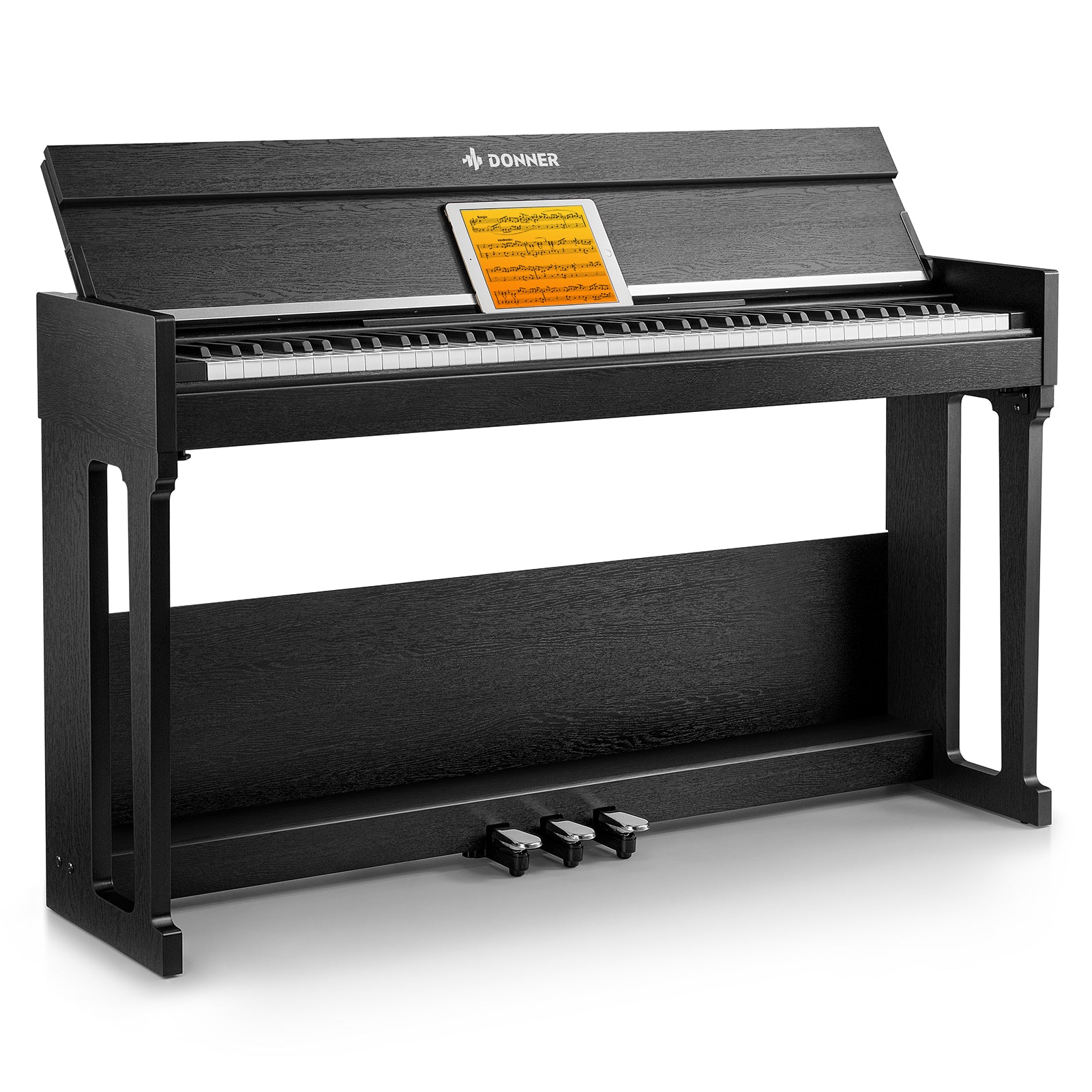
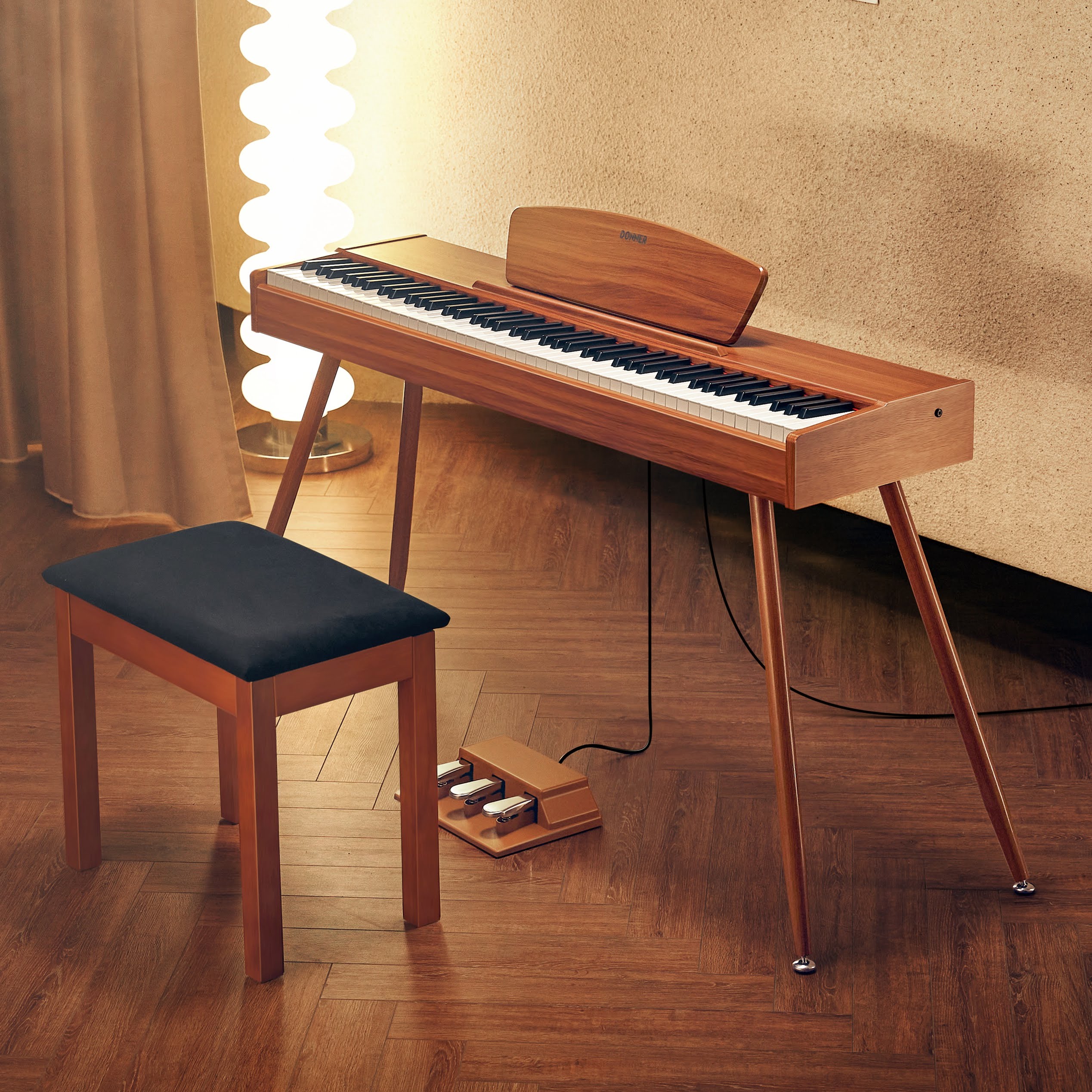
Donner DDP-60 Semi-Weighted Digital Piano Best Budget Digital Piano Overall

Pros
- Complete setup included: 3-pedal unit, music stand, and wood cabinet
- 88 semi-weighted keys with 4-level touch sensitivity
- 128-note polyphony and 128 sounds through a 30W speaker system
- USB MIDI and 5-pin MIDI for lessons and recording software
Cons
- Semi-weighted action rather than fully weighted at this price
- No Bluetooth connectivity
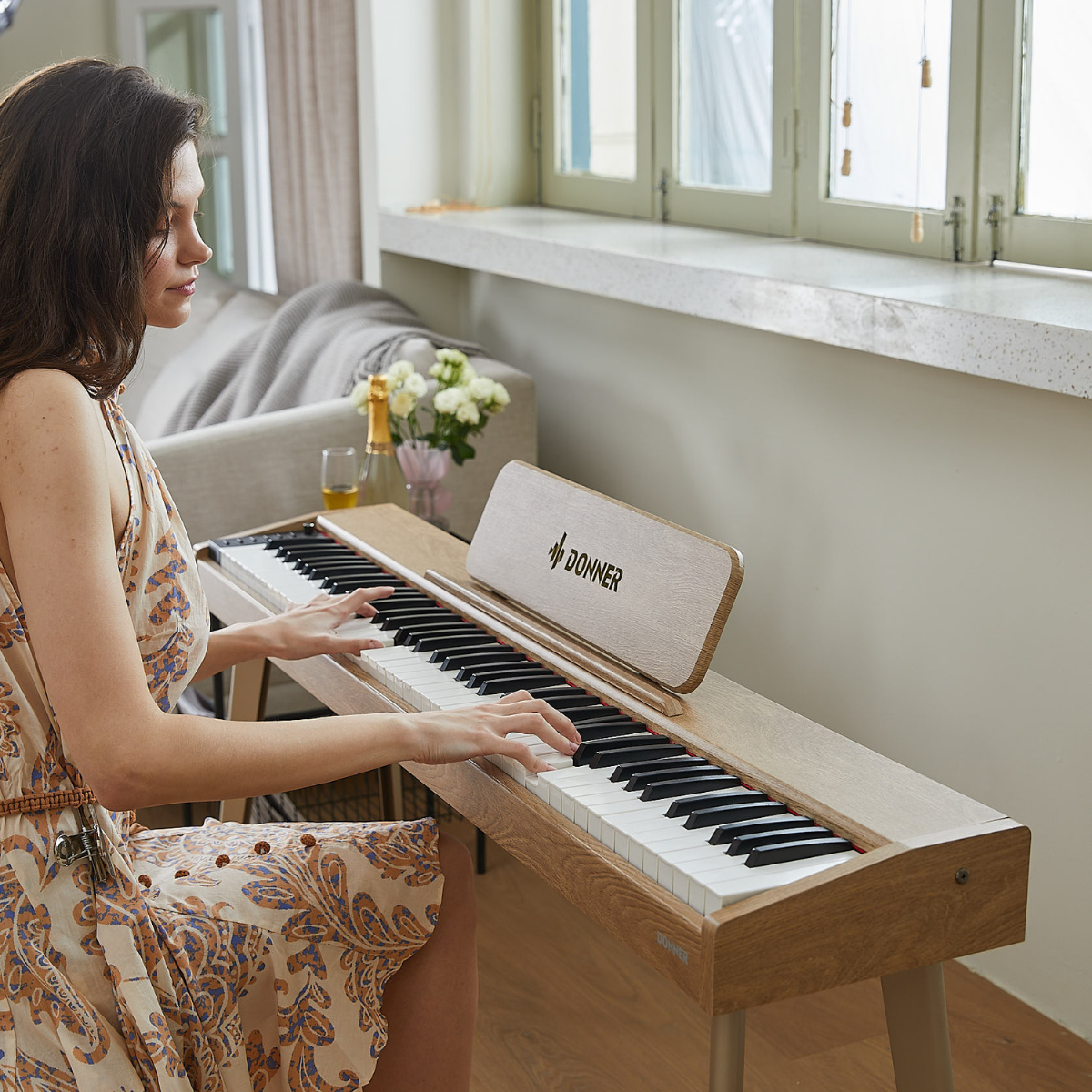
The Donner DDP-60 Semi-Weighted Digital Piano is the number-one pick because it turns a beginner's budget into a complete home setup instead of a long list of extras. Its 88 semi-weighted keys respond at four touch levels, which is enough to build good dynamics early, and the 128-note polyphony with 128 sounds and a 30W speaker system keeps up with duets and layered practice at home.
The 3-pedal unit (sustain, soft, and sostenuto), music stand, and wood cabinet are all in the box, so the piano feels like a proper instrument the day it arrives. Connections are wired — USB MIDI and 5-pin MIDI — with no Bluetooth, which matters mainly if you planned on wireless app control.
Roland FP-10 Digital Piano Best Budget Digital Piano with Hammer Action
Pros
- PHA-4 Standard hammer action with escapement and ivory-feel keys
- SuperNATURAL Piano sound with 96-voice polyphony and 36 tones
- Bluetooth MIDI and USB computer connection for app lessons
- Portable body with included damper pedal
Cons
- No 3-pedal unit included; half-pedaling requires the optional DP-10 pedal
The Roland FP-10 Digital Piano is the pick when you want a realistic hammer action without leaving the budget category. Its 88-key PHA-4 Standard keyboard includes escapement and an ivory feel, so it responds closer to an acoustic piano than a semi-weighted board, and the SuperNATURAL Piano sound with 96-voice polyphony and 36 tones gives practice a rich, responsive piano voice.
Bluetooth MIDI and a USB computer connection make it easy to pair with learning apps, and the portable body with its 6W x 2 speakers and included damper pedal keeps the setup simple. Half-pedaling needs the optional DP-10 pedal, and there is no 3-pedal unit, so plan around a single pedal for now.
Donner DEP-1S Beginner Digital Piano Kit Best Budget Beginner Digital Piano Kit

Pros
- Complete kit: double X-bar stand, sustain pedal, key stickers, and music clip included
- 88 semi-weighted velocity-sensitive keys with 5 touch levels
- Bluetooth MIDI and USB MIDI for app-based lessons
- 128 sounds and a 30W speaker system
Cons
- 64-note polyphony is lower than most other picks in this roundup
The Donner DEP-1S Beginner Digital Piano Kit is the pick for a first-time learner who wants to start playing the same day. The 88 semi-weighted velocity-sensitive keys respond at five touch levels, and the kit arrives with a double X-bar stand, sustain pedal, key stickers, and a music clip, so there is nothing else to buy for a basic setup.
Bluetooth MIDI and USB MIDI cover app-based lessons and recording, while 128 sounds and a 30W speaker system keep practice varied and full. The main trade-off is 64-note polyphony, which is lower than most picks here — fine for typical beginner pieces, but worth knowing if you plan dense two-hand chords with heavy pedal.
Yamaha P-145 Digital Piano Best Budget Portable Digital Piano
Pros
- 88-key GHC keyboard with matte black keytops
- Yamaha CFIIIS tone generation with 192-note polyphony
- Portable 24 lb 8 oz body with a USB audio interface
- Duo, Split, and built-in effects for lessons and layering
Cons
- Only 10 preset voices and no built-in 3-pedal unit
- Bluetooth is available only on the separately sold P-145B version
The Yamaha P-145 Digital Piano is the portable pick for a beginner who wants a trusted action in a lightweight body. Its 88-key GHC keyboard with matte black keytops feels solid under the fingers, and Yamaha CFIIIS tone generation delivers 192-note polyphony across 10 voices — plenty of headroom for beginner repertoire.
At 24 lb 8 oz, it moves easily between lessons and home, and the USB audio interface lets you record straight into a computer or tablet. Duo, Split, and built-in effects add flexibility for practice and duets. The main limits are 10 preset voices and no built-in 3-pedal unit, and Bluetooth is available only on the separately sold P-145B version.
Kawai ES60 Digital Piano Best Budget Digital Piano for Sound
Pros
- Harmonic Imaging sound with SK-EX concert grand samples
- 192-note maximum polyphony with 17 voices
- 20W speaker system (10W x 2)
- Portable 24 lb design with USB-MIDI
Cons
- No Bluetooth connectivity on this model
The Kawai ES60 Digital Piano is the pick for a beginner who judges a piano by its tone first. Harmonic Imaging sound draws on SK-EX concert grand samples, giving practice a warm, detailed piano voice, and 192-note maximum polyphony with 17 voices leaves plenty of room for expressive playing.
A 20W speaker system (10W x 2) fills a bedroom or living room, and the portable 24 lb body makes it easy to move. Connectivity is USB-MIDI, with no Bluetooth on this model, so plan for a wired connection if you want app-based lessons.
Williams Legato IV Digital Piano Best Ultra-Light Budget Digital Piano
Pros
- Ultra-light 20.7 lb body with 88 velocity-sensitive keys
- Dual 1/8-inch headphone outputs and a stereo aux input
- Bluetooth plus a USB interface for MIDI and stereo audio
- Budget-friendly entry point to 88 keys
Cons
- Velocity-sensitive keys feel less piano-like than weighted action
The Williams Legato IV Digital Piano is the ultra-light pick for a very tight budget and a small space. Its 88 velocity-sensitive keys sit in a 20.7 lb body you can carry from room to room, and dual 1/8-inch headphone outputs plus a stereo aux input make quiet practice and play-along straightforward.
A USB interface carries both MIDI and stereo audio to computers and tablets, and Bluetooth adds wireless flexibility. The honest trade-off is the action: keys are velocity-sensitive rather than weighted, so the feel is lighter and less piano-like than a hammer action — a fine start on a tight budget, but know what you are trading.
Donner DDP-50 Beginner Weighted Digital Piano Best Budget Weighted Digital Piano for Home

Pros
- 88 fully weighted keys with hammer action
- 375 sounds with multi-layer sampling and 100 rhythms
- Dual/Layer mode, lesson mode, and one-touch chord for guided practice
- USB MIDI connectivity
Cons
- No Bluetooth connectivity
- A sustain pedal may need to be added separately
The Donner DDP-50 Beginner Weighted Digital Piano brings a fully weighted 88-key hammer action to the lowest price point in this roundup, making it the pick for a beginner who wants realistic key weight from day one. Practice stays varied with 375 sounds, multi-layer sampling, and 100 rhythms, and Dual/Layer mode, lesson mode, and one-touch chord support guided learning.
Connectivity is USB MIDI with no Bluetooth, so app lessons will use a wired connection. The box focuses on the instrument itself, so a sustain pedal may need to be added separately for full pedaling practice.
Williams Allegro IV Digital Piano Best Budget Digital Piano with Weighted Keys
Pros
- 88 weighted velocity-sensitive keys
- Dual 1/8-inch headphone outputs and a stereo aux input
- Bluetooth plus a USB interface for MIDI and stereo audio
- Weighted feel without leaving the budget category
Cons
- 35.5 lb body is heavier than the ultra-light portables
- No 3-pedal unit included
The Williams Allegro IV Digital Piano is the pick when you want weighted keys and Bluetooth together at a budget price. Its 88 weighted velocity-sensitive keys give practice a more piano-like feel, and dual 1/8-inch headphone outputs plus a stereo aux input make quiet practice and play-along easy.
A USB interface carries MIDI and stereo audio to computers and tablets, and Bluetooth handles wireless connections. At 35.5 lb it is heavier than the ultra-light portables, so it suits a settled practice corner more than a board you move daily.
How We Choose the Best Budget Digital Piano for Beginners
Choosing a beginner's piano comes down to four questions: does it have a full 88-key range, does the action respond to how you play, will the sound hold up during practice, and can you connect it to the tools you learn with? Here is what each question means and the standard every pick in this roundup had to meet.
88 Keys for Real Piano Technique. Standard beginner repertoire spans the full keyboard, so a shorter board runs out of range quickly. Only 88-key models were considered for this list, because a full range is what lets you play real pieces and keeps the instrument useful as you progress.
Weighted or Semi-Weighted Action. Key action decides how the piano feels and how your fingers build control. Every pick in this roundup offers at least semi-weighted, velocity-sensitive keys that respond to how hard you play, and weighted or hammer action was preferred because it comes closest to an acoustic feel for building finger strength and dynamics.
Piano Sound and Polyphony. Sound is what keeps you coming back to practice, and polyphony is the headroom behind it. Polyphony had to be high enough to avoid note dropouts in beginner pieces played with the sustain pedal, so the picks here keep layered chords and held notes clean instead of cutting voices off.
Connectivity and Practice Features. A beginner's piano should work with how you learn today. A headphone output for quiet practice and USB MIDI or Bluetooth MIDI for app-based lessons were required for a spot on this list, so the roundup stays usable in a shared room and with lesson software.
FAQ About Budget Digital Pianos for Beginners
Are digital pianos good for beginners? Yes. Digital pianos need no tuning, support headphone practice, and cost far less than acoustic instruments, so a budget model lets you start immediately and upgrade later. That makes them one of the most practical first instruments a beginner can own.
How much should I spend on a first digital piano? There is no single right number, but a first-piano budget should cover the instrument plus the setup — stand, bench, and pedal. This roundup spans entry kits to mid-range models, so the range is wide; confirm current prices on the product page and choose what fits your space and routine.
Are weighted keys necessary for beginners? Not strictly, but they help. Weighted or hammer-action keys build finger control and dynamic range, while semi-weighted velocity-sensitive keys are an acceptable compromise on a tight budget. Either way, 88 keys remain the recommended standard, so focus on keys that respond to your playing.
Start Playing on the Right Budget Digital Piano
Match the piano to how you practice, not to the longest spec list. Start with key action, then sound and polyphony, then connectivity, and finally the format that belongs in your room and your budget. Answer those four questions honestly, and the right instrument usually becomes obvious.
At Donner Music, the mission is simple: make real instruments accessible to every beginner, from the first 88 keys to a complete home setup. When you are ready for the next step, browse the 88 key piano keyboard range and keep the momentum going.