








The best electric guitar is the one that fits your music, your hands, and the place where you actually play. A classic solidbody may cover rehearsals and stage work, a semi-hollow can add warmth and body, and a compact headless model can keep practice possible when space or volume is limited.
The ten picks below span classic, modern, semi-hollow, headless, and travel-focused designs. Instead of naming one universal winner, each guitar is matched to the job it does best so you can compare feel, pickup layout, hardware, and practice setup on equal terms.
The Best Electric Guitars at a Glance
Start with the playing situation you need to solve, then open the matching card for the important trade-offs.
- Donner HUSH X PRO Electric Guitar — Best compact effects guitar
- Fender Player II Stratocaster HSS Electric Guitar — Best all-round workhorse
- Gibson Les Paul Standard 60s Electric Guitar — Best classic rock icon
- Donner HLX-500 Headless Electric Guitar — Best headless solidbody
- Epiphone Les Paul Standard 60s Electric Guitar — Best affordable Les Paul
- Ibanez RG421 Electric Guitar — Best fast-neck value
- Donner HUSH X LIVE Travel Guitar with Speaker — Best travel guitar with speaker
- Gretsch G2622 Streamliner Center Block Electric Guitar — Best semi-hollow
- Donner HUSH I PRO Acoustic-Electric Travel Guitar — Best silent practice acoustic
- Yamaha Revstar Standard RSS20 Electric Guitar — Best modern value
Donner HUSH X PRO Electric Guitar Best compact effects guitar

Pros
- Effects, amp modeling, and IR import
- Headphone, Bluetooth, and USB-C support
- Travel accessories included
Cons
- Compact format differs from a full-size guitar
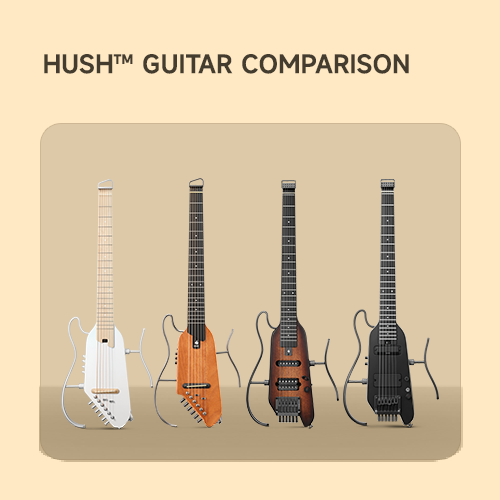
The Donner HUSH X PRO Electric Guitar is the compact choice for a player who wants effects, amp sounds, recording connections, and silent practice in one travel-friendly instrument. Its DXP system provides amp modeling, guitar-model simulation, effects, and IR import, while Bluetooth audio, USB-C/OTG, and a headphone output support play-along sessions and direct recording.
The neck-through mahogany body uses a slim C-shaped neck, a 25.5-inch scale, and 22 stainless-steel frets on a roasted maple and HPL fingerboard. Custom Alnico V pickups pair a bridge humbucker with a neck single-coil through a 3-way toggle. A deluxe travel gig bag, earphones, strap, picks, USB cable, and 1/4-inch cable are included. The compact headless design is built for movement and small spaces rather than the feel of a traditional full-size electric.
Fender Player II Stratocaster HSS Electric Guitar Best all-round workhorse
Pros
- HSS Alnico pickup range
- Rolled fingerboard edges
- Modern 2-point tremolo
Cons
- Tremolo requires more setup than a fixed bridge
The Fender Player II Stratocaster HSS Electric Guitar suits a player who wants familiar Strat sounds and a stronger bridge option in the same instrument. Player Series Alnico V single-coils cover the neck and middle positions, while an Alnico II bridge humbucker adds a thicker voice through the 5-way blade switch.
A Modern C neck has a satin urethane back, and the 9.5-inch-radius maple or slab rosewood fingerboard uses rolled edges and 22 medium jumbo frets. The body is alder, chambered ash, or chambered mahogany depending on finish. A 2-point synchronized tremolo with bent steel saddles and ClassicGear tuning machines completes a versatile solidbody, though a player who never uses vibrato may prefer a fixed bridge.
Gibson Les Paul Standard 60s Electric Guitar Best classic rock icon
Pros
- 60s Burstbucker humbuckers
- SlimTaper mahogany neck
- ABR-1 bridge and aluminum tailpiece
Cons
- Non-weight-relieved body adds weight
The Gibson Les Paul Standard 60s Electric Guitar is for a rock or blues player who wants the traditional Les Paul combination of a substantial mahogany body, carved figured maple cap, and thick dual-humbucker sound. The non-weight-relieved body preserves the full solid construction rather than reducing mass internally.
A mahogany neck uses a 60s-style SlimTaper profile with a rosewood fingerboard and 22 medium jumbo frets. The 60s Burstbucker pickups are wired to audio taper potentiometers and Orange Drop capacitors, while an ABR-1 Tune-O-Matic bridge and aluminum Stop Bar tailpiece provide the fixed-bridge layout. The solid, non-weight-relieved build may feel heavier than chambered or compact alternatives.
Donner HLX-500 Headless Electric Guitar Best headless solidbody

Pros
- Locking headless bridge tuners
- 24 frets on a full 25.5-inch scale
- Custom gig bag and strap included
Cons
- Three-position switch limits pickup combinations
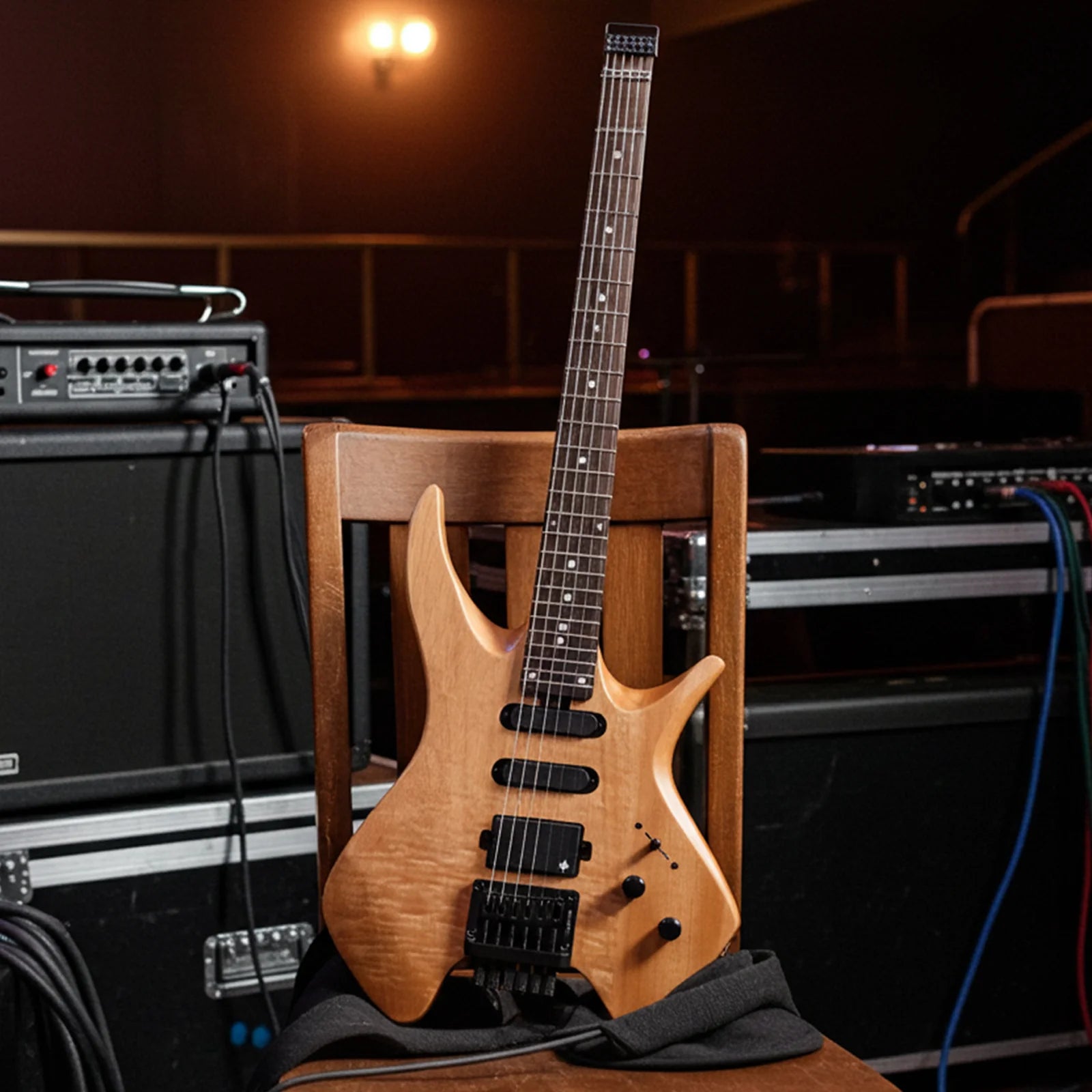
The Donner HLX-500 Headless Electric Guitar gives a player a modern solidbody with a compact footprint and locking bridge tuners. Its solid poplar body connects to a four-point bolt-on maple neck, and the headless layout shortens the instrument without turning it into a frame-style travel guitar.
The 25.5-inch scale carries 24 nickel-silver frets on a 12-inch rosewood fretboard, with a zero-fret design at the nut end. An SSH pickup configuration uses a 3-position switch with one volume and one tone control. The locking Donner Hush Headless bridge tuners keep all tuning hardware at the body, and a custom gig bag, strap, and pick are included.
Epiphone Les Paul Standard 60s Electric Guitar Best affordable Les Paul
Pros
- ProBucker humbuckers with individual controls
- Graph Tech nut
- Stable LockTone bridge
Cons
- No native single-coil pickup positions
The Epiphone Les Paul Standard 60s Electric Guitar fits a player who wants the Les Paul control layout and humbucker character at a more accessible level. A ProBucker 3 bridge pickup and ProBucker 2 neck pickup run through two volume and two tone controls with CTS potentiometers and a 3-way toggle.
The mahogany body carries an AA flame maple top, while the mahogany neck uses a laurel fingerboard, 22 frets, a 24.75-inch scale, and a Graph Tech nut. A LockTone ABR Tune-o-matic bridge provides a stable fixed platform. The focused dual-humbucker layout does not offer the native single-coil positions found on an HSS guitar.
Ibanez RG421 Electric Guitar Best fast-neck value
Pros
- Wizard III neck with 24 jumbo frets
- Quantum humbuckers with 5-way switching
- Stable F106 fixed bridge
Cons
- No tremolo for pitch effects
The Ibanez RG421 Electric Guitar is the practical choice for a rock or metal player who values a thin neck and a stable fixed bridge. Its Wizard III maple neck meets a jatoba fingerboard with 24 jumbo frets, a 25.5-inch scale, a 400 mm radius, and a 43 mm nut width, creating a flat surface for quick movement and upper-fret work.
Two passive ceramic Quantum humbuckers use a 5-way selector, expanding the available combinations beyond a basic dual-humbucker 3-way layout. The F106 fixed bridge provides individual string-height adjustment without the balancing work of a floating tremolo. The fixed design is easy to manage, but it cannot provide tremolo pitch effects.
Donner HUSH X LIVE Travel Guitar with Speaker Best travel guitar with speaker

Pros
- Detachable speaker module
- Five amp models and onboard effects
- Bluetooth backing-track playback
Cons
- Compact travel feel differs from full-size guitars
The Donner HUSH X LIVE Travel Guitar with Speaker suits a player who wants to practice without carrying a separate amplifier. Its quick-install detachable speaker module works with the travel guitar and can also work with other electric guitars, while five built-in amp models, delay, reverb, modulation, and a noise gate provide a self-contained sound system. Bluetooth playback handles backing tracks.
The neck-through body uses seven-piece African mahogany with a standard C neck profile. Original Alnico V H-S pickups combine a single-coil neck with a humbucker bridge. A gig bag and essential accessories are included. The speaker adds independence, but the headless travel format remains different from the size, balance, and body feel of a traditional full-size electric.
Gretsch G2622 Streamliner Center Block Electric Guitar Best semi-hollow
Pros
- Center block helps manage feedback
- Broad'Tron humbuckers with coil split
- Detailed individual and master controls
Cons
- Larger body adds bulk
The Gretsch G2622 Streamliner Center Block Electric Guitar gives blues, rock, and clean players a larger semi-hollow body with a center block that helps control feedback. The double-cutaway 16-inch arched laminated maple body adds semi-hollow character while remaining more manageable at amplified volume than a fully hollow design.
A Soft C-shaped nato neck uses a 24.75-inch scale, 12-inch-radius laurel fingerboard, 22 medium jumbo frets, and a bone nut. Two Broad'Tron BT-3S humbuckers feed a 3-way toggle, individual pickup volumes, and master volume and tone. A push/pull coil split broadens the pickup options, while an Adjusto-Matic bridge and V-Stop tailpiece anchor the strings. The larger body adds more bulk than a conventional solidbody.
Donner HUSH I PRO Acoustic-Electric Travel Guitar Best silent practice acoustic

Pros
- Silent monitoring and USB-C recording
- Effects and body simulations onboard
- Detachable frames for compact travel
Cons
- Limited unplugged projection
The Donner HUSH I PRO Acoustic-Electric Travel Guitar is the acoustic-style choice for a player who needs silent practice, backing tracks, and direct recording in a compact format. Bluetooth audio accepts play-along tracks, USB-C OTG sends audio to a recording device, and 1/4-inch plus 3.5 mm headphone outputs support private monitoring.
The headless acoustic-electric uses detachable metal body frames, a mahogany body with a spruce top, and a neck-through five-piece mahogany and maple neck. Its H-1 Effect System includes a 5-band EQ, Air Boost, Tone Boost, 18 effects, eight body simulations, and 20 IR slots. The 2.2 kg instrument has an eight-hour rechargeable battery and includes a travel bag, earphones, strap, tools, cables, and picks. Its compact body does not project like a full-size acoustic guitar.
Yamaha Revstar Standard RSS20 Electric Guitar Best modern value
Pros
- Chambered body reduces weight
- Alnico V humbuckers with 5-way selector
- Passive Focus Switch
Cons
- Chambered response differs from a solid body
The Yamaha Revstar Standard RSS20 Electric Guitar fits a player who wants a chambered dual-humbucker design with more switching flexibility than a simple 3-way layout. Two custom Alnico V humbuckers use a 5-position selector, and a passive Focus Switch on the push/pull tone control adds another tonal option without active electronics.
The chambered maple and mahogany body is designed to reduce weight while shaping tone, and the three-piece mahogany neck uses carbon reinforcement. That chambered construction can feel easier during a long session, but its response differs from a solid slab body.
How We Choose the Best Electric Guitar
A useful shortlist matches guitars to players rather than forcing every design into one ranking. Start with the pickup layout and the music you play, check the neck dimensions against your preferred feel, choose a body format that fits your room and performance needs, and make sure the bridge and tuners suit the amount of maintenance you want.
Pickups and Tone
Single-coils provide clear, separated sounds that suit classic clean and edge-of-breakup playing, while humbuckers produce a thicker foundation for rock, blues, and higher gain. HSS combines two single-coils with a bridge humbucker, and H-S provides a simpler two-pickup version of that contrast. Dual-humbucker guitars can expand their range through 5-way switching or coil splitting.
Neck and Playability
Neck profile determines how much wood fills your hand, while scale length changes fret spacing and string tension. Fingerboard radius influences the curve beneath the strings: a flatter radius generally supports wide bends and fast movement, while fret size changes how much finger pressure reaches the board. The best neck is the one that stays comfortable through your normal practice or performance length.
Body Type and Weight
A full-size solidbody is the familiar choice for stage and studio work. A semi-hollow body adds a larger resonant structure and requires more room, while a headless solidbody shortens the overall footprint without removing the central body. Frame-style and compact travel guitars save the most space and support quiet practice, but their balance and acoustic response differ from traditional designs.
Hardware and Long-Term Fit
A fixed bridge keeps tuning and string changes straightforward, while a synchronized tremolo adds pitch movement with more setup work. Stable tuners, a well-supported neck, and reliable bridge adjustment matter because they affect intonation and day-to-day tuning. Choose hardware for the techniques you use rather than paying for a system that will remain untouched.
FAQ About the Best Electric Guitar
The answers below turn broad guitar categories into practical choices for your playing level, sound, and practice space.
What is the best electric guitar?
The best electric guitar depends on the job. Choose an HSS solidbody for broad all-round use, a dual-humbucker guitar for rock and blues, a thin-neck fixed-bridge model for fast modern playing, a semi-hollow for added body character, or a compact headless guitar for quiet and portable practice.
What is the best electric guitar for beginners?
The best beginner electric guitar has a comfortable neck, stable hardware, and controls that make sense without constant adjustment. A simple fixed bridge can reduce setup work, while an HSS layout gives a beginner several useful pickup sounds. A higher price matters less than a guitar that stays in tune and feels easy to pick up every day.
Which electric guitar brand is best?
No single electric guitar brand is best for every player. Judge the specific model by its neck, pickup layout, bridge, body format, and intended use. One brand may be stronger for a classic solidbody, another for fast modern designs, and another for compact silent-practice instruments.
What makes an electric guitar high quality?
A high-quality electric guitar has consistent fretwork, stable tuning, a neck that feels comfortable, hardware that adjusts reliably, and pickups suited to the player’s music. Decorative materials can add appeal, but playability and tuning stability affect every practice session and performance.
Should I choose a solidbody, semi-hollow, or compact travel guitar?
Choose a solidbody for amplified versatility and familiar stage use, a semi-hollow for a larger body and warmer hollow-body character, or a compact travel guitar when quiet practice, storage, and movement matter most. The right format is the one you can use comfortably in your normal room and routine.
Find Your Next Electric Guitar at Donner
Choose the sound and format before the feature list: classic solidbody, fast modern neck, semi-hollow character, or compact silent practice. Donner builds headless and travel-ready options for space-conscious players, and the electric guitars collection makes it easier to compare the setup that fits your music.