








The best electric guitars under 1000 is no longer defined by one body shape or pickup formula. Within this range, an advancing player can look for more comfortable neck work, useful pickup combinations, stable hardware, and instruments designed for stage, studio, travel, or silent practice.
The ten picks below include solidbody electrics, a semi-hollow model, and compact acoustic-electric options. Each one is matched to the job it does best, so you can choose by playing style, practice space, and tonal goal instead of treating every guitar as the same kind of upgrade.

The Best Electric Guitars Under $1000 at a Glance
Start with the sound, feel, or practice limitation you want the next guitar to solve.
- Fender Player II Stratocaster HSS Electric Guitar — Best all-round under 1000
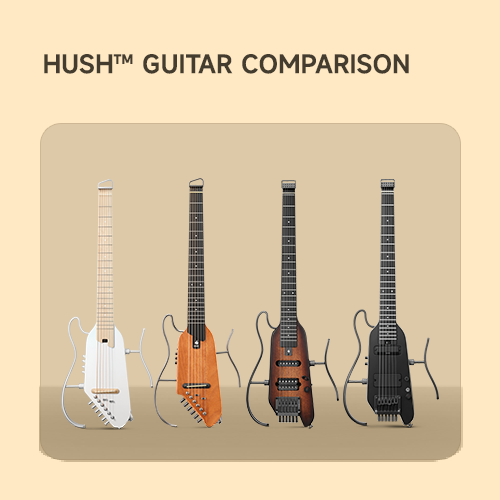
- Donner HUSH X PRO Electric Guitar — Best compact effects guitar
- Epiphone Les Paul Standard 60s Electric Guitar — Best classic rock pick
- Taylor GS Mini-e — Best compact acoustic-electric
- Donner HUSH X LIVE PRO Guitar x MIYAVI — Best travel guitar with speaker
- Ibanez RG421 Electric Guitar — Best fast-neck hard rock pick
- Yamaha Revstar Standard RSS20 Electric Guitar — Best chambered versatility
- Gretsch G2622 Streamliner Center Block Electric Guitar — Best semi-hollow
- Donner HUSH I PRO Acoustic-Electric Travel Guitar — Best silent practice acoustic
- Martin D Jr E Acoustic-Electric Guitar — Best small-body acoustic-electric
Fender Player II Stratocaster HSS Electric Guitar Best all-round under 1000
Pros
- HSS Alnico pickup range
- Rolled fingerboard edges
- Modern 2-point tremolo
Cons
- Tremolo adds setup complexity
The Fender Player II Stratocaster HSS Electric Guitar is the all-round choice for an intermediate player who wants classic Strat positions without giving up a stronger bridge voice. Player Series Alnico V single-coils cover the neck and middle positions, while an Alnico II bridge humbucker adds the thicker option through a 5-way blade switch.
A Modern C neck with a satin urethane back supports longer sessions, and the 9.5-inch-radius maple or slab rosewood fingerboard has rolled edges and 22 medium jumbo frets. The body is alder, chambered ash, or chambered mahogany depending on finish. A 2-point synchronized tremolo with bent steel saddles and ClassicGear tuning machines gives the guitar a modernized Strat hardware layout, although players who never use vibrato may prefer the simplicity of a fixed bridge.
Donner HUSH X PRO Electric Guitar Best compact effects guitar

Pros
- DXP effects, modeling, and IR import
- Headphone, Bluetooth, and USB-C support
- Travel accessories included
Cons
- Compact format differs from a full-size electric
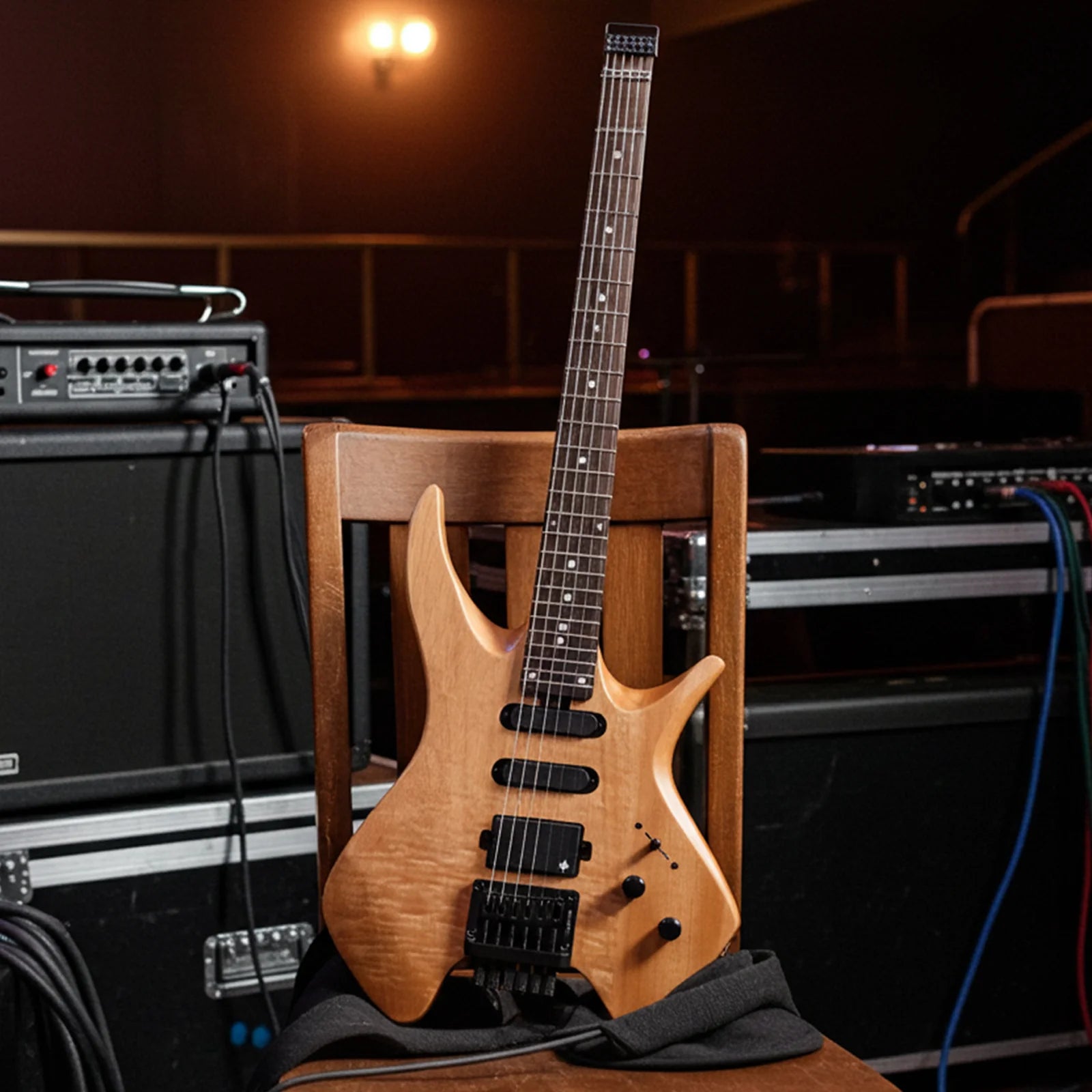
The Donner HUSH X PRO Electric Guitar gives an advancing player a complete compact effects setup for travel, a small room, or late-night work. Its DXP system handles amp modeling, guitar-model simulation, effects, and IR import inside the instrument, while Bluetooth audio, USB-C/OTG, and a headphone output cover backing tracks, recording, and silent practice.
The neck-through mahogany body uses a slim C-shaped neck, a 25.5-inch scale, and 22 stainless-steel frets on a roasted maple and HPL fingerboard. Custom Alnico V pickups pair a bridge humbucker with a neck single-coil through a 3-way toggle. A deluxe travel gig bag, earphones, strap, picks, USB cable, and 1/4-inch cable are included. The compact headless format is the point, but it does not feel or resonate like a traditional full-size solidbody.
Epiphone Les Paul Standard 60s Electric Guitar Best classic rock pick
Pros
- ProBucker humbuckers with individual controls
- Graph Tech nut
- Fixed LockTone bridge
Cons
- No native single-coil pickup positions
The Epiphone Les Paul Standard 60s Electric Guitar is the direct route for a rock or blues player who wants a dual-humbucker instrument with familiar Les Paul controls. A ProBucker 3 at the bridge and ProBucker 2 at the neck run through separate volume and tone controls with CTS potentiometers and a 3-way toggle.
The mahogany body carries an AA flame maple top, while the mahogany neck uses a laurel fingerboard, 22 frets, a 24.75-inch scale, and a Graph Tech nut. A LockTone ABR Tune-o-matic bridge provides a fixed platform for the player who values straightforward tuning and sustain over tremolo effects. The trade-off is specialization: the two-humbucker layout does not provide the native single-coil positions of an HSS guitar.
Taylor GS Mini-e Best compact acoustic-electric
Pros
- Compact Grand Symphony body
- ES-B pickup with built-in tuner
- Slender neck profile
Cons
- Not built for solidbody electric tones
The Taylor GS Mini-e suits a player who wants an acoustic-electric that is easy to keep beside the couch, carry to a lesson, or take on a trip. Its scaled-down Grand Symphony body keeps the instrument compact, while the slender Taylor neck uses a 1-11/16-inch width for a familiar acoustic playing surface.
A solid top works with layered back and sides, and the ES-B electronics provide volume and tone controls plus a built-in digital tuner with an LED display. This is the pick for acoustic-style practice with onboard electronics, not for the magnetic-pickup tones, effects response, or high-gain role of a solidbody electric.
Donner HUSH X LIVE PRO Guitar x MIYAVI Best travel guitar with speaker

Pros
- Quick-install detachable speaker
- Five amp models and multi-effects
- Alnico V H-S pickups
Cons
- Compact travel format, not a full-size rig
The Donner HUSH X LIVE PRO Guitar x MIYAVI fits a player who wants a headless travel guitar that can make sound without a separate practice amp. A quick-install detachable speaker module works with built-in amplifier simulation and multi-effects, including five amp models that span clean, blues, rock, and high-gain sounds. Bluetooth accompaniment adds a simple play-along path.
The neck-through body uses seven-piece African mahogany and a standard C neck profile. Original Alnico V H-S pickups combine a single-coil neck with a humbucker bridge, keeping a magnetic-pickup foundation beneath the onboard processing. A gig bag and essential accessories are included. The detachable speaker improves independence, but this remains a compact headless travel design rather than a traditional full-size guitar-and-amp rig.
Ibanez RG421 Electric Guitar Best fast-neck hard rock pick
Pros
- Wizard III neck with 24 jumbo frets
- Quantum humbuckers with 5-way switching
- Stable F106 fixed bridge
Cons
- No tremolo for pitch effects
The Ibanez RG421 Electric Guitar is the practical hard-rock choice for a player who wants a thin neck and fixed-bridge stability. Its Wizard III maple neck meets a jatoba fingerboard with 24 jumbo frets, a 25.5-inch scale, a 400 mm radius, and a 43 mm nut width, creating a flat playing surface for fast movement and upper-register work.
Two passive ceramic Quantum humbuckers use a 5-way selector, giving the dual-humbucker layout more switching options than a basic 3-way design. The F106 fixed bridge allows independent string-height adjustment and avoids the balancing work of a floating tremolo. Players who rely on pitch dives, however, will need a different bridge system.
Yamaha Revstar Standard RSS20 Electric Guitar Best chambered versatility
Pros
- Chambered body reduces weight
- Alnico V humbuckers with 5-way selector
- Passive Focus Switch
Cons
- Chambered response differs from a solid body
The Yamaha Revstar Standard RSS20 Electric Guitar matches an intermediate player who wants dual-humbucker weight and body without a limited two- or three-sound control layout. Two custom Alnico V humbuckers feed a 5-position selector, and a passive Focus Switch on the push/pull tone control adds another way to shape the response without active electronics.
Its chambered maple and mahogany body is designed to reduce weight while shaping tone, and the three-piece mahogany neck uses carbon reinforcement. The chambered construction is the defining choice: it can feel easier across a long session, but it does not behave exactly like a solid slab body.
Gretsch G2622 Streamliner Center Block Electric Guitar Best semi-hollow
Pros
- Center block helps control feedback
- Broad'Tron humbuckers with coil split
- Individual and master volume controls
Cons
- Larger body adds bulk
The Gretsch G2622 Streamliner Center Block Electric Guitar gives blues, rock, and clean players semi-hollow character with a center block that helps control feedback. Its double-cutaway 16-inch arched laminated maple body is larger than a solidbody, while the chambered center block keeps the design usable at amplified volume.
A Soft C-shaped nato neck, 24.75-inch scale, 12-inch-radius laurel fingerboard, 22 medium jumbo frets, and a bone nut define the playing surface. Two Broad'Tron BT-3S humbuckers use a 3-way toggle, individual pickup volumes, and master volume and tone. A push/pull coil split on the master volume broadens the control set, and an Adjusto-Matic bridge with a V-Stop tailpiece anchors the strings.
Donner HUSH I PRO Acoustic-Electric Travel Guitar Best silent practice acoustic

Pros
- Silent monitoring and USB-C recording
- Effects and body simulations onboard
- Detachable frames for travel
Cons
- Limited unplugged projection
The Donner HUSH I PRO Acoustic-Electric Travel Guitar is the acoustic-style option for a player who needs silent practice, compact storage, and direct recording. Bluetooth audio brings in backing tracks, USB-C OTG sends a recording signal out, and 1/4-inch plus 3.5 mm headphone outputs support private monitoring.
The headless design uses detachable metal body frames, a mahogany body with a spruce top, and a neck-through five-piece mahogany and maple neck. Its H-1 Effect System includes a 5-band EQ, Air Boost, Tone Boost, 18 effects, eight body simulations, and 20 IR slots. The 24.75-inch scale carries 20 stainless-steel frets, and the 2.2 kg instrument runs for up to eight hours on a rechargeable battery. A travel bag, earphones, strap, tools, cables, and picks are included, but the compact body is not intended to project like a full-size acoustic.
Martin D Jr E Acoustic-Electric Guitar Best small-body acoustic-electric
Pros
- Solid spruce top
- Martin E1 electronics
- Softshell case included
Cons
- Smaller body limits maximum projection
The Martin D Jr E Acoustic-Electric Guitar suits a player who wants a compact acoustic with a more traditional body and onboard electronics. Its D Junior 14-fret shape is travel-friendly, while a solid spruce top and sapele back and sides provide the core acoustic construction.
The High-Performance Taper neck uses a 1 3/4-inch fingerboard width at the nut, giving the fretting hand more room than narrower compact acoustics. Martin E1 electronics handle the plugged-in role, and a softshell case is included. The D Junior body remains smaller than a full-size acoustic, so choose it for comfort and movement rather than maximum unplugged projection.
How We Choose Electric Guitars Under $1000
A serious upgrade should solve a limitation you can already name. Compare the neck and frets against the way you bend and move, match the pickups to the sounds you use, choose hardware that fits your tolerance for setup work, and decide whether your routine needs a solidbody, semi-hollow, or acoustic-electric format.
Playability and Neck Comfort
Neck profile, fingerboard radius, fret size, and scale length shape the physical side of an upgrade. A slim neck and flatter radius can support fast movement and wide bends, while a rounder profile may feel more substantial in the hand. Medium jumbo or jumbo frets change how much pressure you need, and scale length affects both fret spacing and string tension. The useful choice is the one that remains comfortable through a full practice or rehearsal.
Pickups and Tone Range
Single-coils emphasize the clear, separated voices associated with classic Strat-style sounds, while humbuckers provide a thicker foundation for rock, blues, and higher gain. An HSS layout combines both in one guitar, and an H-S travel layout offers a similar contrast with fewer switch positions. Dual-humbucker guitars can still broaden their range through 5-way switching, coil splitting, or additional passive controls.
Hardware and Tuning Stability
A fixed bridge is the low-maintenance choice for stable tuning, alternate tunings, and straightforward string changes. A synchronized tremolo adds expressive pitch movement but asks for more setup attention, especially when string gauge or tuning changes. A headless system reduces overall length and can suit travel or compact storage, although the playing balance and restringing method differ from a conventional headstock design.
Solidbody or Acoustic-Electric
Choose a solidbody when magnetic pickups, effects, and amplified electric tone are central to the music. Choose an acoustic-electric when you want acoustic-style practice, unplugged sound, or direct stage and recording electronics. Compact acoustic-electrics trade some natural projection for portability and quiet practice, while a semi-hollow electric sits between the formats with a larger resonant body and magnetic pickups.
FAQ About Electric Guitars Under $1000
These answers focus on the decision that matters after the budget is set: which format and feature set will change the way you actually play.
What is the best electric guitar under $1000?
The best electric guitar under $1000 depends on the sound and format you need. Choose HSS for single-coil clarity plus a stronger bridge voice, dual humbuckers for rock and blues, a semi-hollow for warmer body character, a thin fast neck for hard rock, or a compact headless model for travel and silent practice.
What is the best acoustic electric guitar under $1000?
Choose a compact acoustic-electric when travel, couch practice, or quiet headphone work matters most, and choose a more traditional small- or full-size acoustic-electric when natural projection and acoustic-style performance lead the decision. Onboard electronics, neck width, body size, and the included case or travel system separate the options.
What should I look for in an electric guitar under $1000?
Look for a neck profile and fret setup that remain comfortable, hardware that holds tuning through the techniques you use, and pickups that cover your main sounds without unnecessary controls. Then match the body type to the setting: solidbody for amplified electric work, semi-hollow for added resonance, or acoustic-electric for unplugged and acoustic-style performance.
Is a solidbody or acoustic-electric guitar better under $1000?
A solidbody is better when you want magnetic-pickup tone, effects, high gain, and amplified band use. An acoustic-electric is better when unplugged practice, acoustic-style performance, or direct acoustic recording matters more. Neither format is universally better; the right one supports the sound and room you use most often.
Are guitars under $1000 worth it for intermediate players?
Yes, guitars under $1000 can be worthwhile for intermediate players when the instrument improves a feature they will use every session. Better neck comfort, more stable hardware, a broader pickup layout, or a body format that fits the practice space can all justify the step up; unused features cannot.
Find Your Next Electric Guitar at Donner
Name the job first: versatile stage guitar, classic humbucker sound, fast fixed-bridge playing, semi-hollow warmth, or compact silent practice. Donner builds travel-ready and effects-focused options for smaller spaces, while the electric guitars collection lets you compare the format that best supports your next step.