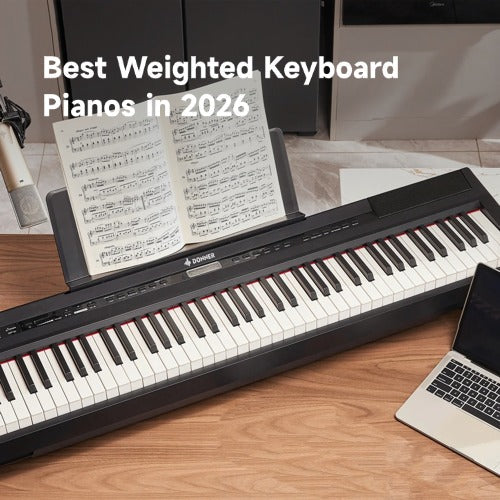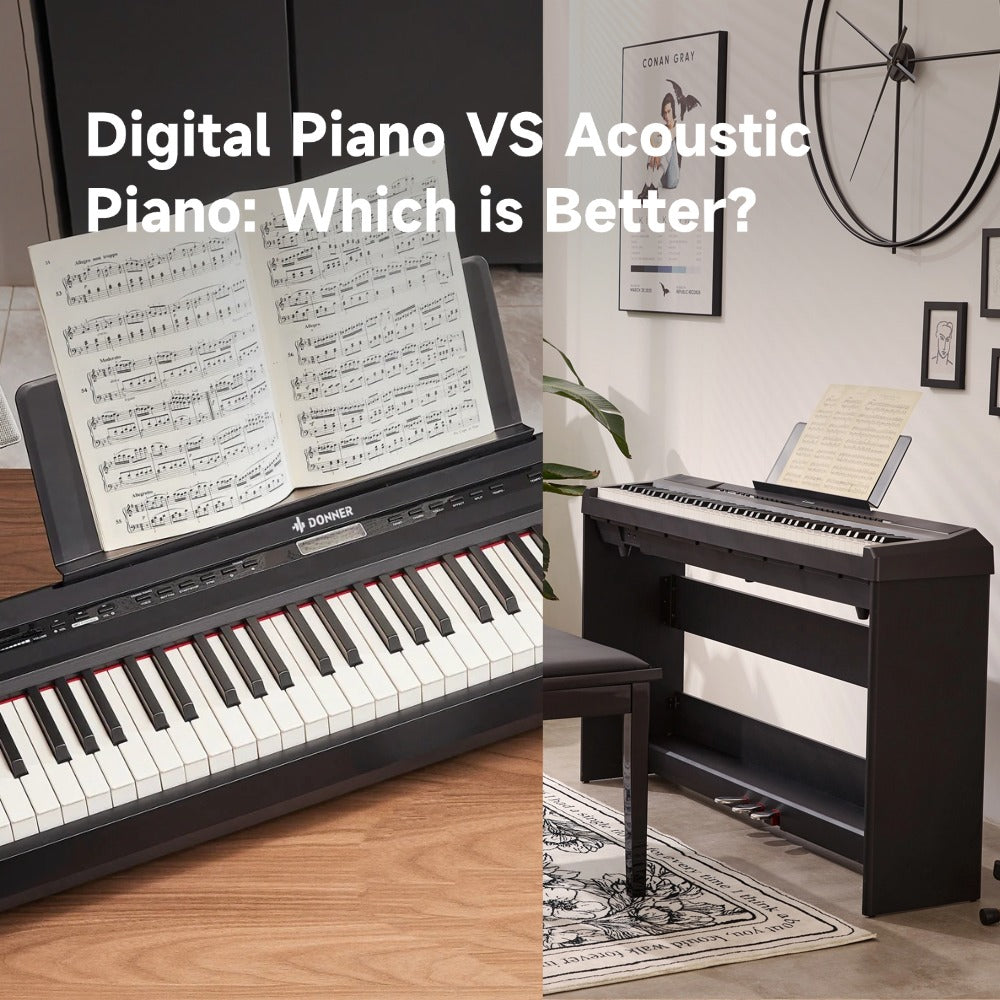







We spent weeks testing and comparing the most popular budget keyboard pianos on the market to help you find the right one — whether you're a complete beginner, a parent shopping for a child, or someone looking to pick up a creative hobby without spending a fortune.
Table of Contents
- Donner's 8 Top Picks of Budget Keyboard Pianos
-
Budget Piano Keyboards In-Depth Reviews
- Donner DP-06 — Best Portable & Folding
- Yamaha PSR-E283 — Best Brand Reliability
- Eastar KIDO V-20 — Best for Kids
- Casio CT-S200 — Best Ultra-Portable
- Yamaha PSR-E383 — Best Touch-Sensitive
- Donner DEP-20 — Best for Adult Beginners
- Alesis Melody 61 MK4 — Best Ultra-Budget Kit
- Casio CT-X700 — Best Sound Engine
- How to Choose a Budget Piano Keyboard?
- FAQ
- Final Verdict
Our Top Picks at a Glance
| Model | Best For | Keys | Key Action | Voices / Rhythms | What's in the Box | Price |
|---|---|---|---|---|---|---|
| Donner DP-06 | Portability & folding | 61 | Touch-sensitive | 200+ / 200+ | Bag, pedal, music rest | ~$100 |
| Yamaha PSR-E283 | Brand reliability | 61 | Synth-action | 410 / 150 | Music rest only | ~$140 |
| Eastar KIDO V-20 | Kids ages 4-10 | 49 | Synth-action | 100+ / 100+ | Stand, mic, stickers | ~$70 |
| Casio CT-S200 | Ultra-lightweight | 61 | Synth-action | 400 / 77 | Music rest only | ~$150 |
| Yamaha PSR-E383 | Touch-sensitive feel | 61 | Touch-sensitive | 650 / 260 | Music rest only | ~$190 |
| Donner DEP-20 | Adult beginners | 88 | Touch-sensitive | 200+ / 100+ | Stand, sustain pedal | ~$160 |
| Alesis Melody 61 MK4 | Budget full kit | 61 | Synth-action | 300 / 300 | Stand, stool, mic, headphones | ~$90 |
| Casio CT-X700 | Sound quality | 61 | Touch-sensitive | 600 / 195 | Music rest only | ~$210 |
Best Budget Keyboard Pianos — In-Depth Reviews
Donner DP-06 Keyboard Piano — Best Portable & Folding Design
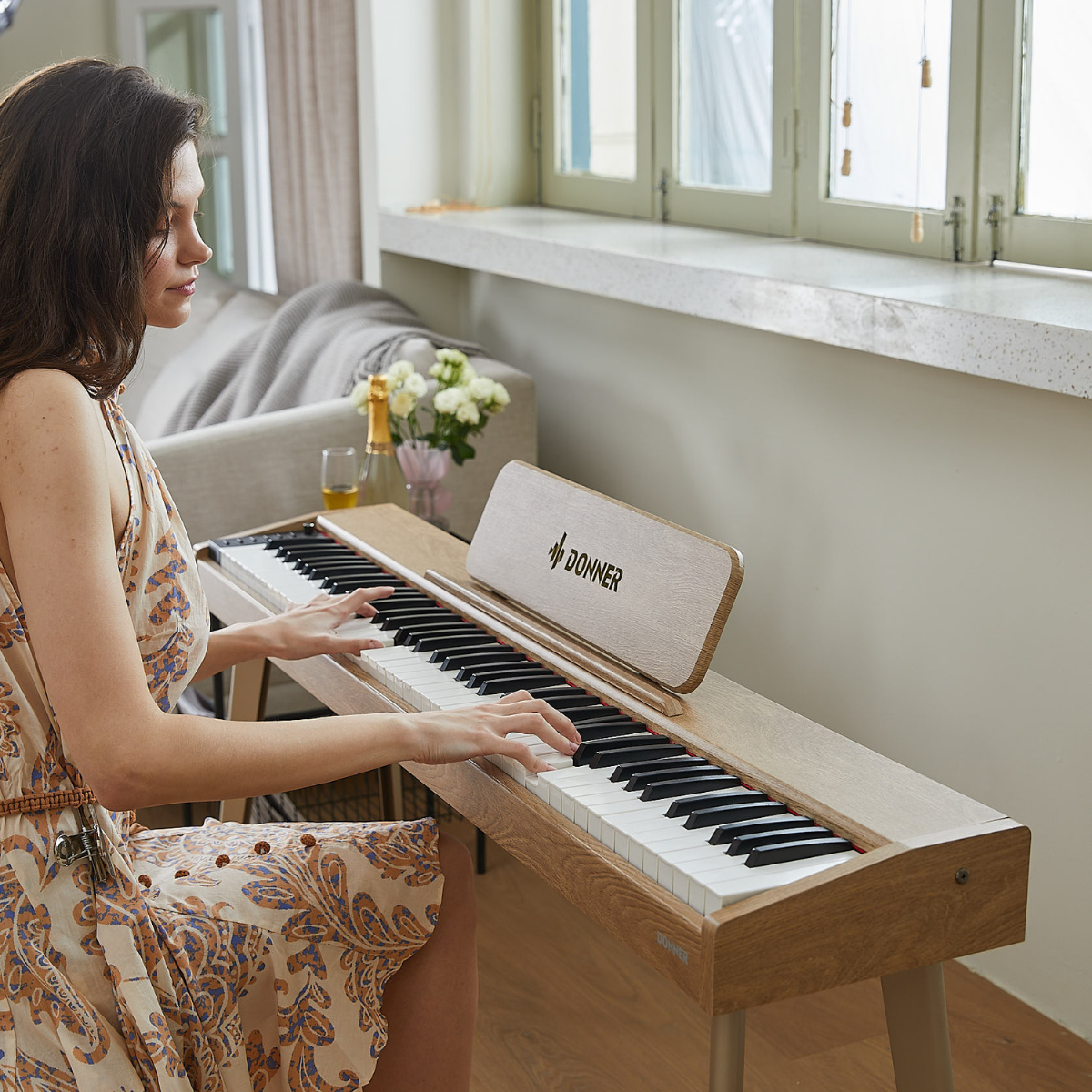
The Donner DP-06 keyboard piano solves a problem no other budget keyboard piano even attempts to address — it folds in half. When collapsed, the Donner DP-06 keyboard piano is roughly the size of a large laptop bag.
The folding mechanism uses a reinforced central joint that clicks firmly when locked. After dozens of fold-unfold cycles during testing, the hinge showed no loosening and the keys stayed properly aligned.
At roughly 8 pounds, the Donner DP-06 keyboard piano is light enough to carry under one arm. The included padded bag makes transporting it practical — you can toss it in a trunk or set it up on a coffee table in 30 seconds.
The Donner DP-06 keyboard piano offers over 200 voices and a matching library of accompaniment rhythms. Its touch-sensitive keys respond to how hard you press, and Bluetooth connectivity lets you pair it with the Donner Play App for interactive lessons.
The touch-sensitive keys lean lighter than a traditional piano. For casual learners and anyone who values portability above all else, the trade-off is well worth it.
Why it stands out: No other budget keyboard piano on the market folds for storage and travel. If portability is your number one priority, this is the clear pick.
Pros
- Unique folding design — collapses to half its playing size
- Bluetooth for wireless connection to learning apps
- Touch-sensitive keys with velocity response
- Includes padded carrying bag, sustain pedal, and music rest
- Weighs only ~8 lbs, genuinely portable
Cons
- Key action is lighter than a traditional piano — not ideal for advanced finger strength training
- Built-in speakers are adequate for personal practice but lack deep bass projection
- Voice quality is good for the price but doesn't match Yamaha or Casio entry-level sound engines

Yamaha PSR-E283 Keyboard Piano — Best for No-Regret Brand Reliability
The Yamaha PSR-E283 keyboard piano is the safest bet on this list if your approach is "I just want something that works and sounds good." Yamaha's decades of instrument-making experience show in the 410 built-in voices, which draw from the company's professional sampling libraries rather than generic synth patches.
The Y.E.S. (Yamaha Education Suite) lesson system breaks songs into left-hand and right-hand parts for independent practice. A quiz mode builds note-recognition speed, and the Duo mode splits the keyboard into two identical pitch ranges so a teacher and student can sit side by side.
The Yamaha PSR-E283 keyboard piano uses synth-action keys with no touch sensitivity, meaning every note plays at the same volume regardless of how you press it. The box includes only the keyboard piano and a music rest — you will need to budget separately for a stand (~$25) and a sustain pedal (~$15).
Why it stands out: Yamaha's refined sound engine and teaching system deliver the most polished beginner experience from a brand-trust perspective.
Pros
- 410 high-quality voices backed by Yamaha's sampling expertise
- Y.E.S. lesson system with hand-separation and quiz modes
- Duo mode for teacher/student side-by-side practice
- Strong resale value compared to lesser-known brands
Cons
- Synth-action keys with no touch sensitivity
- Accessories (stand, pedal) not included — factor in an extra $35-50
- Limited to 32-note polyphony — complex pedal-heavy playing may drop notes
[IMG: Yamaha PSR-E283 keyboard piano product shot — clean white background, front-facing]
Eastar KIDO V-20 Keyboard Piano — Best for Kids
Most budget keyboard pianos marketed for children are either cheap toys that sound terrible within a week or full-size instruments that overwhelm a 6-year-old with hundreds of buttons. The Eastar KIDO V-20 keyboard piano, part of Donner's children's instrument lineup, is a real musical instrument scaled to a child's world.
The Eastar KIDO V-20 keyboard piano includes a library of pre-loaded songs with light-up keys that show which note to play next. The tempo is adjustable, so a child can slow a song down while learning and speed up as they improve. A record-and-playback function lets young players capture and review their performances.
The chassis uses resilient plastic that held up to multiple drop tests during our evaluation. Buttons and knobs sit slightly recessed to resist curious fingers. A headphone jack lets kids practice silently — a feature parents will appreciate.
The Eastar KIDO V-20 keyboard piano ships with a small adjustable stand, a basic sustain pedal, colorful key stickers, and a microphone. The microphone input adds a karaoke element that younger children enjoy.
Why it stands out: This is a purpose-built children's keyboard piano with light-up learning, child-scaled design, and all accessories included — not a generic budget model with a "kids mode" sticker.
Pros
- Light-up key learning system with tempo-adjustable songs
- 49 keys sized appropriately for children's hands
- Kid-proof build — survived drop tests, recessed controls
- Includes stand, sustain pedal, microphone, and key stickers
- Headphone jack for silent practice
Cons
- 49-key range limits repertoire — outgrown within 2-3 years
- Voice and rhythm selection is modest compared to adult-oriented keyboard pianos
- Synth-action keys don't prepare fingers for weighted piano feel

Casio CT-S200 Keyboard Piano — Best Ultra-Portable Lightweight
At 7.3 pounds and powered by six AA batteries, the Casio CT-S200 keyboard piano is the grab-and-go option on this list. A built-in carrying handle is molded into the top edge, and the matte finish resists fingerprints.
The Casio CT-S200 keyboard piano delivers 400 tones with a notably clear grand piano sample. Dance Music Mode splits the keyboard into drum, bass, and synth zones for triggering patterns and effects — part instrument, part groovebox.
A bass-reflex port system borrowed from Casio's audio division helps the built-in speakers sound surprisingly loud and clear for such a thin body. USB-MIDI is included for connecting to a computer. However, the Casio CT-S200 keyboard piano ships without accessories and uses synth-action keys with no touch sensitivity.
Why it stands out: 7.3 pounds, battery-powered, with a built-in handle. No other keyboard piano on this list is this easy to move around.
Pros
- Extremely lightweight at 7.3 lbs with built-in carrying handle
- Runs on 6 AA batteries — truly wireless practice
- 400 tones with notably good grand piano sample
- Dance Music Mode for creative groove-making
- USB-MIDI
Cons
- No touch sensitivity on keys
- No accessories included
- Synth-action key feel is basic

Yamaha PSR-E383 Keyboard Piano — Best Touch-Sensitive Upgrade
The Yamaha PSR-E383 keyboard piano takes the approachable design of the PSR-E283 and adds touch-sensitive keys — the single feature that transforms a keyboard piano from a note-triggering device into an expressive instrument. Press lightly for soft, intimate notes; dig in harder for fuller, louder tones.
Yamaha expanded the voice library to 650 sounds, with a noticeably richer grand piano sample that has better sustain decay and a wider stereo image through headphones. The accompaniment system grows to 260 styles, and polyphony doubles to 48 notes.
The Yamaha PSR-E383 keyboard piano adds a USB audio interface alongside USB-MIDI, so you can record directly into a DAW with one cable. A sampling function lets you capture external sounds and assign them to keys.
Like the PSR-E283, the Yamaha PSR-E383 keyboard piano ships without a stand or pedal. The touch-sensitive keybed uses springs rather than hammers, and at ~$190 the price approaches used entry-level digital piano territory.
Why it stands out: Touch-sensitive keys plus USB audio recording capability in a familiar, beginner-friendly Yamaha package.
Pros
- Touch-sensitive keys with smooth velocity response for expressive playing
- 650 voices with upgraded piano sample quality
- USB audio + MIDI — record directly to computer with one cable
- Sampling function for creating custom sounds
- 48-note polyphony handles layered playing well
Cons
- No accessories included — stand and pedal sold separately
- Spring-based key action, not hammer action
- At ~$190, approaches the used digital piano price tier

Donner DEP-20 Keyboard Piano — Best for Adult Beginners Ready to Commit
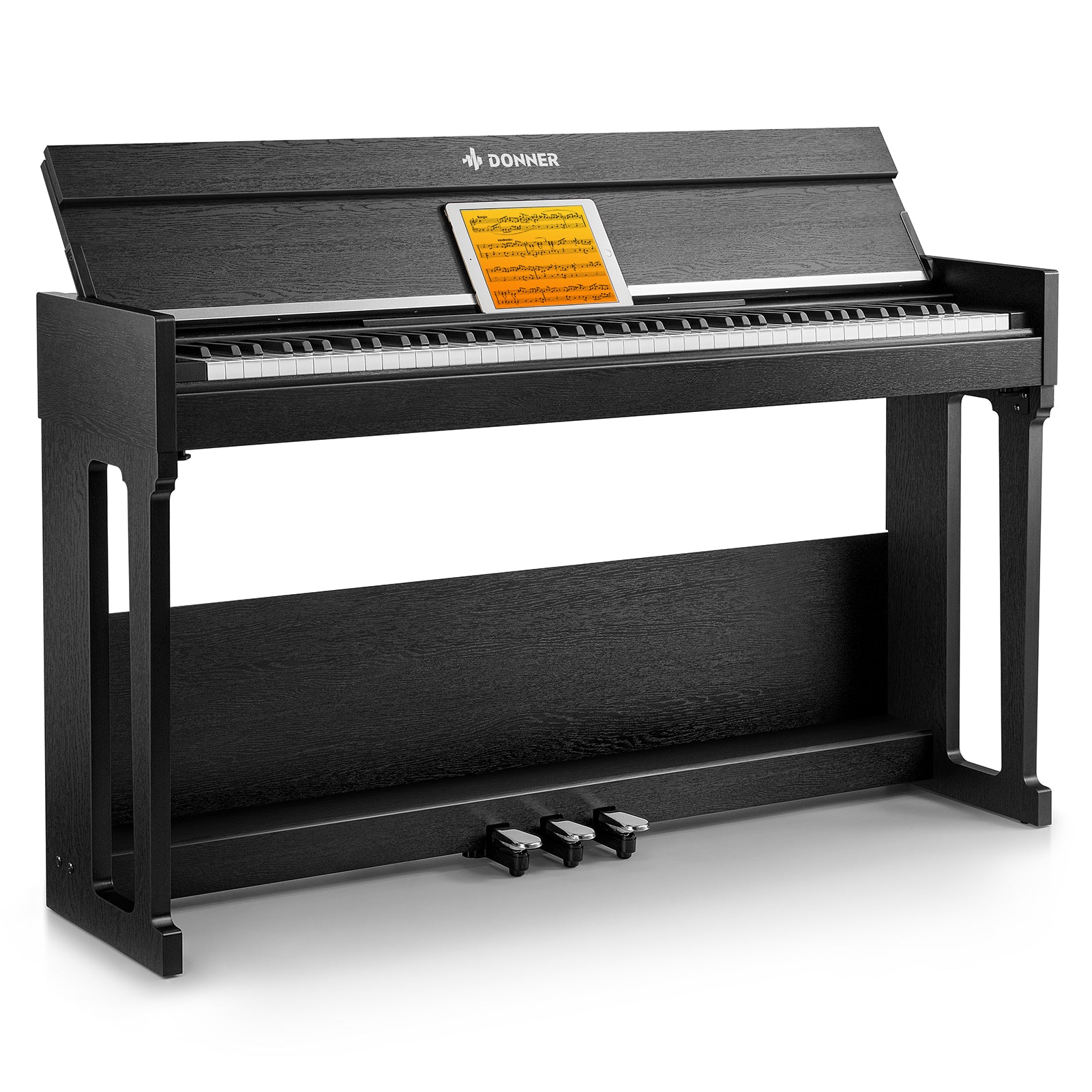
The Donner DEP-20 keyboard piano targets the adult beginner who is serious about learning music but not willing to spend $400+ on a digital piano. A full 88-key layout with touch-sensitive keys provides the note range and dynamic control needed to build proper playing habits from day one.
Most budget keyboard pianos in this price range ship with 61 keys. The Donner DEP-20 keyboard piano gives you all 88, which means you will never encounter a piece you cannot physically play because your instrument ran out of notes. The touch-sensitive keys respond across the full range, producing quiet tones when played softly and fuller sound when struck harder.
The Donner DEP-20 keyboard piano comes loaded with instrument voices spanning acoustic and electric pianos, organs, strings, brass, and synth pads, plus accompaniment rhythms across pop, rock, jazz, and Latin styles. The auto-accompaniment system follows your chord changes and generates backing tracks in real time.
USB-MIDI lets you connect the Donner DEP-20 keyboard piano to any DAW or learning app. Donner ships it with a sturdy X-style stand and a sustain pedal, so the keyboard piano is ready to play out of the box.
The touch-sensitive keys use a spring-based mechanism rather than hammer action. For a complete beginner, the difference is subtle during the first year. For someone who has played acoustic pianos, the lighter resistance is noticeable. The Donner DEP-20 keyboard piano delivers roughly 80% of the digital piano experience at about 40% of the cost.
Why it stands out: 88 touch-sensitive keys with USB-MIDI, a stand, and a pedal — all included for around $160. No competitor offers this combination at this price.
Pros
- Full 88 keys — no repertoire limitations, no forced upgrade in a year
- Touch-sensitive with smooth velocity response across the entire range
- Large voice and rhythm library with auto-accompaniment
- USB-MIDI for connecting to learning apps and DAWs
- Includes X-stand and sustain pedal — ready to play out of the box
Cons
- Spring-based key action is lighter than hammer-action digital pianos
- Built-in speakers benefit from external headphones or monitors for richer sound
- Panel layout takes a few sessions to memorize

Alesis Melody 61 MK4 Keyboard Piano — Best Ultra-Budget Full Kit
If your hard limit is $100 and you want everything in one box, the Alesis Melody 61 MK4 keyboard piano delivers a complete starter station for around $90 — keyboard, X-style stand, padded stool, microphone, headphones, and music rest.
The Alesis Melody 61 MK4 keyboard piano packs 300 instrument voices, 300 accompaniment rhythms, and 40 demo songs. A basic lesson mode walks you through the demo songs note by note, and a record function captures your playing for playback.
The Alesis Melody 61 MK4 keyboard piano shows its budget roots in the finer details. The sound engine uses older sample technology, so piano and organ voices are usable but lack the clarity of Yamaha or Casio entry-level models. The synth-action keybed has no touch sensitivity, and the included stool and stand are fine for casual use but not built for heavy daily practice.
Why it stands out: The most complete all-in-one kit under $100 — keyboard piano, stand, stool, headphones, and microphone. Nothing else to buy.
Pros
- Complete kit: keyboard piano, stand, stool, headphones, mic — all included
- 300 voices and 300 rhythms at a rock-bottom price
- Lesson mode with 40 built-in demo songs
- Record and playback function
- RCA outputs for external speakers
Cons
- Sound quality is a noticeable step below Yamaha and Casio entry models
- Synth-action keys with no velocity sensitivity
- Bundled accessories are lightweight — fine for casual use, less durable for heavy practice

Casio CT-X700 Keyboard Piano — Best Sound Engine for the Price
If sound quality is your top priority, the Casio CT-X700 keyboard piano is the one to get. Casio's AiX (Acoustic and Intelligent multi-eXpression) sound engine models the full envelope of each note — attack, decay, and harmonic shifts — rather than playing back static recordings.
The AiX engine powers 600 instrument tones. Strings swell naturally instead of cutting in abruptly, brass patches have bite without harshness, and electric piano voices carry a warm, slightly overdriven character. The 195 built-in rhythms follow real arrangement patterns with fills, intros, and endings.
The Casio CT-X700 keyboard piano includes touch-sensitive keys, 48-note polyphony, a pitch bend wheel, and a large LCD screen that makes navigating the sound library easier. The Casio CT-X700 keyboard piano ships without a stand or pedal, and the menu system has a moderate learning curve for complete beginners.
Why it stands out: The AiX sound engine produces richer, more realistic tones than any other keyboard piano at this price. Musicians with trained ears will hear the difference immediately.
Pros
- AiX sound engine — best-in-class tones under $250
- 600 instrument voices with exceptional acoustic piano and string sounds
- 48-note polyphony + pitch bend wheel
- Touch-sensitive keys
- Large, readable LCD screen
Cons
- No accessories included — stand and pedal cost extra
- Menu system has a learning curve for complete beginners
- At ~$210, competes with used digital pianos for pure piano learners

How to Choose the Right Budget Keyboard Piano
Key Action — Synth-Action vs Touch-Sensitive
Synth-action keys use a simple spring mechanism with the same light resistance on every key. This is fine for learning note positions, basic chords, and melodies, but every note plays at the same volume regardless of how you press it.
Touch-sensitive keys add velocity detection — the keyboard piano measures how fast you press each key and adjusts volume and tone accordingly. This single feature transforms a keyboard piano into a dynamic, expressive instrument.
If you want to develop musical expression, choose a keyboard piano with touch-sensitive keys. The Donner DP-06, Donner DEP-20, Yamaha PSR-E383, and Casio CT-X700 all include this feature. For young children just starting out, synth-action is fine and actually easier on small fingers.
[IMG: Simple side-by-side diagram showing synth-action (spring mechanism) vs touch-sensitive (sensor-based) key mechanisms]
How Many Keys Do You Need?
Sixty-one keys — five full octaves — cover the vast majority of pop, rock, and beginner-to-intermediate classical pieces. Most songs you learn in your first year fit comfortably within this range.
Eighty-eight keys give you the full piano range. If you plan to take formal lessons or work through classical method books, starting with 88 keys eliminates the need to upgrade. The Donner DEP-20 keyboard piano is the only 88-key option on this list at the budget level.
For casual learners and children, 61 keys is the right starting point. For adults committed to structured learning, the 88-key Donner DEP-20 keyboard piano saves you an upgrade within a year.
Voice Count & Polyphony — What Matters for Beginners?
A voice is a single instrument sound — piano, organ, strings, etc. Voice quality matters far more than voice count. A keyboard piano with 200 well-crafted voices sounds better than one with 600 thin, tinny ones.
Polyphony is the number of notes the keyboard piano can produce simultaneously. At 32 notes, you can play most things without issue. At 48 or 64 notes, you can layer sounds, use heavy sustain pedal, and play complex chords without notes cutting off. For a first keyboard piano, 32-note polyphony is sufficient.
What Accessories Should You Look For?
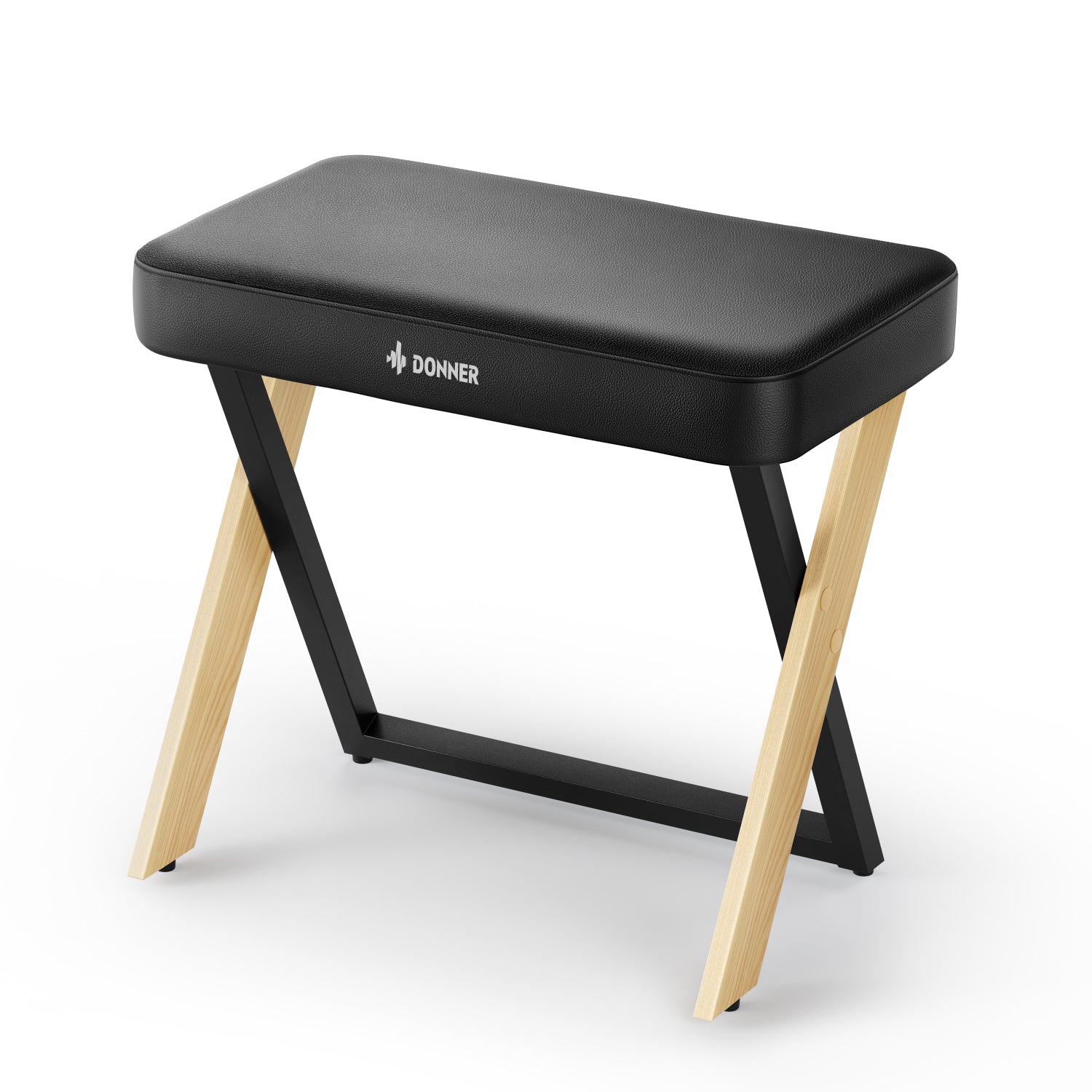
At minimum, you need a stand, a sustain pedal, and headphones. The stand brings keys to proper playing height, the pedal holds notes while your hands move, and headphones enable silent practice.
Some keyboard pianos include these in the box. The Donner DP-06, Donner DEP-20, Eastar KIDO V-20, and Alesis Melody 61 MK4 ship with most or all essential accessories. Yamaha and Casio models typically include only a music rest.
Factor accessories into your true cost. A $140 keyboard piano that needs a $25 stand and a $15 pedal costs the same as a $180 keyboard piano with everything included — but the bundle saves you research time and separate shipping.
Frequently Asked Questions
Can you learn piano on a budget keyboard piano?
Yes. A budget keyboard piano with at least 61 touch-sensitive keys gives you everything you need for note reading, chord shapes, scales, and basic repertoire. You may eventually want weighted keys for advanced finger technique, but that upgrade typically comes after a year or more of consistent practice.
What's the difference between a keyboard piano and a digital piano?
A keyboard piano prioritizes variety — hundreds of voices, auto-accompaniment rhythms, and lightweight portability. A digital piano prioritizes authentic piano feel — 88 fully weighted keys with hammer action and a focused set of high-quality piano sounds. For beginners exploring music broadly, a keyboard piano is the better value.
Do I need 88 weighted keys as a beginner?
No. Sixty-one touch-sensitive keys are enough for your first one to two years of learning. If you are an adult committed to long-term classical study, starting with 88 keys (like the Donner DEP-20 keyboard piano) avoids an early upgrade, but it is not required to begin.
How much should a beginner spend on a budget keyboard piano?
$80 to $200 is the sweet spot. Below $80, you risk getting a keyboard piano with poor sound or unresponsive keys, which can actively discourage learning. Above $200, adding a bit more money starts to unlock entry-level digital pianos with weighted keys.
Can I connect a budget keyboard piano to my computer or iPad?
Most modern budget keyboard pianos include a USB-MIDI port (labeled "USB to Host"), which connects to a computer, iPad, or iPhone with a standard USB cable. This opens up learning apps, notation software, and DAWs. Check for USB-MIDI before buying — some ultra-budget models omit it.
Final Verdict
We put together this guide to help you find a budget keyboard piano that fits your needs — without overcomplicating the decision. Every keyboard piano on this list delivers real value in its category.
Since 2012, Donner has been building solid electric musical instruments with one goal: making music accessible to everyone without the premium price tag. Whether you are picking up your first keyboard piano, buying for a child, or returning to music after years away, Donner's keyboard pianos and digital pianos give you a legitimate musical starting point at a price that doesn't require a leap of faith.
Start your musical journey today!