






A $600 digital piano today can sound and feel remarkably close to an acoustic instrument that costs five times as much. At the same time, a well-built acoustic piano still offers something no speaker can fully replicate.
This article walks you through the six dimensions that actually matter when choosing between a digital piano and an acoustic piano: sound, touch, cost, maintenance, features, and real-world practicality. By the end, you'll know exactly which one fits your life.
Table of Contents
Quick Comparison Between Digital Piano & Acoustic Piano
Before we dive deep, here's a side-by-side look at how digital and acoustic pianos compare across the categories that matter most.
| Dimension | Digital Piano | Acoustic Piano |
|---|---|---|
| Sound | Sampled/modeled from concert grands; consistent, clean | Natural string resonance and harmonics; rich, organic |
| Touch | Weighted hammer action; varies by price tier | Real hammer-and-string mechanism; dynamic, nuanced |
| Starting Price | ~$200 (entry) to ~$2,500 (high-end) | ~$3,000 (entry upright) to $100,000+ (concert grand) |
| Maintenance | Virtually none — plug in and play | Tuning 2x/year ($100-$200 each), regulation, humidity control |
| Space & Weight | Compact; 25-100 lbs; fits in any room | Bulky; 400-1,000+ lbs; may need floor reinforcement |
| Volume Control | Headphone jack for silent practice | Fixed volume — you're playing for the whole house |
| Features | Multiple voices, Bluetooth, apps, recording, MIDI | One sound — but what a sound it is |
| Lifespan | 10-20 years (electronic components) | 50+ years with proper care; can be passed down |
Sound & Tone — How Digital and Acoustic Pianos Produce Sound?
Sound is where the digital piano vs acoustic piano debate usually starts — and where opinions get loudest. But the real question isn't which sounds better. It's which sounds better for your ears, in your space, at your budget.
How an Acoustic Piano Creates Its Sound
When you press a key on an acoustic piano, a felt hammer strikes a set of steel strings. Those strings vibrate, and the vibration travels through a wooden bridge into the soundboard — a large, thin spruce panel that acts as a natural amplifier. But that's just the beginning.
What makes an acoustic piano sound so rich is resonance. When you strike a note, the strings you didn't hit start vibrating in sympathy. The wooden cabinet hums along. The room reflects the sound back. Every element — from the density of the hammer felt to the grain of the soundboard — shapes the final tone.
This is why no two acoustic pianos sound exactly alike, even from the same factory. It's also why a concert grand sounds fuller than an upright: longer strings produce richer bass overtones with less inharmonicity — a technical term for when a string's overtones are slightly out of tune with the fundamental pitch.
How a Digital Piano Replicates That Sound
Digital pianos take a fundamentally different approach. There are no strings, no hammers, no soundboard. Instead, every key you press triggers a digitally stored recording — or a mathematically generated model — of a real acoustic piano.
Sampling is the most common method. Manufacturers record every note of a high-end concert grand at multiple velocity levels — soft, medium, hard — and store those recordings in the piano's memory. When you play, the engine selects the closest matching sample and plays it through the built-in speakers.
Modeling goes further. Instead of playing back recordings, a modeling engine uses algorithms to simulate the physics of a piano in real time — string vibration, hammer impact, damper resonance, even the subtle noise of the key mechanism itself. Roland has championed this approach for years, while Yamaha leans toward meticulously detailed multi-sampling.
In practice, both methods can produce stunning results. The Donner DDP-200 PRO digital piano, for example, uses a high-resolution sampling engine that captures the tonal character of a concert grand across its full dynamic range — from the softest pianissimo to the most forceful fortissimo. Paired with its onboard speaker system, the result is a piano tone that feels alive and responsive.
Can You Hear the Difference in a Real-World Setting?
In a controlled listening test with high-end equipment, a trained pianist might pick out the digital from the acoustic. For everyone else — and even for many experienced players — modern digital pianos pass the blind test.
Here's something most comparison articles skip: in a recording context, digital often wins outright. An acoustic piano needs a treated room, quality microphones, and proper placement to record well. A digital piano with USB audio outputs a pristine stereo signal directly into your DAW — no room noise, no bleed from the neighbor's lawnmower, no post-production cleanup required. If you're a content creator or home studio producer, this alone can tip the scales.

Touch & Playability — The Feel Under Your Fingers
Sound gets people into the showroom, but touch is what keeps them there. The feel of the keys — how they respond to your fingers, how they push back, how they let you shape a phrase — is what makes a piano a piano.
What Makes an Acoustic Piano Action Feel the Way It Does?
An acoustic piano's action is a mechanical marvel. Each key is a lever connected to a series of levers, springs, and pivots that culminate in a felt-covered hammer striking a string. In a grand piano, the action includes over 5,000 individual parts — and every single one of them influences what you feel under your fingers.
The key itself is long, with the pivot point positioned far behind the visible portion. This gives you more control, especially when playing between the black keys. The weight naturally graduates from heavier in the bass register to lighter in the treble, matching the mass of the hammers and strings. When you release a key, a damper falls onto the string, stopping the sound with a precision that digital instruments have worked hard to emulate.
All of this happens with zero latency, infinite dynamic gradation, and a physical connection between your fingertip and the vibrating string that no sensor can fully replicate. It's the gold standard for a reason.
How Weighted Key Actions Work in Digital Pianos?
Digital pianos simulate this experience with weighted key mechanisms. But not all weighted keys are created equal.
Entry-level digital pianos typically use semi-weighted or basic hammer-action keyboards. These have springs and small counterweights that add resistance, but the feel can be lighter and less nuanced than an acoustic. The Donner DDP-60 digital piano falls into this category — it's semi-weighted, which makes it forgiving for young beginners while still providing enough resistance to build proper finger strength.
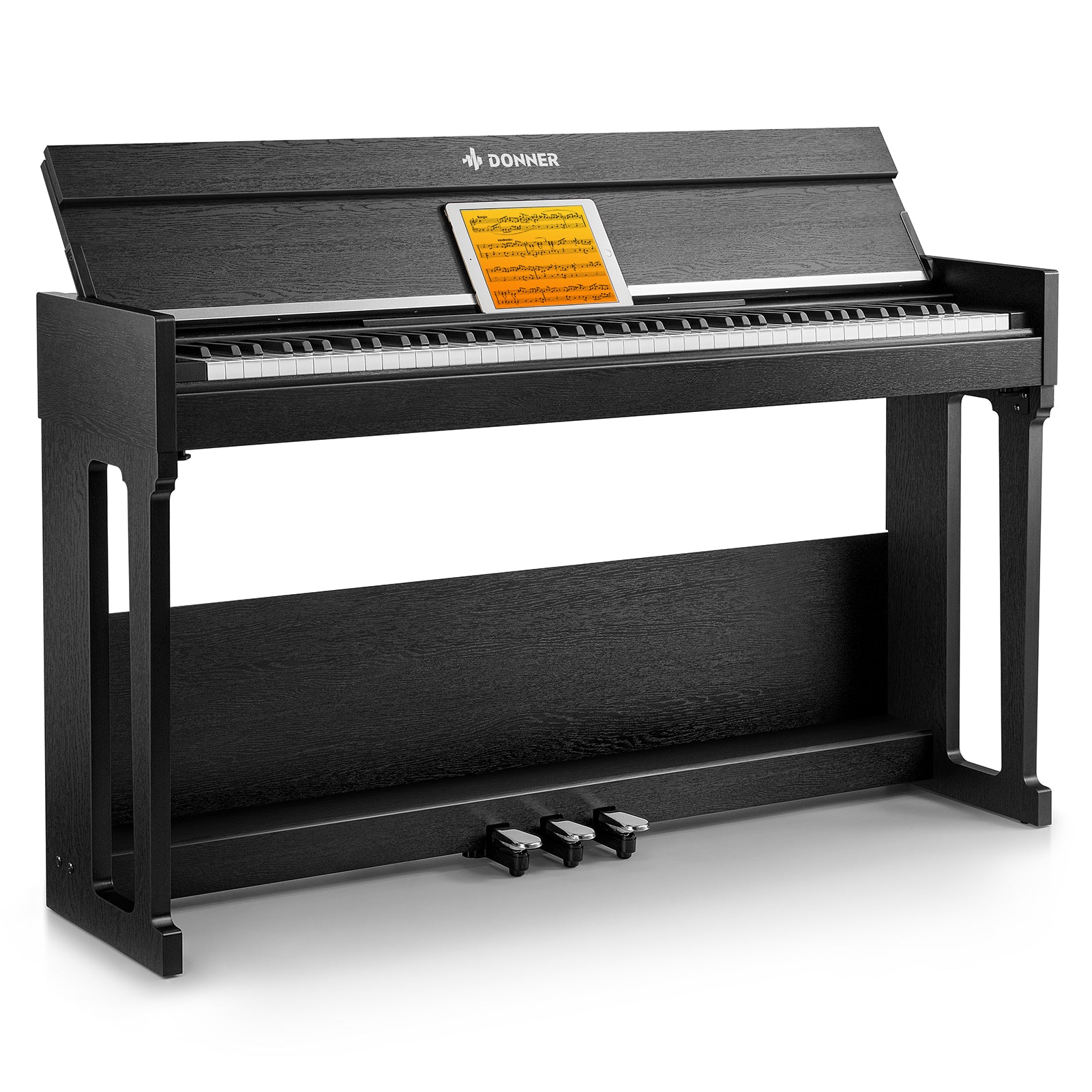
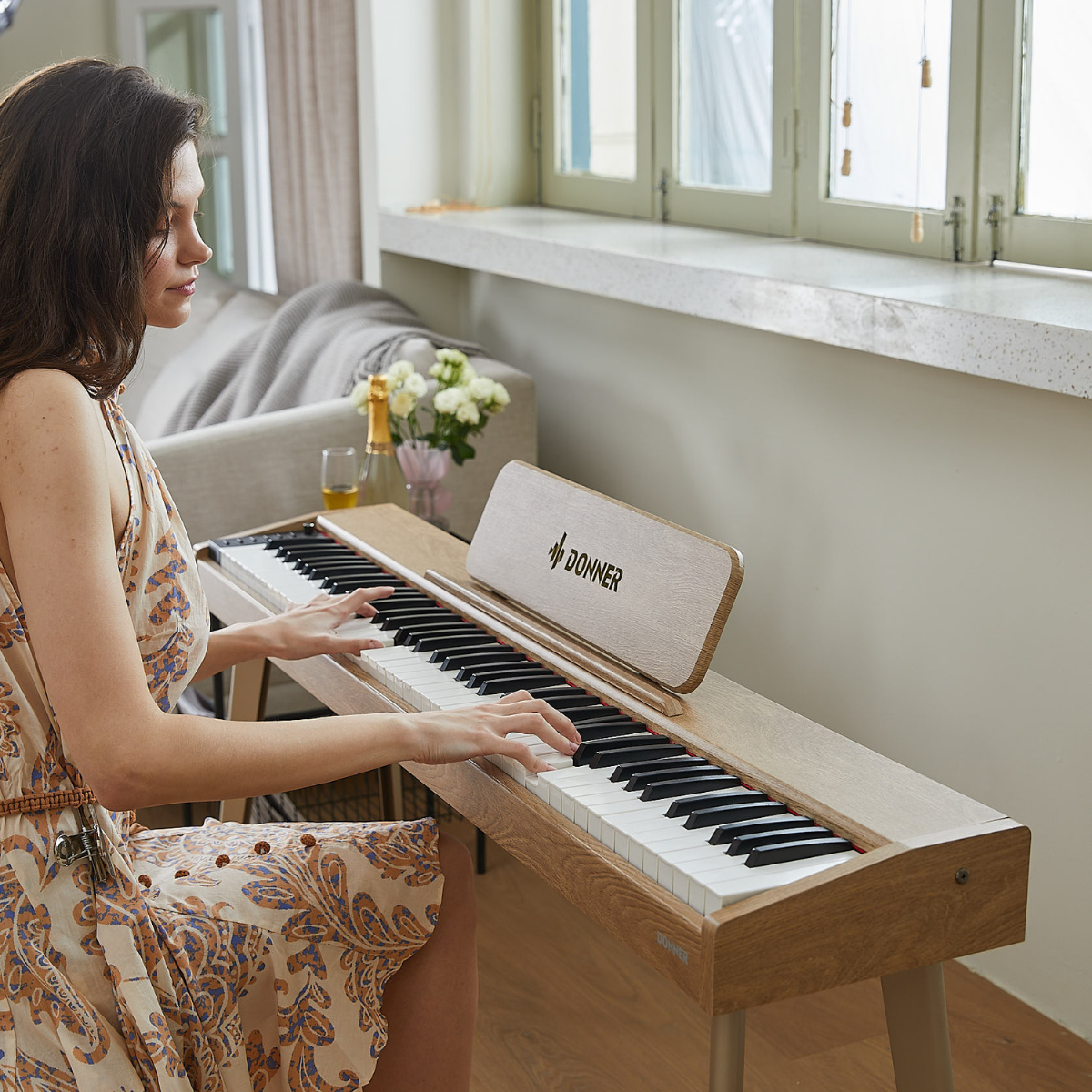
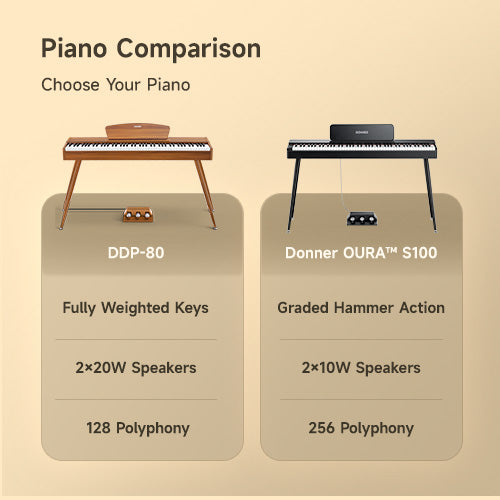
Mid-range models step up to fully weighted, graded hammer action. Each key has an actual hammer mechanism inside — not to strike strings, but to replicate the inertial feel of an acoustic action. The weight is graded, meaning bass keys feel heavier than treble keys. The Donner DDP-80 digital piano and DDP-90 PRO digital piano both use this approach, giving you a playing experience that closely mirrors an upright acoustic piano.
High-end digital pianos push this further with longer key sticks, escapement simulation (the subtle "click" you feel when a key is pressed halfway on a grand), and more sophisticated sensor arrays. The Donner DDP-200 PRO digital piano, with its graded hammer-action keyboard and multi-sensor detection, captures both the weight and the subtle dynamic responsiveness that serious players demand.
Will Practicing on a Digital Piano Hurt Your Technique?
This is the question piano teachers get asked constantly. The short answer: for beginners through intermediate players, no — as long as you're playing on a fully weighted, 88-key digital piano.
The key word here is "weighted." A spring-loaded keyboard from a $100 portable keyboard piano won't prepare your fingers for the real thing. But a graded hammer-action digital piano — like the Donner DDP-80 or DDP-200 PRO — builds the same finger strength, independence, and dynamic control that an acoustic piano does.
Where the difference starts to matter is at the advanced level, when you're working on the subtlest gradations of touch — the difference between a whisper-quiet pianissimo and a note that barely speaks at all. Acoustic actions offer more tactile feedback at that extreme edge. For the other 95% of playing, a quality digital piano prepares you just fine. Countless piano teachers now recommend digital pianos as primary practice instruments for students up to grade 6-7 level.

Cost & Long-Term Value — Beyond the Initial Price Tag
For most buyers, this is where the digital piano vs acoustic piano decision gets made. The sticker price gap is enormous. But the real story is in the numbers that don't show up on the price tag.
What You'll Pay Upfront
Here's what you're looking at in the US market as of May 2026:
| Tier | Digital Piano | Acoustic Piano |
|---|---|---|
| Entry-Level | $200–$600 | $3,000–$6,000 (used upright) |
| Mid-Range | $500–$1,000 | $6,000–$15,000 (new upright) |
| High-End | $700–$2,500+ | $15,000–$100,000+ (grand) |
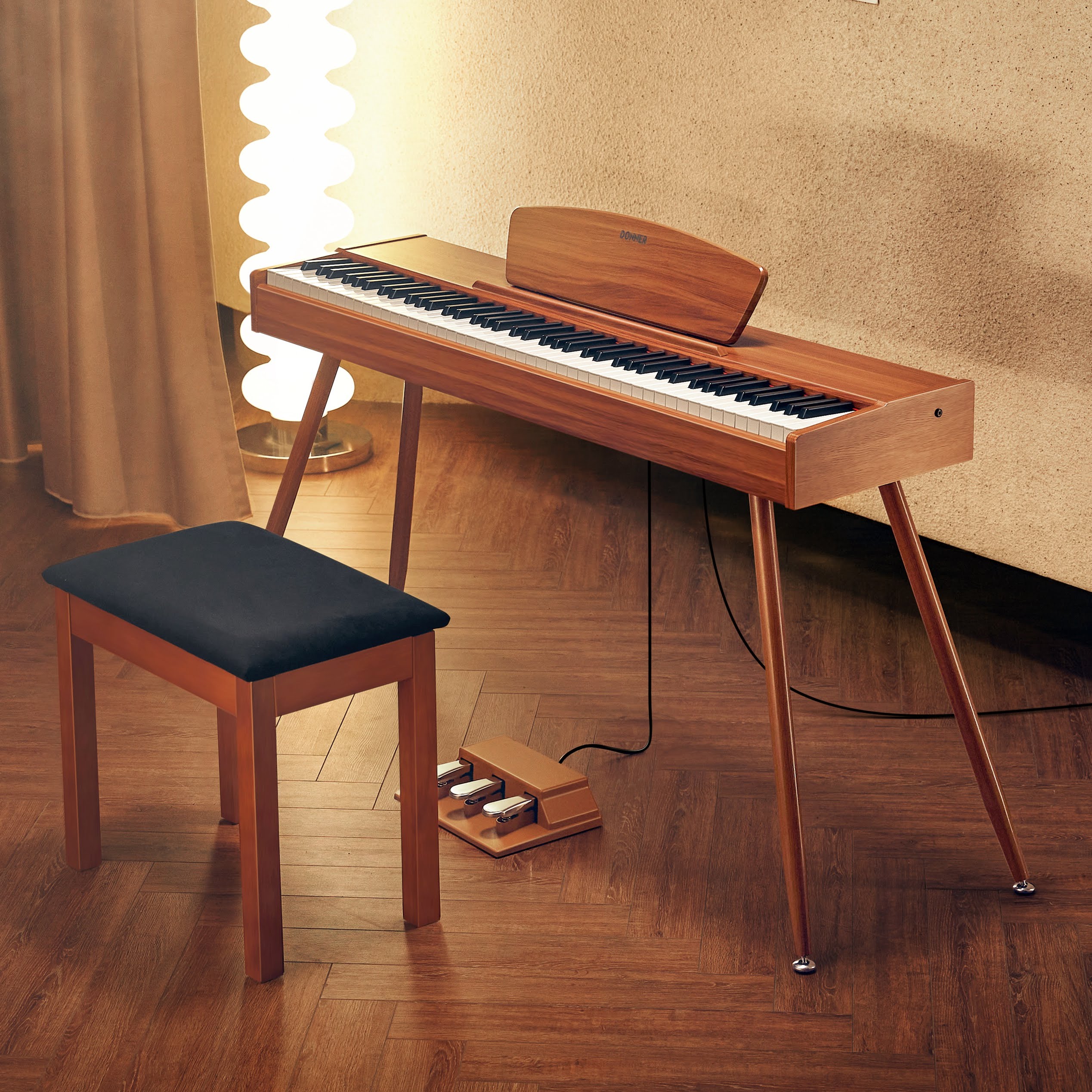
To put those numbers in context: the Donner DEP-1S digital piano — a complete 88-key beginner kit with stand and bench — costs around $206. The Donner DDP-60 digital piano, a wooden-cabinet upright-style instrument with semi-weighted keys, runs about $345. The Donner DDP-80 digital piano, a fully weighted 88-key model with a beautiful wood-finish cabinet, sits at approximately $500. Even the Donner DDP-200 PRO digital piano, with its graded hammer action and touchscreen interface, comes in around $690.
Compare that to acoustic territory: a used Yamaha U1 upright piano — the gold standard for home practice — will set you back at least $5,000 for a reconditioned 1970s model and north of $13,000 brand new. A new entry-level grand starts around $15,000 from the major Japanese brands.
The cheapest acoustic piano worth buying costs more than the best digital piano most people will ever need.
The Real Cost of Ownership Over Five Years
The purchase price is just the beginning. Let's run the numbers on five years of ownership:
Acoustic piano, five-year total:
- Tuning (2x/year at $100-$200 per visit): $1,000–$2,000
- Humidity control system (installation + maintenance): $500–$800
- Action regulation (every 2-3 years): $300–$800 per service
- Moving costs (if you relocate): $300–$1,000 per move
- Total beyond purchase price: ~$2,100–$4,600+
Electric piano, five-year total:
- Electricity: negligible
- Occasional dusting: free
- Total beyond purchase price: ~$0
Add it up, and a $500 Donner DDP-80 digital piano costs roughly $500 over five years. A $5,000 used acoustic upright costs $7,000–$9,600 over the same period.
Which Holds Its Value Better?
This is where acoustic pianos get a rare win. A well-maintained acoustic piano from a reputable brand (Yamaha, Kawai, Steinway) depreciates slowly — some models from the 1970s still sell for half their original price or more after 50 years.
Digital pianos, like all electronics, age faster. A five-year-old digital piano might be worth 20-40% of its original price. The technology moves forward — better samples, better actions, better connectivity — and buyers gravitate toward newer models.
But frame it differently: you could buy a Donner DDP-80 digital piano today for $500, use it for five years, and even if it's worth $0 at the end, you're out $500 total. That's less than one year of tuning and maintenance on an acoustic upright.
Maintenance, Climate, and Everyday Living
Here's a reality that dealerships don't always emphasize: an acoustic piano is not a piece of furniture. It's a living, breathing instrument that reacts to its environment like a wooden boat reacts to water.
The Hidden Work of Owning an Acoustic Piano
An acoustic piano needs tuning at least twice a year, and more often during the first year as the strings settle. Skip a tuning, and the pitch drifts — slowly at first, then noticeably. Each tuning visit runs $100 to $200 depending on your location and the condition of the piano.
Beyond tuning, the action needs periodic regulation — adjusting the thousands of moving parts so every key responds evenly. Hammers wear down and need reshaping or replacement. Felt bushings compress. Strings can break.
Then there's humidity. The Piano Technicians Guild recommends keeping your piano in a room with 45-70% relative humidity, year-round. Wood swells in humidity and shrinks in dryness. The soundboard — the heart of the piano's tone — can crack if it dries out too much. Living in Arizona, Nevada, or anywhere with dry winters? You'll need a room humidifier or a dedicated piano humidity control system. Living in Florida or the Gulf Coast? You're fighting the opposite battle against moisture that corrodes strings and swells wooden parts.
Why Digital Pianos Are Practically Maintenance-Free?
A digital piano doesn't care about humidity. Its electronics are sealed. Its keys are made of plastic and metal. It doesn't go out of tune — ever. You plug it in, turn it on, and it sounds exactly the same as the day you bought it.
Wipe the dust off the case once in a while. That's the maintenance schedule.
For anyone who lives in a climate with extreme seasonal swings, this isn't a minor convenience — it's a genuine quality-of-life difference. You can move from Boston to Phoenix to Seattle and your digital piano sounds identical in all three places.
Space, Weight, and Your Relationship with the Neighbors
An acoustic upright piano weighs 400 to 600 pounds. A grand piano can top 1,000 pounds. Moving either one requires professional movers with specialized equipment — plan on $300-$500 for a local move and much more for stairs or long distance.
A Donner DDP-80 digital piano weighs about 60 pounds fully assembled. It fits against any interior wall. You can move it between rooms by yourself. If you relocate, it fits in the back of an SUV.
And then there's the volume question. An acoustic piano has one volume: whatever the player produces. If you're practicing at 10 PM in an apartment building, everyone knows it. A digital piano has a headphone jack — you can play at 2 AM with the sound of a concert grand filling only your ears. For apartment dwellers, parents with sleeping children, or anyone who shares walls with other humans, this single feature can be the deciding factor.

Features & Technology — What a Digital Piano Can Do That an Acoustic Cannot?
An acoustic piano does one thing — play piano — and does it beautifully. A digital piano does that same thing, plus a list of things an acoustic piano can't touch.
More Than Just a Piano Sound
Even budget digital pianos come loaded with multiple voices. The Donner DDP-80 digital piano includes several high-quality piano tones plus electric piano, organ, strings, and harpsichord sounds. The DDP-200 PRO digital piano expands this to a library of over 100 voices.
This isn't a gimmick. Being able to switch from a concert grand to a warm electric piano opens up genres an acoustic can't reach. Layer strings under your piano part for a cinematic feel. Split the keyboard so your left hand plays bass and your right plays piano — it changes how you practice and create.
Bluetooth, Apps, and Built-In Learning Tools
Modern digital pianos connect to your phone or tablet via Bluetooth. This unlocks a learning ecosystem that simply doesn't exist for acoustic pianos.
Apps like Simply Piano, Flowkey, and Yousician listen to what you play through the Bluetooth MIDI connection and give real-time feedback — which notes you got right, where your timing slipped, what to practice next. The Donner DDP-200 PRO digital piano's Bluetooth MIDI and audio connectivity means you can stream a backing track through the piano's speakers while the app tracks your playing.
Built-in features add even more value: a metronome so you don't need a separate device, a recorder that captures your playing for self-review, and a dual mode that splits the keyboard into two identical pitch ranges — so a teacher and student can sit side by side and play the same passages together.
MIDI, USB Audio, and Music Production
If you record music, a digital piano is not just an instrument — it's a production tool. Connect via USB to your computer, and your piano becomes a MIDI controller for any virtual instrument in your DAW. Need a string arrangement? Play it on your weighted keys. Need a synth bass line? Same keyboard, different sound.
USB audio takes this further: the piano sends its own high-quality stereo audio directly into your recording software. No microphones, no room treatment, no worrying about the AC kicking on mid-take. Hit record and go.
An acoustic piano in a recording context needs at minimum a pair of condenser microphones ($200+), an audio interface, a treated room, and the patience to work around environmental noise. The gap here is not subtle.

Which One Should You Choose? Six Real-World Scenarios?
The best piano isn't the one with the most impressive spec sheet. It's the one that fits your life. Here's how the digital piano vs acoustic piano decision plays out in the situations most buyers actually face.
You're an Electric Piano Beginner or Buying for Your Kid
The pick: a digital piano.
When you or your child are just starting out, the priority is building the habit — and nothing kills a beginner's momentum faster than friction. A digital piano removes most of that friction.
No tuning means it always sounds good, so there's one less reason to avoid practicing. Headphones mean lessons can happen while dinner is being made or after siblings have gone to bed. Learning apps make the first few months less intimidating. And if your child loses interest after six months, you're out a few hundred dollars instead of a few thousand.
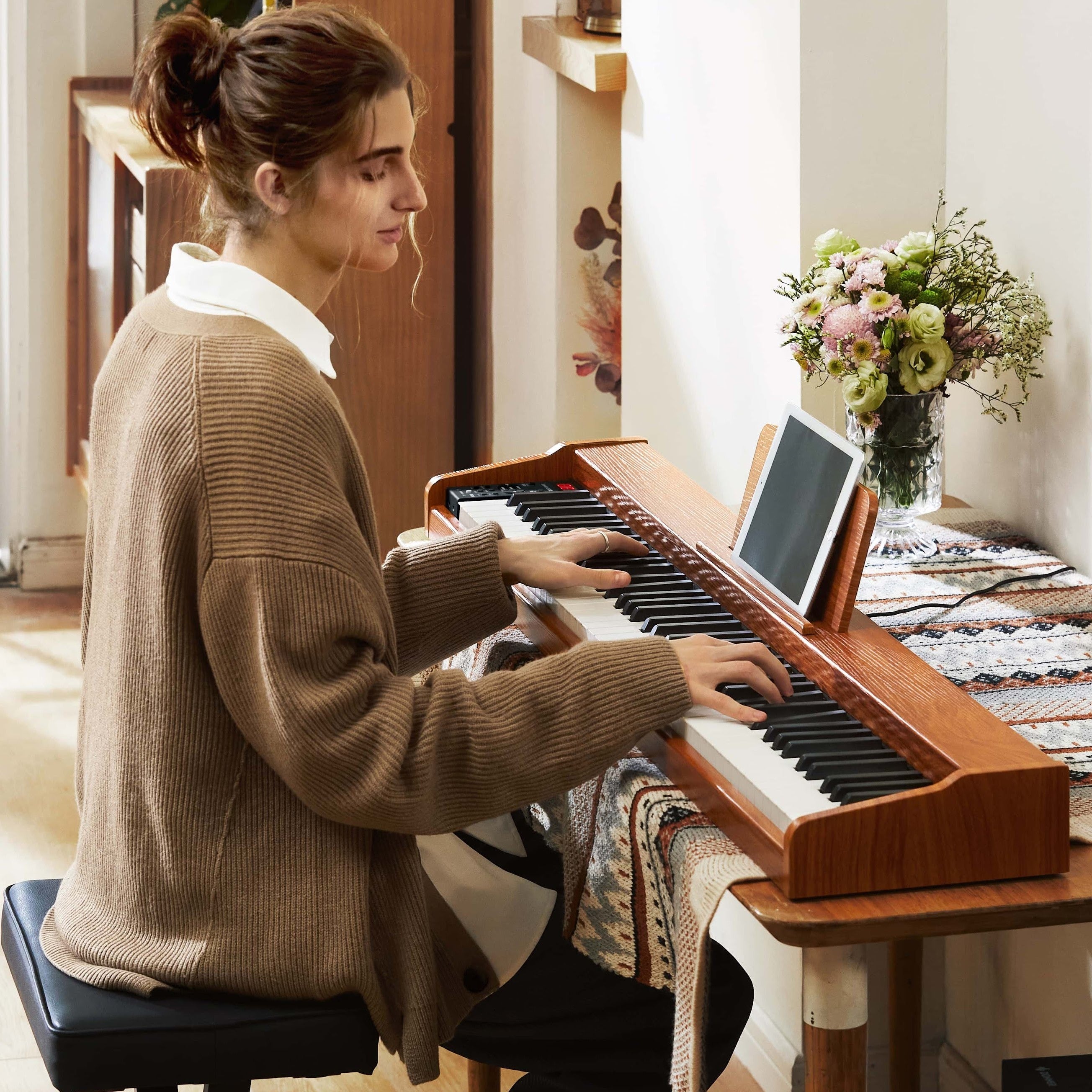
The Donner DDP-60 digital piano is designed exactly for this scenario — an upright wooden cabinet, 88 semi-weighted keys that are forgiving for young fingers, and a price tag around $345. If you want full weighted keys from day one, step up to the Donner DDP-80 digital piano at around $500.
You're a Serious Student Preparing for Conservatory or Exams
The pick: an acoustic piano (with a digital as backup).
If you're working toward a performance degree or high-level exams (ABRSM Grade 8+, RCM Level 10+), an acoustic piano becomes hard to avoid. At that level, you're developing an ear for minute differences in tone color, and your fingers need the full tactile feedback of a real action. Most exam venues and conservatories use acoustic grands, and you'll want to be comfortable on that platform.
That said, even serious students benefit from a digital piano as a practice companion. Late-night practice sessions, repetitive technical drills that would drive housemates insane, and quick recording for self-critique — a digital piano handles all of these. The Donner DDP-200 PRO digital piano with its graded hammer action makes a capable silent-practice partner at around $690.
You Live in an Apartment or Have Noise Constraints
The pick: a digital piano.
This one is straightforward. If you share walls with neighbors, an acoustic piano will make you the person everyone talks about in the building group chat — and not in a good way.
A digital piano with a headphone jack gives you a full concert grand experience at any hour. The compact footprint of a model like the Donner DDP-80 digital piano (roughly 53 inches wide and 14 inches deep) means it fits against a wall without dominating the room. And when life takes you to a new apartment, you can move it yourself.
You're a Content Creator or Music Producer
The pick: a digital piano.
If you make YouTube covers, produce beats, compose for media, or record anything at home, a digital piano is the clear winner. The USB audio and MIDI connectivity means your piano is always ready to record — no setup time, no microphone placement, no retakes because of a passing truck.
The Donner DDP-200 PRO digital piano supports Bluetooth MIDI and USB audio, making it effectively a weighted 88-key controller with built-in pro-grade piano sounds. Record piano parts, program synth lines, trigger drum samples — all from the same keyboard.
You Have the Budget, Space, and Desire for the Purest Experience
The pick: an acoustic piano.
There is a reason concert halls don't put digital pianos on stage. When budget is not a constraint, when you have a dedicated music room in a house you own, and when the experience of playing matters more than practicality — an acoustic piano delivers something irreplaceable.
A quality upright like the Yamaha U1 or a baby grand from Yamaha or Kawai gives you the full acoustic experience: the physical vibration you feel through the keys, the way the sound fills a room, the knowledge that you're playing the same type of instrument that Beethoven and Chopin composed on.
This path makes sense for a small percentage of buyers. For everyone else, the question is less "which is the ultimate instrument" and more "which instrument will I actually play every day."
You Want Both Worlds — Start Digital, Add Acoustic Later
The pick: start with a digital piano now.
This is the most practical route for most people. Buy a quality digital piano today. Play it daily. Develop your skills. In a few years, if your passion and budget both grow, add an acoustic piano to your collection — and keep the digital for silent practice.
Starting with a digital piano like the Donner DDP-80 or Donner DDP-90 PRO costs less than what you'd spend on tuning an acoustic over a few years. It gets you playing immediately. It travels with you. And when the day comes to bring an acoustic home, you'll already have the skills to appreciate it.

Frequently Asked Questions about Electric Piano and Acoustic Piano
Is a digital piano as good as an acoustic piano?
It depends on how you define "good." For sound quality, touch, and expressive potential, a high-end digital piano competes well with a mid-range acoustic upright. For sheer acoustic richness and tactile nuance, a well-built acoustic grand still leads. For convenience, features, and value, digital wins by a wide margin.
Can you learn piano on a digital piano?
Absolutely — provided it has 88 fully weighted, touch-sensitive keys. Thousands of pianists have learned entirely on digital pianos and transitioned to acoustic instruments without issues. The quality of your practice matters far more than the type of piano you practice on.
Do digital pianos ever need tuning?
No. A digital piano reproduces pre-recorded or algorithmically generated sounds, so the pitch never drifts. This is one of its biggest practical advantages over an acoustic piano.
How long does a digital piano last versus an acoustic piano?
A well-built digital piano typically lasts 10 to 20 years before electronic components may start to fail. A properly maintained acoustic piano can last 50 years or more — some 100-year-old Steinways are still concert-ready. However, the acoustic's longevity comes with decades of ongoing tuning and maintenance costs.
Why are acoustic pianos so expensive?
An acoustic piano contains thousands of precision mechanical parts, a cast-iron frame weighing hundreds of pounds, and a soundboard crafted from select spruce aged for years. The labor involved — from stringing to voicing to regulation — is highly skilled and cannot be automated. You're paying for centuries of refined craftsmanship.
Can a digital piano replace an acoustic piano for serious study?
For beginner through intermediate study, yes. For advanced conservatory-level study where the finest nuances of touch and tone are being developed, most teachers still recommend regular access to an acoustic piano. Many serious students use both: an acoustic for primary practice and a digital for silent or late-night sessions.
What is a hybrid piano and is it worth the price?
A hybrid piano combines a real acoustic piano action (hammers, mechanisms, and all) with digital sound generation. Models like the Yamaha AvantGrand and Kawai Aures give you the authentic feel of an acoustic with the convenience of digital features. They're excellent instruments, but starting at $6,000+, they only make financial sense for players who absolutely need the real action feel but can't accommodate a full acoustic piano.
Final Verdict — Digital vs Acoustic Piano in 2026
Roughly 90% of people shopping for a piano right now, a digital piano is the smarter choice.
It costs a fraction of the price. It never needs tuning. It fits in an apartment. It connects to the apps and tools that make learning faster and more fun. It lets you practice at midnight without waking anyone up. And in 2026, the gap in sound quality and touch — the two things acoustic pianos have always held over digital — has narrowed to the point where most players won't notice it.
That's not a compromise. That's technology catching up to tradition in the ways that matter most to everyday musicians.
If you're ready to find the right digital piano for your home, explore Donner's electric musical instrument and make the music you want.