






Will an 88-key weighted keyboard fit in a dorm room? Yes — when you measure the space and plan the setup before buying. An 88-key keyboard is wide but shallow, so the practical question is usually where it will sit, how it will get there, and whether your housing allows a permanent setup.
That makes back-to-school shopping a two-way choice: a movable keyboard-and-stand setup you can pack up between terms, or a slim furniture-style piano corner that needs a measured spot and housing rules that permit it. Both can work in a small shared room — the difference is what you and your roommates can sustain through the semester.
What Actually Decides Whether an 88-Key Keyboard Fits
An 88-key keyboard is roughly four feet or more wide but shallow, so the real constraint is usually wall or desk width, storage height, and hallway or stair access rather than the instrument itself. Weighted or semi-weighted action changes how the keys feel under your fingers, not the physical size of the keyboard, so you do not need extra room for heavier keys.
Before you buy, measure the usable floor or desk space where the keyboard will live, the doorway and stair path to your room, and the storage spot where it will sit when you are not playing. Also check whether the housing allows a permanent setup: a furniture-style piano needs to stay assembled in place, while a keyboard on a stand can be packed up and moved.
What Weighted Keys Mean for Dorm Practice
Weighted keys feel heavier and respond more like an acoustic piano, which helps finger strength and control as you build technique. Semi-weighted keys add some resistance at a lighter touch, while fully weighted or hammer action keys come closest to an acoustic feel. If you are deciding between the two, the breakdown of fully weighted vs semi-weighted keys explains how each action feels in daily practice.
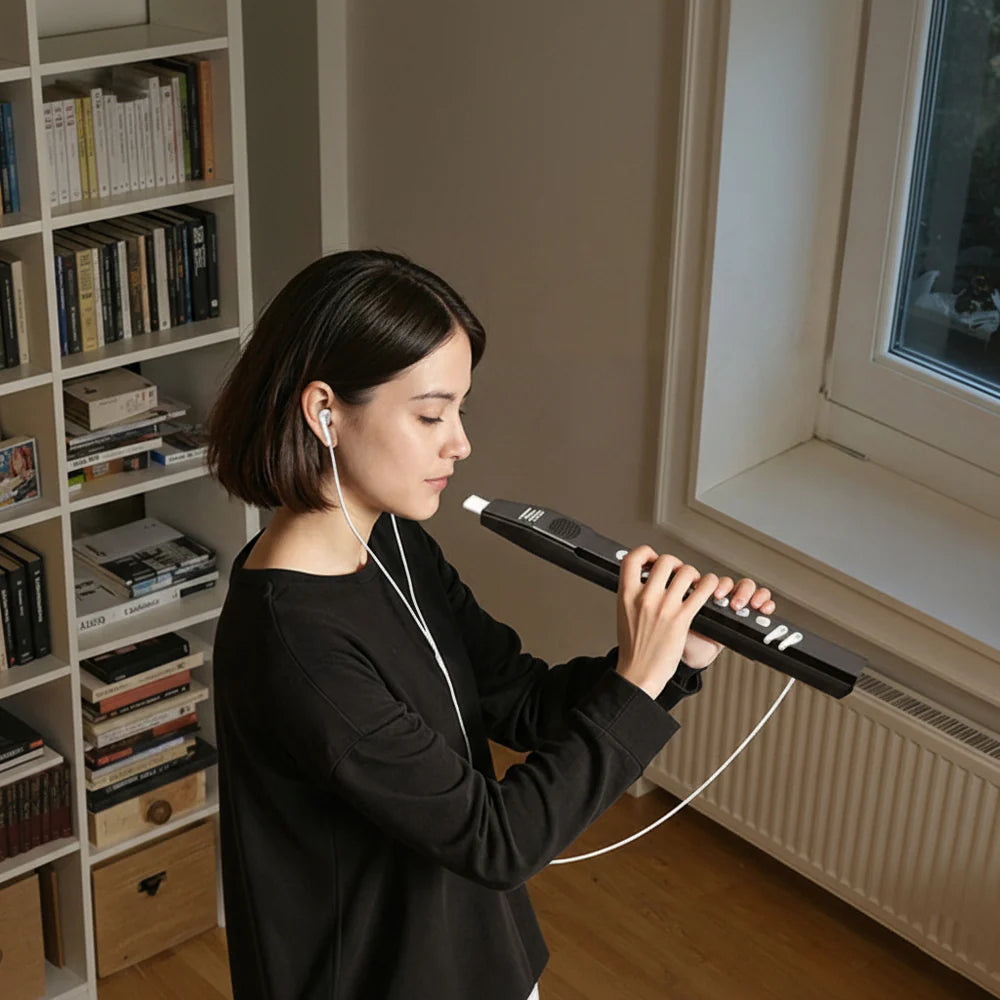
Weighted feel also shapes quiet practice. Plugging in headphones keeps the sound private so a roommate does not have to hear your practice audio, but the key mechanism still makes some physical noise as you play. Treat headphone practice as a courtesy rather than silence: agree on practice windows and keep speaker use within what the room and quiet hours allow.
A Dorm Setup and Move Plan That Works
The setup that survives a semester is the one you can actually sustain. Choose a stable stand or a slim furniture corner, keep the keyboard accessible so you practice instead of digging it out, and agree on practice windows and headphone use with your roommate early.
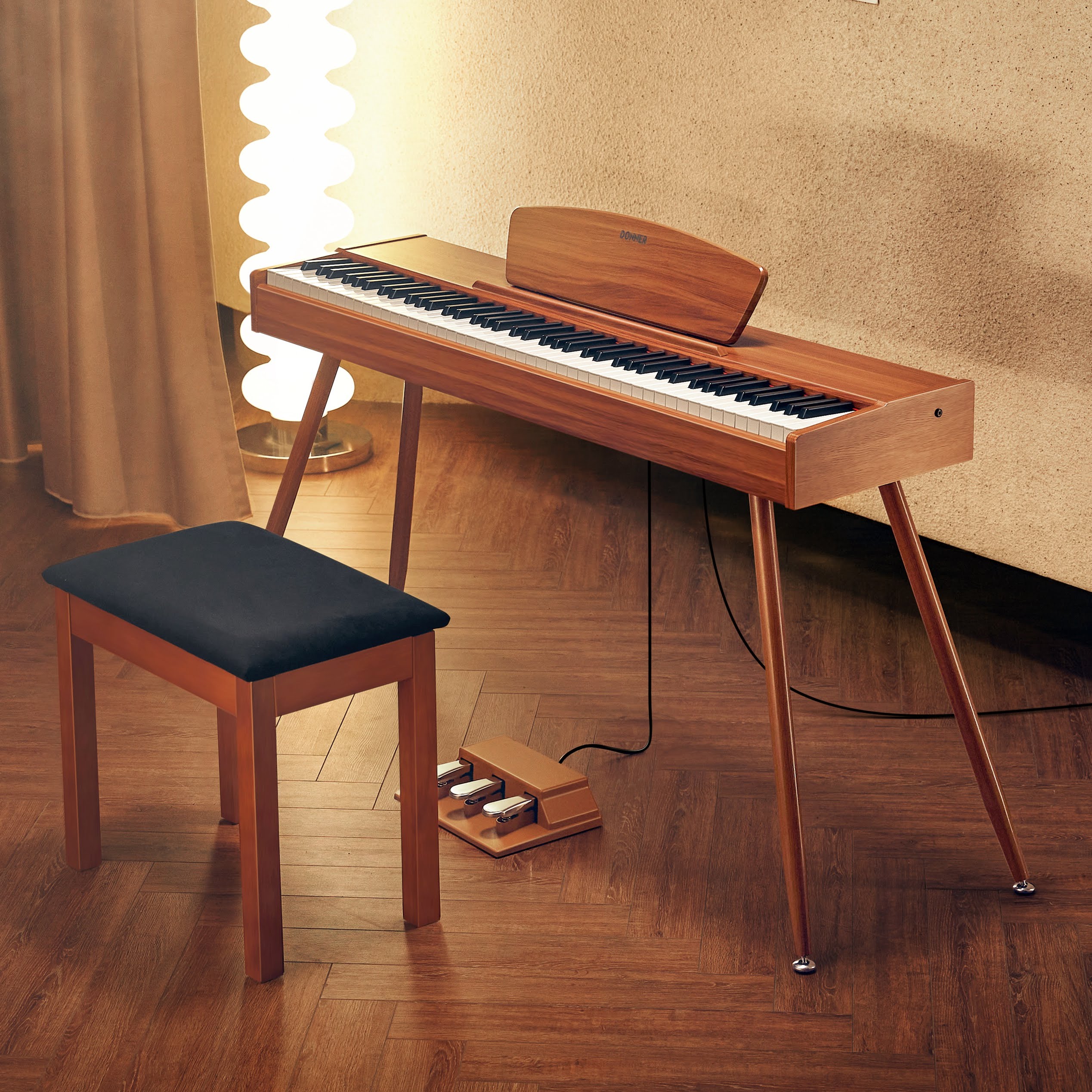
A furniture-style piano belongs only in housing where it can remain assembled without blocking circulation or violating room rules. If you may change rooms or move between terms, a movable keyboard-and-stand setup is the flexible option.
- Measure the corner or desk footprint and compare it with the keyboard's listed dimensions before move-in.
- Walk the route: doorways, stairs, elevators, and the spot where the keyboard will be stored.
- Agree on practice windows and headphone use with your roommate.
- Check housing rules on furniture, noise, and quiet hours before you commit to a permanent corner.
Choose by how you will live with the keyboard, not by specs alone. If you expect to move it, reclaim floor space, or change housing between terms, a movable keyboard-and-stand setup is the flexible route. If your housing allows a measured permanent corner, a furniture-style piano keeps everything assembled and ready. You can compare the full range of 88 key piano keyboard models, or start with the three Donner options below.
Donner DEP-1S Beginner Digital Piano Kit Best movable dorm setup

Features
- Portable piano with a double X-stand and included sustain pedal
- 88 semi-weighted, velocity-sensitive keys with five touch levels
- Bluetooth audio, Bluetooth MIDI, and USB MIDI
- 30W built-in speakers
The Donner DEP-1S Beginner Digital Piano Kit fits a student who expects to move the keyboard, reclaim floor space, or change housing between terms. The portable piano arrives with a double X-stand and sustain pedal, so the whole setup packs up when you need the floor back, while 88 semi-weighted, velocity-sensitive keys with five touch levels keep practice close to a piano feel. Bluetooth audio, Bluetooth MIDI, and USB MIDI make it easy to play along with songs from a phone or laptop, and 30W built-in speakers fill a small room during permitted practice hours.
Donner DDP-60 Semi-Weighted Digital Piano Best slim fixed setup

Features
- 88 semi-weighted keys with 4-level touch sensitivity
- 128 sounds and 128-note polyphony
- 30W built-in speakers and a three-pedal unit
- Two headphone jacks, USB MIDI, MIDI 5-pin, and line out
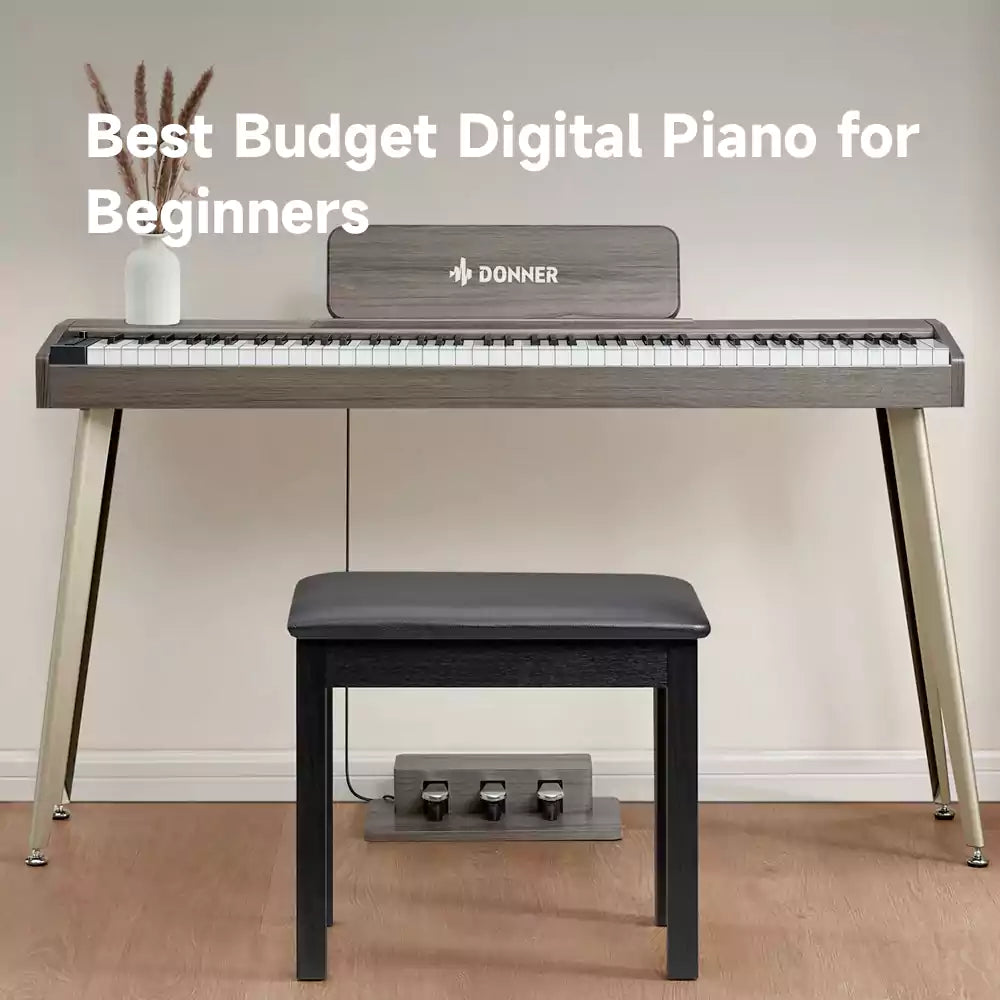
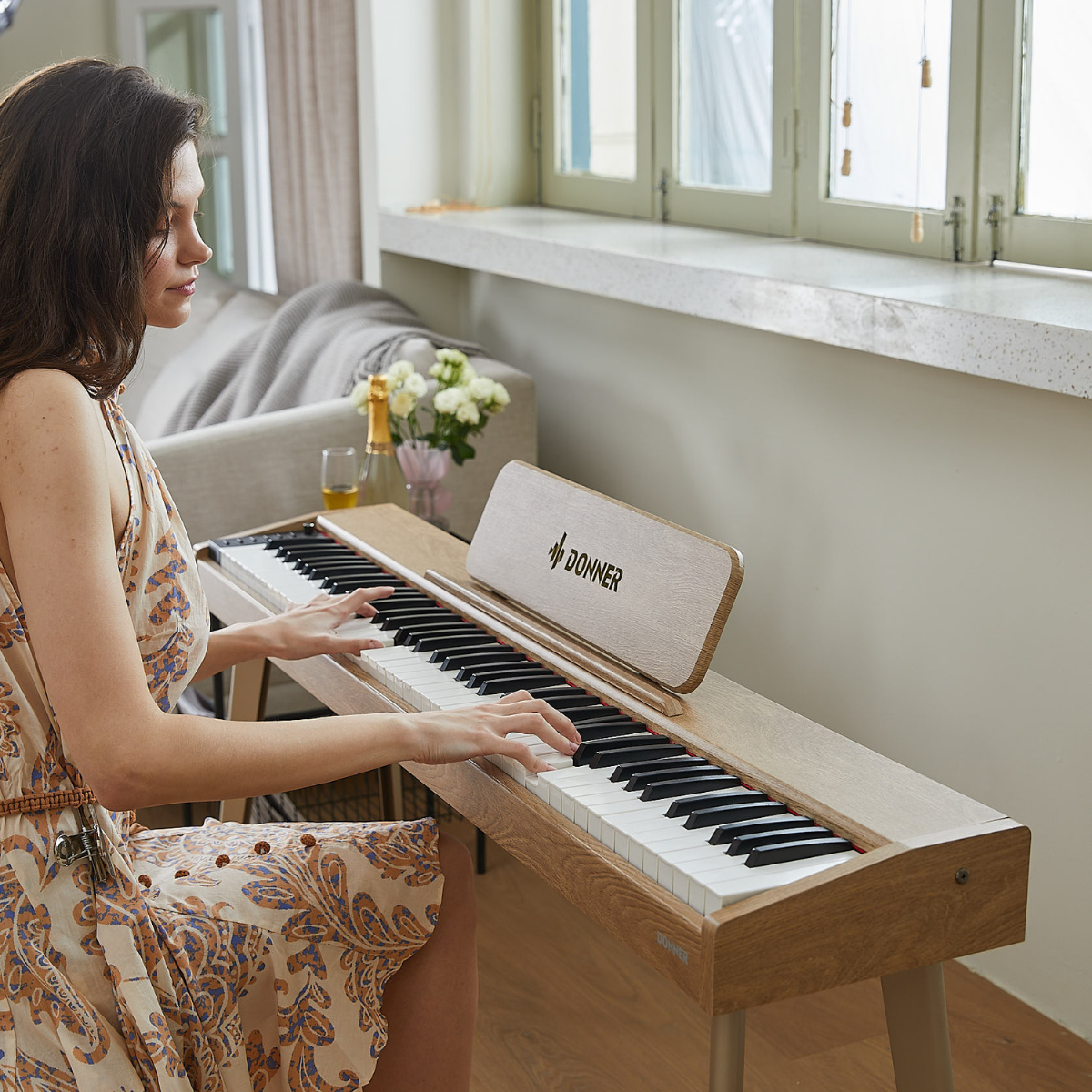
The Donner DDP-60 Semi-Weighted Digital Piano suits a student with permission and measured space for a slim, fixed furniture-style piano corner. Its furniture cabinet is roughly 52 inches wide, so it fits a compact permanent corner. The 88 semi-weighted keys with 4-level touch sensitivity respond expressively for daily practice, and two headphone jacks make shared quiet practice easier. 128 sounds and 128-note polyphony leave room to explore different styles as you learn.
Donner DDP-80 Wooden Digital Piano Best fully weighted feel

Features
- 88 fully weighted Hammer Action II keys
- 128-note polyphony
- 40W built-in speakers and a three-pedal furniture stand
- Headphone output and USB MIDI
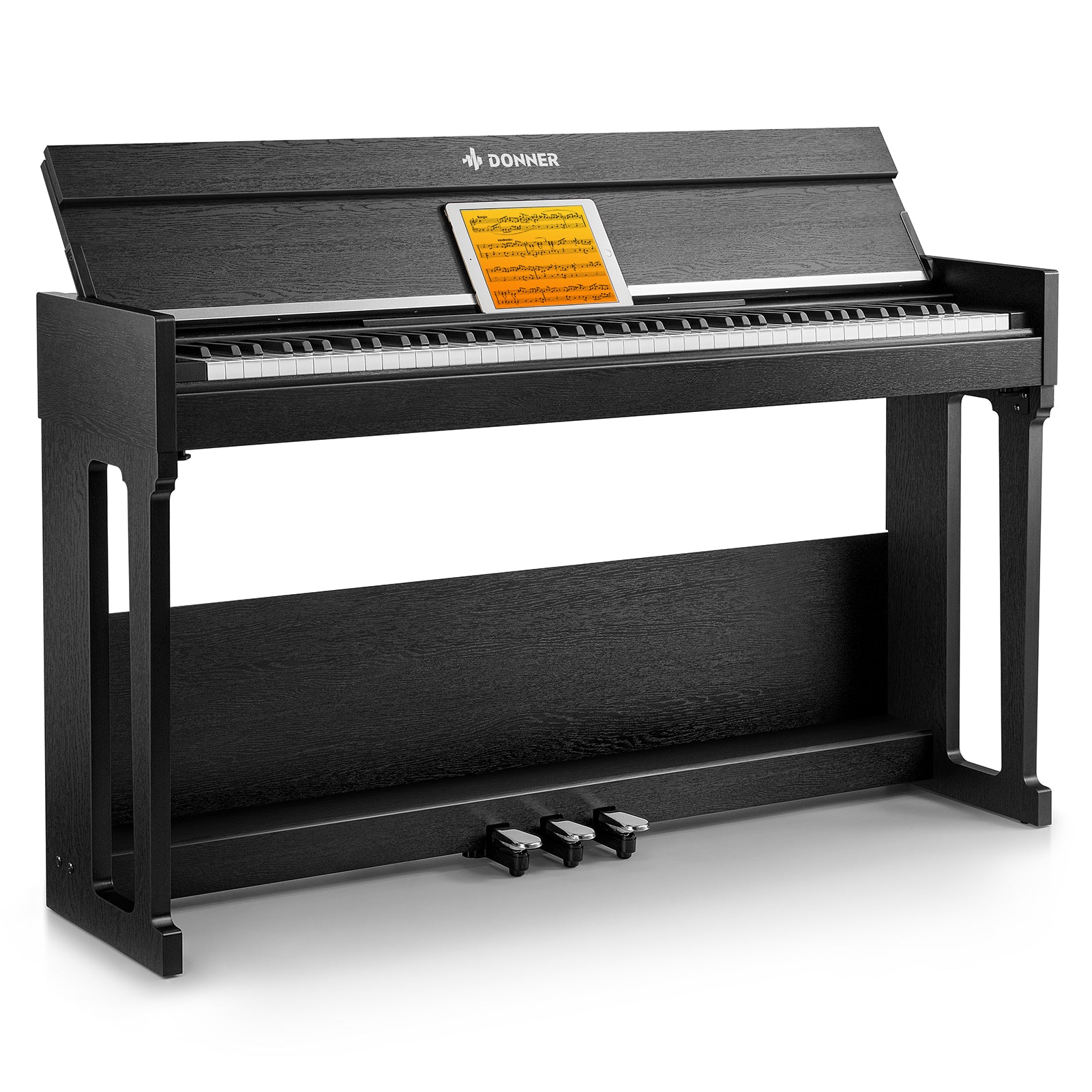
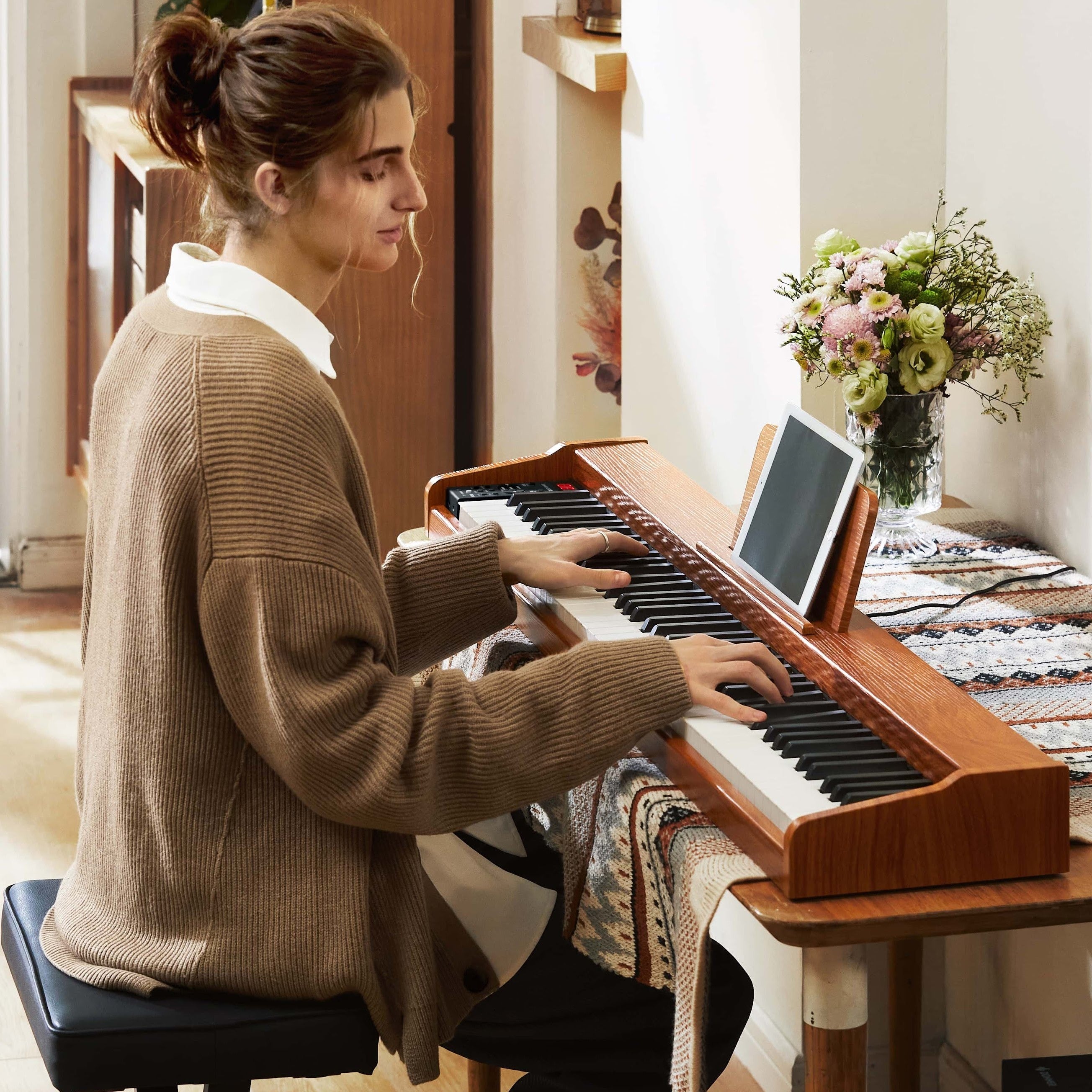
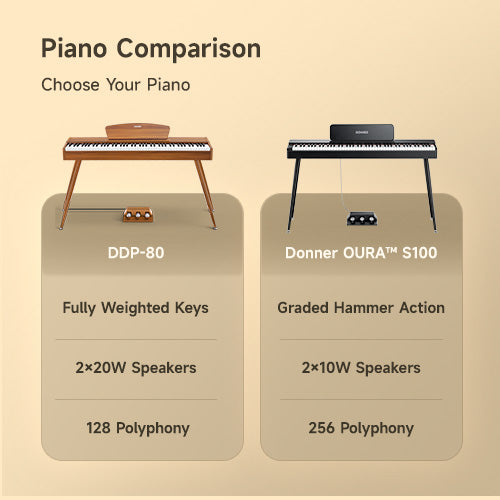
The Donner DDP-80 Wooden Digital Piano is for a student who prioritizes fully weighted piano feel and can keep a furniture-style piano in one measured spot. Its 88 fully weighted Hammer Action II keys come closest to an acoustic piano under your fingers, which helps finger strength and control as you practice. The furniture cabinet is about 58.3 inches wide, 35.6 inches high, and 16.9 inches deep. Headphone output keeps late-night practice private, and USB MIDI keeps connections straightforward.
Choose the Donner DEP-1S when you want a movable setup that can pack up between terms. Choose a furniture model such as the Donner DDP-60 or Donner DDP-80 only when your housing allows a measured permanent corner. Before you buy, shop Donner's Back to School Deals, then start the semester with a practice setup you can actually sustain in a small shared room.