






TL;DR
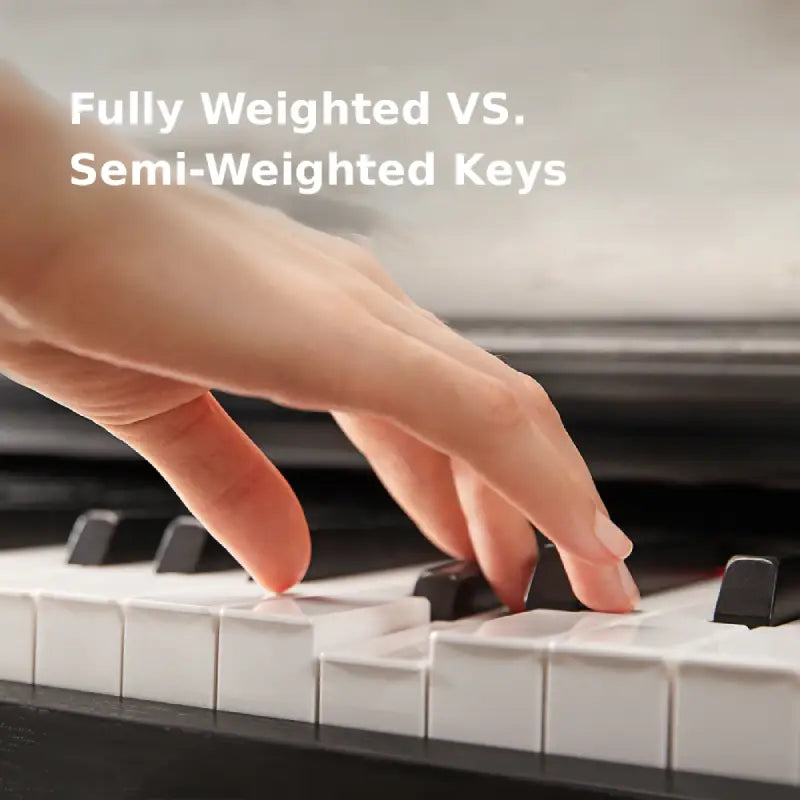
Fully weighted keys feel heavier in the bass and lighter in the treble — and that is the closest a digital piano can get to the real thing.
If you learn on a keyboard with no weight, your fingers build up the wrong habits. Weighted keys, especially hammer-action, feel like a real piano, so your fingers and dynamics actually improve over time.
If your goal is serious piano technique, graded hammer action is usually the better long-term choice. If your priorities are lower cost, lighter carrying weight, or mixed keyboard use, standard weighted action can still be the right fit. Before comparing digital piano keys, separate this topic from weighted keys vs non-weighted keys, because graded hammer action is one type inside the weighted-key category.
This guide compares feel, mechanism, portability, and price in plain language so you can choose with confidence. It also answers common buyer questions and gives product-level examples, so you can move from theory to a practical choice faster.
Table of Contents
- At a Glance: Graded Hammer Action vs Weighted Keys
- What Is Graded Hammer Action?
- What Are Weighted Keys?
- Head-to-Head Comparison
- When to Choose Graded Hammer Action
- When Weighted Keys Are Enough
- Best Donner Digital Pianos with Weighted Keys
- Graded Hammer vs Weighted Keys FAQ
- Find the Key Feel That Keeps You Practicing
- Related Posts
At a Glance: Graded Hammer Action vs Weighted Keys
If you want the short answer first, use this table:
| Comparison Point | Weighted Keys (Standard) | Graded Hammer Action |
|---|---|---|
| Key resistance | Usually uniform across the keyboard | Heavier in bass, lighter in treble |
| Internal mechanism | Weights and spring resistance | Hammer-based simulation with graded response |
| Acoustic piano realism | Moderate | High |
| Technique transfer | Good for basics | Best for long-term piano training |
| Typical price tier | Entry to mid | Mid to premium |
| Portability | Easier to move | Usually heavier cabinets or keybeds |
| Best fit | Casual players, multi-instrument users | Aspiring pianists, exam prep, classical and jazz study |
If your schedule includes regular piano practice and you want your touch to transfer well to acoustic instruments, graded hammer action is usually worth the extra cost.
What Is Graded Hammer Action?
Graded hammer action is a weighted key mechanism designed to mimic how an acoustic piano feels under your fingers. On an acoustic piano, low notes require more force and high notes require less. A graded hammer action keybed recreates that progression, so your hand learns realistic resistance as you move across all 88 keys.
This also answers a common question directly: yes, hammer action keys are weighted. Hammer action is not a separate category from weighted keys. It is a more advanced weighted design, especially when the weight changes from bass to treble.
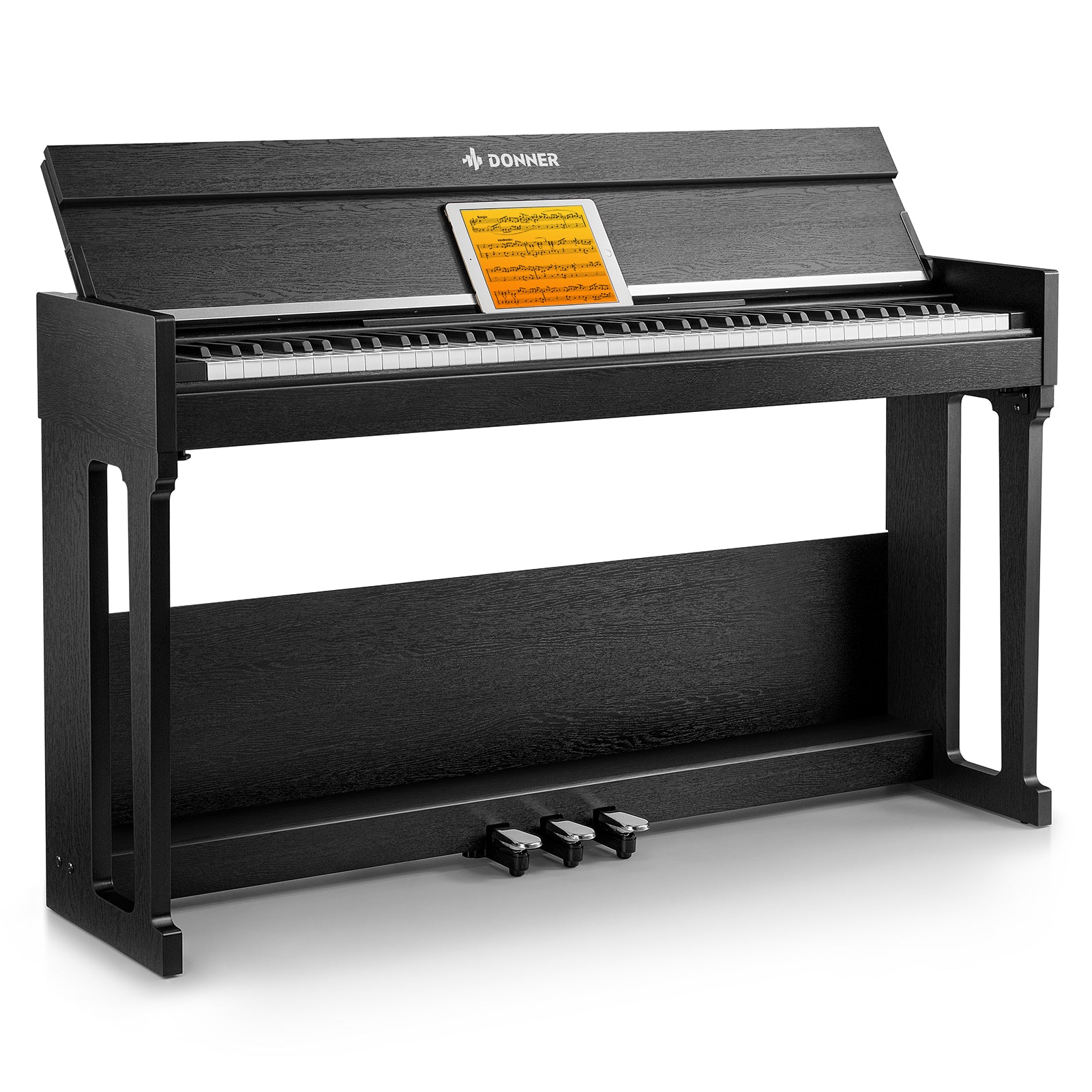
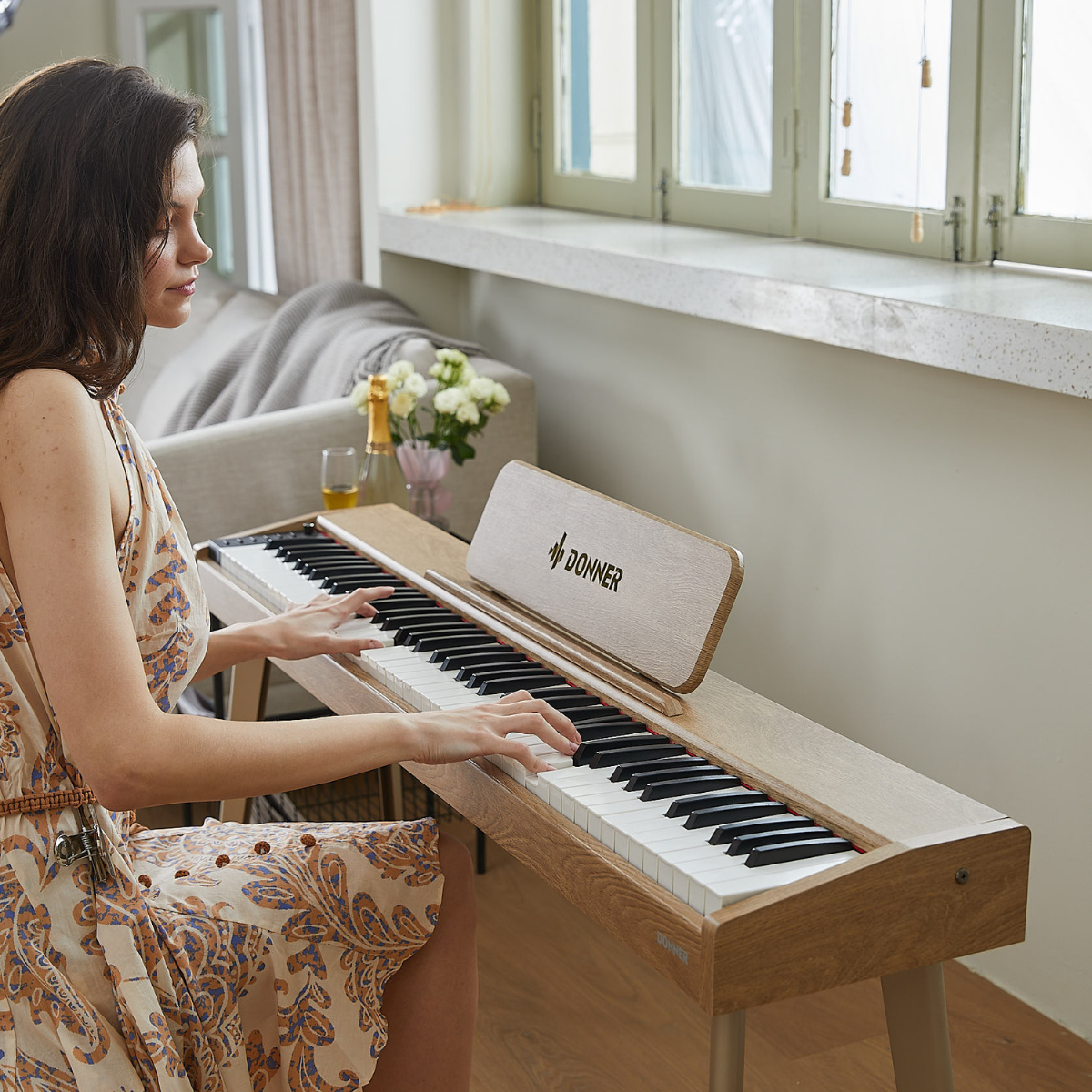
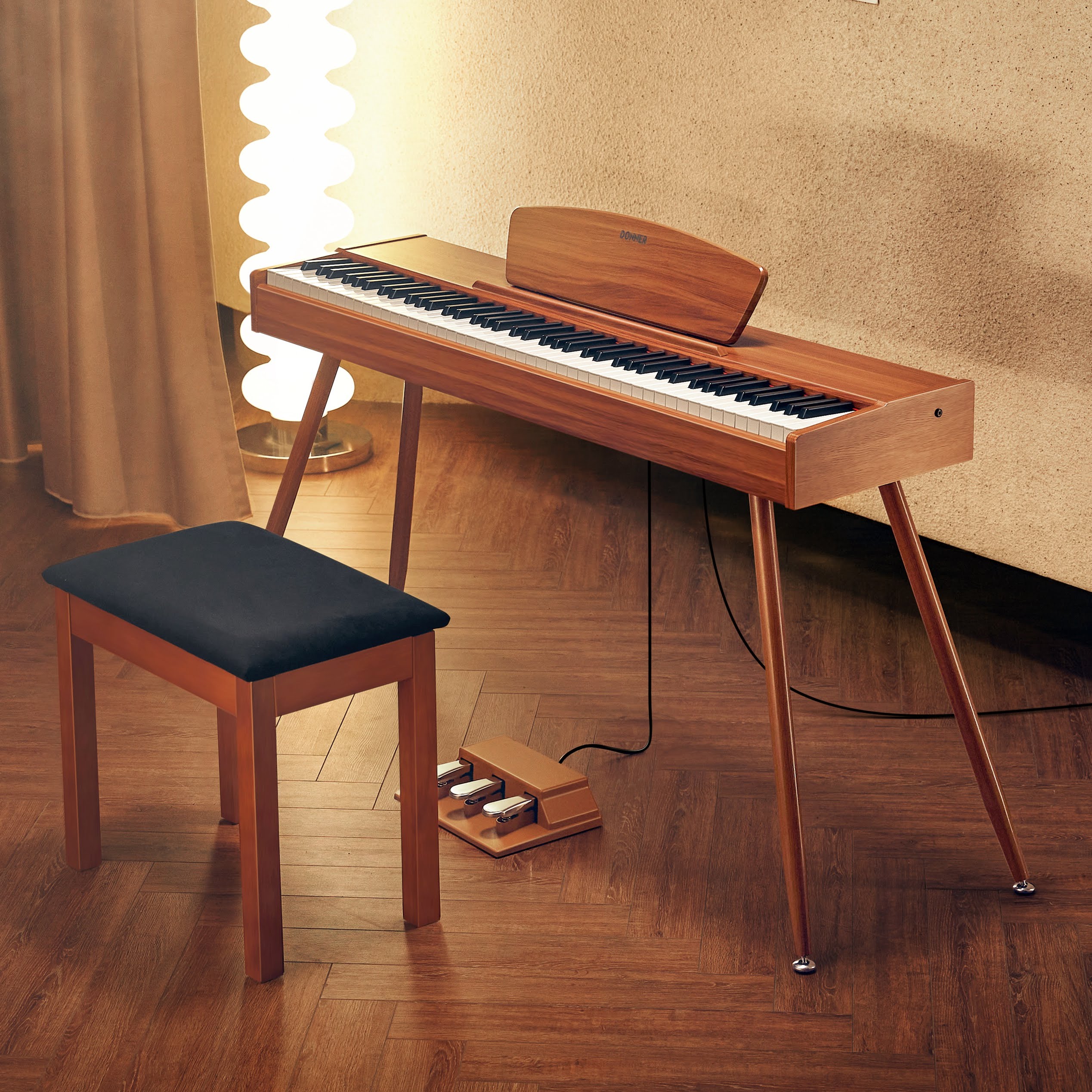
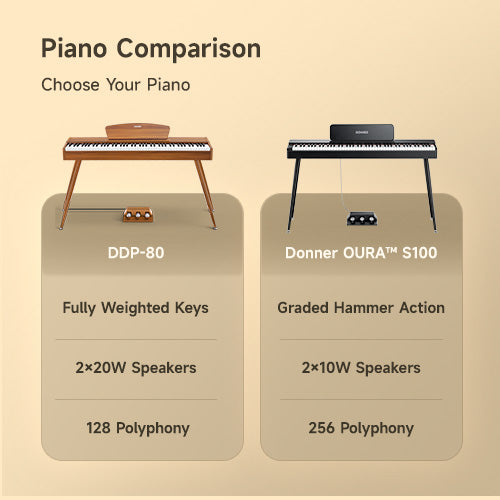
If you want this feel in a home-focused setup, the Donner DDP-80 PRO digital piano and Donner DDP-80 digital piano are two practical examples. Both prioritize piano-style response over large sound libraries.
What Are Weighted Keys?
Weighted keys are keys with added resistance, so they do not bounce like unweighted synth keys. In many standard weighted keybeds, resistance is similar across the keyboard, which still feels closer to a piano than spring-only action.
For beginners, this can be a strong starting point. You get better finger control than unweighted keys, lower entry pricing, and often lighter hardware. A model such as the Donner DEP-20 digital piano gives full-size weighted keys with a broader feature set for lessons and home practice.
The key point is scope: weighted keys describe a broad class of key actions. Graded hammer action is one specialized branch in that class.
Head-to-Head Comparison
Playing Feel: Which One Feels Closest to an Acoustic Piano?
Graded hammer action wins. The progressive weight shift from low to high notes mirrors acoustic behavior, so dynamic control and phrasing feel more natural. Standard weighted action can still feel solid, but it usually lacks that left-hand-to-right-hand weight transition.
Technique Development: Which One Builds Better Piano Habits?
Graded hammer action wins for long-term piano growth. If you are training touch control, voicing, and expressive dynamics, graded resistance gives more realistic feedback. Standard weighted keys can still support beginner foundations, but advanced control often develops faster on graded systems.
Portability and Weight
Standard weighted action usually wins. Many weighted digital pianos are easier to move, easier to place on compact stands, and better for shared spaces. Graded hammer designs often sit in heavier keybeds or furniture-style builds, especially in home-console models.
Price Range and Value
Standard weighted action usually wins on budget. You can find many useful weighted-key instruments in lower price bands. Graded hammer action often starts higher because the mechanism is more complex. If your budget is tight today, weighted keys can still deliver a good practice experience.
Durability and Lifespan
This category is usually a draw. Build quality, quality control, and maintenance habits matter more than naming alone. A well-built weighted key digital piano can outlast a poorly built graded hammer digital piano, so model-level quality still matters.
When to Choose Graded Hammer Action?
Choose graded hammer action if these points match your situation:
- You are preparing for acoustic piano lessons, exams, or ensemble performance.
- You mostly play piano repertoire, not organ or synth-led parts.
- You want more realistic dynamic control for expressive playing.
- You plan to keep the same instrument for multiple years of progression.
- You can accept higher upfront cost for a more acoustic-like touch.
If this sounds like you, testing a graded hammer action digital piano in person is worth the trip before purchase.
When Weighted Keys Are Enough?
Standard weighted keys are often enough when your use case is broader than piano-only training:
- You are a beginner testing commitment before investing in a premium key action.
- You need one keyboard piano for piano sounds, organ parts, and synth layers.
- You move your instrument often and want easier setup.
- You care more about feature count and connectivity than acoustic realism.
- You want to stay in a lower budget range while keeping full-size keys.
For this path, a full-size weighted key digital piano can be the right middle ground between cost and control. If you are still deciding key count, this companion guide on 61-key vs 88-key keyboard piano helps narrow your next step.
Best Donner Digital Pianos with Weighted Keys

Donner DDP-80 PRO Digital Piano
Choose this if: you practice mostly piano repertoire, you want a stable furniture-style setup, and you care about touch consistency- Focused key feel over feature overload
- Clean minimal layout for distraction-free sessions
- Home-centered design with stable everyday play feel
- Fewer onboard voices than feature-heavy beginner keyboards

- Minimalist design that stays easy to use
- Home-ready footprint for everyday practice rooms
- Playing feel that stays closer to acoustic habits
- Not the best fit if you need broad sound libraries for production work

- Balanced feature set for day-to-day home practice
- Beginner-friendly package that is easy to start with
- Flexible value for mixed household use
- Key feel is practical and controlled, but less piano-like than stronger graded hammer designs
Graded Hammer vs Weighted Keys FAQ
Are weighted or unweighted keys better for beginners?
Weighted keys are usually better for piano learning because they train finger control, timing, and dynamic response in a way unweighted keys cannot match, while unweighted keys still make sense for synth-focused playing where speed and light touch are the priority. Your best choice depends on repertoire and training goals.
Can I learn piano on weighted keys without graded hammer action?
Yes, you can learn core skills on standard weighted keys, especially in your first stages, but if you plan to move into advanced repertoire or acoustic performance, graded hammer action usually gives a smoother transition and more accurate touch development over time.
Do weighted keys feel like a real piano?
Weighted keys feel closer to a real piano than unweighted keys because they add resistance and control, but graded hammer action usually feels more authentic since it reproduces the heavier bass and lighter treble response you experience on an acoustic instrument.
How can I tell if a keyboard has weighted keys?
Check the product specification for terms like "weighted keys," "hammer action," or "graded hammer action," then verify whether resistance is uniform or graded across bass and treble. If the listing only says "touch sensitive" without weighted terminology, it is usually not a true weighted key action.
Find the Key Feel That Keeps You Practicing
There is no universal winner for every player. Graded hammer action is stronger for realistic piano touch and long-term technique, while standard weighted keys are often stronger for budget, portability, and mixed-use flexibility.
Donner builds beginner-friendly and intermediate-friendly instruments across both paths, so you can match key feel to your room, routine, and learning goals. Explore Donner's digital pianos and choose the key action that keeps you practicing consistently.