






TL;DR
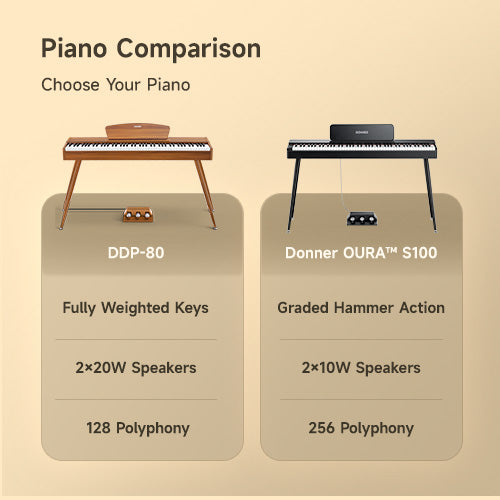
Fully weighted keys build finger strength, improve dynamic control, and transfer more naturally to acoustic pianos — making them the better choice for most piano learners. Semi-weighted keys can still work when portability, lighter touch, or a lower starting cost matters more than long-term piano technique.
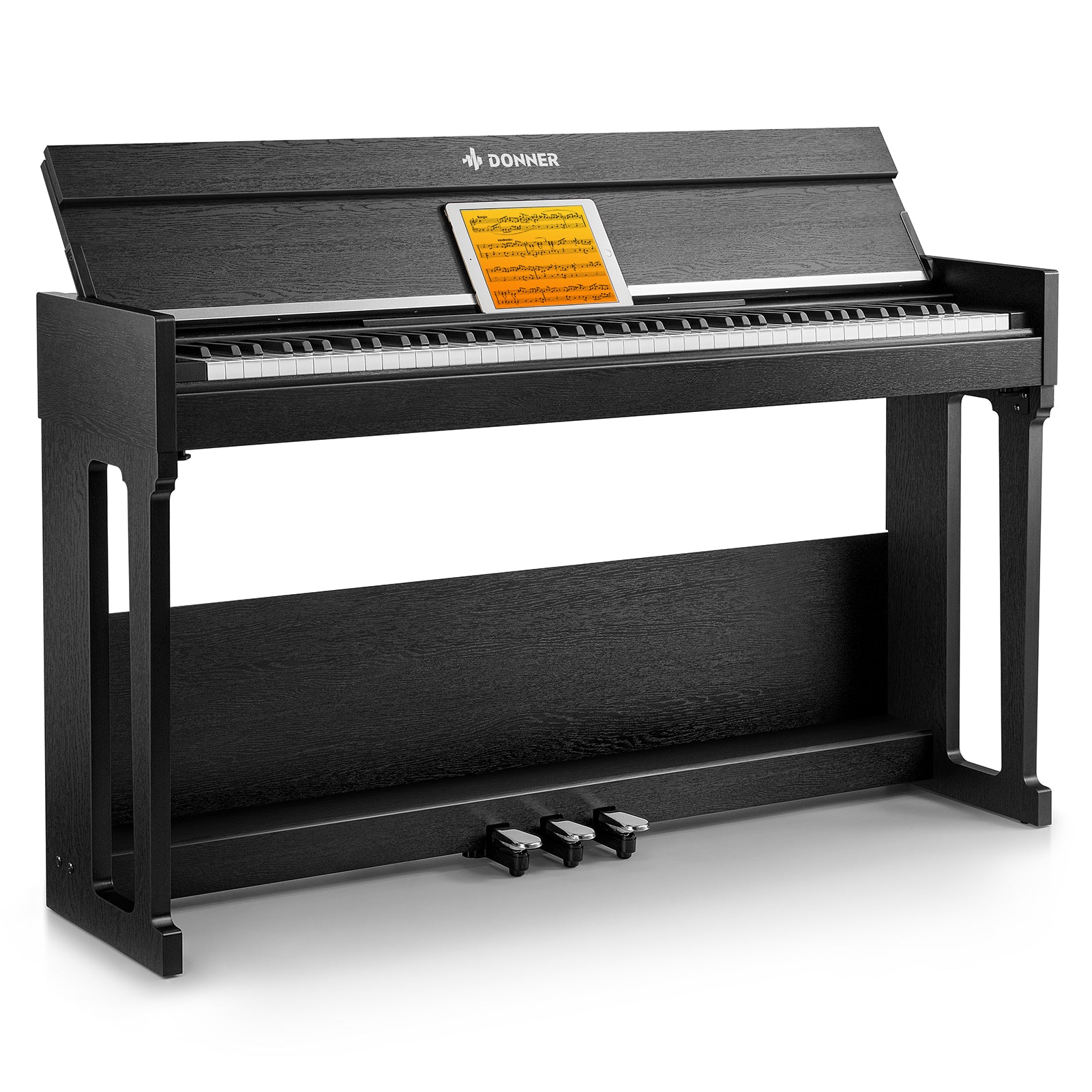
If your goal is piano progress that holds up over time, fully weighted keys are usually the right answer. If you need a lighter instrument for travel, casual playing, or mixed synth work, semi-weighted keys can still be a practical starting point. If you are comparing models now, start by browsing Donner's digital pianos so you can match key action to real product types.
This guide breaks down feel, technique impact, portability, and budget in plain language, then answers the most common buyer questions before you choose.
Table of Contents
- At a Glance: Fully Weighted vs Semi-Weighted Keys
- What Are Fully Weighted Keys?
- What Are Semi-Weighted Keys?
- Why Fully Weighted Keys Are Usually Better for Piano Learning
- When Semi-Weighted Keys Still Make Sense
- Best Donner Fully Weighted Digital Pianos
- Fully Weighted vs Semi-Weighted Keys FAQ
- Choose the Key Action That Supports Your Piano Goals
- Related Posts
At a Glance: Fully Weighted vs Semi-Weighted Keys
| Comparison Point | Fully Weighted Keys | Semi-Weighted Keys |
|---|---|---|
| Key resistance | Higher, closer to acoustic piano | Lighter spring-plus-weight feel |
| Finger strength training | Strong | Moderate |
| Dynamic control | More precise | Adequate for basic dynamics |
| Portability | Usually heavier instruments | Usually lighter instruments |
| Price tier | Mid to premium most often | Entry to mid most often |
| Best fit | Piano learners, technique-focused players | Casual players, producers, mobile setups |
What Are Fully Weighted Keys?
Fully weighted keys use a heavier action system that mimics piano resistance under your fingers. On most digital pianos, low notes feel a bit heavier and high notes feel lighter, which helps your hands learn realistic control across the keyboard.
In practical terms, fully weighted action is the safer path when your goal is proper piano technique, acoustic transfer, and long-term consistency.
What Are Semi-Weighted Keys?
Semi-weighted keys combine spring action with added resistance, so they feel firmer than unweighted synth keys but lighter than fully weighted piano action. The touch is usually faster and easier to press, which many players like for casual practice, MIDI input, and mixed keyboard parts.
The tradeoff is control depth: semi-weighted action can teach notes, rhythm, and coordination, but it usually gives less realistic feedback for advanced piano dynamics and touch.
Why Fully Weighted Keys Are Usually Better for Piano Learning?
Playing Feel: Which One Feels Closer to an Acoustic Piano?
Fully weighted keys win for realism. The deeper resistance and more natural rebound make phrasing, articulation, and timing feel closer to an acoustic instrument, while semi-weighted keys usually feel springier and less grounded.
Finger Strength: Which Action Builds Better Technique?
Fully weighted keys win for technique development. They ask more of your fingers and hands during daily practice, which builds the strength and control you need for harder repertoire later.
Dynamic Control: Which Action Gives You More Expression?
Fully weighted keys usually give you better dynamic range because key travel and resistance are more stable under different playing intensities. Semi-weighted keys can still produce soft and loud contrast, but subtle control is often harder.
Portability and Budget: Where Semi-Weighted Still Wins
Semi-weighted keys often win on mobility and entry cost. If you carry your instrument often, work in tight spaces, or need a lower-cost starting point, semi-weighted action can be the practical choice while you build early skills.
When Semi-Weighted Keys Still Make Sense?
Semi-weighted keys are still a valid option in specific scenarios:
- You are testing commitment and need a lower-cost first instrument.
- You prioritize portability for dorms, shared spaces, or frequent moves.
- You play mixed styles where fast synth or organ parts matter as much as piano feel.
- You are buying for a very young beginner who may struggle with heavier key resistance at first.
If this is your situation, an option like the Donner DEP-1S digital piano can work as a transition setup before moving to fully weighted action.
Best Donner Fully Weighted Digital Pianos

- Graded hammer action with stable home-practice feel
- Furniture-style format for dedicated playing spaces
- Connectivity that supports modern learning workflows
- Heavier cabinet format, less convenient for frequent moving

- Full-size weighted keybed with straightforward controls
- Furniture-style setup for regular home practice
- Strong fit for learners who want a simple piano workflow
- Fewer sound options than multi-voice digital pianos

- 88-key weighted action in a more portable body style
- Bluetooth support for modern beginner workflows
- Flexible setup for smaller rooms and moving routines
- Entry-level speaker power and refinement versus heavier cabinets
Fully Weighted vs Semi-Weighted Keys FAQs
Is a fully weighted or semi-weighted keyboard better for beginners?
For beginners who want to learn piano technique that transfers to acoustic instruments, fully weighted keys are usually better because they build finger strength and touch control from day one, while semi-weighted keys are better only when portability, lighter feel, or short-term budget limits are the top priority.
Can you learn piano on semi-weighted keys?
Yes, you can learn notes, rhythm, and basic coordination on semi-weighted keys, especially in your first stage, but long-term piano development is usually slower because semi-weighted action gives less realistic resistance for advanced dynamics, finger strength, and acoustic-style touch consistency.
What do semi-weighted keys feel like?
Semi-weighted keys usually feel light-to-medium with spring pushback, so they are faster to press and easier on the hands than fully weighted action, but they do not deliver the same grounded resistance or expressive control that piano learners usually need for realistic technique.
Are semi-weighted keys better for young children?
For some very young children, semi-weighted keys can be a practical starting point because the lighter action is easier to press and less physically tiring, but as hand strength develops, moving to fully weighted keys is usually the better path for real piano technique.
Choose the Key Action That Supports Your Piano Goal
Fully weighted keys are usually the better investment when your goal is real piano progress, while semi-weighted keys are a practical option for portability, lighter touch, and early-stage experimentation.
Explore Donner's digital pianos and choose the key action that fits your practice routine and playing goals.