





If you are deciding whether to bring electric guitar to college dorm housing, the short answer is yes - as long as you expect to play regularly and can keep the routine quiet and secure. Check your residence-hall instrument rules, agree on practice times with your roommate, and confirm that the guitar and its case will fit without blocking a walkway. Plan to use headphones for amplified sound, but remember that the strings still make some noise in the room.
Donner Electric Guitars for College and Dorm Practice
Donner gives students a practical mix of value for money, beginner-friendly setup choices, and portable designs that are easier to move and store. That combination matters in a dorm, where one instrument may need to cover private practice, trips home, and occasional playing outside the room.
Choose among these six guitars by the way you expect to practice rather than treating them as a best-to-worst ranking. Some place headphone-ready tools inside the instrument, while others give you a familiar full-size guitar and work best with a separate quiet-practice device.
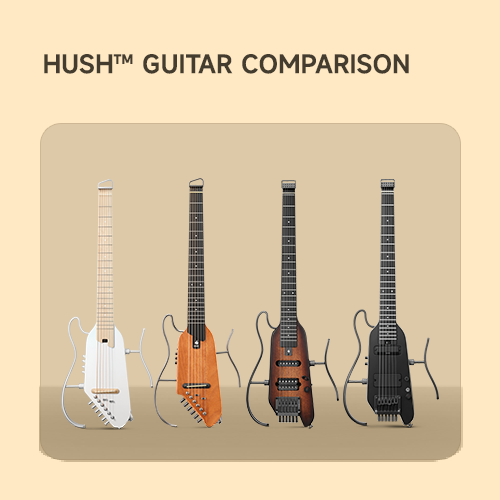
Donner HUSH X PRO Electric Guitar Best all-in-one rig

Pros
- Guitar-model simulation, amp modeling, built-in effects, and IR import support keep tone shaping onboard.
- Quick-release frames and a deluxe travel gig bag make the headless design easier to move and store.
- 1/8-inch and 1/4-inch outputs, USB-C, OTG connectivity, and included earphones support several private-practice connections.
The Donner HUSH X PRO Electric Guitar suits a student who wants the core practice rig built into a compact instrument. Its headless format and onboard DXP system reduce the need to assemble a larger dorm setup, while multiple outputs and USB-C or OTG connectivity keep the practice route flexible.
Donner HUSH X LIVE Travel Guitar with Speaker Best dorm-to-jam flexibility

Pros
- A detachable speaker module supports approved daytime jams or practice-room use.
- Five amp models plus delay, reverb, modulation, and noise-gate effects expand the onboard sounds.
- Bluetooth backing-track playback, a gig bag, and essential accessories support practice on the move.
The Donner HUSH X LIVE Travel Guitar with Speaker fits a student who wants one compact guitar for quiet-hour practice and permitted daytime playing. The quick-install detachable speaker handles the daytime role, while five amp models and built-in effects keep sound shaping onboard. For quiet hours, connect the guitar to a separate headphone amp or audio interface rather than relying on the speaker.
Donner HUSH I EVO2 Travel Guitar Best acoustic-style option

Pros
- A 3.5 mm stereo headphone output creates a direct route for private practice.
- Tool-free removable frames make the headless travel format easier to pack and store.
- A built-in chromatic tuner, gig bag, strap, and magnetic T-wrench simplify the basic setup.
The Donner HUSH I EVO2 Travel Guitar is the acoustic-electric-feel choice for a student who wants a compact instrument and a direct headphone path. Tool-free removable frames simplify packing, while the 3.5 mm stereo headphone output keeps amplified practice private.
Donner HUSH X Portable Electric Guitar Kit for Travel Best quiet dorm value

Pros
- The 4.4-pound headless body and removable frame make transport and small-room storage easier.
- A 1/8-inch headphone output and aux input support private practice with backing tracks.
- The deluxe travel gig bag, earphones, tuner, strap, cable, and picks reduce the extras needed at move-in.
The Donner HUSH X Portable Electric Guitar Kit for Travel pairs a full-scale electric playing format with a headless, removable-frame body listed at 4.4 pounds. Its headphone and backing-track path is straightforward, while the active/passive circuit and Alnico V H-S pickup configuration give the instrument added tonal flexibility.
Donner DST-152 HSS with Coil Split Electric Guitar Kit Best complete starter kit

Pros
- An HSS pickup configuration and push-pull coil split broaden the available pickup combinations.
- The kit includes an amplifier, gig bag, capo, strap, strings, tuner, cable, and picks.
- A C-shaped maple neck and 22 frets provide a familiar full-size electric-guitar layout.
The Donner DST-152 HSS with Coil Split Electric Guitar Kit takes the traditional full-size starter-kit route. Its HSS pickup layout, five-way blade switch, and push-pull coil split provide several pickup combinations. Use the included amplifier only during permitted hours or in a practice room; quiet dorm practice requires a separate headphone-capable device.
Donner HLX-500 Headless Electric Guitar Best compact full-scale

Pros
- The compact headless design retains a 25.5-inch scale and 24 frets.
- A travel-oriented body is easier to carry and place in a small room.
- The lightweight gig bag supports both handheld and backpack carrying modes.
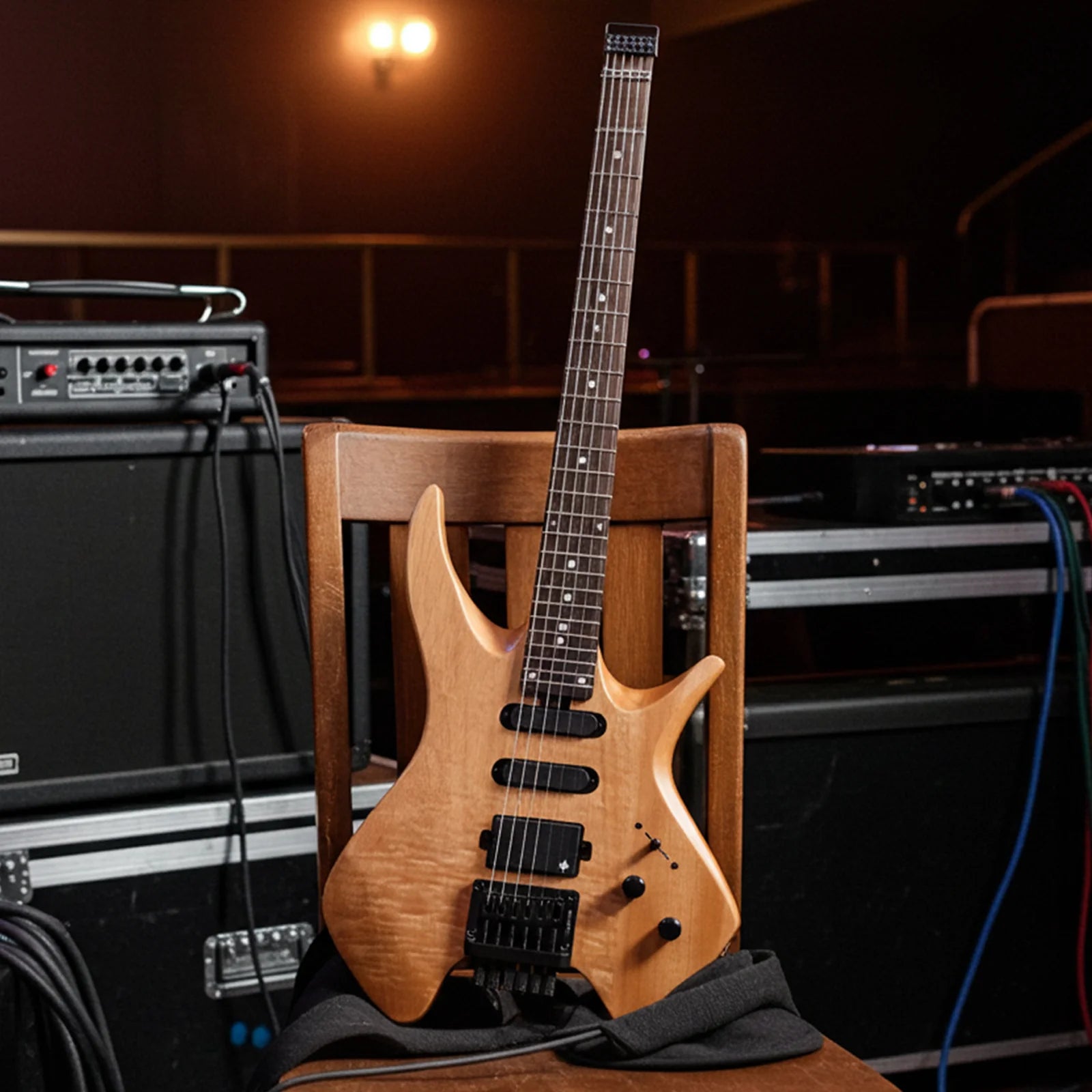
The Donner HLX-500 Headless Electric Guitar is the current name for the model formerly called NHL-500; the product itself did not change. Its compact body keeps a 25.5-inch scale and 24 frets, making it a portable option for a student who still wants a full-scale layout. Add a separate headphone amp or audio interface for quiet dorm practice.
When Bringing an Electric Guitar to College Makes Sense
Bring the guitar when you expect to play often enough to justify the space and can give it a secure, out-of-the-way home. Think through the full routine before move-in: how you will transport it, when you will practice, where the case will sit, and whether your roommate and residence-hall rules allow that plan.
A compact electric guitar can be easier to manage quietly than an acoustic because the amplified sound can go to headphones. That advantage only works when the guitar has a built-in headphone route or you bring a headphone amp, a modeling amp with headphone output, or an audio interface. If you will rarely play or cannot store the instrument safely, leaving it at home may be the better decision.
Build a Quiet Electric Guitar Setup for Your Dorm
A quiet dorm setup needs a simple signal chain. Connect the electric guitar to its built-in headphone system, a headphone amp, a modeling amp with headphone output, or an audio interface, then listen through wired closed-back headphones. Choose the route that matches the guitar you bring instead of assuming every model has a headphone jack.
Use wired monitoring as the default while playing. Bluetooth can introduce noticeable latency between picking a note and hearing it, which can make timing feel unsettled. Keep the headphone level comfortable, and keep backing tracks low enough that you can hear both the music and your own playing clearly.
Tune without a speaker, pick lightly, or use palm muting when someone nearby is studying or sleeping. Save speaker practice for permitted daytime hours or move it to a campus practice room. Headphones remove the amplified sound from the room, but the strings and your hands still create some audible noise, so the setup is quiet rather than literally silent.
Agree on Quiet Hours Before You Start Playing
Read the residence-hall policy before assuming headphone practice or an amplifier is allowed. Talk with your roommate early about study time, sleep schedules, acceptable sound, and the hours when you can practice. A clear agreement is easier to follow than waiting for irritation to build.
Revisit the agreement if class, work, or sleep schedules change. When amplified playing could disturb your roommate or a neighbor, move the session to a campus music room, rehearsal space, or club facility instead of trying to make the dorm handle every kind of practice.
Store and Protect Your Guitar in a Small Dorm Room
Keep the guitar in a fitted gig bag or case and place it somewhere dry, stable, and clear of daily traffic. Avoid walkways, radiators, windows, drinks, and crowded gatherings, where a small accident can damage the instrument or turn the case into a trip hazard.
Lock the room when you leave, decide who may handle the guitar, and record its serial number. It is also worth checking whether a family policy, renters insurance, or dedicated instrument insurance applies while the guitar is at school.
Make Music Part of Your New Semester
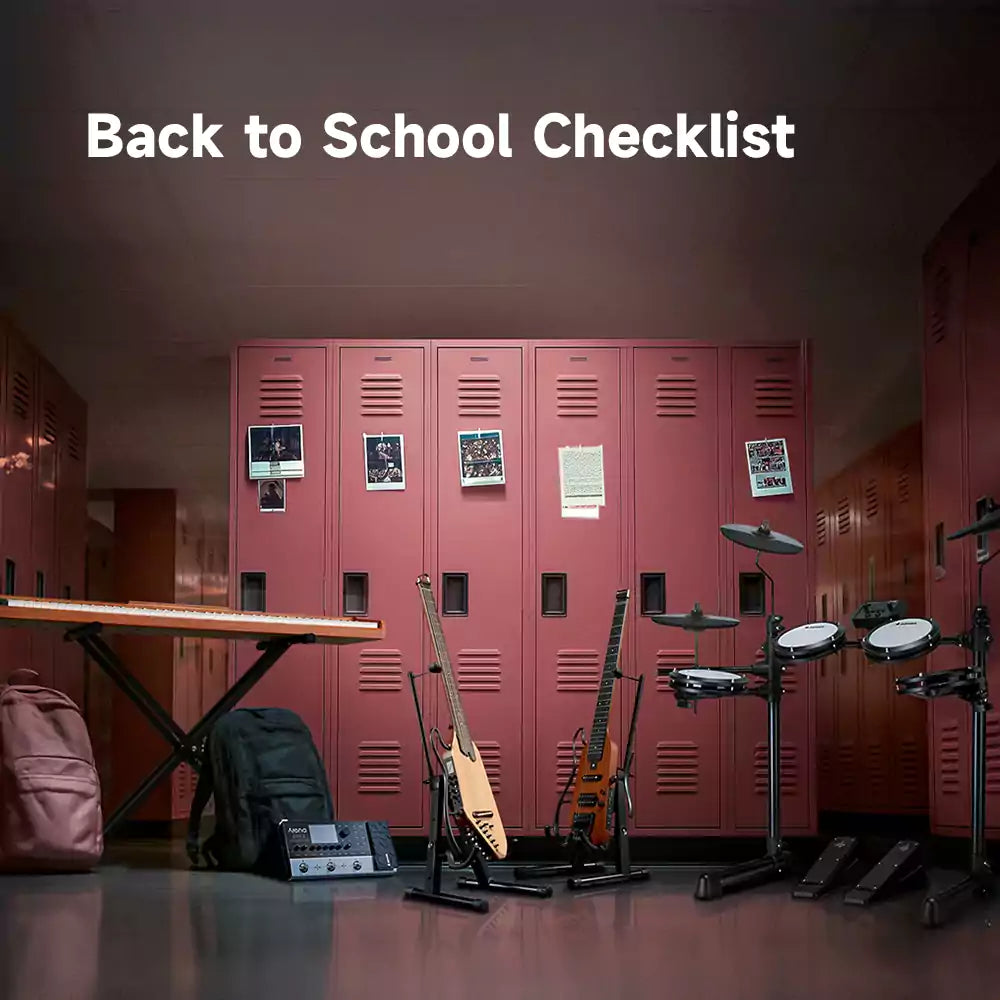
If bringing a guitar will help you play regularly and you can respect the room's limits, make it part of move-in. You can shop Donner's Back to School Sale for an electric guitar or another instrument that fits your new routine, then build a quiet practice habit that works for you and your roommate. Let music open a new semester with something worth practicing for.