








The best electric guitar brands are not interchangeable: a familiar logo matters less than whether a particular neck, pickup layout, and instrument format fit your music and practice space. If you are choosing a first electric guitar kit, also check what playing and listening gear you still need beyond the guitar.
Here, ten brands are compared by the kinds of players they serve, with two or three representative models under each name. That makes the differences between classic solidbodies, rock-focused designs, beginner lines, and compact travel instruments more useful than a ranking based on reputation alone.
The Best Electric Guitar Brands at a Glance
Start with the type of guitar and player each name serves, then compare the representative models under that brand.
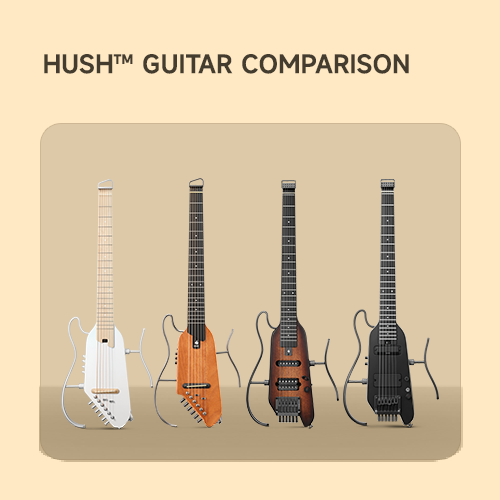
- Donner — newer players needing compact HUSH travel guitars or the HLX-500 headless solidbody
- Fender — mainstream Stratocaster HSS and Telecaster solidbodies
- Gibson — classic rock and blues Les Paul and SG humbucker models
- Yamaha — flexible Pacifica HSS and chambered Revstar guitars
- Ibanez — slim-neck RG and Gio rock designs
- Epiphone — accessible Les Paul humbucker and P-90 choices
- Squier — first-guitar Sonic and vintage-style Classic Vibe Stratocasters
- Jackson — speed-neck Dinky models for rock and metal
- Gretsch — hollow G2420 and center-block G2622 Streamliners
- Sterling by Music Man — approachable Cutlass HSS guitars
Donner: Best overall beginner-friendly brand
Donner is the beginner-friendly option when a full-size guitar is not the only route into playing. Its direct-to-consumer lineup includes compact acoustic-electric travel models for headphone practice, a headless solidbody, and a stringless smart-guitar alternative. Decide whether you want traditional fretted electric technique, an acoustic-electric practice format, or a different input method before choosing among them.
Donner HUSH I EVO2 Travel Guitar Best silent practice travel guitar

The Donner HUSH I EVO2 Travel Guitar shows Donner's compact acoustic-electric approach: removable body frames attach with tool-free thumb screws, so the instrument can be packed for travel and assembled for a more familiar outline. An undersaddle piezo pickup feeds the HPS-II preamp, with a 3.5 mm headphone output for private practice.
A built-in chromatic tuner includes a low-battery alert, and the five-piece maple and mahogany neck has an HPL fretboard. The included gig bag, strap, and magnetic T-wrench help you keep the setup together. Choose this format for acoustic-electric playing in a small space, not as a substitute for a full-size magnetic-pickup electric.
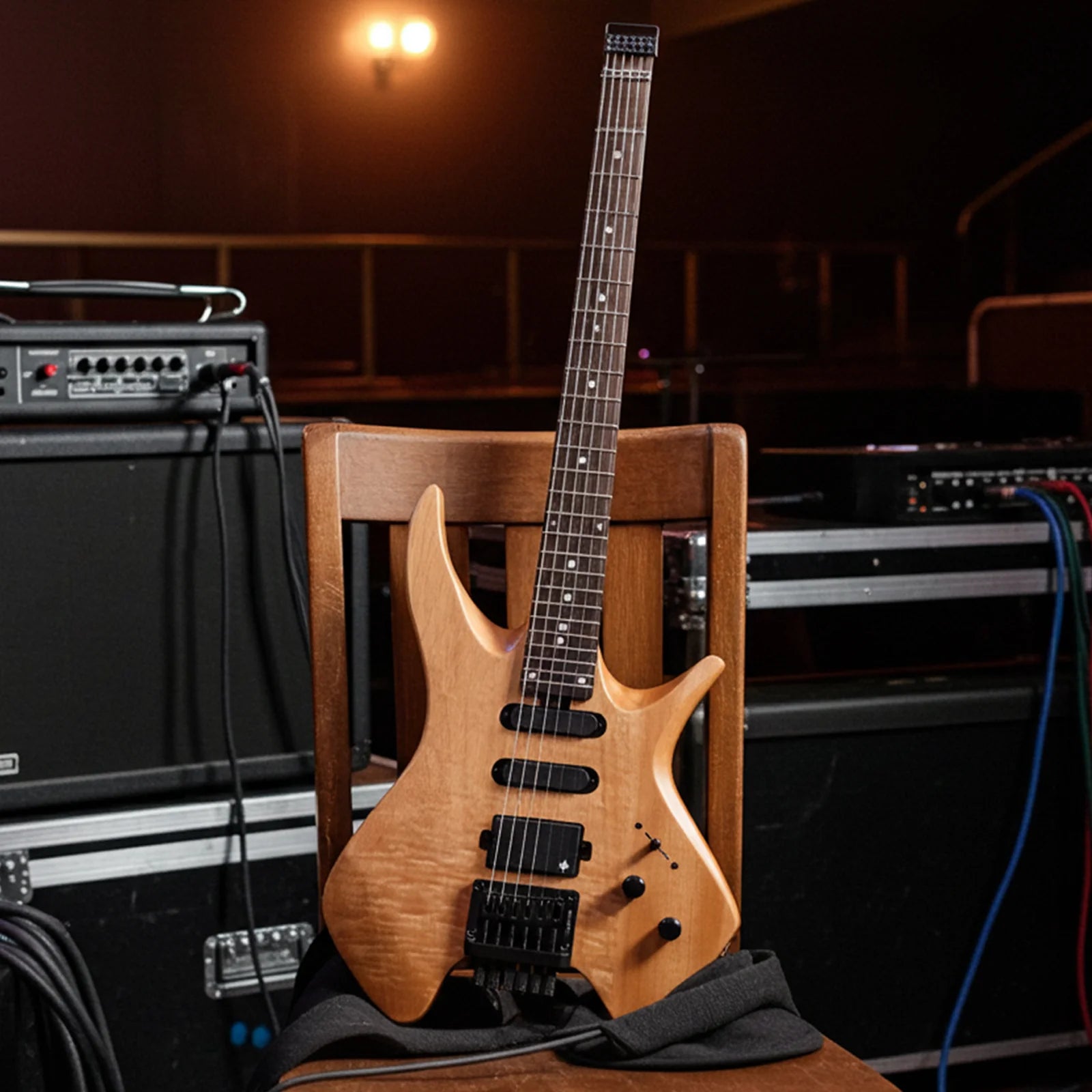
Donner HLX-500 Headless Electric Guitar Best headless solidbody

The Donner HLX-500 Headless Electric Guitar is Donner's conventional magnetic-pickup alternative for a player who still wants a compact footprint. Its solid poplar body joins a four-point bolt-on maple neck, and locking Donner Hush Headless bridge tuners keep the tuning hardware at the body end.
A 25.5-inch scale, 24 nickel-silver frets, zero fret, and 12-inch-radius rosewood fingerboard make this a different playing proposition from the frame-style HUSH I EVO2. SSH pickups use a 3-position switch with volume and tone controls. A custom gig bag, strap, and pick come with the guitar; the headless balance remains worth comparing with a familiar instrument.
Donner VIVA Stringless Smart Guitar Best stringless smart guitar

The Donner VIVA Stringless Smart Guitar represents a different idea within Donner's electric-guitar lineup. The officially listed model has no traditional strings, so it is not a conventional starter guitar for practicing fretting, picking, or string changes.
Consider the VIVA if the stringless smart-guitar format itself interests you. If your goal is to build technique on a traditional electric, the HLX-500 offers strings and magnetic pickups, while the HUSH I EVO2 offers an acoustic-electric travel route. The VIVA's appeal is its alternative playing interface rather than a like-for-like replacement for either.
Fender: Best mainstream all-round brand
Fender makes sense when you want an established bolt-on electric-guitar platform with a broad range of replacement and aftermarket parts. The Stratocaster HSS covers multiple pickup characters, while the Telecaster keeps its controls and fixed bridge simpler. The choice between them is more useful than the logo alone.
Fender Player II Stratocaster HSS Electric Guitar Best all-round classic
The Fender Player II Stratocaster HSS Electric Guitar is Fender's flexible classic here: two Alnico V single-coils give you traditional Strat positions, and an Alnico II bridge humbucker adds a thicker option. The 5-way switch makes those choices available without changing instruments.
Its Modern C neck has a satin urethane back, rolled fingerboard edges, a 9.5-inch radius, and 22 medium jumbo frets. Alder is joined by chambered ash or mahogany body options depending on finish. A 2-point tremolo and ClassicGear tuners suit a player who wants pitch-arm expression; compare that upkeep with the fixed-bridge Telecaster below.
Fender Player II Telecaster Electric Guitar Best straightforward workhorse
The Fender Player II Telecaster Electric Guitar is the simpler Fender path if you like the two-pickup Tele layout and a fixed bridge. Alnico V single-coil Tele pickups use a 3-way blade switch, and the six-saddle string-through-body bridge lets each string's intonation be adjusted.
A satin-backed Modern C neck and rolled-edge maple or slab rosewood fingerboard support comfortable fretting across 22 medium jumbo frets. Bodies come in alder, chambered ash, or chambered mahogany. Compared with the HSS Stratocaster, you trade its bridge humbucker and tremolo for a more direct control and bridge arrangement.
Gibson: Best classic rock brand
Gibson is a classic rock and blues choice built around mahogany designs and humbucking pickups. A Les Paul Standard 60s supplies the substantial single-cut format; the SG Standard gives you a lighter double-cutaway alternative. Compare the body feel and neck profile before assuming the same brand means the same playing experience.
Gibson Les Paul Standard 60s Electric Guitar Best classic rock icon
The Gibson Les Paul Standard 60s Electric Guitar is Gibson's substantial single-cut rock and blues format. A non-weight-relieved mahogany body with a carved figured maple cap pairs with 60s Burstbucker pickups, so choose it if dual-humbucker sound and a full solid body are central to your decision.
Its mahogany neck uses a 60s-style SlimTaper profile and a rosewood fingerboard with 22 medium jumbo frets. Audio-taper potentiometers and Orange Drop capacitors form the pickup control circuit; an ABR-1 Tune-O-Matic bridge and aluminum Stop Bar anchor the strings. If body weight matters to you, compare its non-weight-relieved construction with the SG rather than assuming all Gibson shapes feel alike.
Gibson SG Standard Electric Guitar Best lightweight rock classic
The Gibson SG Standard Electric Guitar offers a different Gibson rock feel through its solid mahogany double-cutaway body and rounded-profile mahogany neck. The long-tenon neck joint meets the body at the 19th fret, and a bound rosewood fingerboard carries 22 frets.
A 490R neck humbucker and 490T bridge humbucker use Alnico 2 magnets; the model is designed to cover vintage blues through higher-gain leads. Choose the SG if the lighter double-cutaway format appeals more than the substantial Les Paul Standard 60s, while keeping a classic two-humbucker direction.
Yamaha: Best value major brand
Yamaha offers two different paths within a major-brand lineup: the Pacifica 112V for a newer player wanting HSS flexibility, and the chambered Revstar Standard RSS20 for someone who wants humbuckers and additional switching. That spread makes it easier to choose by playing stage and sound instead of treating every Yamaha as a starter guitar.
Yamaha Pacifica 112V Best beginner value
The Yamaha Pacifica 112V gives a newer player a clear reason to look at Yamaha: its Alnico V HSS pickups combine a bridge humbucker with two single-coils, while a push-pull coil split adds another single-coil-style option from the humbucker. That range is helpful when your favorite songs do not all ask for the same pickup sound.
An alder body and bolt-on maple neck sit on a 25.5-inch scale with 22 frets and a rosewood fingerboard. A vintage-style tremolo with block saddles adds pitch-arm playing. If you would rather avoid tremolo maintenance, judge this feature against how often you expect to use it.
Yamaha Revstar Standard RSS20 Electric Guitar Best modern versatility
The Yamaha Revstar Standard RSS20 Electric Guitar is for a player who wants Yamaha's more modern dual-humbucker direction rather than the Pacifica's HSS layout. Two custom Alnico V humbuckers feed a 5-position selector; a passive Focus Switch on the push-pull tone control provides another way to shape the response.
A chambered maple and mahogany body is designed to reduce weight while influencing tone, and the three-piece mahogany neck uses carbon reinforcement. The extra switching offers choices without changing pickups, but give yourself time to learn which settings you will use instead of treating more positions as an automatic advantage.
Ibanez: Best fast-neck brand
Ibanez is a practical stop for players drawn to slim necks and rock- or metal-oriented pickups. The fixed-bridge RG421 is aimed at fast playing without tremolo upkeep; the Gio GRX20Z takes a more introductory route with a tremolo. Check which bridge you want to maintain as carefully as which neck feels quick.
Ibanez RG421 Electric Guitar Best fast-neck performance
The Ibanez RG421 Electric Guitar is the rock or metal option for a player who wants a thin Wizard III maple neck and a fixed bridge. Its 400 mm-radius jatoba fingerboard, 24 jumbo frets, and 25.5-inch scale favor movement across the upper register.
Two passive ceramic Quantum humbuckers run through a 5-way selector, giving more pickup combinations than a simple 3-way HH layout. The F106 bridge allows individual string-height adjustment without a tremolo system. Choose this setup if you value simpler tuning changes more than pitch-arm effects.
Ibanez Gio GRX20Z Best budget rock guitar
The Ibanez Gio GRX20Z is a more introductory Ibanez choice for someone who wants a slim maple neck and two high-output Infinity R ceramic humbuckers. The 5-way switch provides several ways to use its HH pickup layout for rock-oriented playing.
A poplar body joins a bolt-on GRX neck, with 22 medium frets and a 305 mm-radius jatoba fingerboard. Its 25.5-inch scale and T106 tremolo with six independent saddles let you try pitch-arm effects. The tremolo distinguishes it from the fixed-bridge RG421, so the bridge choice should follow your playing habits.
Epiphone: Best affordable classic brand
Epiphone brings familiar Gibson-style shapes into a more accessible line. The Les Paul Standard 60s uses two humbuckers and a fixed Tune-o-matic bridge, while the Special Double Cut pairs a slab mahogany body with P-90 pickups and a wraparound bridge. Their different pickups matter more than the shared Les Paul name.
Epiphone Les Paul Standard 60s Electric Guitar Best affordable Les Paul
The Epiphone Les Paul Standard 60s Electric Guitar takes the familiar Les Paul outline toward a more accessible model line. ProBucker 3 and ProBucker 2 humbuckers run through two volume and two tone controls with CTS potentiometers, giving each pickup separate adjustment through a 3-way toggle.
A mahogany body with an AA flame maple top pairs with a mahogany neck, laurel fingerboard, Graph Tech nut, and 24.75-inch scale. The LockTone ABR Tune-o-matic bridge is a fixed setup. If you want humbucker sound with individual controls, this is the Epiphone to compare with Gibson's Les Paul Standard 60s; do not expect single-coil positions.
Epiphone Les Paul Special Double Cut Best affordable P-90 guitar
The Epiphone Les Paul Special Double Cut takes Epiphone in another direction with two P-90 PRO soapbar pickups. P-90s are single-coil pickups, not the humbuckers of the Les Paul Standard 60s; separate volume and tone controls with a 3-way toggle give you direct adjustment for rock and blues parts.
Its slab mahogany double-cut body joins a glued-in mahogany neck with a 60s SlimTaper profile. A 12-inch-radius bound rosewood board, 22 medium jumbo frets, and 24.75-inch scale define the feel. The compensated Lightning Bar wraparound bridge, Graph Tech nut, Deluxe tuners, and included gig bag complete a straightforward alternative to the carved-top Les Paul.
Squier: Best first-guitar brand
Squier, Fender's beginner-focused sub-brand, gives you recognizable Stratocaster layouts in two distinct versions. The Sonic Stratocaster HSS combines a bridge humbucker with single-coils; the Classic Vibe '60s stays with three alnico single-coils and vintage-style appointments. Choose the pickup layout you will use, not just the finish you like.
Squier Sonic Stratocaster HSS Best first Strat-style
The Squier Sonic Stratocaster HSS is the direct first-Strat option if you want a bridge humbucker without giving up single-coil positions. Ceramic HSS pickups use a five-position switch, letting a new player explore thicker bridge sounds and clearer neck or middle choices with familiar controls.
A thin, lightweight poplar body and satin-finished C-shaped maple neck keep the instrument approachable. Its 25.5-inch scale, 9.5-inch-radius maple fingerboard, and 21 frets lead to a conventional Strat-style playing surface. A six-saddle vintage-style synchronized tremolo and sealed die-cast tuners complete the platform; players who do not need a tremolo should weigh its setup against a fixed bridge.
Squier Classic Vibe '60s Stratocaster Electric Guitar Best vintage-style value
The Squier Classic Vibe '60s Stratocaster Electric Guitar suits the player who wants the three-single-coil version of the Strat idea. Fender-Designed alnico pickups and five-position switching give you classic pickup combinations rather than the Sonic HSS model's bridge humbucker.
A nyatoh body with gloss finish carries a slim C-shaped bolt-on maple neck. Its Indian laurel fingerboard has a 9.5-inch radius, 21 narrow-tall frets, and a bone nut. Vintage-style tuners and a six-saddle synchronized tremolo complete the older-inspired format; if thicker humbucker sounds are your priority, compare the Sonic HSS instead.
Jackson: Best beginner metal brand
Jackson focuses on rock and metal guitars with speed-oriented necks and high-output humbuckers. The JS11 keeps the pickup controls straightforward for a newer player; the JS32 adds a compound-radius fingerboard and double-locking tremolo for more demanding pitch effects. The latter makes sense only if you want its extra setup routine.
Jackson JS Series Dinky JS11 Electric Guitar Best entry metal guitar
The Jackson JS Series Dinky JS11 Electric Guitar is Jackson's more straightforward metal-oriented starting point here. Two high-output ceramic humbuckers use a three-position blade switch, so a newer player can focus on bridge and neck sounds without navigating many pickup options.
A poplar Dinky body joins a graphite-reinforced bolt-on maple speed neck with a satin finish. The 12-inch-radius amaranth fingerboard has 22 jumbo frets on a 25.5-inch scale. A two-point fulcrum tremolo adds pitch movement; compare its regular setup needs with the fixed-bridge Ibanez RG421 if you change tunings often.
Jackson JS Series Dinky Arch Top JS32 DKAM Electric Guitar Best locking-tremolo value
The Jackson JS Series Dinky Arch Top JS32 DKAM Electric Guitar moves the Jackson design toward more involved lead playing. Its maple fingerboard changes from a 12-inch to a flatter 16-inch radius as you move upward; 24 jumbo frets give room for upper-register lines.
The poplar arch-top body joins a satin bolt-on maple neck with graphite reinforcement. Two high-output Jackson humbuckers use a three-position switch. A Floyd Rose licensed double-locking tremolo is intended for more dramatic pitch-arm use, but restringing and tuning changes demand more attention than on the JS11's simpler two-point bridge.
Gretsch: Best hollow-body brand
Gretsch is a useful comparison when you want hollow or semi-hollow character rather than another slab-body electric. Its Streamliner G2420 is fully hollow; the G2622 has a center block inside a larger semi-hollow body. That construction difference affects which format suits your room, stage volume, and preferred body feel.
Gretsch G2420 Streamliner Hollow Body Electric Guitar Best hollow-body value
The Gretsch G2420 Streamliner Hollow Body Electric Guitar represents Gretsch's fully hollow route. Its arched laminated maple body has a single cutaway and parallel tone bars, a different construction from the center-block G2622. Broad'Tron BT-3S humbuckers include a push-pull coil split for another pickup voice.
A soft C-shaped set nato neck meets a 12-inch-radius laurel fingerboard with 22 medium jumbo frets on a 24.75-inch scale. Master volume and tone controls sit alongside individual pickup volumes, while an Adjusto-Matic bridge and Bigsby B60 tailpiece support pitch-arm expression. The fully hollow body is worth choosing for that format, not simply because it shares a Streamliner name.
Gretsch G2622 Streamliner Center Block Electric Guitar Best semi-hollow value
The Gretsch G2622 Streamliner Center Block Electric Guitar gives you a semi-hollow comparison to the fully hollow G2420. A chambered center block runs through its 16-inch arched laminated maple body, helping manage feedback when amplified while retaining a large double-cutaway format.
Two Broad'Tron BT-3S humbuckers use a three-way toggle, individual pickup volumes, and master volume and tone. A push-pull coil split provides another sound. Its soft C-shaped nato neck, 12-inch-radius laurel board, 22 medium jumbo frets, and 24.75-inch scale define the feel; an Adjusto-Matic bridge and V-Stop tailpiece complete a non-Bigsby alternative.
Sterling by Music Man: Best modern budget brand
Sterling by Music Man offers accessible, modern Cutlass designs derived from Music Man's design language. The SUB Series CT30 HSS and Intro Series CT20 HSS both combine a bridge humbucker with single-coils, but differ in their pickup and model-line details. Compare neck feel and switching needs within the line instead of choosing solely by the family name.
Sterling by Music Man SUB Series Cutlass CT30 HSS Best modern budget HSS
The Sterling by Music Man SUB Series Cutlass CT30 HSS is a modern HSS option for a newer player who wants an Alnico pickup set and a fulcrum tremolo. The bridge humbucker and two single-coils give it a wider starting palette than a guitar with only one pickup type.
A poplar body and hard maple neck meet a hard maple fingerboard with a 12-inch radius, 22 frets, and 1.65-inch nut width. Its retro-style stained neck is part of the presentation, but the key playing decision is whether the flatter board and tremolo suit your hands and music.
Sterling by Music Man Intro Series Cutlass CT20 HSS Best first HSS guitar
The Sterling by Music Man Intro Series Cutlass CT20 HSS keeps the Cutlass layout approachable for a first guitar. Ceramic HSS pickups cover classic and modern sounds, while a fulcrum tremolo offers pitch-arm effects; the straight string path through the tuners is intended to improve intonation.
Its hard maple neck has a 12-inch fingerboard radius, 22 frets, and a 1.65-inch nut width. Compare the CT20 with the CT30 by the pickup type and the feel of the specific instrument, rather than assuming the similar names make them interchangeable.
How We Choose Electric Guitar Brands
A good brand fit begins with a specific guitar, not an overall winner. Compare the model lines your budget reaches, then check comfort, pickup sound, and the practical support you may need after purchase. The same company can serve a first-time player and a more experienced one with very different instruments.
Budget and Value
Compare entry, middle, and premium model lines on the features that affect your playing: neck feel, pickups, bridge, and included equipment. A more expensive line within a brand may add features you will not use; an accessible line can be enough if the fundamentals suit you. Avoid judging an entire manufacturer by one flagship or one starter pack.
Beginner-Friendly Playability
A newer player benefits from a neck that feels comfortable for repeated practice, a body they can hold without strain, and controls they can understand. Scale length changes fret spacing and string feel; body size matters if you carry the guitar or practice in a small room. Try to separate a flattering specification from something you can feel in your hands.
Music Style and Pickups
A single-coil pickup usually gives a clearer, leaner electric voice, while a humbucker supplies a thicker one. HSS combines a bridge humbucker with two single-coils for mixed styles; dual humbuckers make a direct rock or metal choice. A semi-hollow body changes the instrument's physical feel and character, so compare it with a solidbody at the kind of volume you expect to use.
Support, Availability, and Upgrade Path
Before committing to a model, check whether you can get a setup locally, replace routine parts, and find the accessories that fit. A broad model range and established parts ecosystem can help when you later change pickups or hardware; a smaller maker may offer a distinctive practice feature you value more. Resale and availability vary by model and location, so treat them as things to verify, not guarantees attached to a logo.
FAQ About Electric Guitar Brands
Use these questions to narrow the search to a model and playing situation rather than to a brand name alone.
What is the best electric guitar brand?
There is no single best electric guitar brand for everyone. Fender and Gibson represent different classic playing formats, Squier and Epiphone make related designs accessible to newer buyers, and Ibanez or Jackson fit particular fast-playing needs. Donner is worth considering when compact or quiet practice drives the choice; the best model is the one whose feel and sound fit your routine.
Which electric guitar brands are best for beginners?
Beginner-friendly choices include accessible lines from Squier, Yamaha, Epiphone, Ibanez, Jackson, Sterling by Music Man, and Donner. Compare a comfortable neck, a stable bridge, and a pickup layout you understand before deciding. A compact acoustic-electric practice instrument is a different starting path from a conventional amplified electric.
Is Fender or Gibson better for beginners?
Neither Fender nor Gibson is automatically better for beginners. Fender-style bolt-on guitars can provide several clear pickup sounds and familiar serviceable construction, while Gibson-style dual-humbucker guitars may fit the rock or blues tone you want from day one. Choose the particular neck and bridge you can live with, rather than buying a name in isolation.
What is the best electric guitar brand for metal?
For metal, look at models from Jackson or Ibanez with a neck and high-output humbuckers that suit fast playing. The Jackson JS11 keeps controls simple, while the RG421 uses a fixed bridge for players who do not need tremolo effects. A locking tremolo is useful for players who will use dramatic pitch changes and accept the extra setup.
Should beginners buy a major brand or a smaller brand?
A major brand can make it easier to find compatible parts, setup help, and a model line with familiar options, but that advantage still depends on the exact guitar and your location. A smaller brand may give you a distinctive travel or silent-practice feature. Buy the model that solves your playing problem, then check local support and resale rather than assuming either side wins.
Explore Electric Guitars at Donner
Choose a brand only after you have identified the neck feel, pickup sound, and practice format that fit your routine. Donner's electronic music instruments include compact playing paths; compare the individual guitar models and what each includes before making the final choice.