










Introduction: Best Electric Acoustic Guitar for Beginners
The best electric acoustic guitar for beginners is the one that fits where you practice. A full-size dreadnought fills a room and rewards you with acoustic volume, while a compact travel model fits a dorm shelf or a backpack and stays quiet through headphones. Body size and neck comfort shape how often you pick the guitar up, and quiet practice matters more than an extra feature when your practice space is shared.
There is no single winner across a beginner shortlist of acoustic-electric guitars. The ten picks below are matched to situations instead: a dorm room, a first plugged-in gig, a small frame, or a daily commute with a guitar in a gig bag.
The Best Electric Acoustic Guitars for Beginners at a Glance
Start with the Best for label that matches your space and playing style, then open the card that fits.
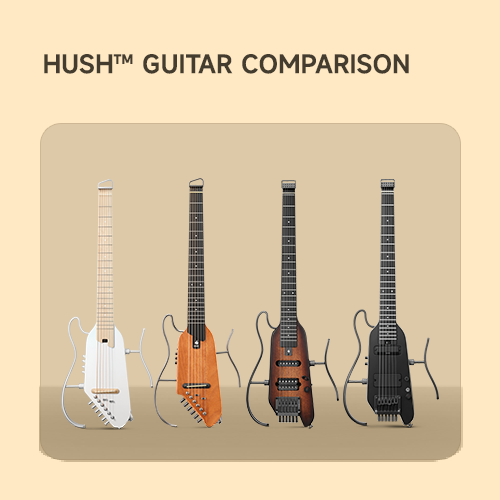
- Donner HUSH I EVO2 Travel Guitar — Best portable silent practice
- Fender CD-60SCE Dreadnought Acoustic-Electric Guitar — Best full-size all-rounder
- Yamaha APX600 Acoustic-Electric Guitar — Best slim-body comfort
- Donner HUSH X PRO Electric Guitar — Best built-in effects
- Taylor GS Mini-e Acoustic-Electric Guitar — Best compact premium
- Epiphone Hummingbird Studio Acoustic-Electric Guitar — Best classic styling
- Ibanez AEG7MH Acoustic-Electric Guitar — Best plug-in value
- Martin D Jr E Acoustic-Electric Guitar — Best small-body tone
- Donner HUSH I PRO Acoustic-Electric Travel Guitar — Best recording-ready travel
- Taylor Academy 12e Acoustic-Electric Guitar — Best comfort-focused compact
Donner HUSH I EVO2 Travel Guitar Best portable silent practice

Pros
- Headphone output for truly quiet practice
- Frames detach for packing and travel
- Gig bag, strap, and tool included
Cons
- Small body gives limited unplugged volume
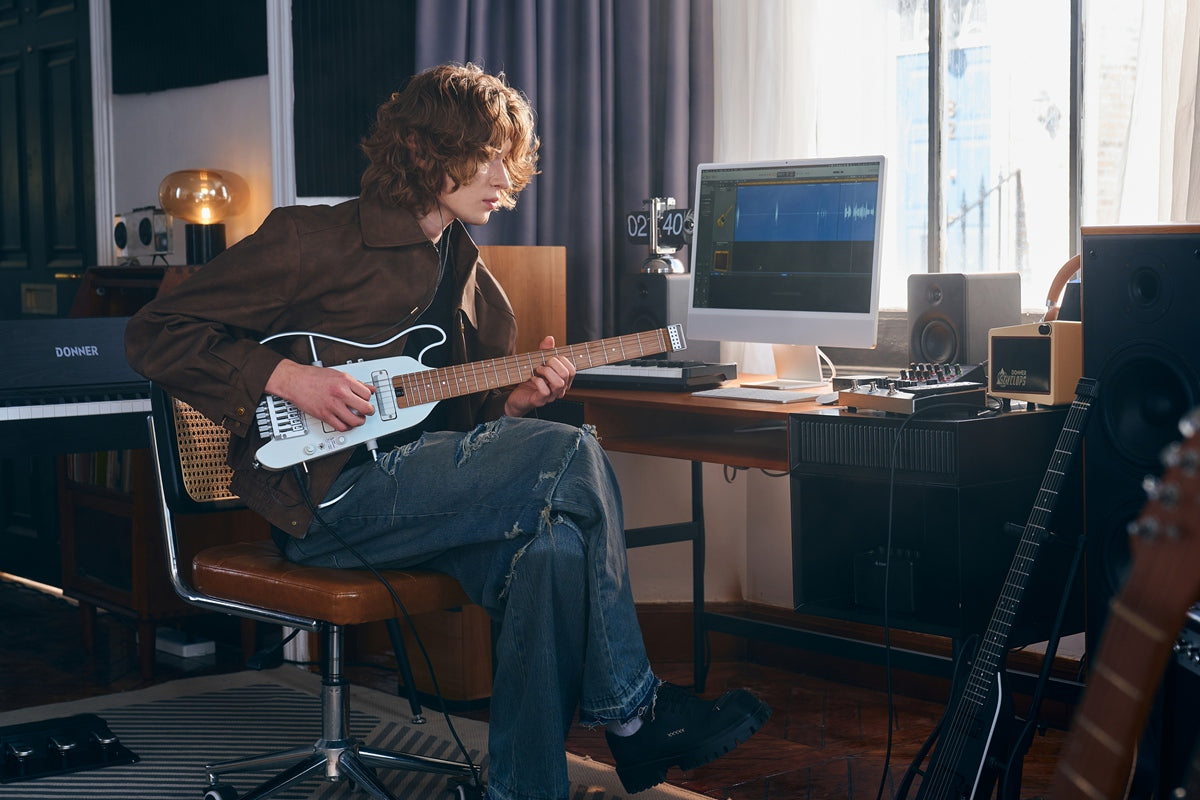
The Donner HUSH I EVO2 Travel Guitar answers the two problems a first guitar creates in a shared apartment or dorm: noise and storage. It is a compact acoustic-electric travel guitar rather than a full-size acoustic, with removable body frames that come off on a thumb screw so the whole instrument packs into its gig bag.
Practice stays quiet through the 3.5 mm headphone output, and an undersaddle piezo with the HPS-II preamp carries the plugged-in sound when you connect to an amp or interface. A built-in chromatic tuner with a low-battery alert keeps the instrument playable without extra gear, and the 5-piece maple and mahogany neck with an HPL fretboard uses the same feel you will meet on larger guitars. The gig bag, strap, and magnetic T-wrench arrive with it. The trade-off is that a travel body cannot match the acoustic presence of a dreadnought, so plan on headphones or an amp rather than group playing.
Fender CD-60SCE Dreadnought Acoustic-Electric Guitar Best full-size all-rounder
Pros
- Solid spruce top with scalloped X-bracing
- Rolled fingerboard edges ease the fretting hand
- Simple Fishman controls with a built-in tuner
Cons
- Full-size dreadnought body takes up space
- Laminated back and sides limit tonal growth
The Fender CD-60SCE Dreadnought Acoustic-Electric Guitar is the full-size option for a beginner who wants a familiar shape and a straightforward plug-in setup. The single-cutaway dreadnought pairs a solid spruce top with scalloped X-bracing and laminated mahogany back and sides.
The neck is built for beginning hands, with rolled fingerboard edges that smooth the playing surface. Fender CD-1 Fishman electronics add volume, bass, and treble controls, an integrated tuner with an on-off switch, and a low-battery indicator, so you can plug into a small amp or interface and shape your tone without pedals. This model is aimed at beginning to intermediate players who are ready to plug in. What you trade is portability: a dreadnought body takes up more space in a small room and feels larger against the body than a slim or compact design.
Yamaha APX600 Acoustic-Electric Guitar Best slim-body comfort
Pros
- Thinline cutaway body is comfortable to hold
- Narrower string spacing at a 25-inch scale
- SRT transducer resists feedback when amplified
Cons
- Slim body projects less when unplugged
The Yamaha APX600 Acoustic-Electric Guitar suits a new player who finds a full-size body uncomfortable. Its thinline cutaway shape is easier to hold and reaches the upper frets without the stretch a deep dreadnought demands.
A 25-inch scale and narrower string spacing shorten the reach along the fretboard, which helps a fretting hand that is still building strength. Scalloped bracing lifts the bass response, while an undersaddle piezo with the Yamaha SRT transducer targets natural tone, feedback rejection, and a mix-friendly signal. The model continues the APX500 line, one of the best-selling acoustic-electric guitars worldwide. The compromise is projection: a slim body pushes less air than a full dreadnought when you play without an amplifier.
Donner HUSH X PRO Electric Guitar Best built-in effects

Pros
- Built-in effects, amp modeling, and IR import
- Silent practice through headphones
- Travel-ready kit with accessories included
Cons
- A compact electric format, not a full-size acoustic
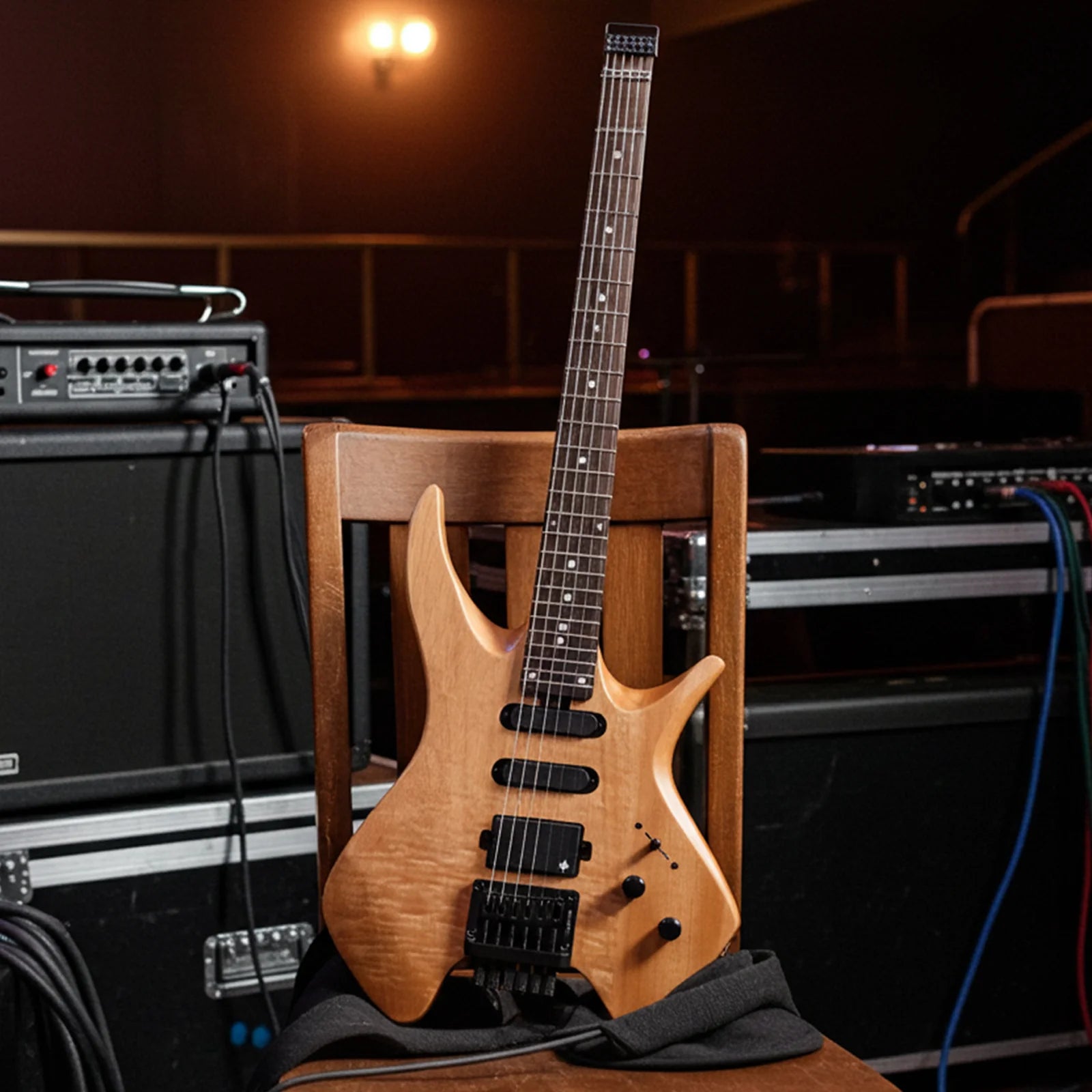
The Donner HUSH X PRO Electric Guitar gives a travelling beginner more to explore than a plain practice instrument. Effects, amp modeling, and guitar-model simulation all live in the guitar, so you can shape a range of sounds without buying pedals or an amplifier first.
The compact headless solid-body uses mahogany with neck-through construction and a slim C-shaped neck. 22 stainless-steel frets sit on a 25.5-inch scale over a roasted maple and HPL fingerboard, and custom Alnico V pickups pair a bridge humbucker with a neck single-coil on a 3-way toggle. The DXP system handles modeling and IR import through an OLED Super Knob, while Bluetooth audio, USB-C/OTG, and a headphone output cover play-along and quiet practice. A deluxe travel gig bag, earphones, strap, picks, USB cable, and 1/4-inch cable come with it. What you accept in return is that this is a headless travel guitar, not a full-size acoustic, so the sounds are modeled rather than produced by a resonating body.
Taylor GS Mini-e Acoustic-Electric Guitar Best compact premium
Pros
- Compact body with a solid top
- Slim 1-11/16 inch neck width
- ES-B pickup with an LED tuner onboard
Cons
- Compact body yields less low-end than a dreadnought
The Taylor GS Mini-e Acoustic-Electric Guitar is the compact choice for a player who wants a small instrument that still feels serious. Its body scales down the Grand Symphony shape, which keeps the guitar easy to carry without turning it into a toy.
A solid top over layered back and sides holds the tone together, and the slender Taylor neck measures 1-11/16 inches at the nut for a reachable fretboard. GS Mini-e electronics add an ES-B pickup with tone and volume controls plus a built-in digital tuner with an LED display, so you can plug in and check tuning without a separate device. The premium build is what you pay for, and it is also the main trade-off: a compact body gives up low-end and projection next to a full-size dreadnought.
Epiphone Hummingbird Studio Acoustic-Electric Guitar Best classic styling
Pros
- Square-shoulder dreadnought styling
- Short 24.75-inch scale suits smaller hands
- Fishman Presys VT preamp with soundhole controls
Cons
- Layered body has limited tonal development
The Epiphone Hummingbird Studio Acoustic-Electric Guitar is for the beginner who wants a guitar that looks the part. Square-shoulder dreadnought styling with a solid spruce top over a layered mahogany body delivers the classic look and a warm starting voice.
A mahogany neck in a Rounded C profile carries a rosewood fretboard with 20 frets on a 24.75-inch scale, a slightly shorter reach that suits smaller hands. Fishman electronics pair an S-Core under-saddle pickup with the Presys VT preamp, and volume and tone controls mount in the soundhole where they stay out of the way. Grover Rotomatic tuners and a 60s Kalamazoo-style headstock complete the look, and a standard gig bag comes with the guitar. The layered body is the trade-off; unlike a solid-wood back and sides, it will not open up much as the years pass.
Ibanez AEG7MH Acoustic-Electric Guitar Best plug-in value
Pros
- Onboard tuner works without plugging in
- Comfort Grip neck for longer practice sessions
- Chrome die-cast tuners for stable pitch
Cons
- Preamp offers basic rather than deep tone shaping
- Sapele top voices warmer than spruce
The Ibanez AEG7MH Acoustic-Electric Guitar delivers the most useful plugged-in control set for a budget-aware beginner. The AEG body carries a sapele top with matching sapele back and sides, and it stays comfortable whether the reader plays seated or standing.
The Comfort Grip okoume neck joins a purpleheart fretboard and bridge with 20 frets on a 25-inch scale, a combination intended to keep long practice sessions relaxed. An Ibanez undersaddle pickup runs through the AEQ-2T preamp, and the onboard tuner works even when the guitar is not plugged in, so tuning never depends on finding an amp. Chrome die-cast tuners hold pitch, and the 9V battery and 1/4 inch output cover amplification. The preamp is practical rather than deep, and a sapele top voices warmer than a spruce one, so brightness is not the point of this model.
Martin D Jr E Acoustic-Electric Guitar Best small-body tone
Pros
- Solid spruce top with sapele back and sides
- 1-3/4 inch nut width aids fingerpicking
- Martin E1 electronics and softshell case included
Cons
- Compact body gives less low-end weight
The Martin D Jr E Acoustic-Electric Guitar brings traditional acoustic character to a small body. The D Junior 14-fret shape stays compact and travel-friendly while keeping the proportions of a dreadnought, which matters if the reader wants a familiar voice rather than an adapted one.
A solid spruce top with sapele back and sides supports the classic Martin tonal signature. The High-Performance Taper neck measures 1-3/4 inches at the nut, giving the fingerboard room that suits fingerpicking and chord work. Onboard Martin E1 electronics let the reader plug in when practice turns into a performance, and a softshell case is included for storage and transport. The compact body is the compromise: it asks for a deliberate move away from the depth and low-end weight of a full-size dreadnought.
Donner HUSH I PRO Acoustic-Electric Travel Guitar Best recording-ready travel

Pros
- 18 effects, 8 body simulations, and 20 IR slots
- Bluetooth play-along and USB-C recording
- 8-hour battery with travel kit included
Cons
- Modest unplugged volume from a travel format
The Donner HUSH I PRO Acoustic-Electric Travel Guitar is built for the beginner who practices at home and wants to record without building a studio. Detachable metal body frames keep the headless travel format packable, and the mahogany body with a spruce top and the neck-through 5-piece mahogany and maple neck carry the acoustic side of the design.
The DONNER H-1 Effect System preamp does the heavy lifting: a 5-band EQ, Air Boost, and Tone Boost sit alongside 18 built-in effects, 8 body shape simulations, and 20 IR slots, so you can shape tone in the guitar. Bluetooth audio brings backing tracks in, and USB-C OTG output sends your playing straight to a recording app. Headphone outputs at 1/4 inch and 3.5 mm cover quiet practice, and the 2.2 kg body runs for 8 hours on its USB-C rechargeable battery. 20 frets sit on a 24.75-inch scale with a bone nut and stainless steel frets. A deluxe travel gig bag, earphones, strap, tools, cables, and picks are included, and the guitar comes in six colors. As with any travel guitar, the acoustic output stays modest, so recording and headphones are where it performs.
Taylor Academy 12e Acoustic-Electric Guitar Best comfort-focused compact
Pros
- Built-in armrest for playing comfort
- Solid torrefied spruce top
- ES-B system with a digital chromatic tuner
Cons
- Grand Concert body yields less volume than a dreadnought
The Taylor Academy 12e Acoustic-Electric Guitar targets the beginner who tires quickly when a guitar digs into the forearm. Its compact Grand Concert body includes a built-in armrest, a small addition that changes how long a practice session can last.
A solid torrefied spruce top with layered walnut back and sides carries the tone, and X bracing supports the response. ES-B pickup and preamp electronics include a built-in digital chromatic tuner, so plugged-in playing and tuning stay in one place. A Taylor Neck design and a lightweight gig bag make the instrument easy to handle. The Grand Concert body is the limitation as much as the benefit: it gives up some low-end and volume compared with a full dreadnought in exchange for the comfort a beginner is more likely to keep using.
How We Choose Acoustic-Electric Guitars for Beginners
Four checks decide most first purchases: whether the body fits against you, whether the electronics match how you will practice, whether the guitar can stay quiet in a shared space, and whether the build still makes sense after the first year. Work through them in that order and the shortlist narrows itself.
Body Size and Playing Comfort
Sit with the guitar before you decide, because body depth and width decide how your strumming arm and fretting hand sit. A full-size dreadnought gives the fullest unplugged sound, but it asks for a longer reach and more space. A thinline body, like the Yamaha APX600, sits closer to you and puts the upper frets within reach. A compact or scaled-down design is the third path: it travels well and suits a smaller frame, provided you accept a quieter acoustic voice. Whichever you choose, check that your fretting hand can reach the first fret without lifting your shoulder, and that the guitar does not slide off your leg.
Electronics and Plugged-In Tone
An undersaddle piezo pickup with a simple preamp covers the basics: plug in, adjust volume, bass, and treble, and read the onboard tuner. That setup is enough for a first amplifier or audio interface, and models such as the Fender CD-60SCE and Ibanez AEG7MH stay in that territory. A modeling or effects system goes further. The Donner HUSH X PRO and HUSH I PRO carry built-in effects, body shape simulations, and IR slots, which means the guitar can shape its own tone without pedals. Before buying, answer two questions: do you plan to plug in within the first few months, and do you want the guitar to produce its tone or to model it?
Quiet Practice and Portability
A headphone output changes your practice schedule more than any other feature on this list. The HUSH models route the signal straight to headphones, so you can play at night in a dorm or apartment without disturbing anyone. Detachable frames go a step further: the HUSH I EVO2 and HUSH I PRO come apart for storage in a gig bag, which decides whether a guitar travels with you or stays home. If you practice in a shared room, weigh headphone practice and packability before you weigh acoustic volume.
Build, Setup, and Long-Term Fit
A first guitar should still make sense after a year of practice. Solid tops, stable hardware, and necks that stay true matter more than a long feature list. Check the tuners, the bridge, and the fret ends, and expect a professional setup to improve action and intonation on almost any model. Accessories tip the balance as well: a gig bag, a strap, and picks mean the guitar is playable the day it arrives, which is how the Donner HUSH kits are configured.
FAQ About Electric Acoustic Guitars for Beginners
What is the best acoustic electric guitar for beginners?
It depends on which situation you need to solve. A full-size model such as the Fender CD-60SCE gives you traditional acoustic feel and projection, a slim-body design such as the Yamaha APX600 keeps the guitar comfortable against you, and compact travel models such as the Donner HUSH I EVO2 and HUSH I PRO cover quiet practice and portability. Match the body to your space first, then compare electronics.
What is the difference between an acoustic electric guitar and an electric acoustic guitar?
Both phrases describe the same instrument: an acoustic-style guitar with a pickup and preamp that can be plugged into an amplifier or interface. The wording order carries no technical difference, and the standard term is acoustic-electric.
Are acoustic electric guitars good for beginners?
Yes, as long as the body and neck feel comfortable and the electronics match how you plan to practice. An acoustic-electric works unplugged like any acoustic guitar, and the preamp adds amplification and tuning when you want them, so you are not paying for a feature you must use on day one.
What is the best starter acoustic electric guitar?
The best starter guitar is the one you will keep picking up. If you practice in a shared space, start with a headphone-ready travel model; if you want a full acoustic voice at home, start with a full-size or slim-body design. The ten picks above are grouped by that decision rather than by price.
Do I need an amplifier to use an acoustic electric guitar?
Not for quiet practice. The guitar works acoustically on its own, and models with a headphone output let you hear the pickup directly without any extra gear. You need an amplifier when you want to play louder than the guitar alone, or to perform with other musicians.
Find Your First Acoustic-Electric Guitar at Donner
Choosing by your practice situation beats comparing electronics on paper. Donner builds the HUSH travel models for quiet practice and portability, and the acoustic-electric guitars collection covers the full-size and slim-body formats for playing at home.