
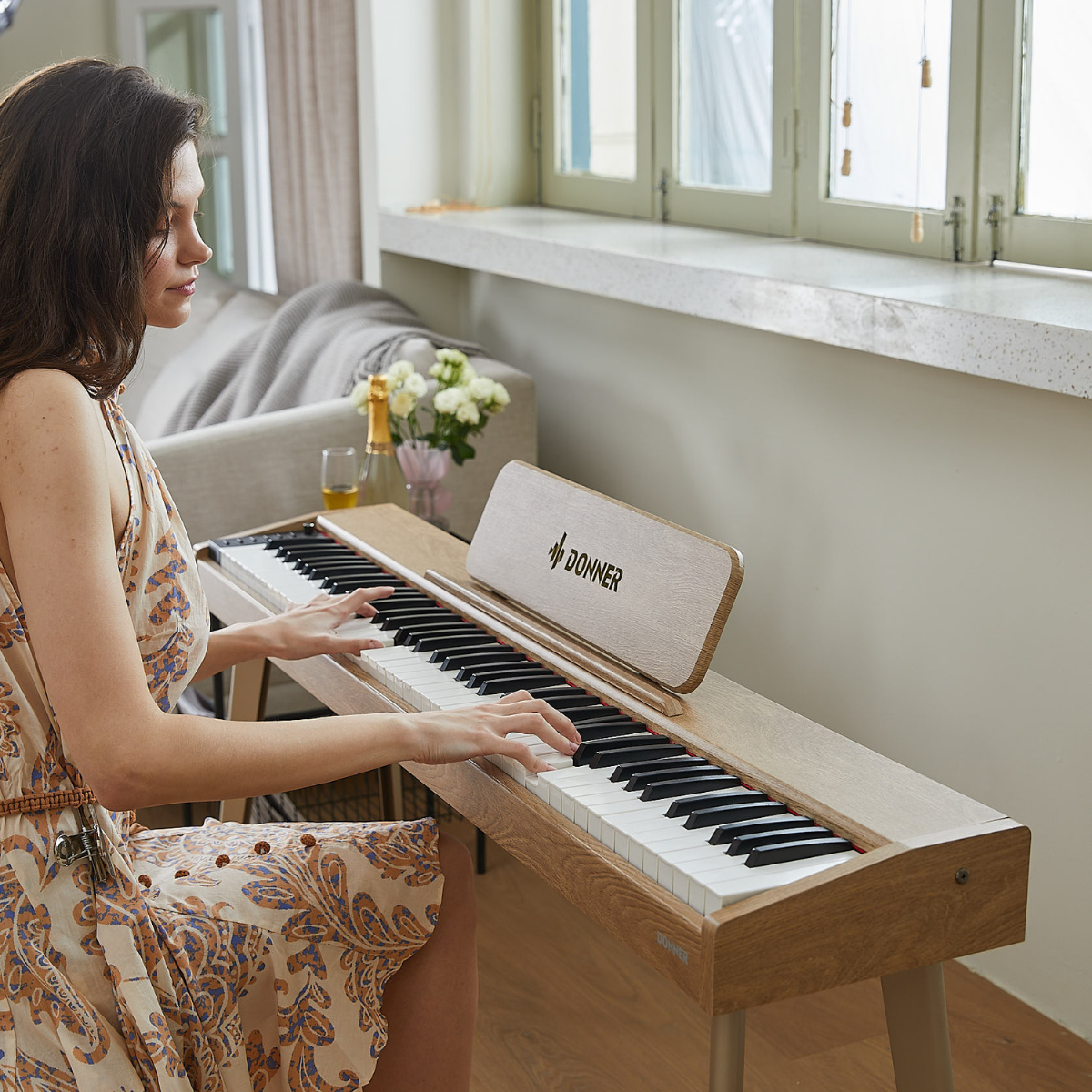
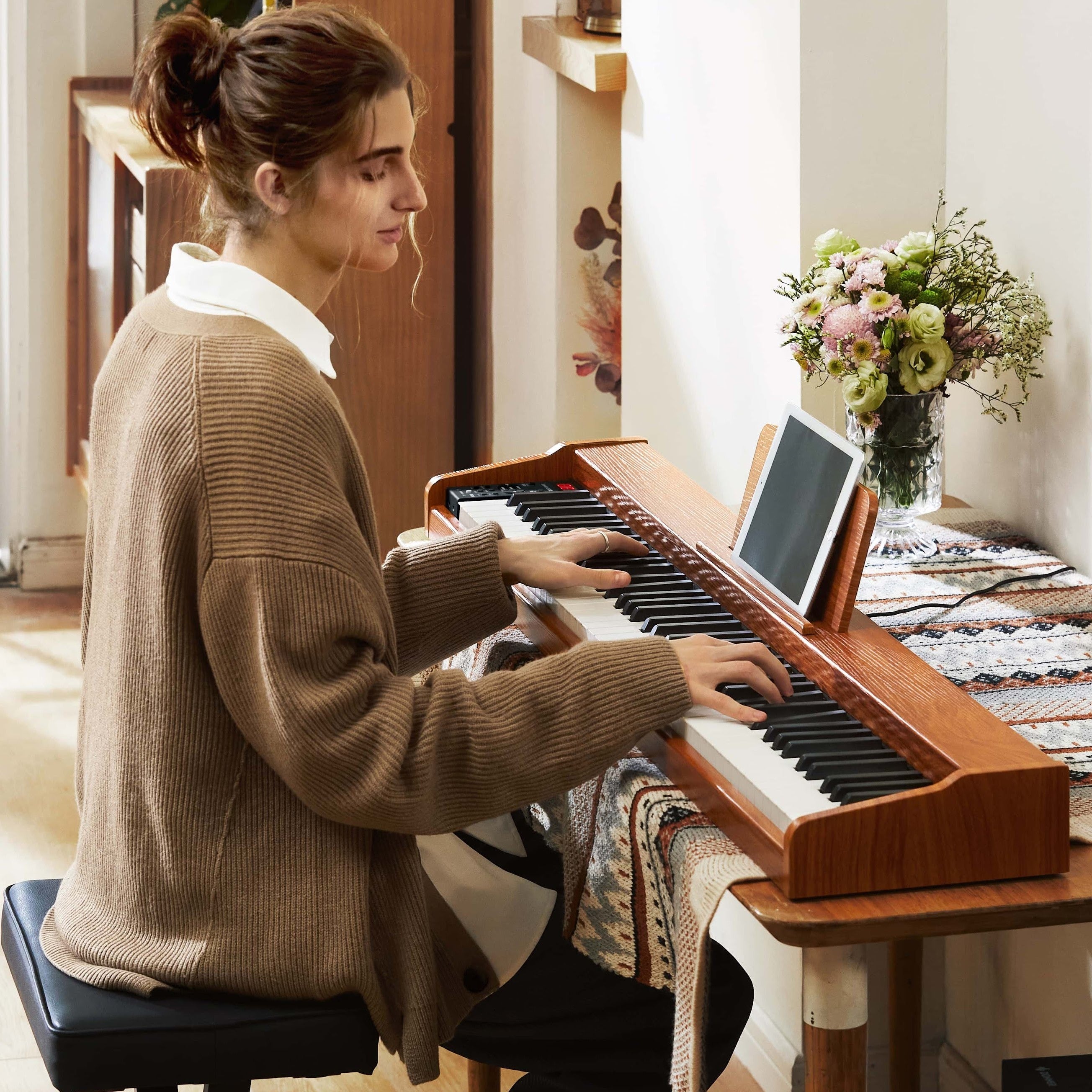






The best digital piano for you depends on more than the number of keys. The action changes how technique feels, the sound system affects how the instrument fills a room, and the connection options determine whether it fits naturally into lessons, app-based practice, or play-along sessions.
Start with your daily setup. A portable piano is easier to move but may need a separate stand and expanded pedals. An upright-style model takes more dedicated space, yet it can feel more complete at home. The wider digital piano category also ranges from piano-focused instruments to models with broader tones, rhythms, and accompaniment.
The ten picks below cover those different paths for US beginners, returning players, home pianists, and occasional performers. Each one has a clear best-for use case, so you can compare the features that will actually shape your practice instead of searching for one universal winner.
Best Digital Piano Picks at a Glance
- Donner DDP-200 MK2 - best for an upgraded home setup
- Roland FP-30X - best for portable all-round playing
- Yamaha P-225 - best for compact app practice
- Kawai ES120 - best for piano tone portability
- Donner DDP-95 - best for feature-rich home learning
- Roland FP-10 - best for entry-level action practice
- Yamaha P-145BT - best for simple beginner practice
- Kawai ES60 - best for focused practice
- Yamaha P-45 - best for a simple baseline
- Donner DDP-80 PLUS - best for design-focused home playing
| Product | Key action | Format | Connectivity | Best for |
|---|---|---|---|---|
| Donner DDP-200 MK2 | Dual-sensor graded hammer | Upright furniture | Bluetooth audio/MIDI, USB MIDI | Upgraded home practice |
| Roland FP-30X | PHA-4 Standard hammer | Portable slab | Bluetooth audio/MIDI, USB audio/MIDI | Portable all-round use |
| Yamaha P-225 | GHC weighted | Portable slab | Bluetooth audio, USB audio/MIDI | Compact app practice |
| Kawai ES120 | Weighted portable action | Portable slab | Bluetooth audio/MIDI, USB MIDI | Piano tone on the move |
| Donner DDP-95 | Fully weighted | Upright furniture | Bluetooth audio/MIDI, USB MIDI | Feature-rich home learning |
| Roland FP-10 | PHA-4 Standard hammer | Compact portable slab | Bluetooth MIDI, USB MIDI | Entry-level action practice |
| Yamaha P-145BT | GHC weighted | Slim portable slab | Bluetooth audio, USB audio/MIDI | Simple beginner practice |
| Kawai ES60 | Weighted portable action | Portable slab | USB MIDI, app support | Focused piano practice |
| Yamaha P-45 | GHS weighted | Compact portable slab | Wired controls | Simple established baseline |
| Donner DDP-80 PLUS | Progressive weighted | Upright furniture | USB MIDI, 5-pin MIDI | Design-focused home use |
Donner DDP-200 MK2 Digital Piano Best for Home Upgrades

Pros
- Dual-sensor hammer action
- Escapement simulation
- Bluetooth audio and MIDI
- Full three-pedal setup
Cons
- Furniture-style footprint
- Less convenient to transport
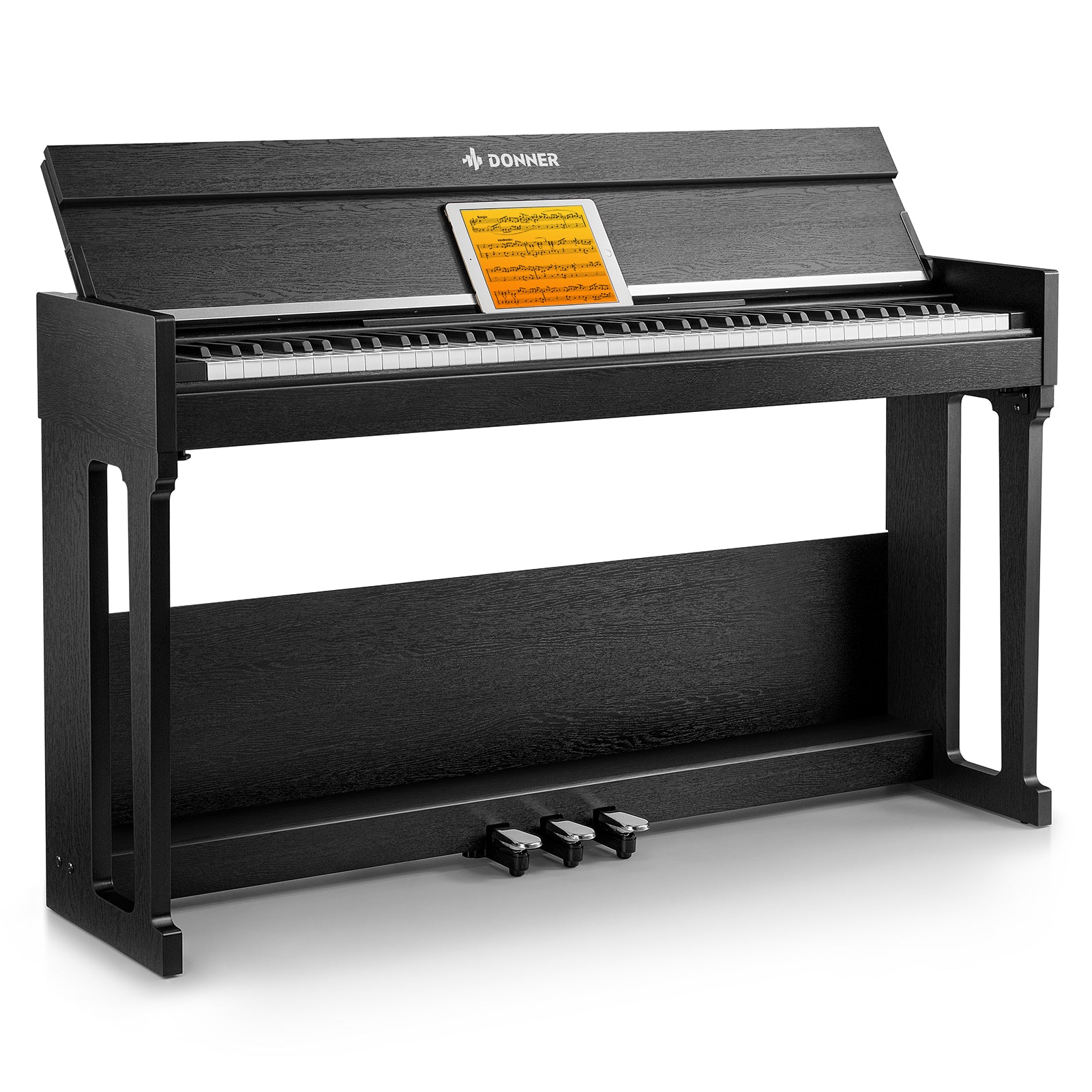
An upright home setup is the natural fit for Donner DDP-200 MK2 Digital Piano. Its 88-key graded hammer action adds dual sensors and escapement simulation, while the updated LCD and 15 premium tones keep everyday practice easy to navigate. The full three-pedal system also gives the instrument a ready-made home configuration.
Choose it when wireless play-along matters as much as piano practice: Bluetooth audio and MIDI cover different device needs, and USB MIDI adds a wired path to music software. The furniture-style body is less convenient to transport than the portable slabs below, but it makes sense when the piano will stay in one dedicated position.
Roland FP-30X Digital Piano Best for Portable All-Rounders
Pros
- PHA-4 hammer action
- 22W stereo amplification
- Bluetooth audio and MIDI
- Twin headphone outputs
Cons
- Separate stand setup
- Optional pedal expansion
Players who want one instrument for lessons, home practice, and occasional performance will find Roland FP-30X Digital Piano a flexible fit. The PHA-4 Standard 88-key hammer action adds escapement and ivory feel, while Roland's SuperNATURAL Piano engine and 22W stereo system give the portable cabinet enough presence for everyday playing.
Bluetooth audio and MIDI make it useful for both listening and app connections, and USB audio and MIDI extend the setup to a computer. At 14.8 kg it remains movable, although a dedicated stand and expanded pedal setup are separate decisions if you want a more permanent upright arrangement.
Yamaha P-225 Digital Piano Best for Compact App Practice
Pros
- Yamaha CFX voice
- GHC weighted action
- Bluetooth audio
- Smart Pianist support
Cons
- Portable body needs stand
- Separate three-pedal setup
If your practice includes a phone or tablet, Yamaha P-225 Digital Piano keeps the setup compact without reducing the standard 88-key range. Its Graded Hammer Compact action, Yamaha CFX voice, VRM Lite, and 192-note polyphony focus the instrument on expressive piano playing, while Bluetooth audio makes play-along sessions straightforward.
The Smart Pianist app adds another way to manage settings and lessons, and USB audio gives a computer a direct connection path. The 11.5 kg portable format is easy to place in a smaller room; add a separate stand and three-pedal unit only if your routine calls for a more fixed home setup.
Kawai ES120 Digital Piano Best for Piano Tone Portability
Pros
- Piano-focused sound engine
- 192-note polyphony
- Bluetooth audio and MIDI
- Portable 12 kg format
Cons
- Stand sold separately
- Three-pedal setup separate
Kawai ES120 Digital Piano suits a player who wants a portable instrument with a distinctly piano-focused feature set. Harmonic Imaging, stereo piano sampling, 25 voices, and 192-note polyphony give the sound engine room for sustained and layered playing, while the weighted action keeps the physical layout centered on piano technique.
Bluetooth audio and MIDI, USB MIDI, and line out make the ES120 adaptable to headphones, apps, and external audio equipment. Its approximately 12 kg format is convenient for moving between rooms, but a stand and three-pedal setup are separate choices when portability gives way to a dedicated home position.
Donner DDP-95 Weighted Upright Digital Piano Best for Feature-Rich Learning

Pros
- Fully weighted 88 keys
- Large tone library
- Rhythms and accompaniment
- Dual headphone jacks
- Bluetooth audio and MIDI
Cons
- Upright footprint
- Less travel-friendly
For a household that wants more than a piano voice, Donner DDP-95 Weighted Upright Digital Piano builds a broader learning environment around its 88 fully weighted keys. The documented library includes 610 tones, 600 rhythms, 128 accompaniment styles, and 110 demo songs, so a beginner can explore beyond straight piano practice without changing instruments.
Bluetooth audio and MIDI, USB MIDI, aux in, line out, dual headphone jacks, and three pedals cover both shared-room practice and device-based learning. Its upright furniture format favors a stable home position rather than frequent transport, and the larger feature set is most useful when the player actually wants rhythms, accompaniment, and many sounds.
Roland FP-10 Digital Piano Best for Entry-Level Action
Pros
- PHA-4 hammer action
- Escapement and ivory feel
- Bluetooth MIDI
- Twin Piano mode
Cons
- Optional stand and pedal
A player who wants a compact starting point for piano technique can look closely at Roland FP-10 Digital Piano. Its PHA-4 Standard 88-key hammer action includes escapement and ivory feel, and the SuperNATURAL Piano engine supplies a focused set of 36 tones with 96-note polyphony. Bluetooth MIDI and USB MIDI connect it to apps and computer software, while Twin Piano mode supports side-by-side lessons. The compact body is easier to place than an upright console, but the stand and half-pedal-capable DP-10 option are separate pieces of the final setup.
Yamaha P-145BT Digital Piano Best for Simple Beginner Practice
Pros
- GHC weighted action
- Bluetooth audio
- Smart Pianist support
- Duo Mode
- Included sustain switch
Cons
- Portable slab format
- Single sustain switch
For a first piano that keeps the controls approachable, Yamaha P-145BT Digital Piano combines 88 weighted touch-sensitive keys with a slim, portable design. Graded Hammer Compact action, 64-note polyphony, 10 voices, and Damper Resonance DSP cover the core of a focused practice routine without turning the front panel into a project of its own. Bluetooth audio lets you play along with a device, while Smart Pianist and Rec'n'Share add learning and recording workflows. Duo Mode can split the keyboard for partner practice, and the included sustain foot switch gets a beginner started; a full three-pedal console still requires a different setup choice.
Kawai ES60 Digital Piano Best for Focused Practice
Pros
- SK-EX piano sampling
- 192-note polyphony
- USB MIDI apps
- Front headphone jack
- 30 drum rhythms
Cons
- No built-in furniture stand
Kawai ES60 Digital Piano is aimed at players who prefer a simple control panel and a piano-first practice routine. Harmonic Imaging, SK-EX stereo sampling, 17 voices, and 192-note polyphony keep the sound side focused, while the weighted 88-key layout supports the range and response expected from a full piano keyboard. USB MIDI connects the ES60 to PianoRemote and PiaBookPlayer, and its front headphone jack makes quiet practice easy to reach. The instrument also adds a metronome and 30 drum rhythms without becoming an accompaniment-heavy arranger, keeping the setup deliberately wired and straightforward.
Yamaha P-45 Digital Piano Best for Simple Baselines
Pros
- 88-key GHS action
- Four touch settings
- Slim portable design
- Simple control layout
Cons
- Fewer modern app features
When the goal is simply to start practicing on a full keyboard, Yamaha P-45 Digital Piano keeps the path uncomplicated. Its 88-key Graded Hammer Standard action uses four touch-sensitivity settings, and AWM stereo sampling, 10 voices, and 64-note polyphony cover the essential piano-and-practice brief. The slim body is under 30 cm deep and weighs approximately 11.5 kg with speakers, which helps when space is tight or the instrument moves occasionally. Settings use a single-button approach, making it a natural fit for a direct, wired routine rather than a heavily app-centered setup.
Donner DDP-80 PLUS Digital Piano Best for Design-Focused Homes

Pros
- Progressive weighted action
- French DREAM sound
- Semi-open quiet cover
- Five-pin MIDI
- Three-pedal system
Cons
- Upright body limits travel
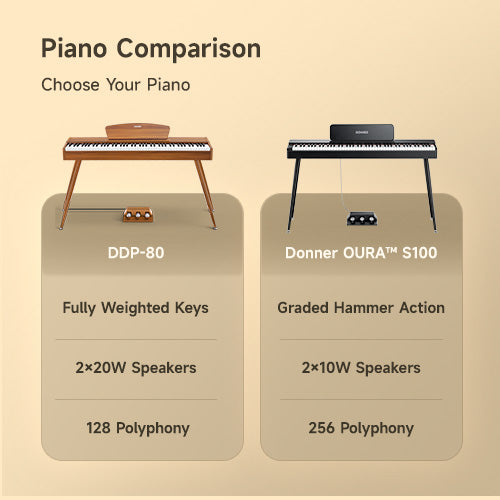
A dedicated home position changes the appeal of Donner DDP-80 PLUS Digital Piano. Its 88-key Graded Hammer-Action II keyboard uses progressive weighting, and the French DREAM sound source keeps the instrument centered on piano playing. The semi-open quiet cover and upright furniture body also suit a room where the piano stays ready to play.
USB MIDI, five-pin MIDI, line out, headphones, and three pedals cover a practical wired setup. The product data lists two 20W speakers, while the official page describes a built-in 20W stereo system; either way, the important choice is the clean home format. The upright body is not intended for frequent travel.
How We Choose the Best Digital Piano
A useful shortlist should make the choice clearer, not turn every specification into a score. The models here are separated by the situations they fit: dedicated home playing, portable practice, app-supported learning, a broader accompaniment library, or a simple piano-first routine.
Four questions do most of the work. How does the key action respond? What do the sound engine and speakers offer? Which practice features will you actually use? Finally, will the instrument live on a stand, in a furniture-style position, or move between rooms?
Key Action and Touch Response
Key action is the first thing to compare if you are learning piano technique. Graded or progressive weighting changes resistance across the register, while touch settings change how strongly you need to play for a louder response. Escapement simulation adds a modeled tactile notch; it is a feel feature, not a claim that the digital action contains an acoustic piano mechanism.
The Roland FP-30X and FP-10 use PHA-4 Standard action, Yamaha's P-225 and P-145BT use GHC action, and the P-45 uses GHS. Donner's DDP-200 MK2 adds dual sensors and escapement simulation, while the DDP-80 PLUS uses progressive weighting. The right choice is the response that suits your hands, goals, and willingness to build a more complete setup.
Piano Sound, Polyphony, and Speakers
Polyphony tells you how many notes the sound engine can keep available at once, which becomes more relevant when you hold the sustain pedal, layer sounds, or play dense passages. It is useful context, but it does not decide tone quality on its own. Sampling or modeling, speaker design, and the instrument's piano voice all shape the result you hear.
The Yamaha P-225 and Kawai ES120 offer 192-note polyphony in portable formats, while Roland's FP-30X lists 256 notes. The Donner DDP-95 takes a different route with a much broader set of tones, rhythms, and accompaniment styles. Piano-focused models can be easier to navigate when your priority is practice; a wider library is more useful when you want to arrange or explore other sounds.
Practice Features and Connectivity
Separate Bluetooth audio from Bluetooth MIDI. Audio lets a phone or tablet stream a lesson or backing track through the piano's speakers. MIDI carries performance and control data to a compatible app or computer. USB MIDI serves a similar control role, while USB audio can also carry the instrument's sound when the product supports it.
For a lesson routine, small features can matter more than a long tone list. Yamaha's P-145BT supports Smart Pianist and Rec'n'Share, Roland's FP-10 includes Twin Piano mode and Roland Piano App support, and Kawai's ES60 connects to PianoRemote and PiaBookPlayer through USB MIDI. Donner's DDP-95 adds dual headphone jacks and a larger accompaniment set for shared home practice.
Portable Slab or Upright Home Setup?
Choose a portable slab when the piano must move, fit a smaller room, or share a desk or living area. Roland FP-30X, Yamaha P-225, Kawai ES120, Roland FP-10, Yamaha P-145BT, Kawai ES60, and Yamaha P-45 all follow this path, though their action, connections, and app support differ.
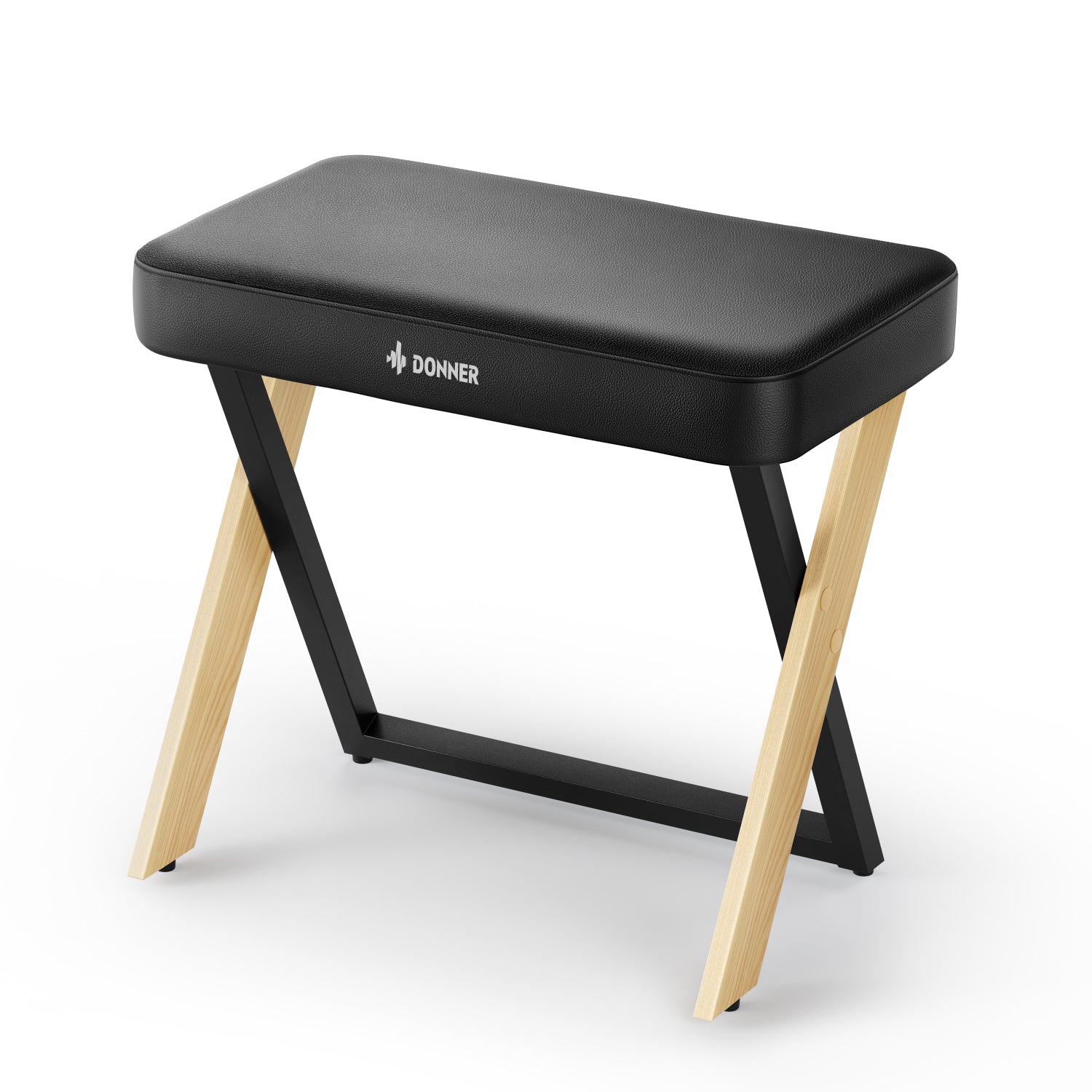
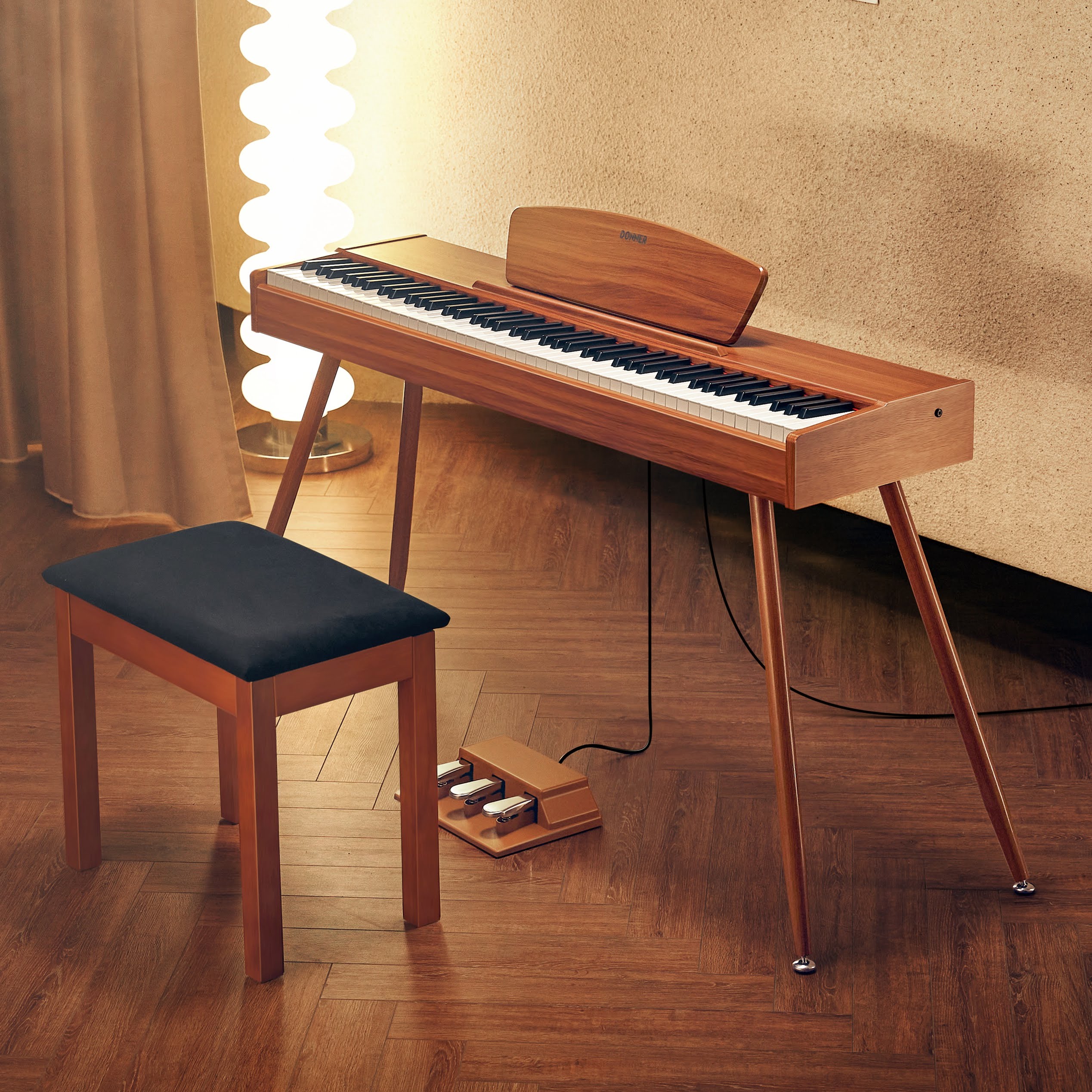
An upright model makes more sense when the instrument will stay in one position. Donner's DDP-200 MK2, DDP-95, and DDP-80 PLUS provide furniture-style bodies and integrated pedal setups, with the DDP-80 PLUS adding a semi-open cover. Before choosing, account for bench height, pedal reach, headphone access, and the space needed to leave the piano ready to play.
FAQ About the Best Digital Piano
The right answer depends on how you plan to practice, where the instrument will live, and which connections you will use.
What Is the Best Digital Piano for Most Home Players?
There is no single best choice for every home. Favor Donner DDP-200 MK2 or DDP-95 for an upright setup, Roland FP-30X or Yamaha P-225 for portable all-round use, and Yamaha P-145BT, Kawai ES60, or Yamaha P-45 when simple piano practice matters most.
Are 88 Weighted Keys Necessary for Learning Piano?
They are useful rather than mandatory. An 88-key weighted layout provides the full piano range and resistance for practicing dynamics and technique. A lighter or portable setup can still be reasonable when space and transport matter, but it may feel different from a dedicated home piano.
What Is the Difference Between a Digital Piano and a Keyboard?
A digital piano usually prioritizes 88-key piano-style action, piano voices, sustain response, and quiet practice. A general keyboard often emphasizes more sounds, rhythms, accompaniment, and portability. The Donner DDP-95 shows how the categories can overlap by combining a weighted piano layout with a larger tone and rhythm library.
Should I Choose a Portable or Upright Digital Piano?
Choose portable when you move the instrument, share space, or need flexible storage. Choose upright when it will stay in a dedicated position and you value an integrated furniture-style body and pedal setup. Room size, transport frequency, bench placement, and pedal needs matter more than the label alone.
Choose the Digital Piano That Fits Your Practice
Make the decision in order: choose the key action and format first, then decide how much piano sound, polyphony, and speaker output you need. After that, check the connections you will use every week rather than paying attention to features that will stay untouched.
When you are ready to compare more instruments, Donner Music offers the wider brand range, while the digital piano keyboard for beginners collection keeps the next step focused on practice-ready options. Confirm current specifications and included accessories before making the final choice.