





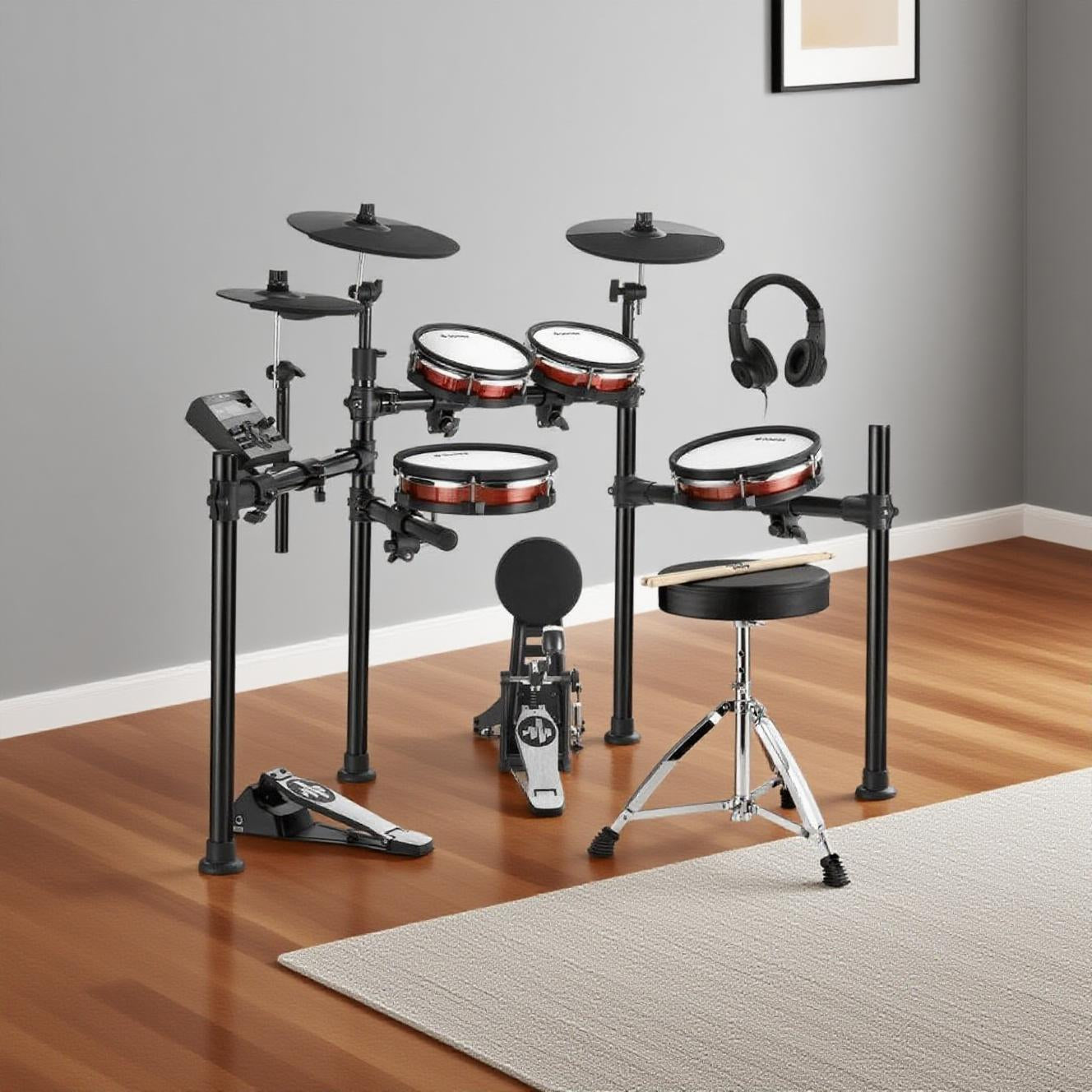
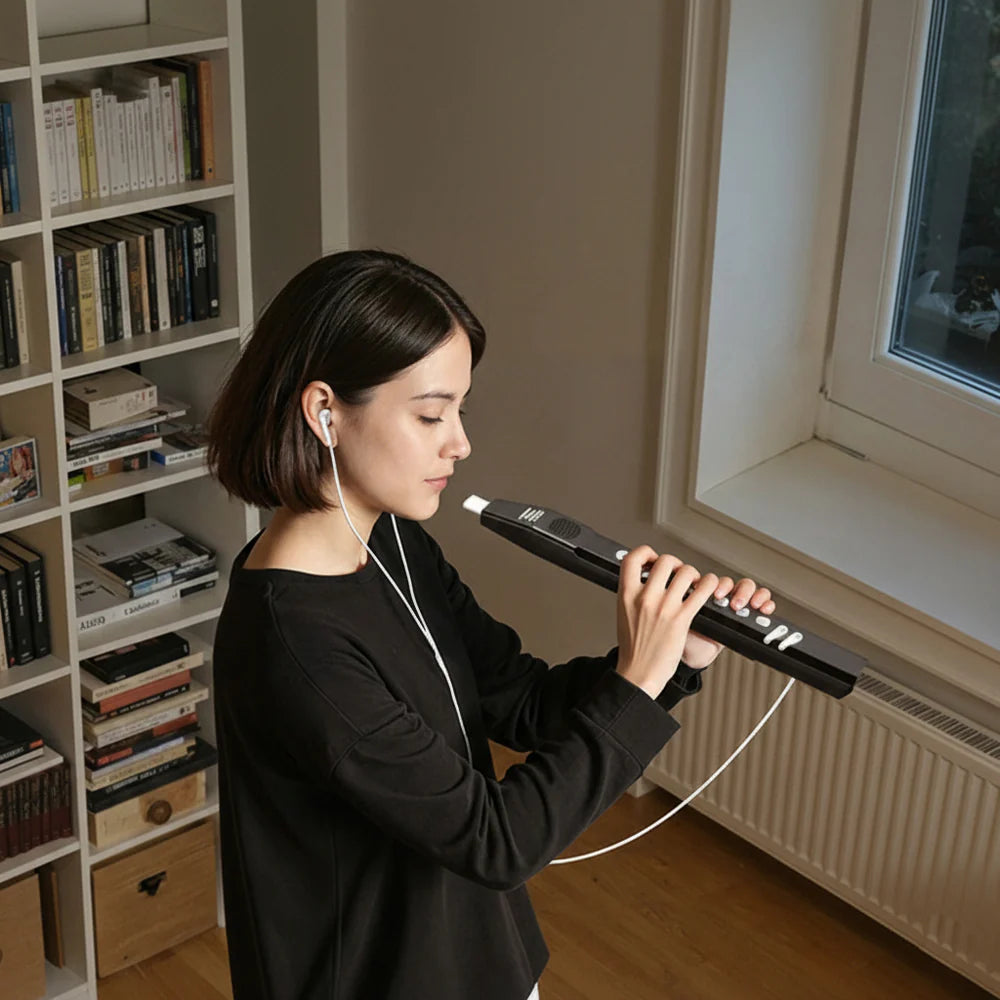
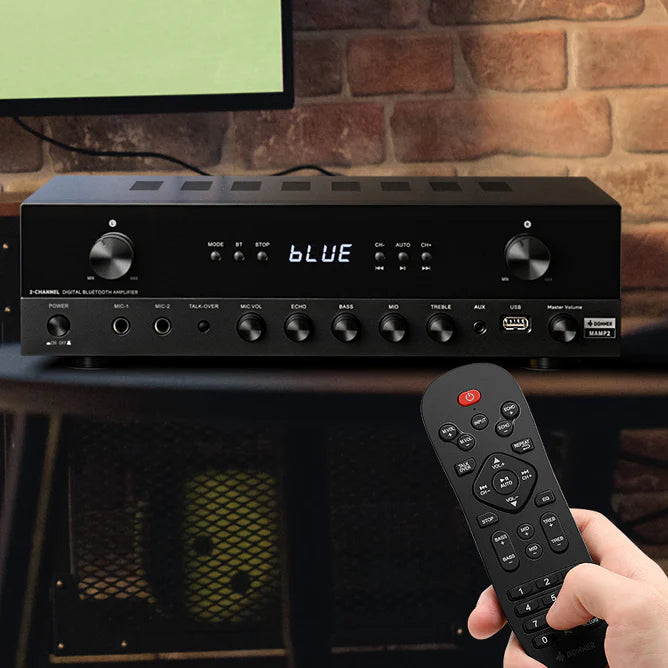
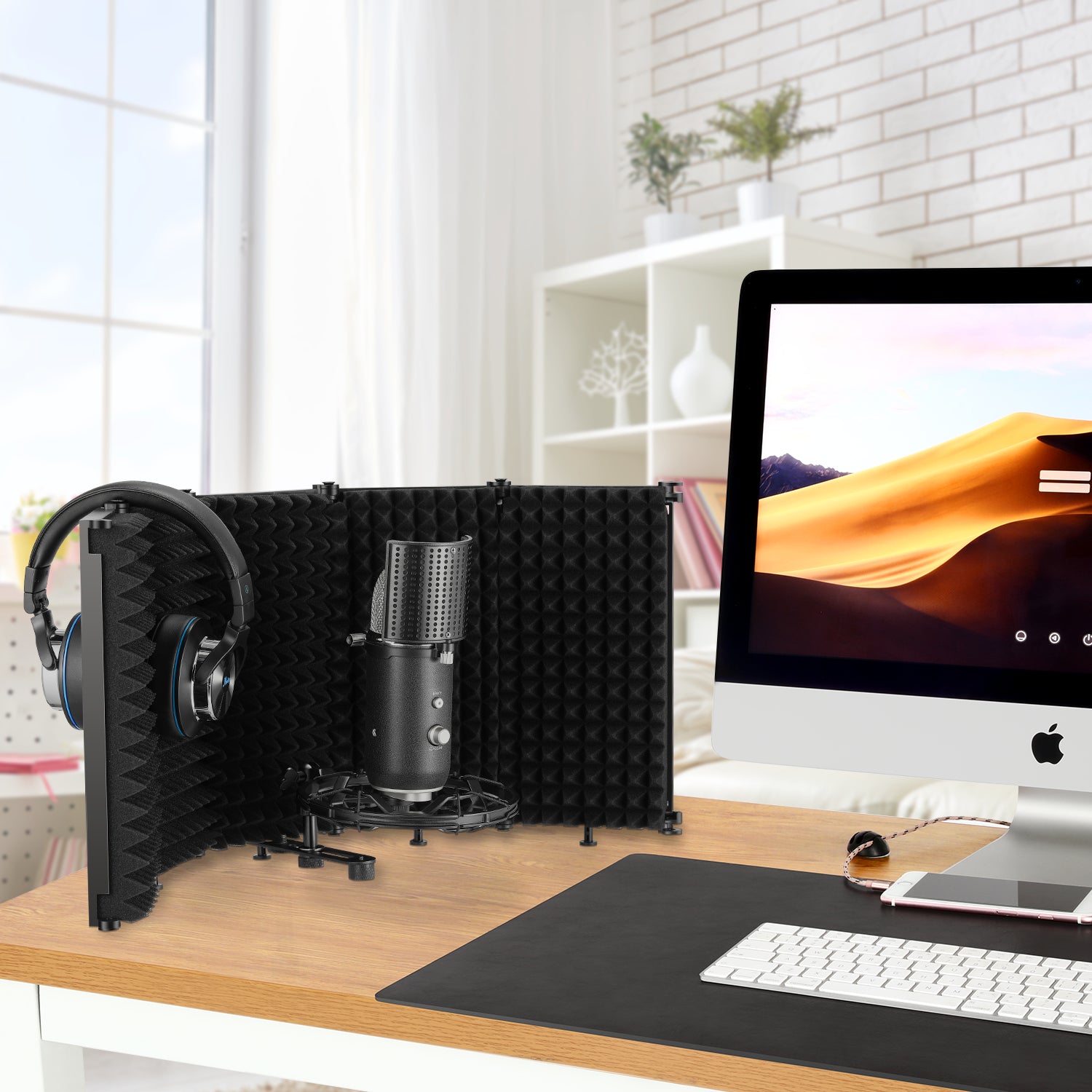

Why Electronic Drums Need More Than Headphones
Headphones are fine for quiet practice, but they keep the kit's sound to yourself. Once you want to hear the kit across a room or play alongside other musicians, you need an amp that reproduces the full kit at a volume the room can handle. Shopping for one is a lot like shopping for other music gear, except the right choice depends on the job more than on wattage alone.
The eight picks below cover compact practice cabinets, personal monitors, mid-size drum amps, and full-range speakers for modeling devices. Each one is matched to a job, such as quiet home practice, band rehearsal, or stage monitoring, so you can start from the place you play rather than the wattage on the box.
The Best Amps for Electronic Drums at a Glance
- Donner DDA-20 Mini Electronic Drum Amp: best compact home practice amp
- Roland PM-100 Personal Drum Monitor: best personal drum monitor
- Alesis Strike Amp 12 MK2: best for stage volume
- Donner DDA-35 Electric Drum Amplifier: best all-round drum amp
- Simmons DA2108 Advanced Drum Amp: best mid-size practice amp
- Roland PM-200 Drum Monitor: best large-format drum monitor
- Donner DKA-20 20W Amplifier: best multi-instrument amp
- HeadRush FRFR-108 MKII: best neutral speaker for modelers
Donner DDA-20 Mini Electronic Drum Amp Best compact home practice amp

Pros
- Compact enough for apartment practice
- Streams backing tracks from a phone
- Rubber pads keep it steady
Cons
- Built for practice, not stage volume
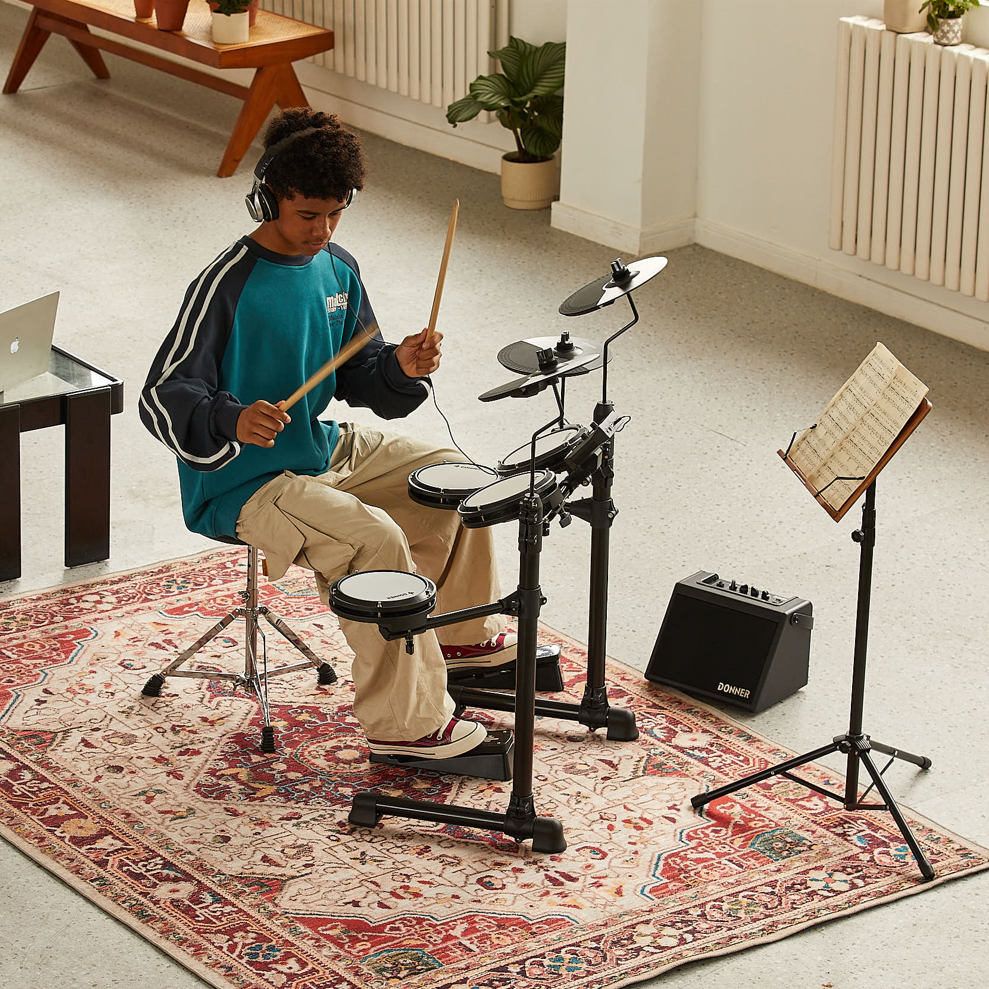
The Donner DDA-20 Mini Electronic Drum Amp is a compact practice amp that sits under a kit in an apartment or spare room. Its enclosed cabinet is designed for strong bass response, a 6.5-inch woofer (the speaker for low sounds) carries the low end, and a 2-inch tweeter (the speaker for high sounds) adds cymbal and snare detail.
The multimedia control knob streams backing tracks wirelessly from a phone or tablet, so you can play along without a cable. The instrument input accepts electronic drums and keyboards, and the 18V/3A power adapter comes in the box. At 29.5 x 22.5 x 23 cm, the amp is small enough to tuck under a kit, and its rubber pads keep it steady on the floor.
Roland PM-100 Personal Drum Monitor Best personal drum monitor
Pros
- Angled cabinet aims sound at you
- Separate volume for drums and tracks
- Designed for electronic drum sound
Cons
- Personal monitor, not a room-filling amp
For a home player who wants a compact monitor, the Roland PM-100 Personal Drum Monitor is tuned for electronic drums and keeps backing tracks simple to mix. Its 80 watts of power drive a custom 10-inch speaker and a tweeter (the speaker for high sounds).
The cabinet is angled to aim sound at a seated player. The integrated mixer gives the drum input and the line input their own volume controls, plus a two-band EQ (two tone controls for low and high sounds). A dedicated V-Drums input sits alongside 1/4-inch and 1/8-inch line inputs, which take pads, phones, and music players.
Alesis Strike Amp 12 MK2 Best for stage volume
Pros
- Headroom for band rehearsal
- Separate volume on each input
- Upright or floor-monitor use
Cons
- Louder than most home practice needs
Rehearsing with a band calls for headroom, the margin an amp has before its sound starts to distort, and the Alesis Strike Amp 12 MK2 is built to keep up with acoustic instruments. It is bi-amplified, meaning each driver has its own amplifier. Its 2,500 watts of peak power (the short-burst maximum, not a steady rating) drive a 12-inch low-frequency driver and a high-frequency compression driver in a waveguide, which is a horn-shaped guide that directs the highs.
The speaker covers 44 Hz to 20 kHz, from deep bass to bright treble. Two combo inputs take either an XLR plug (a three-pin connector used in pro audio) or a 1/4-inch plug, and each one has its own volume control and clip lights that warn when a signal runs too hot.
An XLR output lets you link a second cabinet or send the main mix to the front-of-house system, which is the venue's main sound system. A Contour EQ control shapes the tone, and the cabinet works upright or tilted back as a floor monitor.
Donner DDA-35 Electric Drum Amplifier Best all-round drum amp

Pros
- Two channels run kit and mic together
- DI output links to a larger system
- Bluetooth for play-along tracks
Cons
- Larger than a compact practice amp
A drummer who wants to run a kit, a microphone, and backing tracks at the same time will find the Donner DDA-35 Electric Drum Amplifier built for that mix. Its 35-watt amp drives an 8-inch woofer and a 2.5-inch tweeter, and each of its two channels has its own volume control, so each sound can be set on its own.
The connections cover most setups. Two 1/4-inch instrument inputs take the kit, a three-band EQ (tone controls for low, middle, and high sounds) shapes the tone, a 1/8-inch aux input takes a phone or player, and a 1/8-inch headphone output keeps practice silent. The microphone input switches between dynamic mic mode for a standard microphone and line mode for a keyboard or other line-level device.
The DI output (a direct feed that sends the signal to another speaker or the venue's sound system) is the link to a bigger system when you need one. The Bluetooth audio input lets you play along with tracks from a phone.
Simmons DA2108 Advanced Drum Amp Best mid-size practice amp
Pros
- Works on the floor or a speaker pole
- Bluetooth input with a phone holder
- Headphone output mutes the speakers
Cons
- Practice-focused rather than stage-scale
Players who want one cabinet for both the living room and the rehearsal room will find the Simmons DA2108 Advanced Drum Amp a good fit. It can sit on the floor at home or go onto a speaker pole (a stand that lifts the cabinet), thanks to a floor or pole switch that sets the cabinet for either placement.
The Class-D amplifier (a compact, efficient amplifier design) is rated 100 watts RMS, which means continuous power, and 400 watts peak. The 8-inch speaker and 1-inch compression driver (the high-frequency unit) cover 65 Hz to 20 kHz, and the cabinet reaches 118 dB maximum SPL (sound pressure level, a measure of how loud it can get).
Connections include two balanced stereo line inputs on 1/4-inch TRS jacks, a stereo aux input, and Bluetooth stereo with a detachable device holder. A two-knob EQ covers lows and highs, a direct output sends the signal to another system, and the headphone output mutes the speakers when you plug in.
Roland PM-200 Drum Monitor Best large-format drum monitor
Pros
- Covers home practice and stage monitoring
- Handle makes repositioning easy
- Two XLR outputs for larger systems
Cons
- Large cabinet, not a personal monitor
One cabinet that covers quiet home practice and louder stage monitoring is the appeal of the Roland PM-200 Drum Monitor. Its 180 watts of power drive a custom 12-inch speaker and a horn tweeter (a high-sound speaker with a horn that directs its output), and the angled design projects sound toward a seated player.
A full-width bar handle makes it easy to reposition. The integrated mixer has independent volume controls and one EQ for the overall tone. The dedicated V-Drums input is joined by 1/4-inch and 1/8-inch line inputs, and two XLR direct outputs can run in stereo or as two separate mono feeds, which helps when the sound goes to a second system.
Donner DKA-20 20W Amplifier Best multi-instrument amp

Pros
- Mic input for singing and drums
- Two channels with separate volume
- Headphone output for quiet practice
Cons
- Shared across several instruments, not drums alone
Players who sing or play more than one instrument want one small amp that can cover them. The Donner DKA-20 20W Amplifier handles an electronic kit, a keyboard, a bass, or a guitar, and its 20-watt output runs through an 8-inch woofer and a 2-inch tweeter with a response of 50 Hz to 20 kHz.
Two channels each have a volume control, and the amp adds gain (how much the input is boosted), boost select, volume, treble, middle, and bass controls. The microphone input offers up to 48 dB of gain, so you can sing through the same cabinet while the kit plays.
Two 1/4-inch instrument inputs, a 1/8-inch aux input, a 1/8-inch headphone output, and a DI output port cover the connections. The angled back and a perforated steel grille (a front cover with small holes) over a rugged housing give the cabinet a durable build.
HeadRush FRFR-108 MKII Best neutral speaker for modelers
Pros
- Flat response for modeled tones
- High-pass filter for noisy stages
- Wedge, upright, or pole mounting
Cons
- No drum-specific coloring built in
Anyone who runs an amp modeler (a device that copies the sound of guitar amps and effects) or a rig with many effects modules will want a cabinet that stays neutral. The HeadRush FRFR-108 MKII is a full-range cabinet with a flat response, which means it reproduces the sound without adding the coloring a drum amp is tuned for.
Its 8-inch woofer and high-frequency compression driver are tuned for amp and cabinet emulations, the simulated sounds a modeler produces. The cabinet is rated 2,000 watts peak, covers 46 Hz to 22 kHz, and reaches 129 dB maximum SPL, so it is built for louder rooms than a home practice setup.
Two combo inputs take XLR or 1/4-inch plugs, each with its own volume control, and an XLR direct output sends the signal onward. A Bluetooth audio channel and a ground-lift switch (which helps reduce hum) round out the connections, and a high-pass filter EQ switch trims low rumble on noisy stages. The cabinet weighs about 21 lb and works as a wedge (a floor monitor tilted toward the player), upright, or on a speaker pole.
How to Choose an Amp for Electronic Drums
Four checks narrow the field before you compare amps. Start with the job the amp has to do, then look at the power and speaker size, the inputs and monitoring options, and the room where you will actually play.
What a Drum Amp Actually Does
Electronic drums cover a wide range, from a deep kick to bright cymbals and sharp rim clicks. A guitar speaker is built around a narrower band with limited low-end handling, so the bottom of the kit can get lost and the amp adds its own coloring. A drum amp, a keyboard amp, or a full-range speaker reproduces the full range, so the sound stays close to what the module sends.
Power, Speaker Size, and Headroom
Watts tell you how much power an amp can deliver, but speaker size and headroom matter just as much for how the sound fills a room. Compact practice cabinets suit a bedroom or apartment, mid-size amps handle a rehearsal room with a band, and high-power speakers are built to carry a stage. Headroom is the margin between your normal volume and the point where the sound starts to distort, and more of it keeps the kit clean when the band gets loud.
Inputs, Mixing, and Monitoring
Check the instrument inputs first, since that is where the kit plugs in. An aux input or Bluetooth lets you play along with tracks from a phone, and a headphone output keeps practice silent. EQ (tone controls for bass, middle, and treble) shapes the sound, and a DI or line output (a feed to another speaker or a mixer) lets the kit join a larger system.
Home Practice and Playing With Others
Match the cabinet size and output to where you will play. Apartment practice favors a small cabinet with a headphone output, band rehearsal calls for a mid-size amp with enough headroom to keep up with acoustic instruments, and a stage monitor position needs a cabinet that stays clear over the band.
FAQ About Amplifiers for Electronic Drums
The answers below cover the questions drummers ask most before buying an amp.
Do I need an amp for electronic drums?
Not for quiet practice. Headphones carry the kit's sound to you alone, which is enough when the goal is to work on technique. An amp becomes necessary when you want to hear the kit across a room or play with other people.
Can you use a guitar amp for electronic drums?
You can, but it is not the safer choice. A guitar amp colors the sound with its own tone and has limited low-end handling, so the kick and toms can lose their weight. A drum amp, a keyboard amp, or a full-range speaker keeps the sound closer to the module.
How many watts do you need for an electronic drum amp?
Match the wattage to the situation rather than to the highest number you can find. Small practice cabinets are enough at home, mid-size amps suit a rehearsal room, and high-power cabinets make sense for stage monitoring. Pick the level that covers the loudest setting you expect.
Is a drum amp or a PA speaker better?
Neither is better across the board. A drum amp adds tone shaping made for drums and simple mixing for a kit and a backing track. A PA speaker (a full-range speaker built for public address systems) or a neutral speaker suits a modeler or a mix sent straight from a mixer or module, where the sound should stay close to the original.
Find the Right Drum Amp at Donner
Match the amp to the room and the rig first, then decide how much headroom and how many inputs you need. Donner's electronic music instruments range is the place to compare the full lineup before you decide.