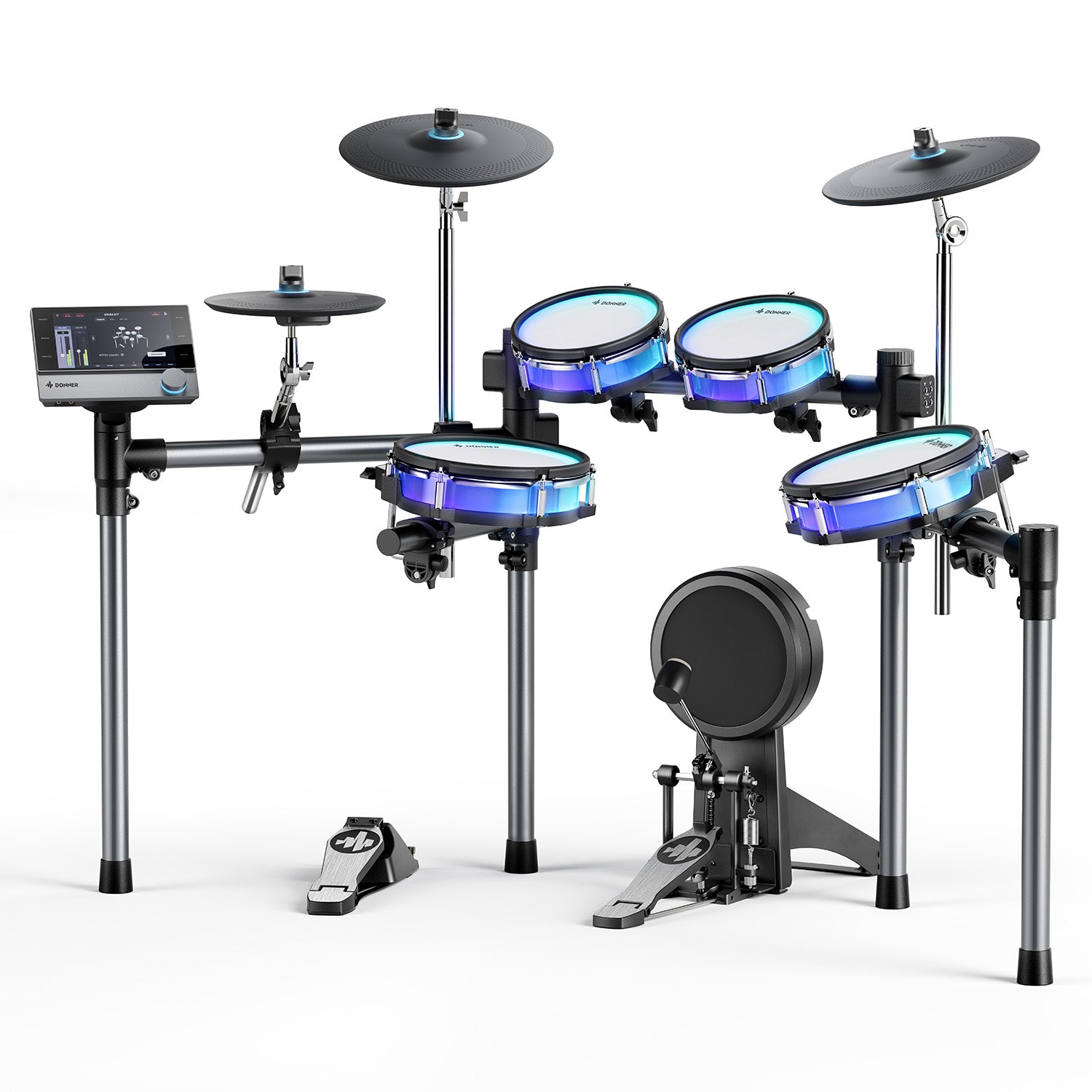

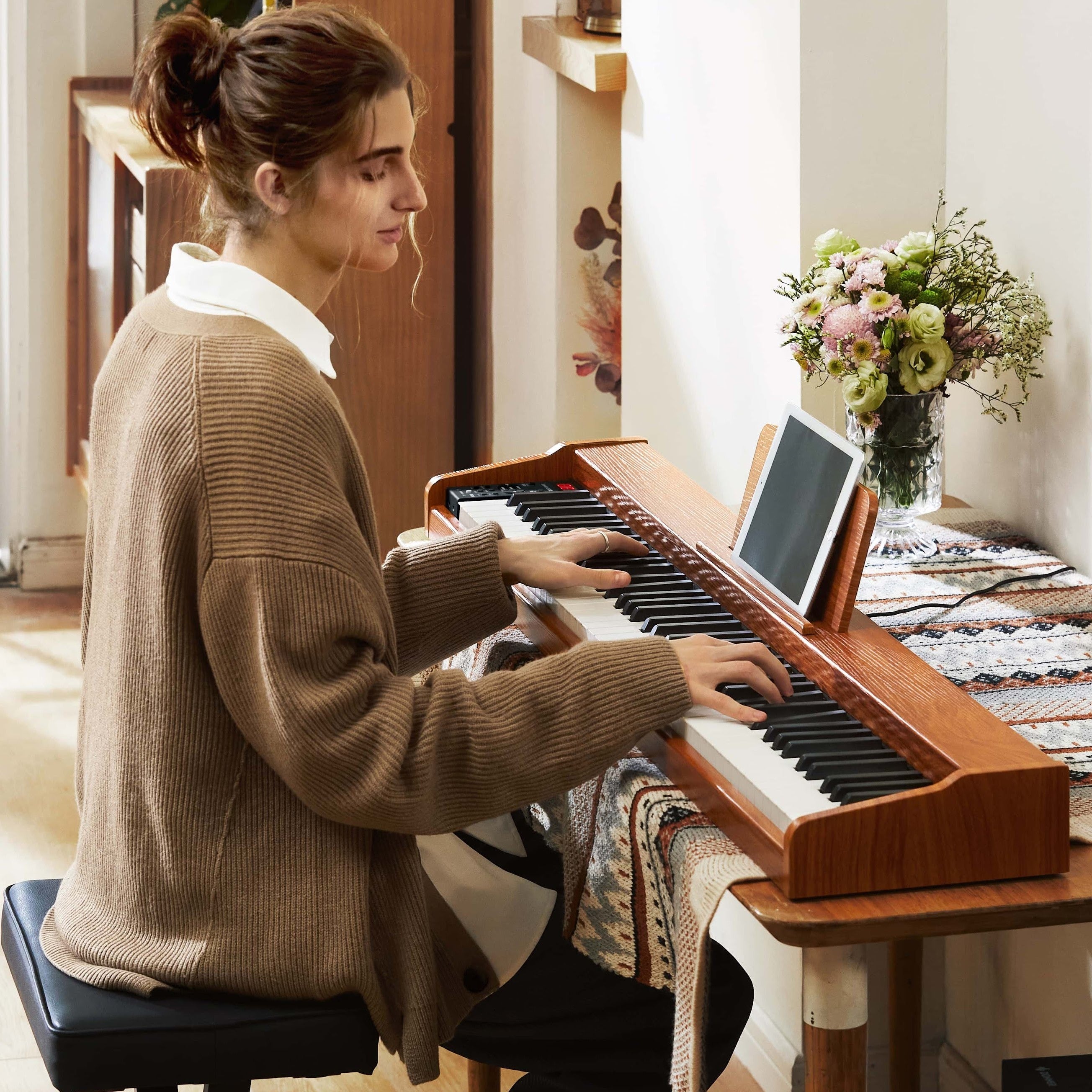






Finding the best 88 key keyboard piano is less about choosing one universal winner and more about matching the instrument to how you will use it. A beginner may want weighted keys and simple controls. A gigging player may prioritize weight and outputs, while a home pianist may prefer a cabinet that stays assembled.
The eight picks below cover those different needs. Every model has 88 keys, built-in sounds, and speakers, so the list focuses on keyboard pianos and digital pianos rather than controller-only instruments. Compare the main formats in the 88 key piano keyboard collection, or narrow the field with a starter digital piano.
Best 88 Key Keyboard Piano Picks at a Glance
- Donner DEP-16 Digital Piano - Best for Beginners
- Roland FP-30X Digital Piano - Best All-Rounder
- Yamaha P-225 Digital Piano - Best Lightweight Pick
- Donner DDP-80 Wooden Digital Piano - Best for Home Design
- Kawai ES120 Digital Piano - Best for Piano Practice
- Korg XE20 Digital Ensemble Piano - Best for Accompaniment
- Donner DDP-200 Digital Piano - Best Home Console
- Yamaha P-525 Portable Piano - Best for Advanced Players
Donner DEP-16 Digital Piano Best for Beginners

Pros
- Fully weighted 88-key action
- 238 built-in sounds
- Bluetooth and USB-MIDI
- 30W built-in speakers
- Lightweight 11 kg body
Cons
- No three-pedal support
- No dedicated line outputs
The Donner DEP-16 Digital Piano combines a full 88-key weighted action with 238 sounds, 128-note polyphony, Bluetooth, and USB-MIDI. Its 30-watt speaker system is built in, so you can practice without connecting an amp or computer. At 11 kg, the keyboard body is also easier to reposition than a full cabinet piano.
The broad sound library makes the DEP-16 useful for a new player who wants to explore more than acoustic piano. The compromise is in the pedal setup: it comes with sustain-pedal functionality but does not support a fixed three-pedal unit. Choose it for flexible learning and home practice, not for a permanent console-style setup.
Roland FP-30X Digital Piano Best All-Rounder
Pros
- PHA-4 hammer action
- 256-note polyphony
- Bluetooth and USB audio/MIDI
- Dedicated stereo outputs
- Dual headphone jacks
Cons
- Stand and pedals cost extra
- Heavier than compact rivals
The Roland FP-30X Digital Piano is a strong all-around choice because its core features stay focused on playing. Its 88-key PHA-4 Standard action includes escapement and an ivory-feel surface, while the SuperNATURAL Piano engine and 256-note polyphony give sustained passages plenty of room. The two 11-watt speakers handle everyday practice, and dedicated line outputs make it easier to connect to external amplification.
Bluetooth audio and MIDI, USB audio/MIDI, two headphone jacks, and compatibility with Roland's piano app make the FP-30X flexible without turning the control panel into a workstation. The main cost consideration is the complete furniture setup: the KSC-70 stand and KPD-70 three-pedal unit are optional rather than standard accessories.
Yamaha P-225 Digital Piano Best Lightweight Pick
Pros
- Compact GHC weighted action
- Lightweight 25 lb 6 oz body
- 192-note polyphony
- 24 built-in voices
- Bluetooth audio
Cons
- No Bluetooth MIDI
- Three-pedal setup costs extra
The Yamaha P-225 Digital Piano puts an 88-key Graded Hammer Compact action into a body that weighs 25 lb 6 oz. The action is designed to preserve a graded piano response while using a more compact mechanism than earlier P-Series designs. Its 192-note polyphony, 24 voices, CFX concert grand sound, and two-way speaker system make it capable enough for daily practice without adding a crowded interface.
Bluetooth audio lets you play music from a phone or tablet through the piano's speakers, while USB-to-host supports a wired connection to compatible devices. A basic footswitch is included. Players who want three pedals and a furniture-style posture need the optional L-200 stand and LP-1 or FC35 pedal unit.
Donner DDP-80 Wooden Digital Piano Best for Home Design

Pros
- Fully weighted Hammer Action II
- Integrated three-pedal unit
- 40W built-in speakers
- Minimal piano-focused controls
- USB-MIDI connectivity
Cons
- Only one built-in voice
- No Bluetooth
- Not designed for transport
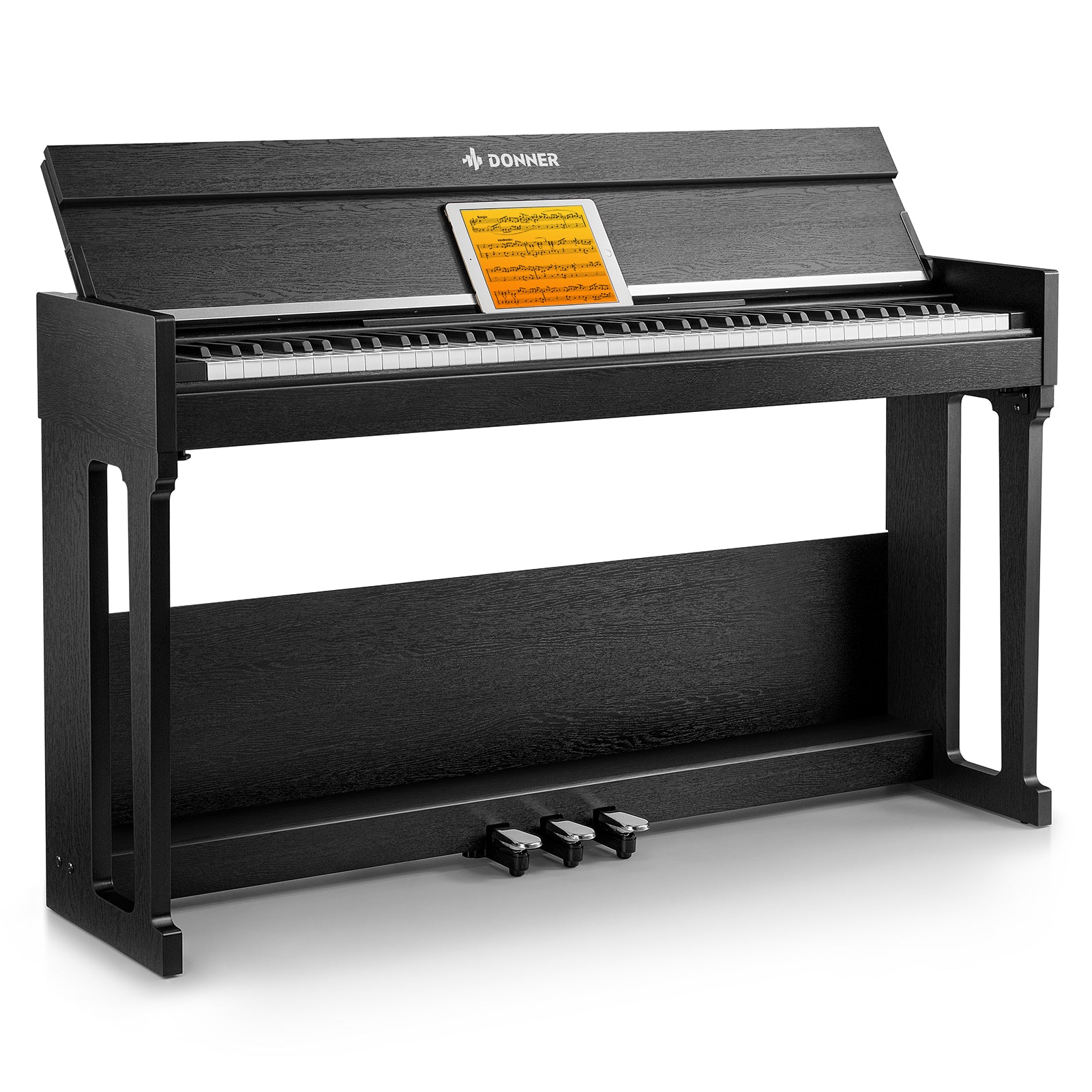
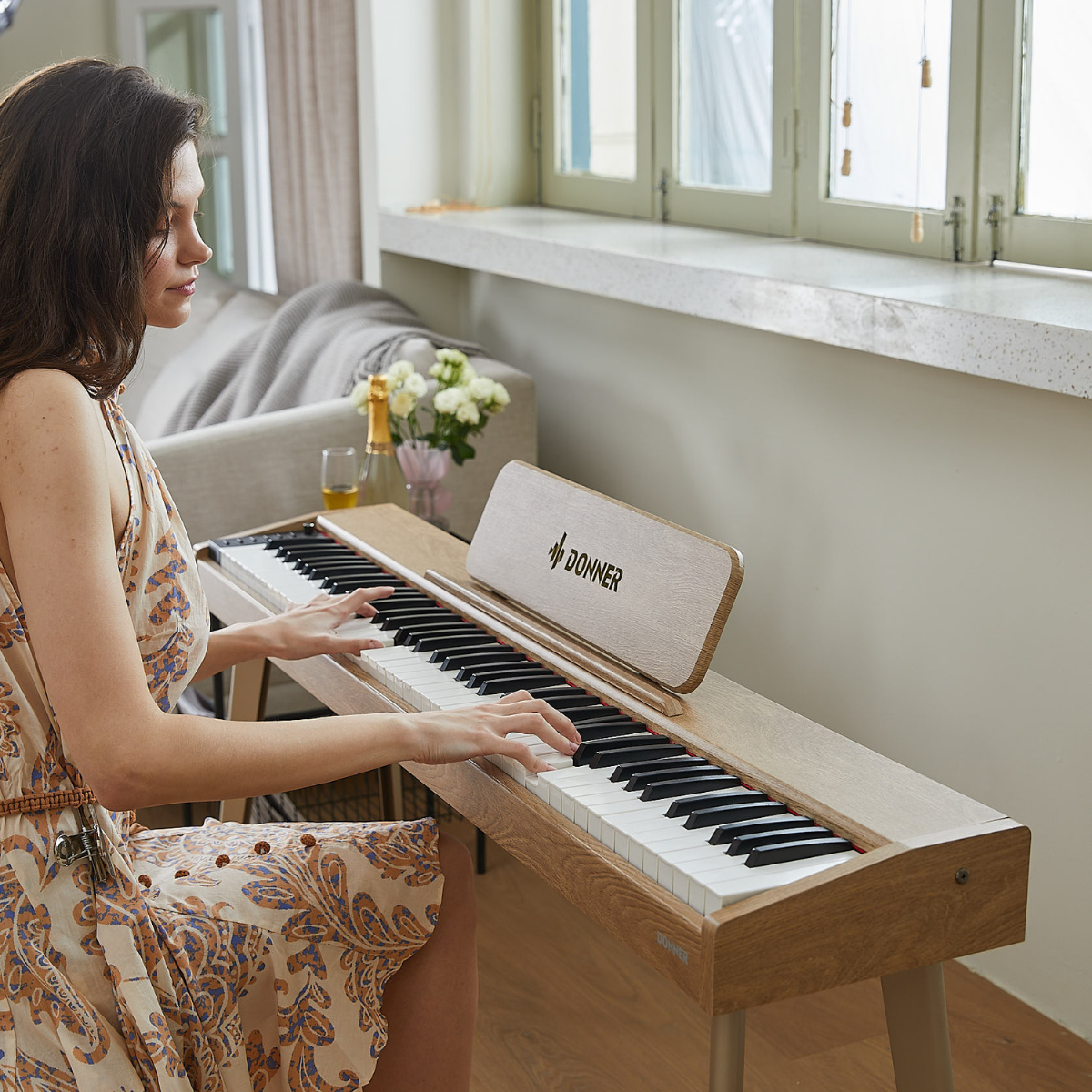
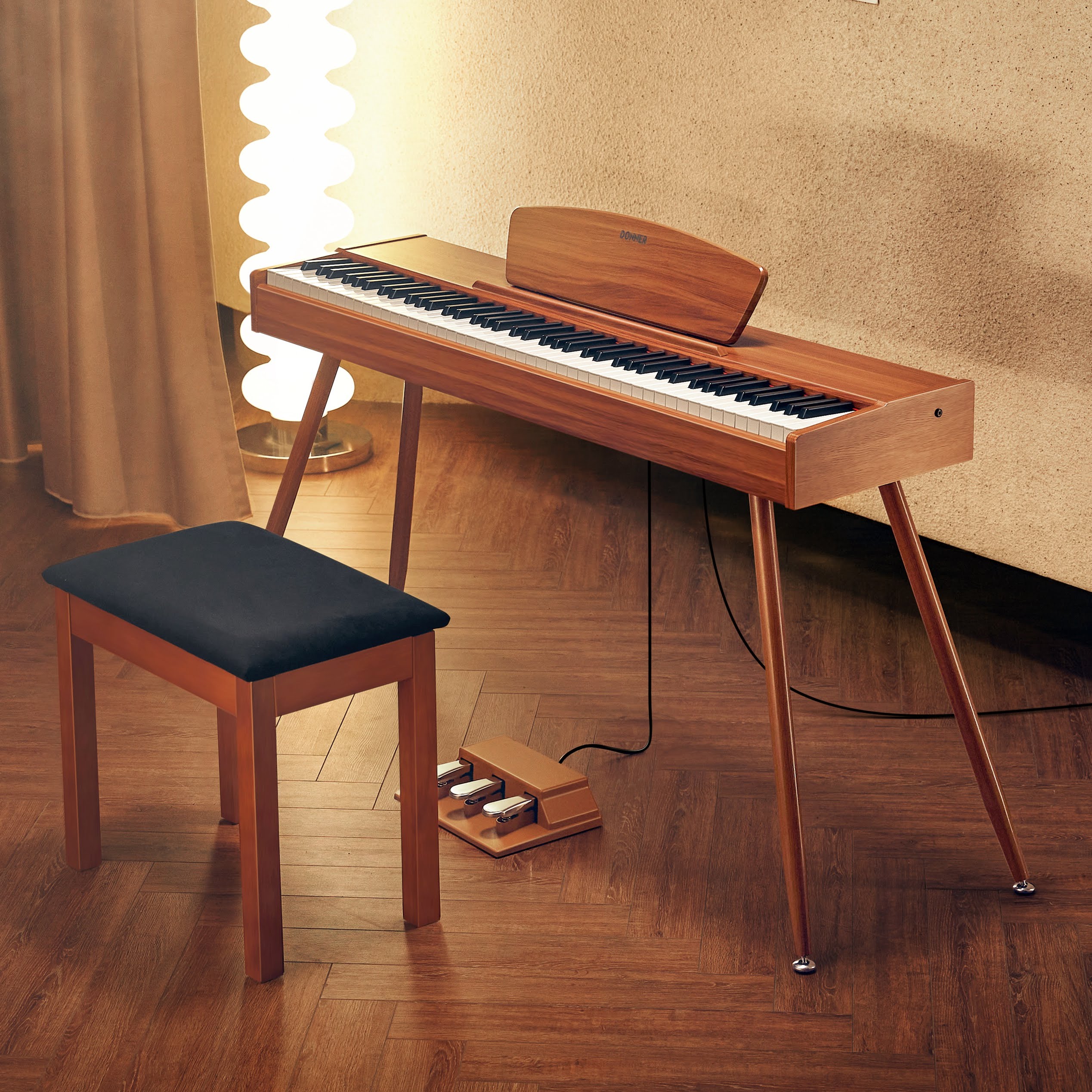
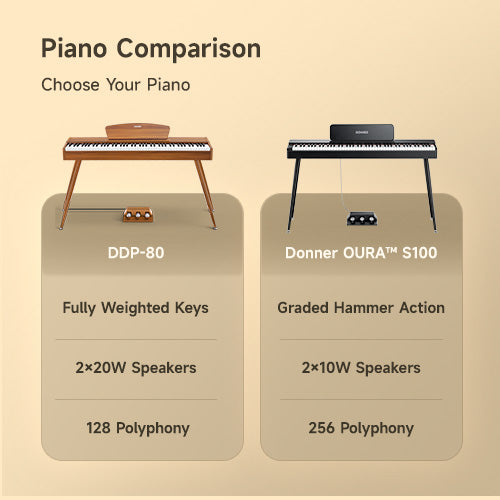
The Donner DDP-80 Wooden Digital Piano takes a deliberately simple approach. It has 88 fully weighted Hammer Action II keys, one grand-piano voice, 128-note polyphony, a 40-watt speaker system, three pedals, and no screen. The mid-century-inspired cabinet comes in several wood-look finishes and is intended to stay assembled as part of the room.
That simplicity is either the reason to buy it or the reason to skip it. The DDP-80 keeps the player focused on piano and supports USB-MIDI when you want to connect software, but it does not offer Bluetooth, rhythms, or a library of instrument sounds. It fits a living room or practice space better than a stage, and its cabinet is not meant for frequent transport.
Kawai ES120 Digital Piano Best for Piano Practice
Pros
- Responsive Hammer Compact action
- 88-key piano sampling
- 192-note polyphony
- Bluetooth audio and MIDI
- 25 focused voices
Cons
- Stand and pedals cost extra
- No USB flash-drive port
The Kawai ES120 Digital Piano is built around the company's Responsive Hammer Compact action and Harmonic Imaging sound engine. Its piano system uses 88-key sampling, while 192-note polyphony supports sustained passages. The 25 built-in voices cover useful alternatives without pulling attention away from the core piano experience.
At 27 lb 8 oz with the music rest attached, the ES120 remains manageable for home-to-lesson transport. Bluetooth audio and MIDI plus USB-MIDI support wireless practice audio, apps, and computer connections. The included F-1SP pedal handles sustain, while the HML-2 stand and F-351 triple-pedal board are optional for players building a fixed home setup.
Korg XE20 Digital Ensemble Piano Best for Accompaniment
Pros
- Natural Weighted Hammer Action
- 705+ built-in sounds
- 280 accompaniment styles
- 36W built-in speakers
- 12-track sequencer
Cons
- Busier control panel
- No built-in Bluetooth
- Stand and pedals cost extra
The Korg XE20 Digital Ensemble Piano is the most arranger-oriented choice in this list. It combines an 88-key Natural Weighted Hammer Action keyboard with more than 705 sounds, 280 accompaniment styles, a backlit display, a 12-track sequencer, and two 18-watt amplifiers. Play a chord with the left hand and the accompaniment system can follow it with a full backing arrangement.
That makes the XE20 useful for songwriting, solo entertainment, and players who enjoy exploring genres. It weighs 25.13 lb and includes a damper pedal, but the STB1 stand and PU-2 three-pedal unit are optional. Piano purists may prefer a simpler control panel; creative players may see the same feature set as the main attraction.
Donner DDP-200 Digital Piano Best Home Console

Pros
- Graded hammer action
- Integrated three-pedal unit
- Built-in key cover
- Bluetooth and USB-MIDI
- Stereo line outputs
Cons
- Heavy 35 kg cabinet
- Only six sounds
- No Bluetooth audio
The Donner DDP-200 Digital Piano is a fixed home instrument with 88 graded hammer-action keys, 128-note polyphony, six sounds, a 30-watt speaker system, and a built-in three-pedal unit. Its cabinet includes a key cover, and the two headphone connections make quiet practice or teacher-student sessions easier to arrange.
Bluetooth MIDI and USB-MIDI connect the DDP-200 to compatible apps and computers, while stereo line outputs provide a path to external speakers or recording equipment. At about 35 kg, this is a place-it-once piano rather than a portable keyboard. It suits a dedicated practice area where the cabinet, pedals, and seating position can remain ready every day.
Yamaha P-525 Portable Piano Best for Advanced Players
Pros
- GrandTouch-S wooden-key action
- CFX and Bosendorfer grand voices
- 256-note polyphony
- Bluetooth and USB audio
- Performance-ready line outputs
Cons
- Heavy 48 lb 8 oz body
- Stand and pedals cost extra
- Overfeatured for beginners
The Yamaha P-525 Portable Piano sits at the premium end of the portable-piano category. Its 88-key GrandTouch-S action uses wooden white keys, synthetic ebony and ivory keytops, and escapement. The sound system includes Yamaha CFX and Bosendorfer Imperial concert grand voices, 256-note polyphony, and a much broader library of keyboard and XG sounds for performance work.
Bluetooth audio and MIDI, USB audio, registration memory, line outputs, and onboard speakers make the P-525 equally comfortable as a high-level home piano or a performance instrument. Portability is relative: at 48 lb 8 oz, it is far heavier than the P-225, ES120, or XE20. The dedicated stand and three-pedal unit are also optional, though a half-pedal-compatible FC3A foot pedal is included.
How We Chose These 88-Key Keyboard Pianos
Selection is based on current first-party specifications, active Donner US availability, and the recurring decision factors found across a fresh set of 20 search results. Marketplace ratings and price alone were not used to determine fit.
Key Action and Playing Control
An 88-key range gives you the same number of notes as a standard acoustic piano, but key count alone does not determine feel. Fully weighted and hammer-action keyboards add resistance; graded actions make the lower register feel heavier than the upper register. For piano study, that response usually matters more than the number of extra sounds.
Piano Sound, Polyphony, and Speakers
A good instrument should respond clearly from soft to loud playing and sustain notes without obvious dropouts. Polyphony indicates how many notes the sound engine can produce at once, including sustained and layered notes. Speaker wattage can help compare output capacity, but placement, cabinet design, and the sound engine also affect what you hear. Headphones are still the best way to judge late-night practice comfort.
Portability and Setup
Portable does not mean effortless. The lightest models here are around 25 pounds, while the premium P-525 is nearly twice that weight. Add the stand, pedal unit, bench, cables, and case before deciding whether a keyboard is truly practical for lessons or gigs. For a permanent practice area, a home digital piano may be more convenient because the pedals and playing height remain fixed.
Connectivity and Long-Term Fit
Bluetooth audio plays music through the keyboard speakers. Bluetooth MIDI sends performance data to compatible apps. USB audio can carry recorded sound, while USB-MIDI sends note and control information. Those features are not interchangeable. Choose the connections your actual setup needs, and favor a keyboard you can keep using as your skills and repertoire grow.
Best 88 Key Keyboard Piano FAQs
Is an 88-key keyboard better than a 61-key keyboard?
An 88-key keyboard is better for piano-focused learning because it provides the full acoustic-piano range. A 61-key model can still cover early lessons, synth parts, and portable use while taking less space. Your repertoire, available room, and need to transport the instrument should decide. See the full 61 key vs 88 key keyboard comparison for the practical trade-offs.
Should I choose weighted or semi-weighted keys?
Choose weighted or hammer-action keys if your goal is piano technique and expressive control. Semi-weighted keys can suit casual playing, travel, and some production workflows because they are usually lighter. The label alone is not enough, so try the action and listen for even control from very soft to loud notes.
Do I need built-in speakers?
You need built-in speakers if you want to switch on the keyboard and play without other equipment. They are convenient for lessons and home practice. Stage players with external amplification and studio users working through a computer may not need them, but should check for the correct line, USB-audio, or headphone connections.
What is the difference between an 88-key keyboard and an 88-key MIDI controller?
An 88-key digital piano or performance keyboard produces its own sound; many models also include speakers. A MIDI controller primarily sends performance data and normally needs software or an external sound module. If you want a self-contained instrument, choose a digital piano. For a broader category explanation, review the difference between digital piano and keyboard.
Choose the Keyboard That Fits Your Playing Life
Start with the experience you want every day. Choose a weighted portable piano if lessons, practice, or occasional performance all matter. Choose a console if you want a stable home setup with three pedals. Choose an arranger if accompaniment and sound variety keep you engaged. Move to a premium action only when the extra touch detail and performance features justify the added weight and cost.
Donner Music builds approachable instruments for people starting and growing their musical journey. Explore the keyboard piano collection, compare the features that affect your practice, and pick the instrument that makes it easy to sit down and play consistently.