

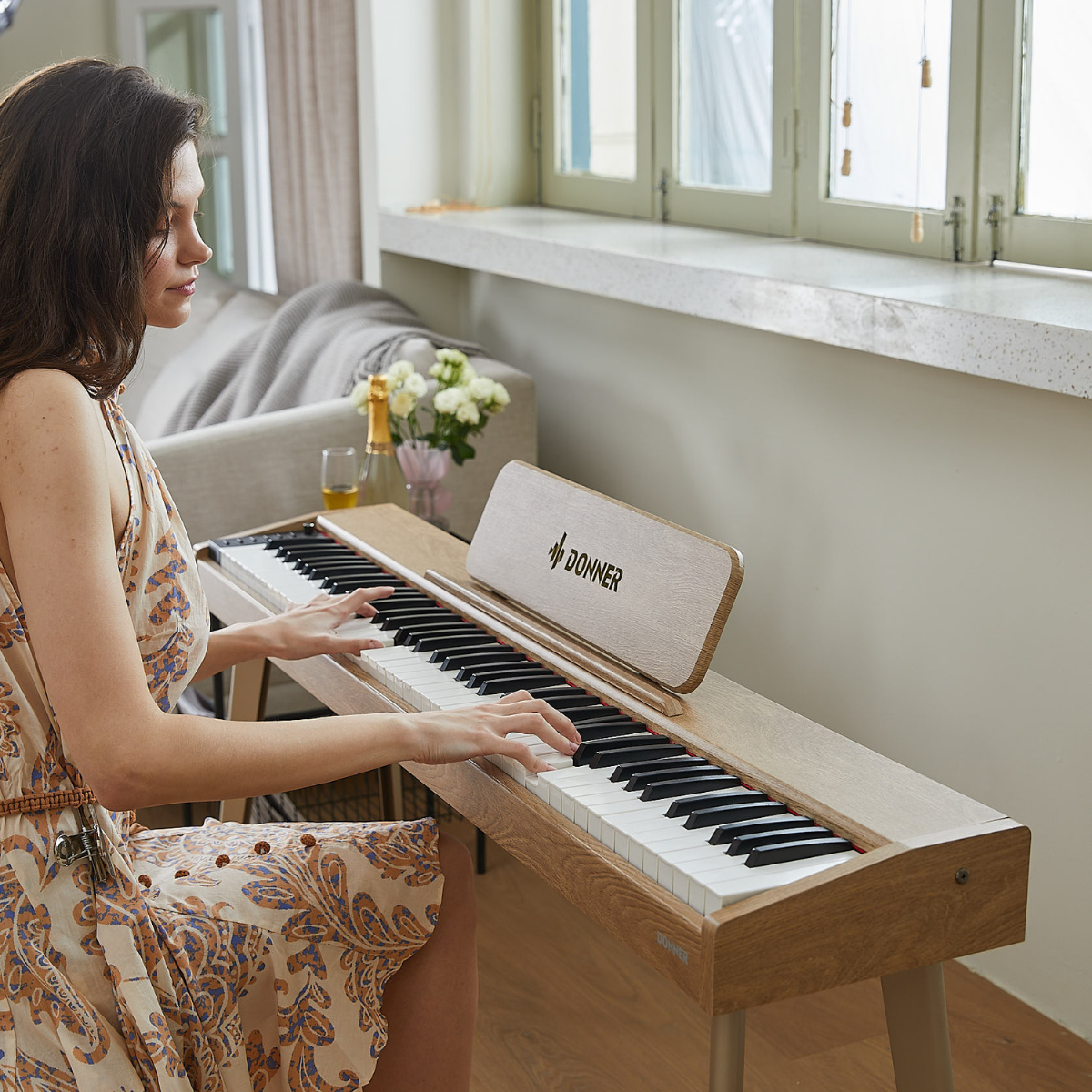
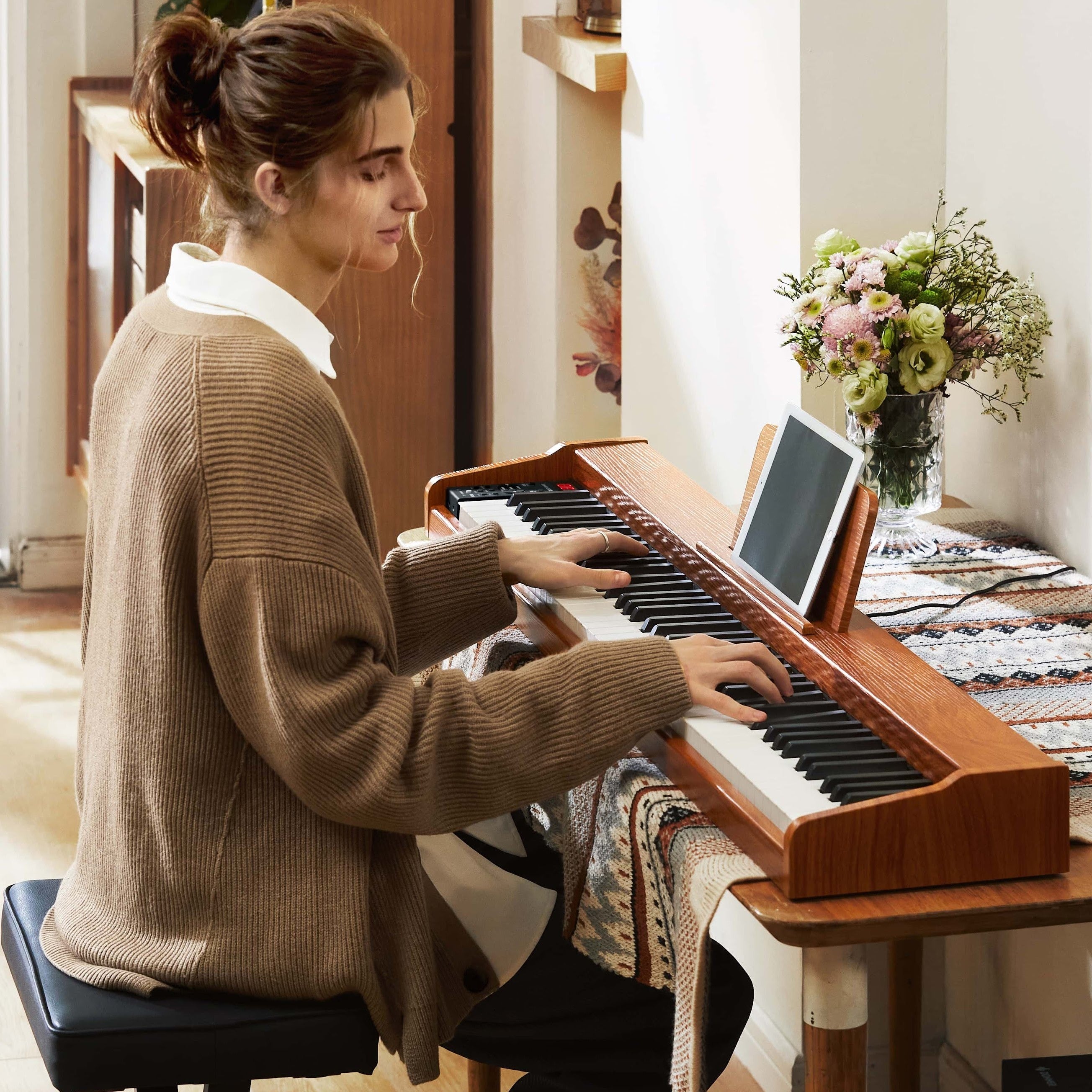





If you start learning piano on unweighted keys, you are building habits you will have to unlearn. Weighted keys simulate the resistance of an acoustic piano: the hammers, the graduated heaviness from bass to treble, and they are non-negotiable for developing proper finger strength and technique.
The good news: you do not need to spend thousands to get that feel. The best weighted keyboard pianos for beginners today all share one thing — fully weighted hammer-action keyboards at prices that make sense for a first instrument. Whether you are looking for a starter digital piano with a furniture-style cabinet or a portable digital piano that fits a small apartment, we compared eight models across key action quality, sound, features, and long-term value so you can find the right one for your space, your budget, and your goals.
Best Weighted Keyboards for Beginners at a Glance
- Donner DDP-80 Digital Piano — Best Overall for Beginners
- Yamaha P-45 Digital Piano — The Classic Standard
- Donner DEP-20 Digital Piano — Best Value for Features
- Roland FP-10 Digital Piano — Best Key Action
- Yamaha P-145BT Digital Piano — Best Modern Features
- Kawai ES60 Digital Piano — Best Piano Tone
- Donner DDP-60 Digital Piano — Most Affordable Furniture-Style Weighted Piano
- Williams Allegro IV Digital Piano — Ultra-Budget Alternative
Donner DDP-80 Digital Piano — Best Overall for Beginners
Pros
- 88-key fully-weighted hammer action with authentic graduated feel
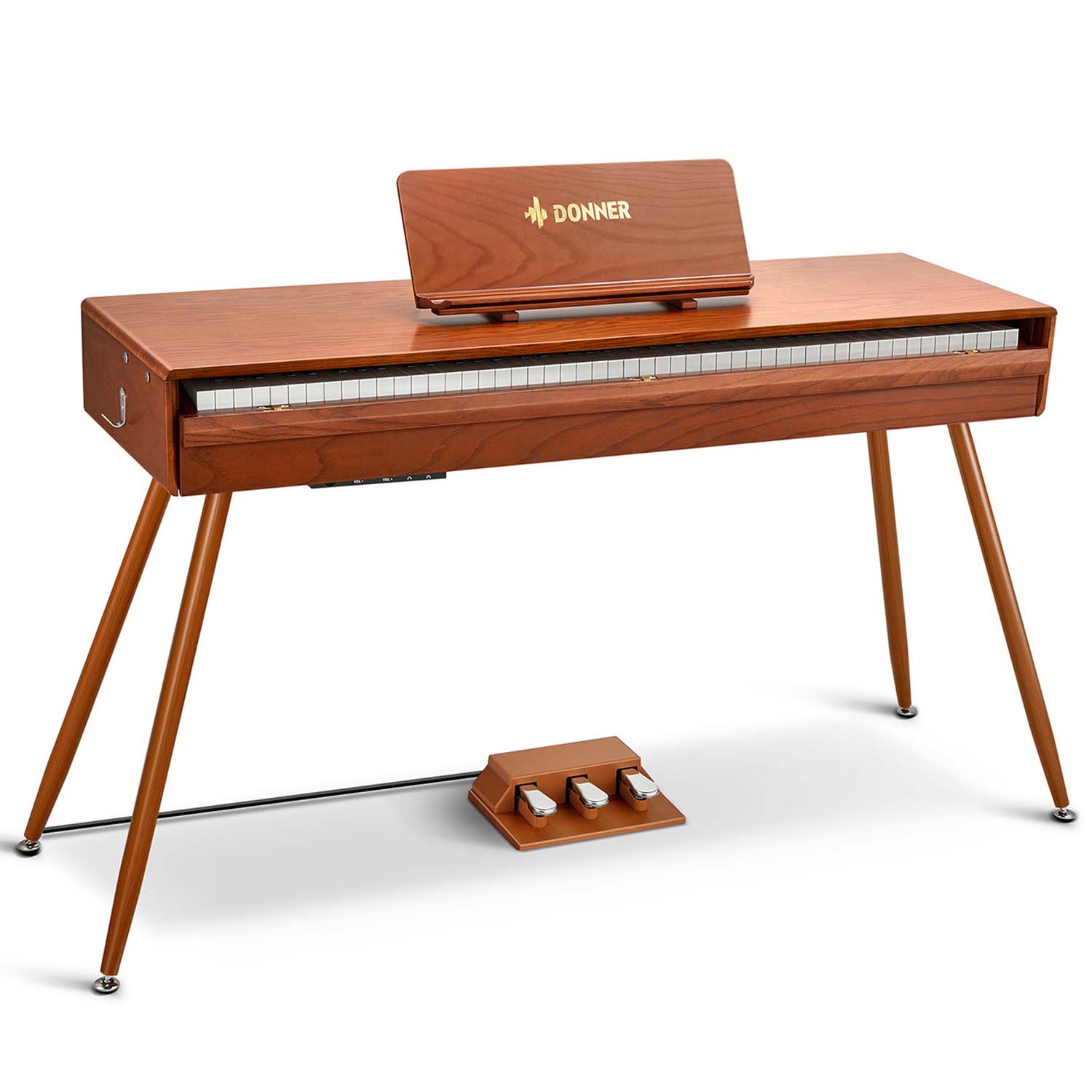
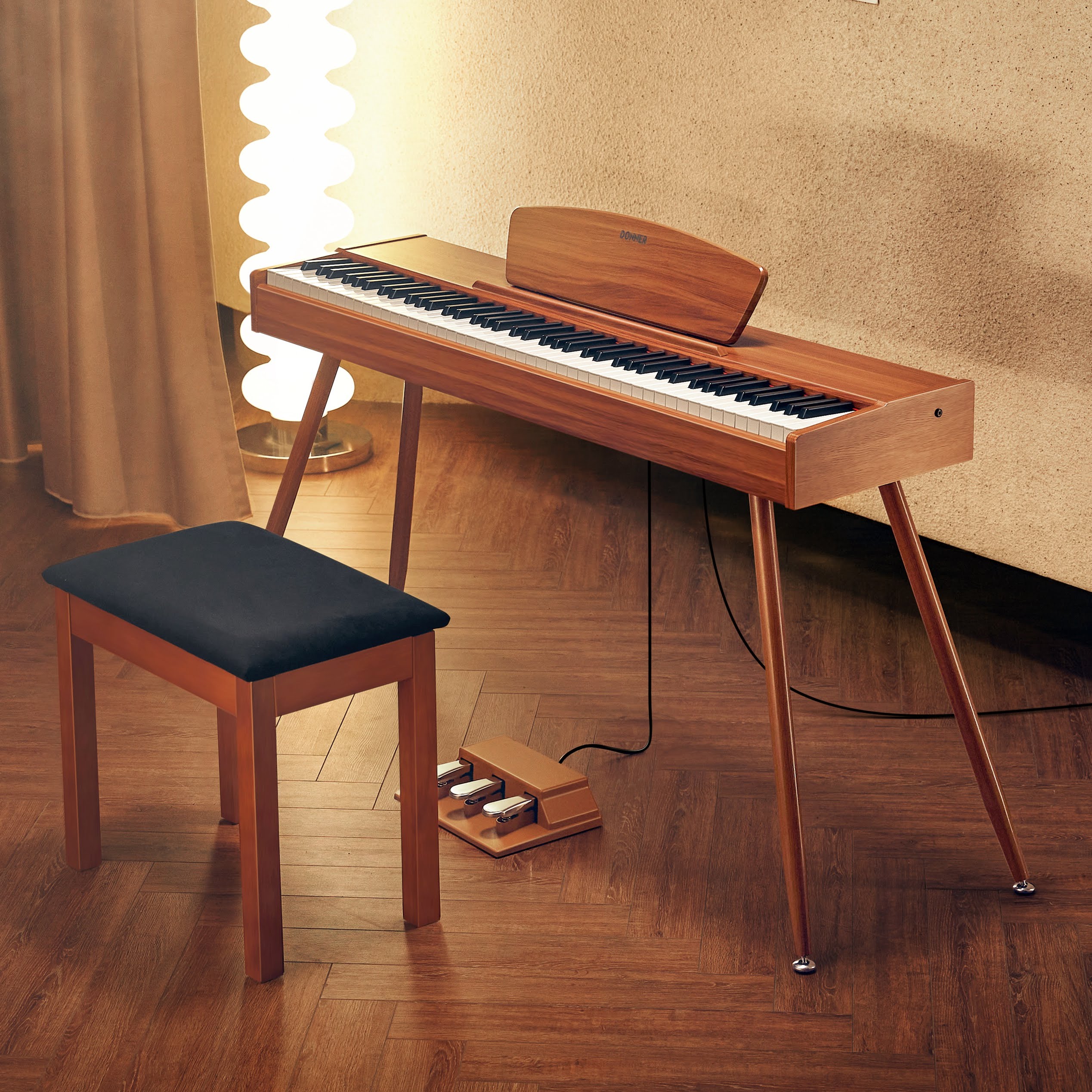
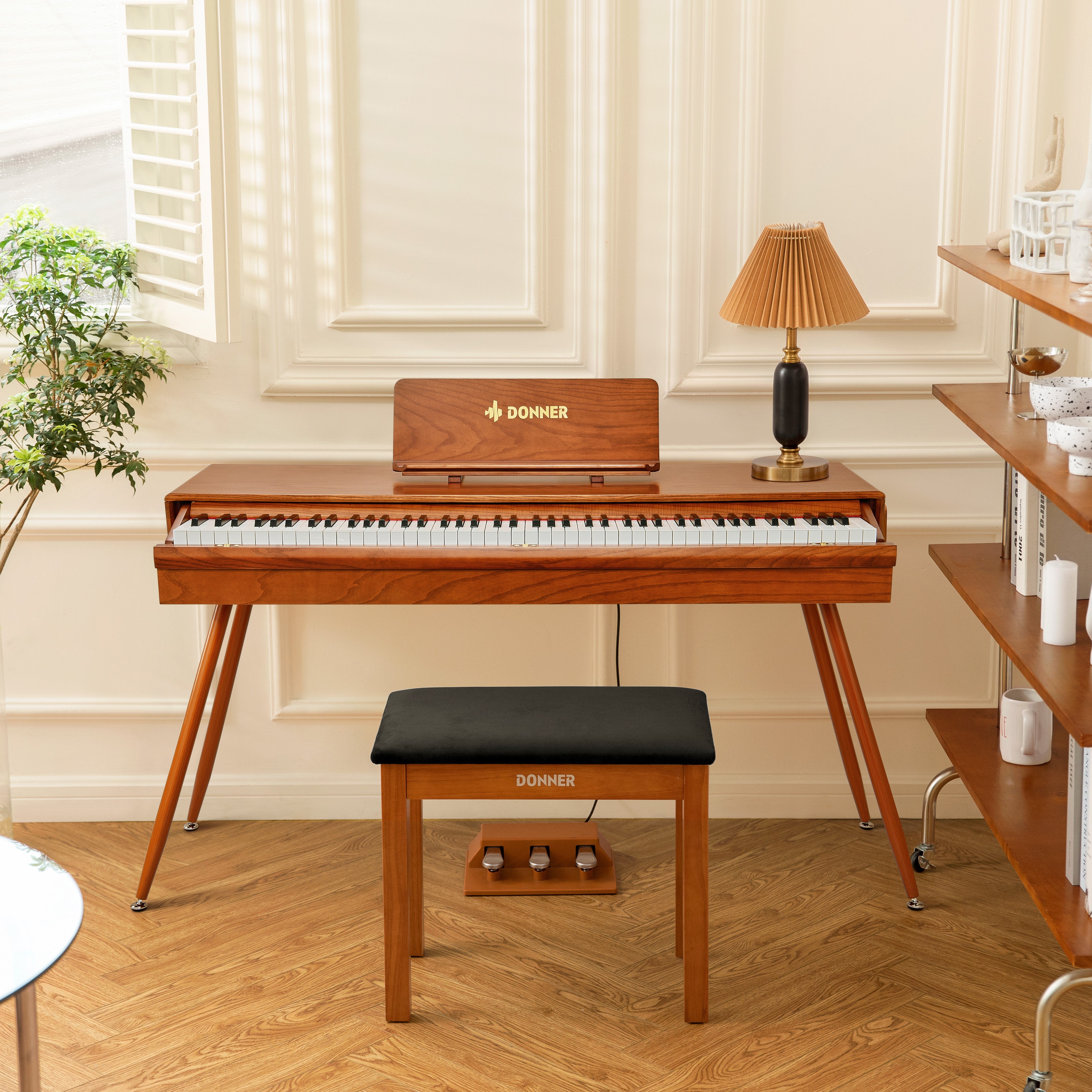
- Mid-century modern furniture design in three finishes, looks like real furniture
- Clean, minimalist layout, no buttons or screen, pure piano focus
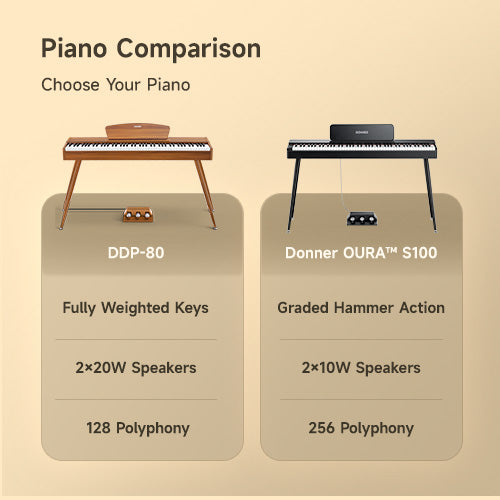
- 128-note polyphony and 40W speakers deliver full, sustained sound
- USB-MIDI for DAW and app integration
Cons
- Only one voice, no additional instruments or rhythms
- Key action runs heavier than Yamaha equivalents, which may fatigue younger or smaller hands

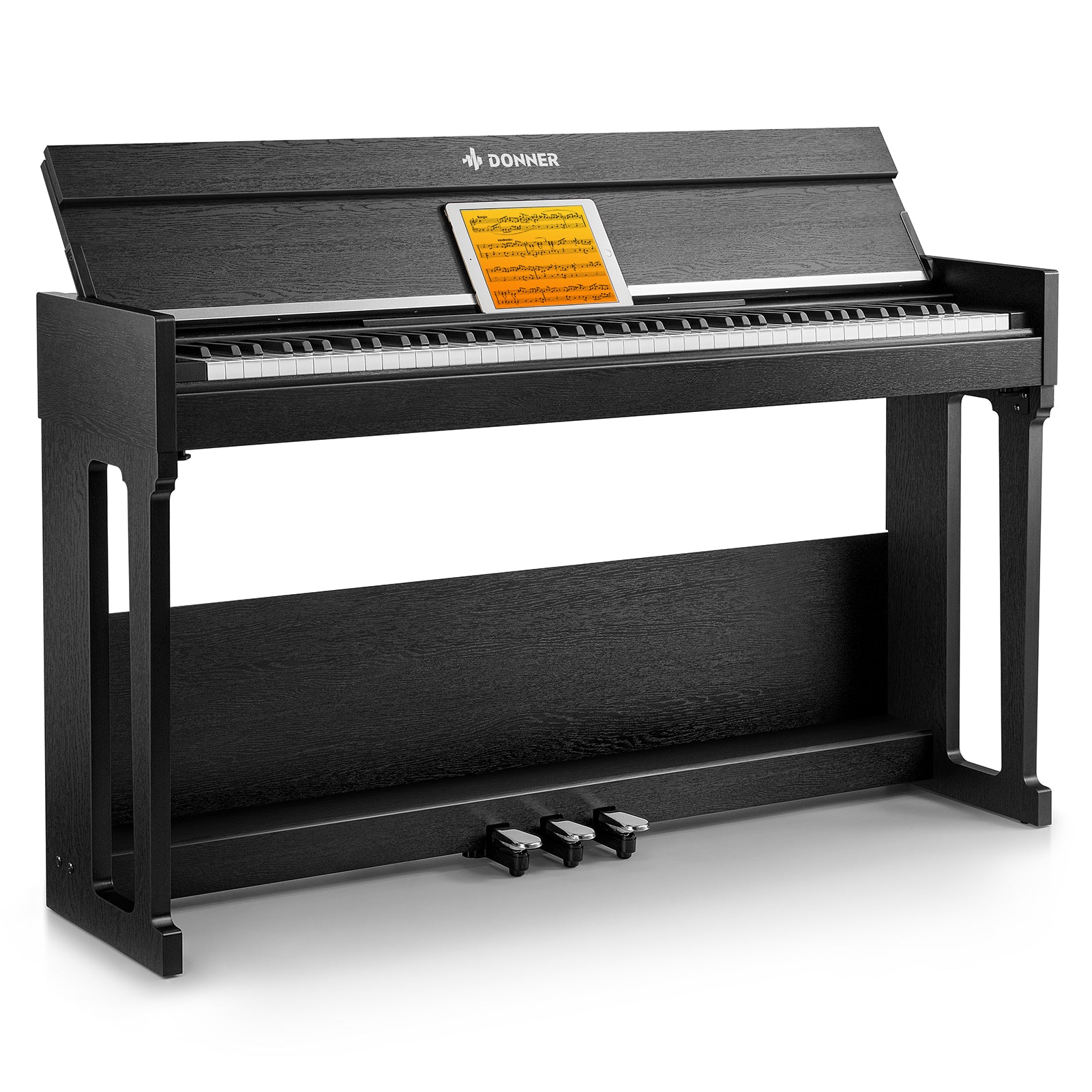
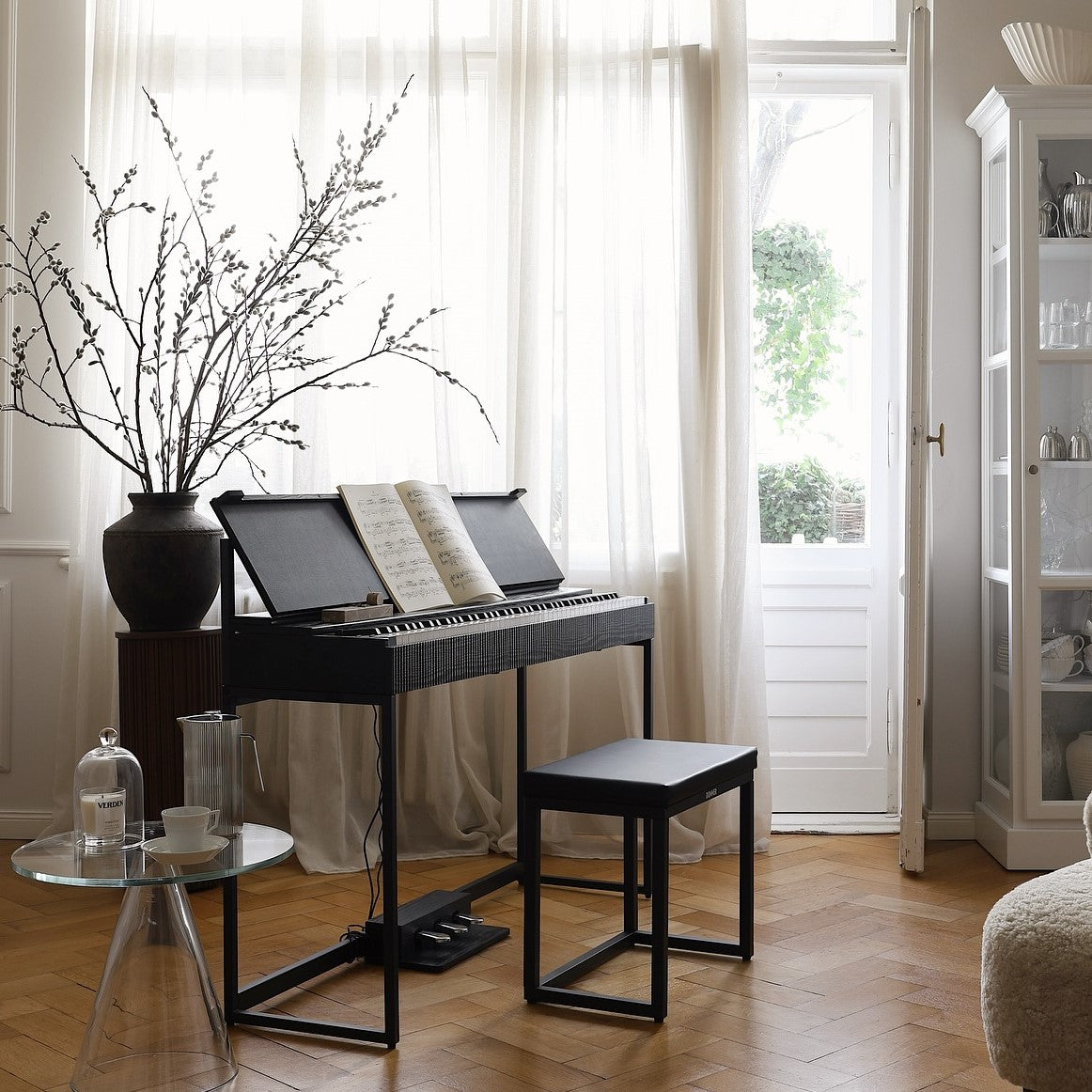
The DDP-80 is the best overall pick for beginners who want their first piano to look as good as it sounds. Its fully-weighted Hammer Action II keyboard and mid-century modern furniture cabinet in three finishes make it a genuine piece of decor, while the focused single-voice grand piano sound engine and 40W speakers deliver everything a beginner needs without unnecessary complexity.
Key Specification
88-key | Fully-weighted Hammer Action II | 128-note polyphony | 40W dual speakers
Check Current PriceYamaha P-45 Digital Piano — The Classic Standard
Pros
- Proven GHS weighted action with over a decade of reliability
- Clear AWM stereo sampling with natural, balanced piano tone
- Simple four-button interface, no learning curve
- Portable 25-pound form factor with solid build quality
Cons
- No Bluetooth, app connectivity, or LED display
- 64-note polyphony, modest by current standards
The P-45 has been the standard against which all entry-level digital pianos are measured for over a decade. For the beginner who wants zero surprises and proven reliability, it remains a safe, solid choice. Its GHS weighted action and AWM stereo sampling deliver a balanced playing experience, and the simple four-button interface means there is no learning curve.
Key Specification
88-key | GHS weighted action | 64-note polyphony | 10 voices | 12W dual speakers | 25 lbs
Donner DEP-20 Digital Piano — Best Value for Features
Pros
- 238 tones and 200 rhythms, the most feature-rich model at this price
- 50W dual speakers, the loudest in its class
- Furniture stand and triple pedal unit included
- 128-note polyphony and LED display with intuitive controls
Cons
- Piano tone quality lags behind Yamaha and Roland equivalents
- Key action stiffness limits dynamic expressiveness

The DEP-20 is the value play: 238 tones, 200 rhythms, 50 watts of speaker power, and a full furniture stand, all for a price that undercuts competitors with half the feature set. For the beginner who wants maximum flexibility and a complete setup in one purchase, it is difficult to beat.
Key Specification
88-key | Fully-weighted | 238 tones | 200 rhythms | 50W dual speakers
Check Current PriceRoland FP-10 Digital Piano — Best Key Action
Pros
- PHA-4 Standard action with escapement, widely considered best in class
- SuperNATURAL Piano engine produces rich, dynamic tone
- Bluetooth MIDI connects wirelessly to Roland Piano Partner 2 app
- Ivory-textured key surfaces absorb moisture during long practice sessions
Cons
- Modest 6W per side speaker output, sounds best through headphones
- 96-note polyphony, slightly below newer competitors at similar price
The FP-10 earns its spot through one thing it does better than anyone else at this price: key action. The PHA-4 Standard keyboard with escapement and ivory-textured keys is widely considered the best touch in the entry-level class. If authentic piano feel is your top priority, the FP-10 justifies the purchase.
Key Specification
88-key | PHA-4 weighted action with escapement | 96-note polyphony | 15 voices | 12W speakers | 27 lbs
Yamaha P-145BT Digital Piano — Best Modern Features
Pros
- Lighter GHC weighted action tuned for younger and smaller-handed beginners
- Bluetooth audio streams music from a phone directly through the piano speakers
- CFIIIS concert grand piano sampling, richer tone than the P-45 predecessor
- Smart Pianist app unlocks visual lessons, rhythm patterns, and chord analysis
Cons
- 64-note polyphony unchanged from P-45, entry-level ceiling
- Only 10 voices, no significant voice upgrade over the older model
The P-145BT modernizes the P-45 formula with lighter key action, better Bluetooth connectivity, and improved piano sampling. It is the right choice for the tech-savvy beginner who wants an instrument that connects to the apps and devices they already use for learning and play.
Key Specification
88-key | GHC weighted action | 64-note polyphony | 10 voices | 14W dual speakers | 24 lbs
Kawai ES60 Digital Piano — Best Piano Tone
Pros
- Harmonic Imaging sound engine captures Kawai flagship SK-EX concert grand in detail
- 192-note polyphony, highest in the entry-level class
- Responsive Hammer Compact action with let-off simulation for authentic feel
- Bluetooth MIDI and audio built in, plus PiaBookPlayer app support
Cons
- Higher price point than most entry-level competitors
- Modest 20W speaker output given the premium positioning
The ES60 brings Kawai acoustic piano heritage into an accessible digital format. Its 192-note polyphony and SK-EX concert grand sampling produce the richest piano tone in the entry-level class, for the beginner who can hear and value the difference that dedicated sampling makes.
Key Specification
88-key | RHC weighted action | 192-note polyphony | 17 voices | 20W speakers | 26 lbs
Donner DDP-60 Digital Piano — Most Affordable Furniture-Style Weighted Piano
Pros
- Furniture-style wood cabinet with triple pedal at the lowest entry price
- 128 instrument tones and 83 accompaniment rhythms for exploring styles
- USB-MIDI and MIDI 5-pin connectivity, rare at this price
- Dual headphone jacks and Dual mode for teacher-student practice
Cons
- Semi-weighted action lacks the graduated hammer feel of fully-weighted competitors
- 30W speakers adequate but not as powerful as the DEP-20 at a similar price

The DDP-60 is the most affordable way to get a furniture-style digital piano with a wood cabinet and triple pedal. The semi-weighted action means you trade some key feel for cabinet quality at this price, but for beginners who prioritize form factor and connectivity over fully-weighted authenticity, it is a unique value at the entry-level.
Key Specification
88-key | Semi-weighted (4-level touch) | 128-note polyphony | 128 tones | 30W speakers
Check Current PriceWilliams Allegro IV Digital Piano — Ultra-Budget Alternative
Pros
- 88-key fully-weighted graded hammer action at the lowest entry price
- Bluetooth audio and MIDI built in for app-based learning
- Two-way speaker system with ported enclosure projects surprisingly clearly
- Lightest and most compact 88-key weighted model available
Cons
- Build quality and key texture a clear step below Roland and Yamaha
- Only 12 voices, limited sound library for exploring different styles
The Allegro IV proves that a fully-weighted 88-key hammer action does not have to cost a lot. It is the ultra-budget pick for the beginner who wants to start with the right key feel but cannot stretch to the Roland or Yamaha tier yet. Bluetooth audio and MIDI are built in, and the ported speaker enclosure projects more clearly than expected at this price.
Key Specification
88-key | Fully-weighted graded hammer action | 12 voices | Bluetooth audio + MIDI | Two-way ported speakers
How We Chose the Best Weighted Keyboards for Beginners
This list is the result of hands-on evaluation data, owner feedback analysis, and spec-to-spec comparison across the entry-level digital piano market. Each model was measured against four screening dimensions that matter most when you are buying your first weighted keyboard.
Key Action and Weighted Feel
A weighted keyboard must simulate the mechanical resistance of an acoustic piano, where hammers strike strings, or it is not a weighted keyboard. We required every model on the main list to have at least a graded hammer action, with resistance that varies from heavier in the bass to lighter in the treble. Semi-weighted spring-based actions were excluded except for the DDP-60, which is explicitly labeled and earns its spot through furniture-cabinet value rather than key action purity.
Sound Quality and Polyphony
The core piano voice is what a beginner will hear for hundreds of hours. We set a minimum of 64-note polyphony, enough to sustain complex passages without audible note drop-off, and prioritized models with dedicated piano sampling engines over generic sound banks. A convincing piano tone keeps a beginner engaged; thin, artificial sounds discourage practice.
Beginner-Friendly Features
A built-in metronome, headphone output for silent practice, and at least one connectivity option for apps or recording software were non-negotiable. We looked for features that support learning: lesson modes, split-keyboard for teacher-student practice, and app integration. Gimmicky extras that add complexity without helping a beginner improve were deprioritized.
Price and Long-Term Value
Every model on this list is priced under $800, with most clustering between $350 and $600. We balanced upfront cost against how long a beginner can grow with the instrument before needing an upgrade. A keyboard that lasts two years of structured learning is better value than one you outgrow in six months, even if the latter costs less on the day you buy it.
Reading a buying guide
If you are still narrowing down what form factor and key action you need, our keyboards to learn piano on guide walks through the decision step by step.
FAQ About Weighted Keyboards for Beginners
Do I need a weighted keyboard as a beginner?
Yes. Weighted keys build proper finger strength and technique from the start, and learning on unweighted keys creates habits you will have to unlearn when you transition to an acoustic piano or a higher-tier digital instrument. Even budget weighted keyboards simulate hammer resistance well enough for the first one to two years of learning. The key is consistency: if you practice daily on a weighted action, your fingers develop the muscle memory that translates directly to any acoustic piano you sit down at later. If you have the space for a dedicated instrument, a home digital piano with a furniture stand and triple pedal feels closer to the real thing from day one.
What is the difference between weighted and unweighted keys?
Weighted keys use a hammer mechanism to simulate the resistance of an acoustic piano. They feel heavier in the bass register and lighter in the treble, just like real piano strings under hammers. Unweighted keys, also called synth-action, use simple springs with uniform resistance across all 88 keys. Semi-weighted keys add a spring with slightly more tension but lack the graduated hammer weight and mechanical linkage that make a fully-weighted action feel like a piano. For learning piano specifically, fully weighted hammer action is the standard; everything else is a compromise. If you are still comparing options across the category, a well-organized keyboard piano collection makes it easier to compare key actions side by side.
What is the cheapest 88-key weighted keyboard?
Fully-weighted 88-key keyboards start between $300 and $400 at the entry level. At this price you will find models like the Williams Allegro IV and Alesis Recital Pro, where you should expect compromises in speaker quality and key action refinement. The core weighted feel is present. Moving up to the $500 to $600 tier gets you into Roland FP-10 and Yamaha P-145BT territory, where the action and sound improve noticeably and the instrument can serve you through several years of advancing skill. For a broader set of weighted keyboard recommendations across price tiers, the weighted piano guide compares more models in detail.
Do you really need 88 keys to learn piano?
Not for the first six to twelve months. Most beginner repertoire and method book material fits comfortably within 61 keys. But 88 keys give you room to grow without upgrading. If you are tight on space or budget, a good 61-key weighted keyboard works for fundamentals and early-level pieces. Expect to want the full range once you progress past method book level two, when repertoire starts using the top and bottom octaves regularly.
Start Playing with the Right Foundation
The right weighted keyboard makes practice feel rewarding instead of frustrating. Each key press responds the way your fingers expect, and that feedback loop is what turns a beginner into a player. None of the models on this list will hold you back in your first years of learning. The differences come down to which trade-offs match your priorities: sound versus features, portability versus furniture presence, lowest cost versus longest useful life.
Donner Music builds instruments for people at the start of their musical journey, with a focus on quality that beginners can feel and prices that do not get in the way of starting. Explore our digital piano keyboard for beginners collection to find the right fit for your space and goals. Pick the instrument that makes you want to sit down and play. Everything else follows from that.