




You walk into a music store or scroll through Amazon, and both options stare back at you. A digital piano and a keyboard look similar at first glance — same black and white keys, same plug-and-play setup. But the digital piano vs keyboard piano decision is more than skin deep: they're built for completely different purposes. Pick the wrong one, and you might end up frustrated or spending twice as much later.
This guide breaks down the real differences between a digital piano and a keyboard, so you can make the right call on your first try.
Table of Contents
- What Is the Difference Between a Digital Piano and a Keyboard?
- Digital Piano vs Keyboard: Head-to-Head Comparison
- Digital Piano vs Keyboard: Price and Value Comparison
- Digital Piano vs Keyboard for Beginners — Which One Should You Get?
- Frequently Asked Questions
- Final Verdict
What Is the Difference Between a Digital Piano and a Keyboard?
A digital piano is designed to replicate the sound and feel of an acoustic piano as closely as possible. A keyboard (often called a portable arranger keyboard) is built to give you as many sounds and features as possible in a lightweight, portable package. Everything else — the keys, the sound, the features, the price — flows from these two core missions.
Keys and Key Action
Digital pianos almost always come with 88 fully weighted keys using graded hammer action. The keys feel heavier in the lower register and lighter in the higher register, just like an acoustic grand piano. This builds proper finger strength and technique over time.
Keyboards typically have 61 to 76 keys with synth-action (spring-loaded) or semi-weighted keys. They're lighter to the touch and easier to press, but don't provide the resistance needed to develop real piano control.
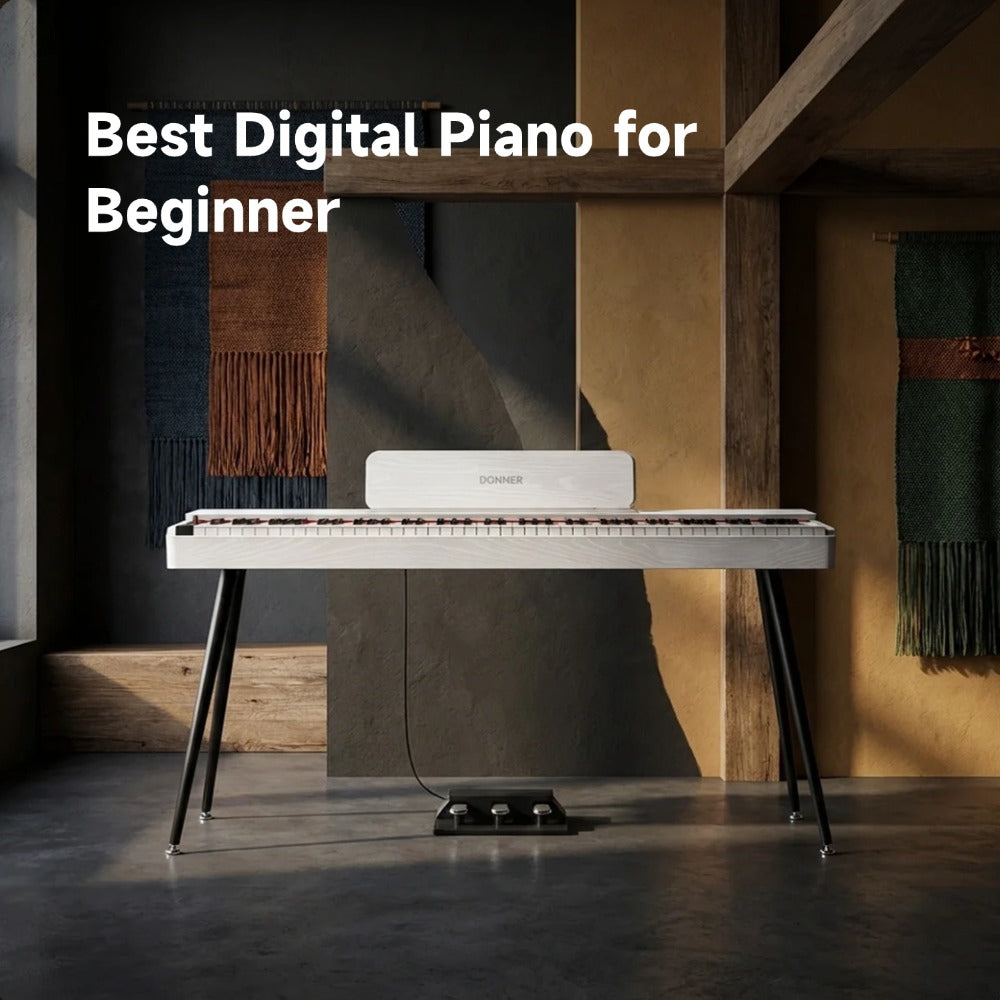
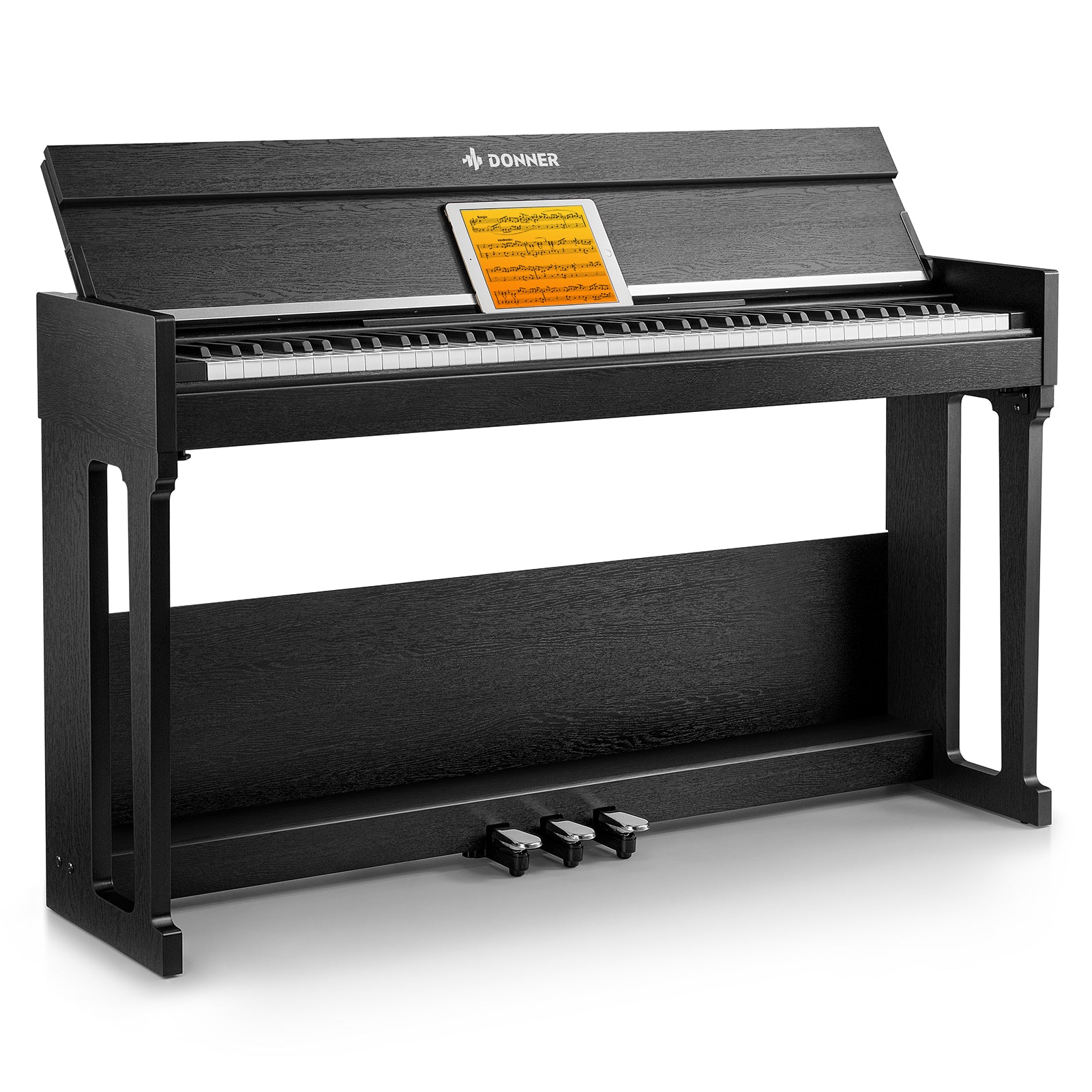
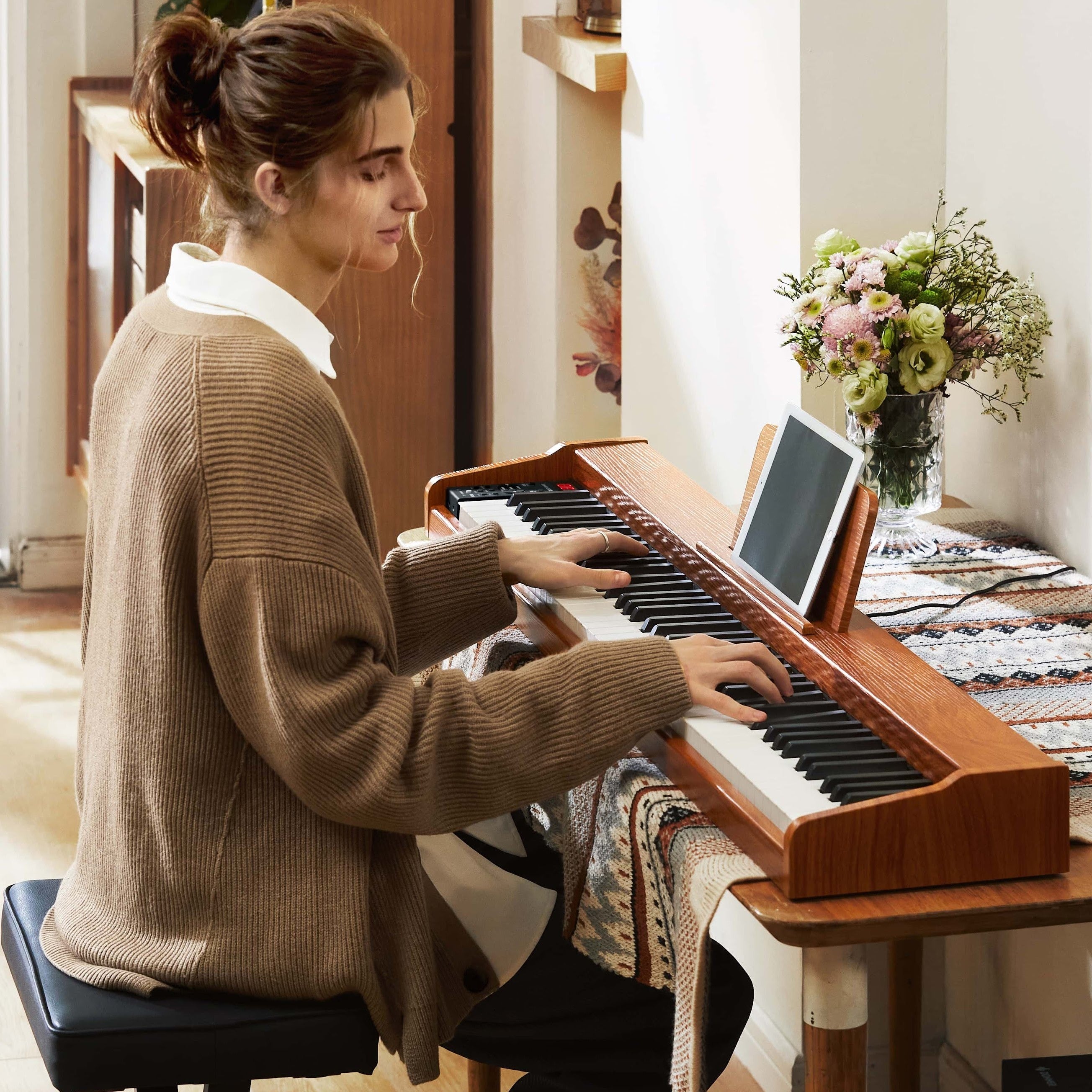
A good example of a digital piano with proper key action is the Donner DDP-200 Graded Hammer Digital Piano, which gives you the full 88-key weighted experience in a console-style cabinet.

Sound Quality and Variety
Digital pianos focus on quality over quantity. They deliver 10-30 high-quality piano tones sampled from real concert grand pianos, often with multiple layers per key to capture every nuance of how hard you press. Non-piano sounds (strings, organ, electric piano) are included but secondary.
Keyboards pack in 200-700+ instrument voices — organs, strings, brass, drums, synth leads, sound effects. The piano sounds are decent on modern keyboards, but lack the depth and dynamic range of a dedicated digital piano. The tradeoff is variety: you can switch from grand piano to church organ to synth lead in one button press.
Auto-Accompaniment and Built-in Features
This is one of the biggest practical differences. Keyboards include built-in drum patterns and auto-accompaniment — play a chord with your left hand, and the keyboard generates a full backing arrangement (bass, drums, electric guitar) in whatever style you pick (rock, jazz, Latin, EDM). Many also include built-in lesson modes, arpeggiators, and recording functions.
Digital pianos rarely include auto-accompaniment. They focus on the core piano experience: play a note, hear a piano. Some higher-end models include basic drum patterns or rhythm tracks, but the priority is always realistic piano response.
Portability and Form Factor
Keyboards win on portability. Most weigh 8-15 pounds, run on batteries, and fit under your arm. The Donner DP-06 61 Keys Keyboard Piano is a great example — lightweight enough to carry to lessons or practice anywhere.
Digital pianos are 25-45 pounds and require a stand (or come built into a furniture-style cabinet). They're designed for a dedicated spot in your home, not for frequent travel.

Price Range
Digital pianos start around $350 and go up to $3,000+ for premium console models. The cost comes from the weighted hammer action mechanism — dozens of moving parts per key.
Keyboards range from $80 to $800. The simpler spring-loaded mechanism keeps costs low, and you get more features for your dollar, but the core piano experience is less authentic.
Digital pianos also hold their value better — expect 50-65% resale after 3 years versus 30-40% for keyboards.
Best For
Digital pianos are best for anyone serious about learning piano — beginners who want proper technique, returning players, classical pianists, and parents enrolling children in formal lessons.
Keyboards are best for singer-songwriters, music producers, band keyboardists who need organ/synth sounds, and families on a tight budget exploring music for the first time.
The Gray Zone — When the Lines Blur
Some instruments sit in between. You'll find 88-key keyboards with weighted keys or digital pianos with arranger features like 100+ sounds and built-in rhythms.
The rule of thumb: look at what the instrument was designed to do first. If the primary focus is authentic piano feel with piano-optimized samples, it's a digital piano. If the priority is sound variety and one-person-band features, it's a keyboard.
Digital Piano vs Keyboard: Head-to-Head Comparison
| Feature | Digital Piano | Keyboard |
|---|---|---|
| Keys | 88 weighted (hammer action) | 61-76 unweighted or semi-weighted |
| Key Action | Graded hammer action | Synth-action or spring-loaded |
| Sound Focus | 10-30 high-quality piano tones | 200-700+ instrument voices |
| Auto-Accompaniment | Rarely included | Yes, standard feature |
| Portability | 25-45 lbs, needs a stand | 8-15 lbs, often battery-powered |
| Price Range | $350 – $3,000+ | $80 – $800 |
| Best For | Learning piano, classical practice | Songwriting, band use, variety |
| Resale Value | Higher | Lower |
Digital Piano vs Keyboard: Price and Value Comparison
Entry-Level Price Breakdown ($100 – $500)
$100 – $200: You'll find basic 61-key keyboards with unweighted keys and a handful of sounds. These are fine for casual play but won't help you develop proper piano technique.
$200 – $350: This bracket gets you 76-key keyboards with semi-weighted keys or better sound engines. Some entry-level digital pianos start appearing near the top of this range.
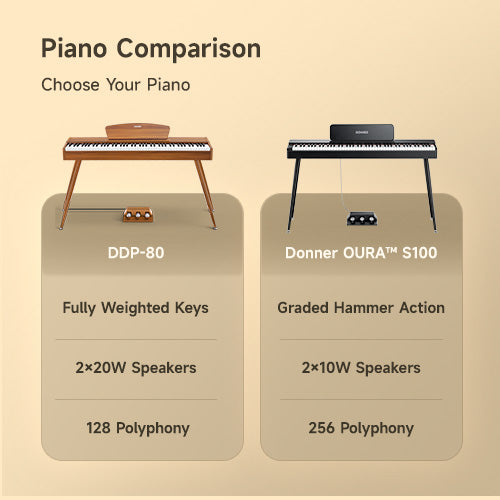
$350 – $500: This is where real digital pianos begin. The Donner DDP-80 Digital Piano gives you 88 fully weighted keys, hammer action, and authentic grand piano samples — the essential ingredients for proper piano practice. At this price, you're getting a legitimate learning instrument that won't hold you back.

Mid-Range Options ($500 – $1,500)
Digital pianos in this range offer noticeably better key actions and sound engines. Key actions become more refined — graded hammer actions with escapement simulation that mimics the tactile "click" of a grand piano's mechanism.
Keyboards at this level become powerful arranger workstations with hundreds of styles, professional-grade effects, and advanced recording capabilities.
The Hidden Costs — Accessories & Long-Term Value
Don't forget the extras. A proper setup needs:
- Stand ($30 – $80)
- Sustain pedal ($15 – $60)
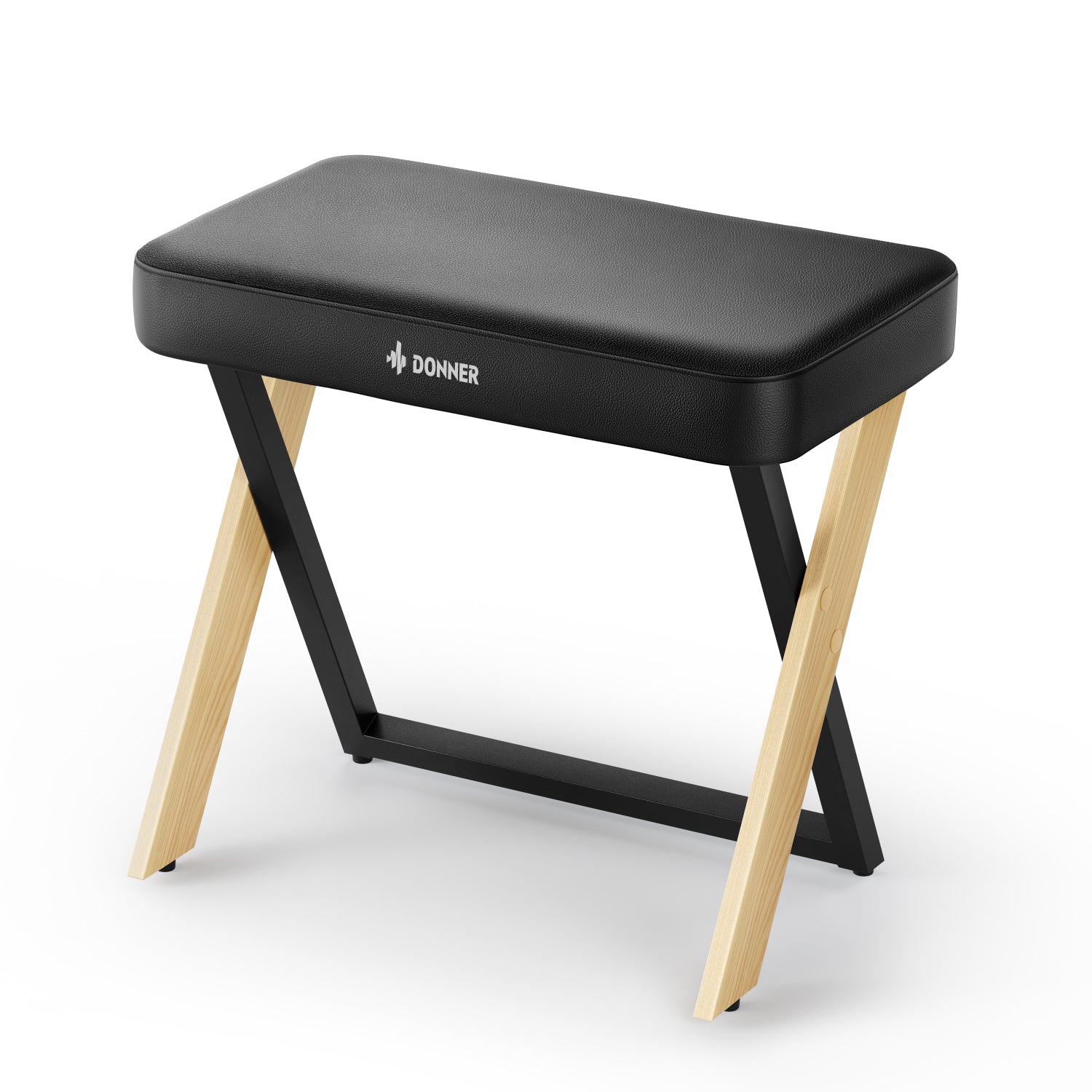
- Adjustable bench ($50 – $150)
- Headphones ($30 – $100)
Total accessories: $125 – $390 on top of your instrument.
Over 3 years, a digital piano holds its value better. Weighted key instruments in good condition typically sell for 50-65% of their original price on the used market. Keyboards depreciate faster — expect 30-40% return at best.
Digital Piano vs Keyboard for Beginners — Which One Should You Get?
When a Digital Piano Is the Right Choice
You should pick a digital piano if:
- You want to learn piano properly, with correct finger technique.
- Your child is starting formal lessons (most teachers expect weighted keys).
- You played before and want to come back to the instrument.
- Sound quality and dynamic expression matter to you.
When a Keyboard Makes More Sense
A keyboard is the better choice if:
- You're a singer-songwriter who needs a portable sketchpad with multiple sounds.
- You're producing music and need a MIDI-capable instrument.
- Your budget is under $200.
- You're buying for a very young child (under 5) who's just exploring sounds.
FAQs About Digital Piano VS. Keyboard Piano
How many keys do you need to learn piano?
61 keys (5 octaves) can get you through the first 3-6 months. But many classical and pop pieces require the full 88-key range. If you're serious about piano, go with 88 keys from the start. It saves you from upgrading within a year.
Can you learn piano on a keyboard?
Yes, for the basics — note reading, simple melodies, basic chords. But keyboards don't build proper finger strength or control. The transition from unweighted to weighted keys feels like starting over for many learners. If you plan to play piano long-term, start with weighted keys.
Why are digital pianos more expensive than keyboards?
The hammer action mechanism is the main cost driver. Weighted keys use physical hammers and graded weights to simulate acoustic piano feel — dozens of moving parts per key. Keyboards use simple springs, which cost pennies to manufacture. You're paying for mechanical complexity and realism.
Does key action really matter?
Think of it this way: practicing piano on unweighted keys is like training for a marathon in flip-flops. You can do it, but your body won't develop the right muscles or technique. Weighted keys build finger independence, control, and dynamic sensitivity. These skills transfer directly to any acoustic piano you sit down at later.
Final Verdict
Here's the bottom line:
- Your goal matters most. Want to learn piano the right way? Get a digital piano. Want to make music across genres and styles? A keyboard might serve you better.
- Your budget sets the floor. At $350+, you can get a legitimate digital piano. Under $200, you're in keyboard territory.
- Your space affects your options. Digital pianos need a dedicated spot. Keyboards fold up and disappear into a closet.
If you're still unsure, remember this: a digital piano with weighted keys will never hold you back. A keyboard with unweighted keys might.
Donner offers best electric musical instruments at honest prices. Whether you choose the Donner DDP-80 for serious piano practice or the Donner DP-06 for versatile music-making, you're getting an instrument built for real progress. Check out the full Donner keyboard collection to find your match.