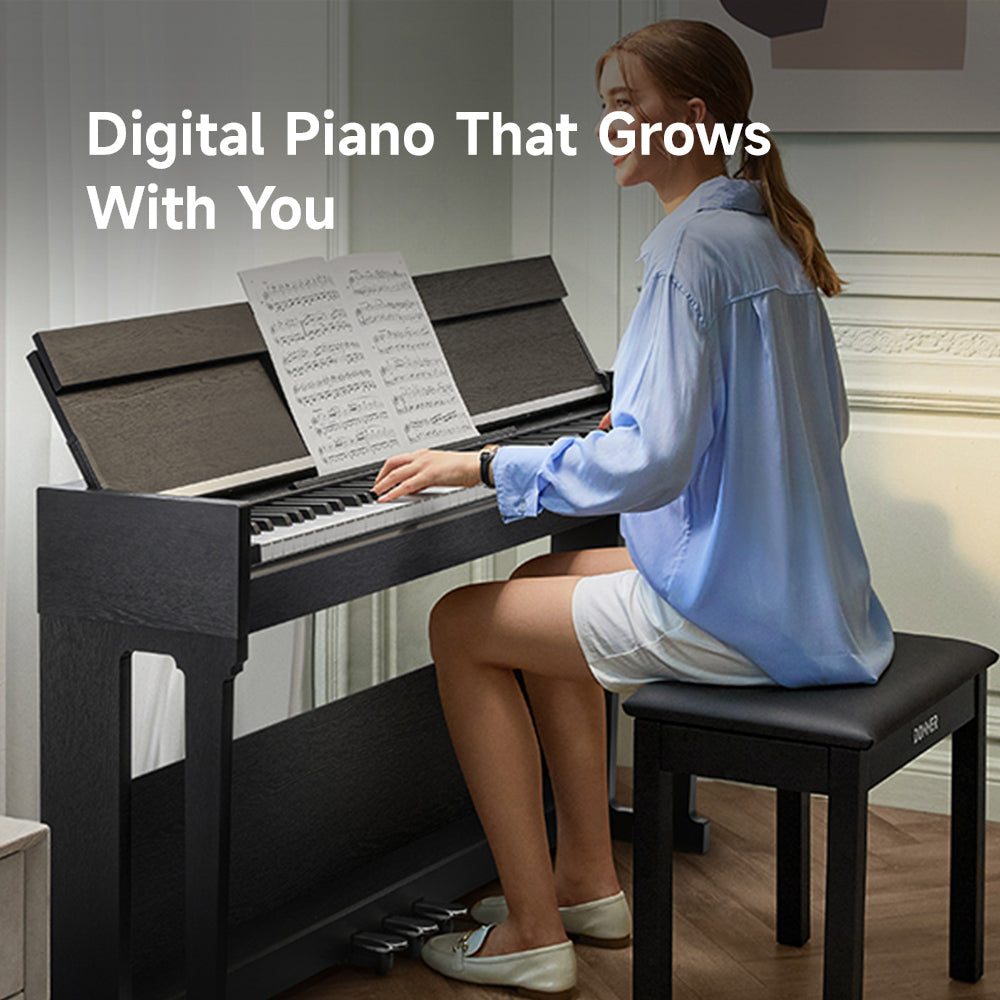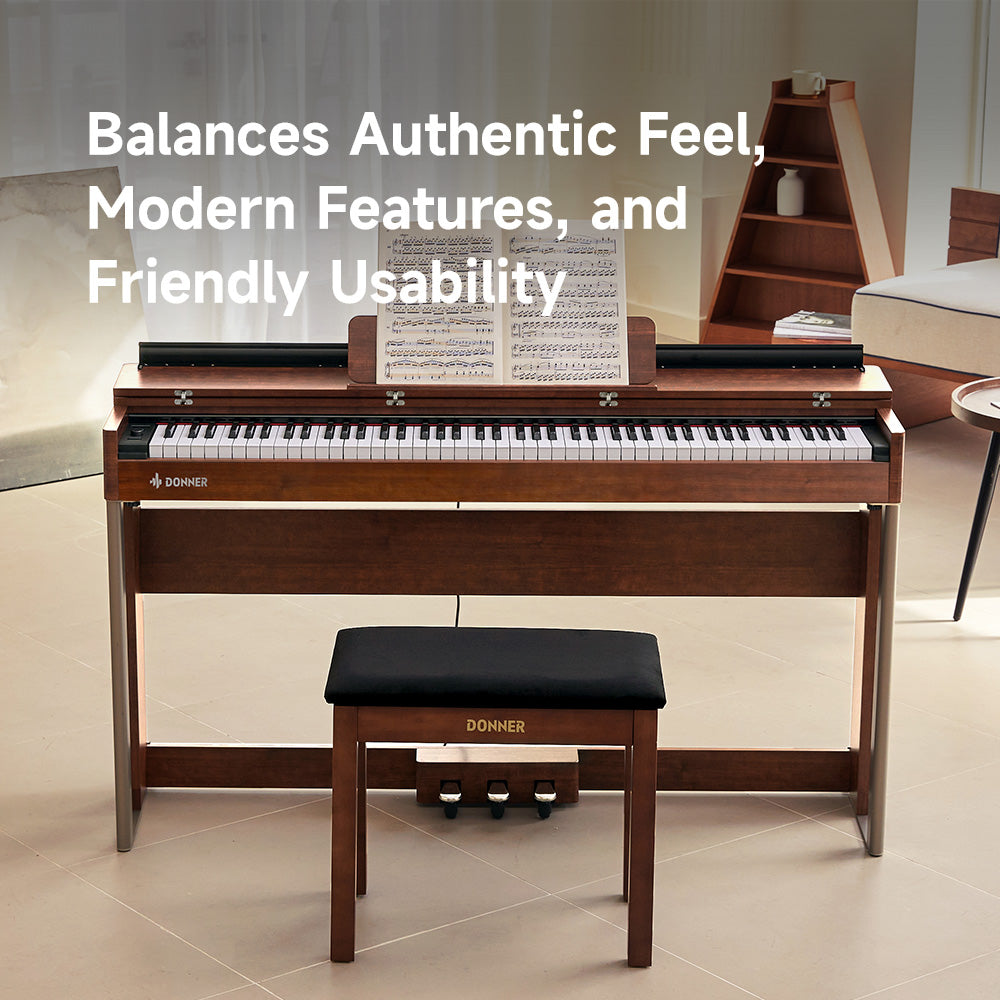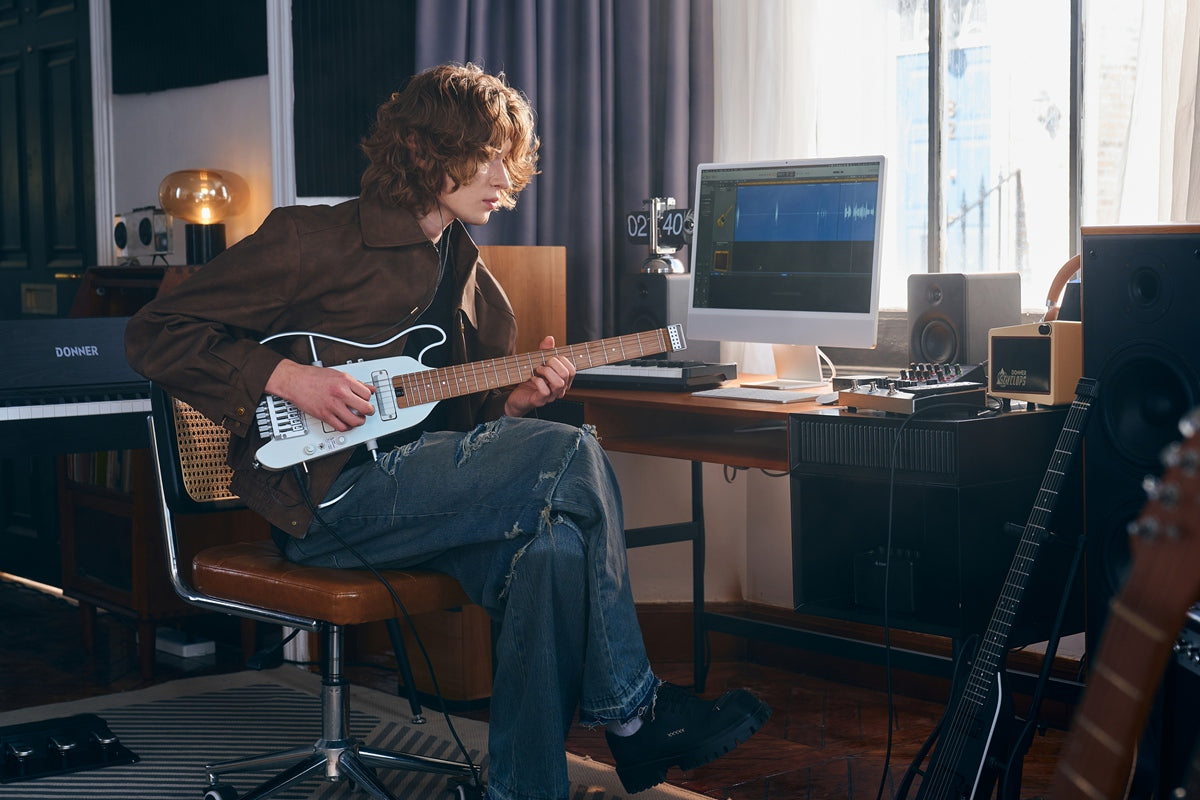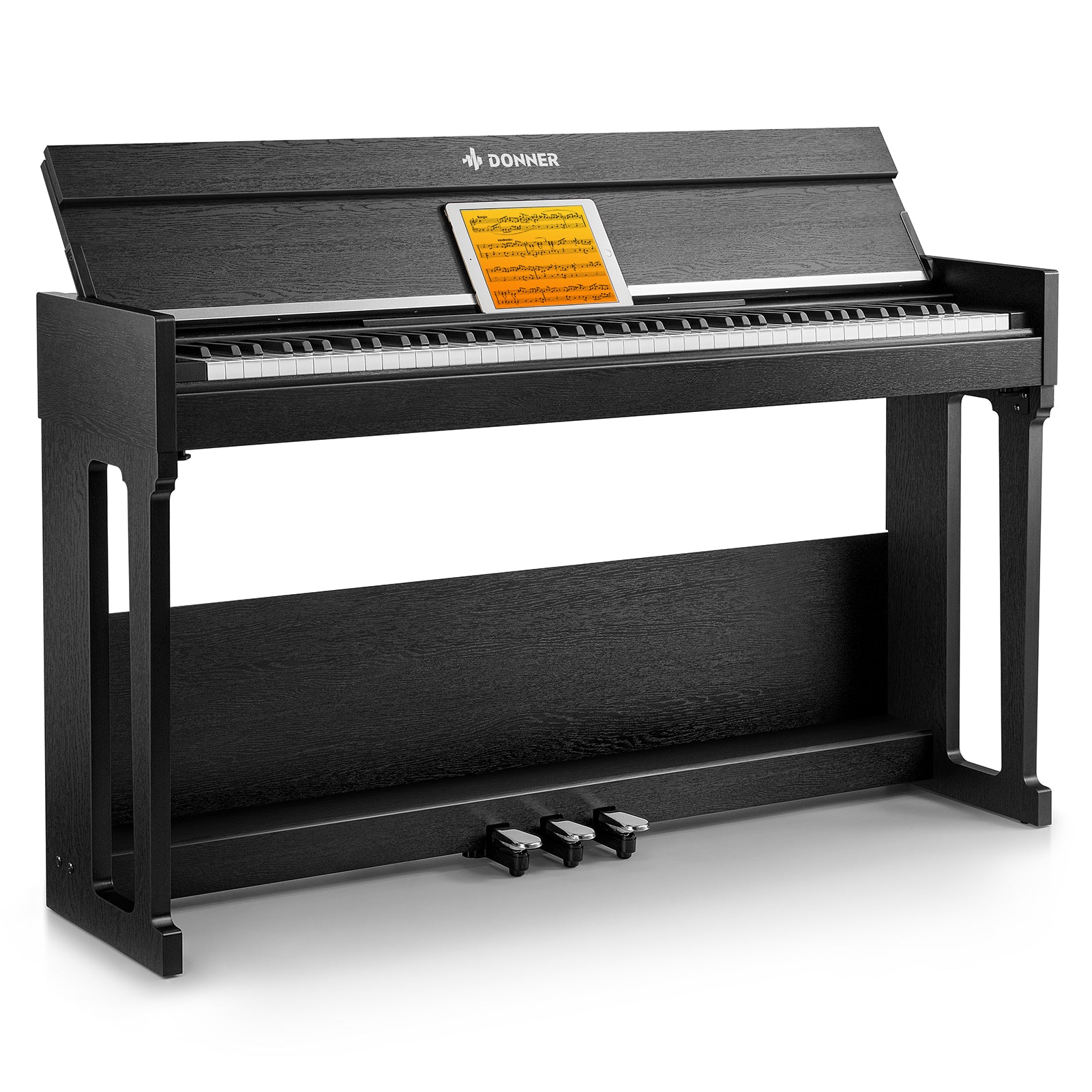


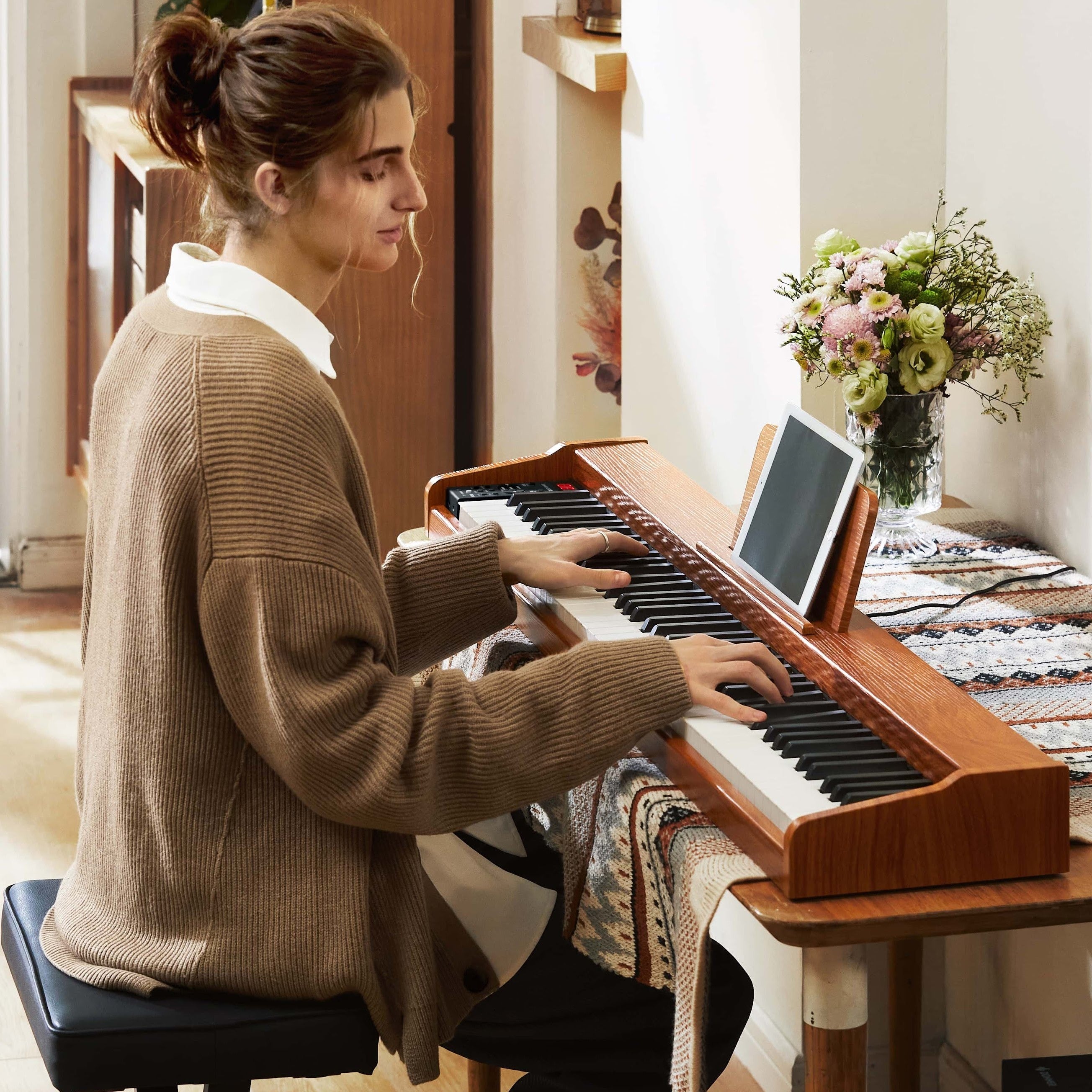




If you’re looking for a portable 88-key digital piano for home practice, learning, or creative playing, Donner DEP-20 and DEP-16 are two popular options that often come up side by side. At first glance, they share many similarities—fully weighted keys, compact designs, and versatile practice features—but they are designed with slightly different priorities in mind.
In this article, we’ll compare DEP-20 vs DEP-16 in terms of keyboard action, sound, features, connectivity, and physical design, helping you decide which model best matches your playing style and setup.

Overall Positioning
Both DEP-20 and DEP-16 are portable digital pianos available in:
- A stand-mounted version with 3 pedals, suitable for home use
- A portable version with a sustain pedal, ideal for flexible setups
The key difference lies in focus:
- DEP-20 emphasizes classic playing feel and stronger sound output
- DEP-16 emphasizes modern connectivity and streamlined portability

Keyboard Action & Playing Experience
Shared Foundations
Both models feature:
- Standard 88-key, full-size keyboards
- Weighted hammer-action keys
- Adjustable touch response for dynamic control
These shared fundamentals make both DEP-20 and DEP-16 suitable for building proper finger technique and transitioning from acoustic piano fundamentals.
DEP-20 Keyboard Highlights
The DEP-20 uses a weighted hammer-action keyboard designed to deliver a balanced, traditional piano response. It is widely recognized as a classic model in the Donner lineup, offering a familiar and comfortable feel for long practice sessions.
DEP-16 Keyboard Highlights
The DEP-16 also features fully weighted hammer-action keys but offers 4 levels of touch sensitivity adjustment, giving players additional flexibility to fine-tune the response based on personal preference or playing style.
Key takeaway: Both provide authentic weighted action. DEP-20 focuses on a classic, stable playing feel, while DEP-16 adds extra touch-adjustment flexibility.

Sound Engine: Tones, Rhythms & Polyphony
Shared Sound Core
Both models include:
- 238 instrument tones
- 200 accompaniment rhythms
- 100 demo songs
- 128-note polyphony
From acoustic piano and electric piano to bass, drums, and other instruments, both keyboards cover essential sounds for practice, composition, and casual performance.
Speaker Output
- DEP-20: Dual 25W speakers
- DEP-16: Built-in speakers with 20W total output
The DEP-20 delivers stronger volume and fuller projection, making it better suited for larger rooms or situations where more presence is needed. DEP-16 provides balanced output optimized for personal practice.

Features & Practice Tools
DEP-20: Performance-Oriented Tools
DEP-20 offers a broad set of features focused on versatility:
- Dual voice and dual keyboard modes
- Single-finger and multi-finger chords
- Sync start and tempo control
- Metronome and DSP effects
- Recording, transpose, and keyboard drum mode
- MP3 playback
- Backlit LCD display
These tools make DEP-20 suitable for practice, arranging, and creative exploration.
DEP-16: Streamlined with Smart Connectivity
DEP-16 includes many of the same core features, plus:
- Dual voice and dual keyboard modes
- Auto accompaniment (one-key chord & sync start)
- Reverb effect
- Recording, transpose, tempo control, and MP3 playback
- Bluetooth Audio
- Bluetooth MIDI
Bluetooth connectivity allows DEP-16 to wirelessly connect to learning apps, mobile devices, and music software, offering a more modern and cable-free experience.

Connectivity & Expansion
Both models support:
- Headphone output for quiet practice
- Audio input/output
- USB-MIDI connection
The DEP-16 goes a step further with Bluetooth Audio and Bluetooth MIDI, making it especially convenient for players who prefer using tablets, smartphones, or wireless learning setups.
Design, Materials & Dimensions
DEP-20 (With Stand)
- Material: Wood + ABS plastic
- Dimensions: 132 × 28.4 × 76 cm
- Clean, practical design with a compact footprint
DEP-16 (With Stand)
- Material: Wood + ABS plastic
- Dimensions: 130.5 × 26 × 96 cm
- Slim, upright profile with a lighter visual presence
Both models are space-efficient, but DEP-16’s slimmer depth and taller profile may suit tighter layouts or modern interiors.

Which One Should You Choose?
Choose DEP-20 if you:
- Prefer a classic digital piano feel
- Want stronger speaker output for fuller sound
- Focus on traditional practice and performance
- Value a proven, well-rounded design
Choose DEP-16 if you:
- Want Bluetooth Audio and MIDI connectivity
- Use learning apps or mobile devices frequently
- Prefer a lighter, more streamlined setup
- Enjoy wireless, modern practice workflows
Final Thoughts
Both DEP-20 and DEP-16 are capable, portable 88-key digital pianos built on the same solid foundation. The right choice depends on whether you value classic playing experience and sound power or modern connectivity and flexibility.
Explore detailed specifications, accessories, and availability on the official Donner website to find the digital piano that best fits your space, goals, and playing style.
Ready to Choose Your Digital Piano?
Both DEP-20 and DEP-16 are thoughtfully designed portable 88-key digital pianos, offering weighted keys and flexible setups for home practice and learning.
If you prefer a classic playing experience with stronger sound projection, the DEP-20 is a dependable choice. If you value wireless connectivity and modern practice workflows, the DEP-16 may better match your needs.
👉 Explore full specifications, compatible accessories, and current availability on the official Donner website:
Find the digital piano that fits your space, your routine, and the way you like to play music.