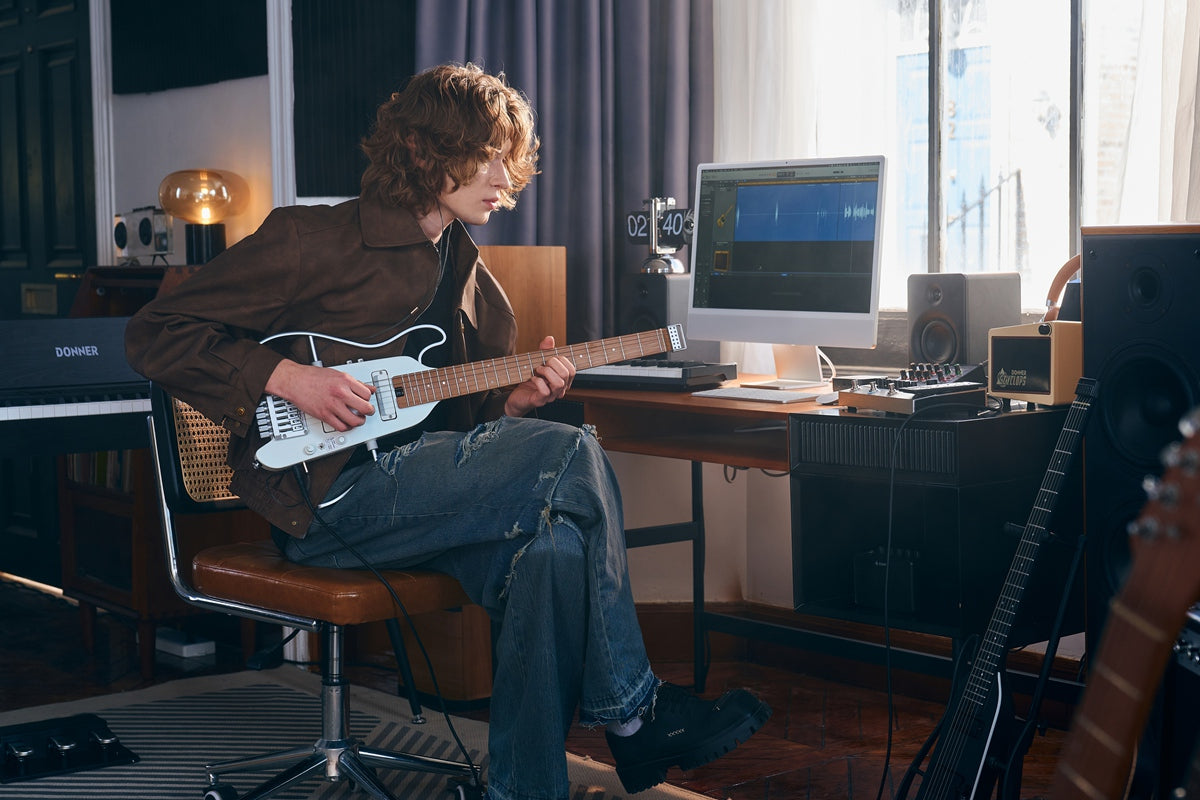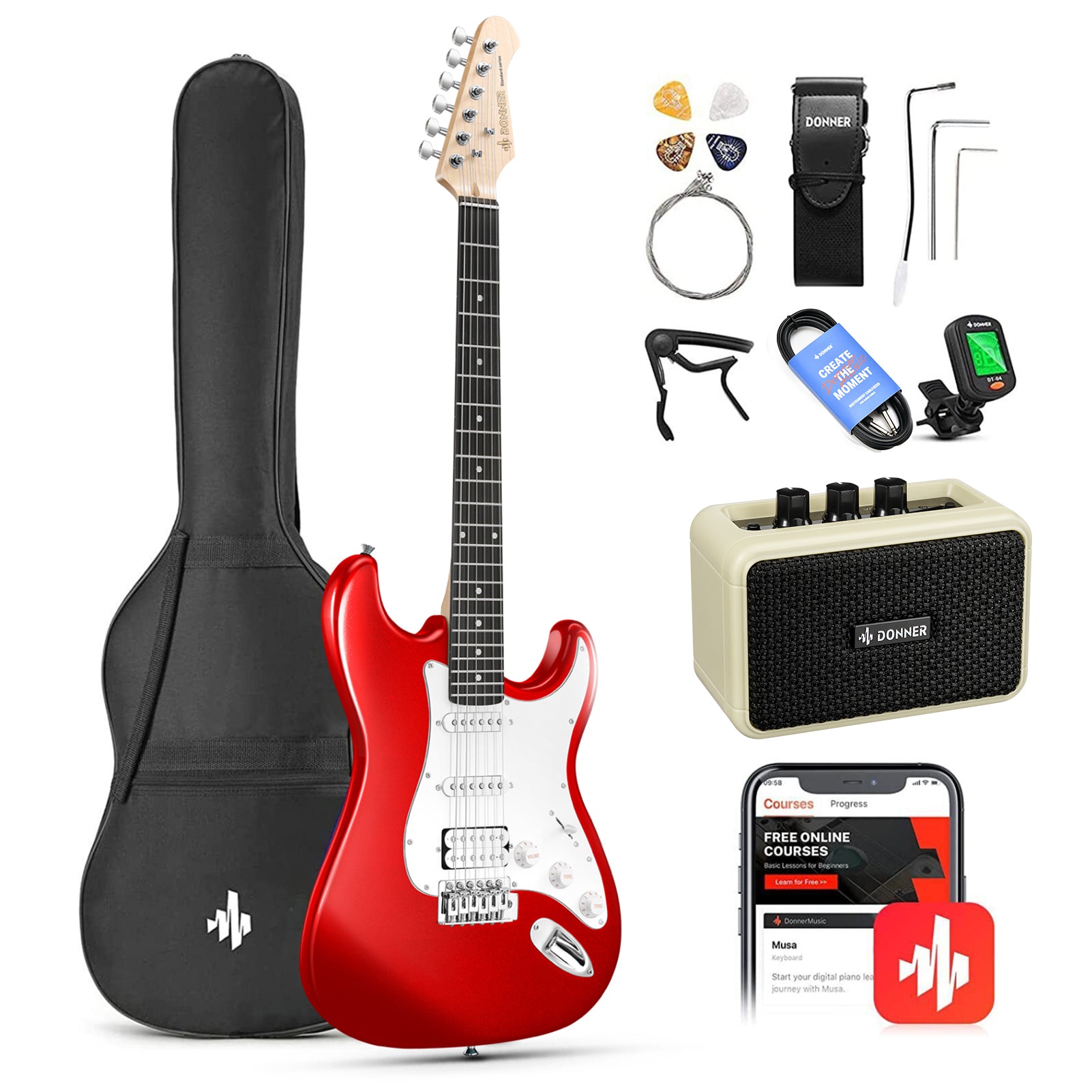

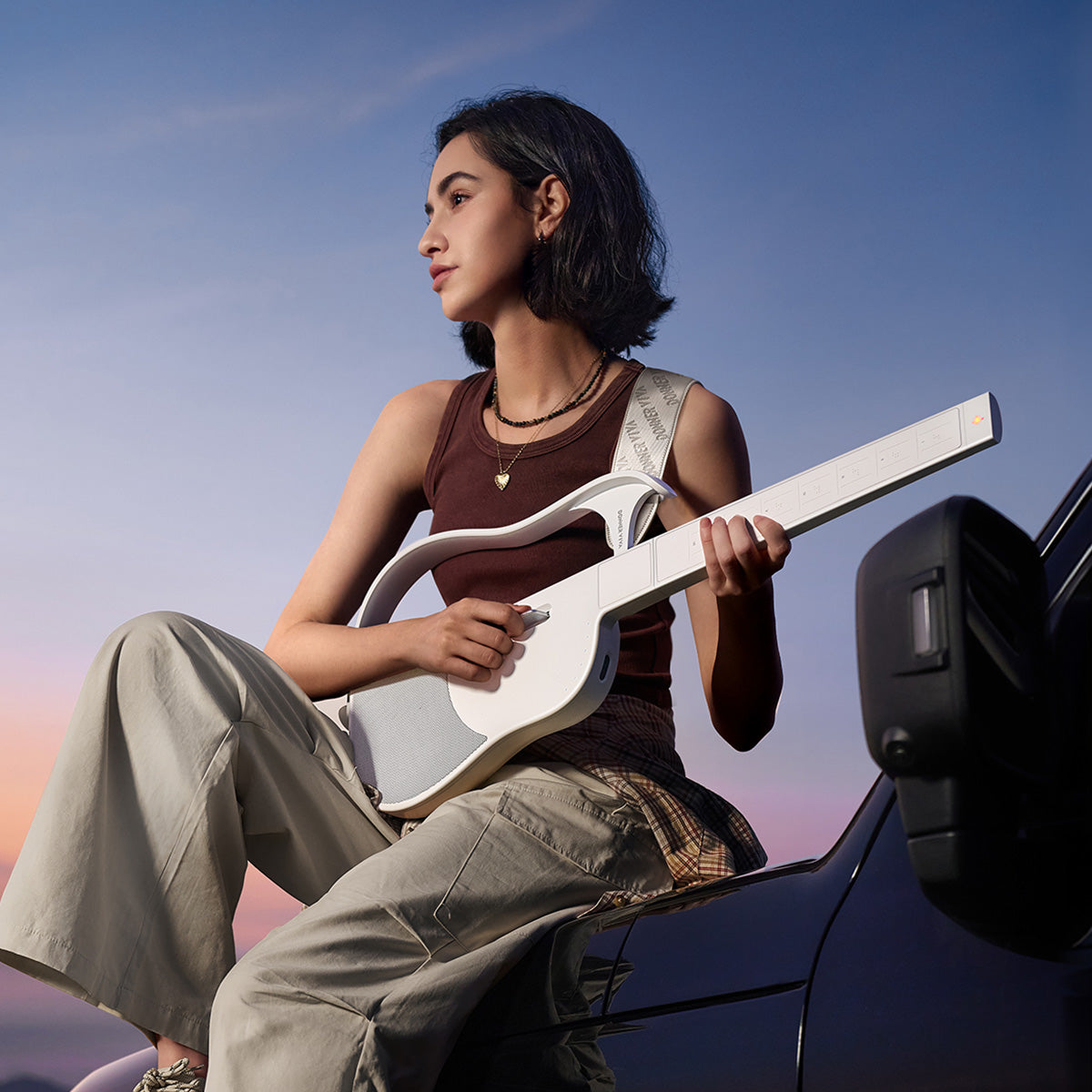




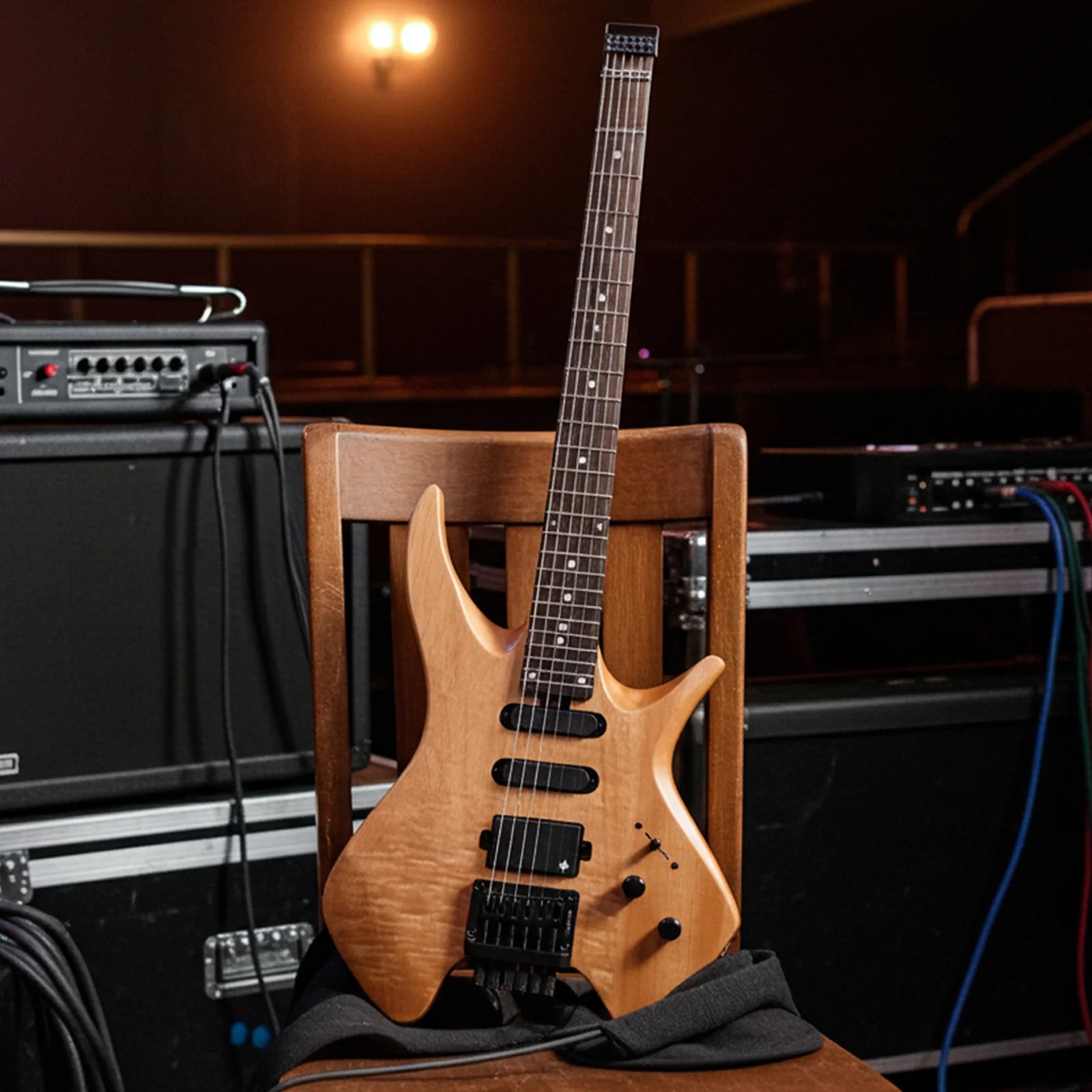



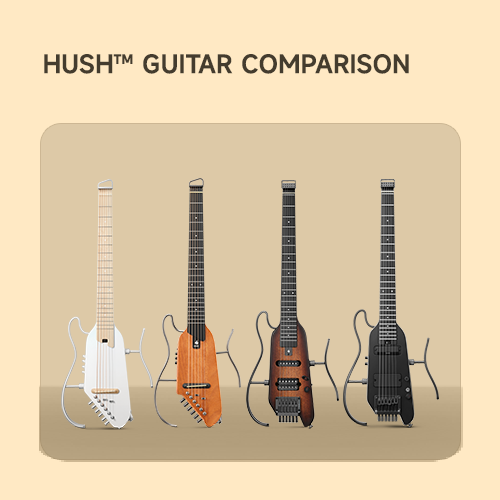
A guitar can be easy to carry and still be awkward to practice with once you arrive. The best portable electric guitar for you depends on what needs to shrink: the instrument, the bag or the extra gear around it. A portable guitar with a full-scale neck solves a different problem from a short-scale model or a guitar with its own practice electronics.
Start with the trip you actually make. A guitar that moves between home and a rehearsal room may only need a smaller body and a good bag. For hotel practice, a wired headphone output or onboard sounds can be more useful than saving a little length while still carrying a separate amplifier.
The Best Portable Electric Guitars at a Glance
- Traveler Guitar Ultra-Light Electric — Best ultra-light carry
- Donner HUSH X — Wired headphone practice
- Steinberger Spirit GT-PRO Deluxe — Best compact classic
- Donner HUSH X PRO — Best effects built in
- Ibanez Q52 — Flexible pickup switching
- Traveler Guitar Travelcaster Deluxe — Best full-scale Strat feel
- Donner HUSH X LIVE — Best with detachable speaker
- Squier Mini Stratocaster — Best kid-size classic
- Hils Next HN3 — Full-scale headless alternative
- Donner HLX-500 — Best headless for stage and travel
Traveler Guitar Ultra-Light Electric Carry size first
Pros
- Full scale in a 28-inch body
- Detachable lap rest
- Included gig bag
Cons
- Separate headphone setup needed
The Traveler Guitar Ultra-Light Electric puts packing size ahead of familiar body shape. A 24.75-inch scale sits in a body only 28 inches long overall, keeping familiar fretting distances in the compact design. Its roughly 1.4 kg weight and detachable lap rest make it worth considering when carrying less is the main objective.
The tuning system sits inside the body rather than on a conventional headstock. That removes length, but it also means learning a different way to reach the tuners. A gig bag is included; a headphone amplifier is not. The passive dual-rail humbucker feeds a normal quarter-inch output, so account for an amp, interface or headphone amplifier if quiet practice is part of the trip.
Donner HUSH X Wired headphone practice

Pros
- Headphone amplifier onboard
- Removable support frames
- Passive output without battery
Cons
- Headphone use needs a 9 V battery
Wired headphones are a major reason to consider the Donner HUSH X electric guitar. Its onboard amplifier and auxiliary input let you listen to the guitar and bring in a backing track without adding a separate headphone amplifier. A 9 V battery powers that practice setup; the ordinary instrument output can still work passively without it.
For packing, the support frames come off the headless body and fit into the supplied gig bag. The 648 mm scale keeps full-size fretting distances, so this is a compact instrument rather than a short-scale one. Its single-coil and bridge humbucker offer contrasting pickup choices. Players who want integrated amp models and effects can consider the PRO version below.
Steinberger Spirit GT-PRO Deluxe Compact design with tremolo
Pros
- Full 25.5-inch scale
- Tremolo-equipped headless design
- Five-way pickup selection
Cons
- Double-ball strings or adapter
- Around 3.2 kg
A compact guitar with a tremolo makes a different promise from a stripped-down travel instrument. The Steinberger Spirit GT-PRO Deluxe keeps a 25.5-inch scale in an approximately 30.25-inch headless design, and its R-Trem bridge gives players a tremolo option rather than a fixed-bridge-only travel setup.
The humbucker–single-coil–humbucker layout provides several pickup combinations through a five-way selector. At around 3.2 kg, though, compact does not mean ultralight. The string system is another ownership consideration: double-ball strings are the standard approach, while ordinary strings need an adapter.
Donner HUSH X PRO Amp sounds without extra boxes

Pros
- Amp modelling and effects onboard
- Full scale with removable frames
- USB audio connection
Cons
- Powered functions need charging
A small guitar does not save much luggage if you still need to pack an amp and effects unit. The Donner HUSH X PRO electric guitar addresses that side of portability with DXP amp modelling, effects and tone simulation built into the instrument. The wired headphone output gives those sounds a listening path without a separate practice amplifier.
The headless body and quick-release frames reduce the packing shape while retaining a 25.5-inch scale. The manual records a 790 mm length and 2.42 kg weight, although it does not separate frame weight.
USB-C charging and a built-in 2,000 mAh battery support the powered electronics, while USB audio and OTG provide recording connections with a compatible device and cable. Bluetooth brings in backing tracks. This is the pick for reducing supporting gear, provided you want to use and charge an integrated system rather than keep the guitar entirely passive.
Ibanez Q52 Flexible pickup switching
Pros
- Full-scale headless layout
- Split and parallel pickup options
- 24 stainless-steel frets
Cons
- More switching to learn
Some players want a smaller instrument without making travel electronics the center of the design. The Ibanez Q52 fits that approach: a 25.5-inch headless guitar with a nyatoh body, a roasted-maple-and-bubinga neck and 24 jumbo stainless-steel frets.
Its Q58 humbuckers and dyna-MIX10 switching provide split and parallel pickup options through the Alter switch. That gives you several pickup combinations from the guitar itself, with a switching system to explore. The integrated Mono-Tune bridge also changes where tuning happens. Think of the Q52 as a compact playing instrument first, with your practice or performance system chosen around it.
Traveler Guitar Travelcaster Deluxe Familiar full-scale geometry
Pros
- Reduced body with full scale
- Custom gig bag
- Two-point tremolo on US version
Cons
- Longer packed shape than headless options
The Traveler Guitar Travelcaster Deluxe is the alternative for someone who wants less body around a familiar full-scale neck, rather than the smallest headless package. Its 25.5-inch scale, 9.5-inch fingerboard radius and 22 medium-jumbo frets keep that playing geometry central to the design.
The reduced body still produces a 33.75-inch overall instrument, with a weight around 2.35 kg. A custom bag is included, but the length is worth comparing with a headless option before deciding it solves the same packing problem. The US configuration uses three ceramic single-coils and a two-point tremolo, giving players pickup combinations and vibrato control in the reduced body.
Donner HUSH X LIVE Practice with a detachable speaker
Pros
- Speaker and effects in one module
- Wired headphone connection
- Full-scale removable-frame guitar
Cons
- Module needs charging and setup
Headphone-only practice is not always the goal. The Donner HUSH X LIVE electric guitar adds a detachable speaker and processing module, so the instrument can provide an audible practice setup without a separate small amplifier to position beside it. Five amp models, modulation, delay and reverb are in that module rather than in a separate pedalboard.
The guitar retains a 648 mm scale and a removable frame, with a gig bag supplied for carrying it. The module has a wired headphone output when you do want private listening, plus Bluetooth backing-track input. Its 3,000 mAh battery charges over USB-C.
This approach adds a piece to attach and charge, even though it reduces separate practice boxes. The speaker module detaches for packing.
Squier Mini Stratocaster Smaller fretting reach
Pros
- 22.75-inch scale
- Conventional pickup controls
- Hardtail bridge
Cons
- Bag and headphone setup separate
For a player whose main difficulty is fret spacing, the Squier Mini Stratocaster answers a different question from the full-scale travel guitars. Its 22.75-inch scale brings the frets closer together, while the three single-coil pickups, five-way selector and hardtail bridge retain a conventional electric-guitar layout.
That makes it a candidate for smaller hands rather than a direct substitute for a headless packing design. The body remains a recognizable Stratocaster shape, and a bag and headphone output are not part of the package. For carrying, allow for its traditional body shape and the separate listening equipment.
Hils Next HN3 Full-scale headless alternative
Pros
- Padded bag included
- Push/pull coil split
- 24 stainless-steel frets
Cons
- Headless restringing needs familiarity
The Hils Next HN3 offers another full-scale headless approach, with a 25.5-inch scale and an included padded gig bag. A mahogany body, roasted maple neck and rosewood fingerboard support a design that is compact in layout without shortening the playing length.
Two ceramic humbuckers have a push/pull coil split, giving another pickup option without a complicated external system. The 24 medium stainless-steel frets and compound 12–16-inch radius are worth comparing with the neck feel you already prefer, rather than treating every headless neck as interchangeable. The headless bridge brings a different tuning and restringing method to get familiar with.
Donner HLX-500 A headless guitar for your own rig

Pros
- Full scale and 24 frets
- HSS pickup choices
- Dedicated bag and strap
Cons
- Amplification and cable separate
The Donner HLX-500 electric guitar is for someone who wants a headless electric guitar to plug into an existing setup, rather than a travel instrument built around a headphone amplifier. The 25.5-inch scale, 24 frets and rosewood fingerboard make playing space part of its appeal, while bridge-end tuning removes the conventional headstock.
Its HSS layout combines a ceramic bridge humbucker with two single-coils and five-way switching. The guitar-only package includes a dedicated bag and strap, but it does not include an amplifier, cable or headphones. That can suit a player who already owns that equipment; it is not an all-in-one practice purchase.
The frets are specified as nickel silver, while body and neck woods vary by color.
How to Choose a Portable Electric Guitar
Choose the playing and practice setup before comparing the smallest dimensions. A short guitar is not necessarily the one that leaves the most space in your luggage once the rest of the equipment is packed.
Packed size and weight
Measure the bag, not only the guitar. A removable frame or lap rest can make the packed shape different from the playing shape, and the bag adds its own space. Compare like-for-like figures: an instrument length is not a packed length, and an unspecified weight may include different accessories.
For a regular commute, carry weight may matter more than the last inch of length. For a tight storage space, the opposite may be true.
Scale length and playing feel
Scale length is the vibrating string distance between the nut and bridge, not the instrument's overall length. That is why a headless guitar can keep a 25.5-inch scale while using less space at the headstock, whereas a short-scale guitar changes the fret spacing as well.
Shorter spacing may suit smaller hands, but it also changes the string setup and feel. If you like the reach of a familiar guitar, a reduced-body or headless design can be more relevant than choosing the shortest scale available.
Headphone practice and power
An ordinary instrument jack does not drive headphones on its own. The Ultra-Light needs an additional listening setup, while the HUSH X has a powered headphone amplifier and the HUSH X PRO adds amp modelling and effects.
Count the supporting equipment you will actually carry: headphone amplifier or interface, headphones, cables and a way to power or recharge the system. A compact guitar that uses equipment you already bring can be the simpler choice; a self-contained setup is useful when it removes items from the bag.
Setup and included accessories
An included gig bag gives the guitar its own carrying space. Removable frames and lap rests introduce a packing step, while headless locks and bridge tuners introduce a string-changing method you may not know yet.
Learn those adjustments at home rather than during a trip. For an unfamiliar string system, decide which spare strings and tools you need before you pack; the differences between these guitars extend beyond how quickly they fit into a case.
Frequently Asked Questions
Can Bluetooth backing-track input connect my wireless headphones?
Not necessarily. Bluetooth backing-track input receives music from a phone or tablet; it does not establish wireless-headphone output. Use the specified wired headphone connection unless the exact model explicitly supports headphone transmission.
Will a travel guitar fit in an overhead bin?
There is no universal overhead-bin guarantee. Compare the packed bag with the airline's current musical-instrument and cabin-baggage rules, and allow for the space available on the flight.
Is a short-scale guitar easier to play?
A short scale reduces the spacing between frets, which may help some smaller hands. It is not automatically easier for everyone: string setup and the player's preferred reach still matter. A full-scale headless design may be a better answer when packing, rather than fretting reach, is the problem.
Do headless guitars need special strings?
It depends on the string-lock and bridge design. The Spirit uses double-ball strings unless an adapter is fitted; that requirement does not apply to every headless guitar. Match replacement strings and the restringing method to the specific instrument.
Find the Right Guitar for Your Next Trip
Choose around the part of your setup that gets in the way. Keep a familiar scale if playing feel matters most, look at the packed bag if storage is tight, and account for the whole listening system if you practice away from home.
The right combination should leave you with a guitar you want to play after the journey, not only one you can carry. Find a travel guitar for that setup with Donner.