









The bass guitar vs electric guitar choice trips up a lot of first-time players, because the two look similar and both plug in. The difference is in what you actually play: a bass guitar anchors the low end with single-note grooves, while an electric guitar carries melodies, chords, and solos. Neither is easier for everyone — the right pick comes down to the music you want to make and where you want to make it.
The comparison covers five practical dimensions — strings and tuning, sound and role, learning curve, playing solo versus playing with others, and gear and practice setup — then moves to three electric guitar options from Donner for the electric path and closes with a clear way to decide.
Quick Comparison: Bass Guitar vs Electric Guitar
| Dimension | Bass Guitar | Electric Guitar |
|---|---|---|
| Strings and tuning | Four thick strings tuned E-A-D-G one octave lower; single-note roots and grooves | Six thinner strings tuned E-A-D-G-B-E; melodies, chords, and solos |
| Sound and role | Anchors the low end, locks in with the drums, drives the groove | Adds harmonic color with chords, plays melodies and solos |
| Learning curve | Single notes sound musical fast, but thicker strings and a longer scale demand strength and timing | Chord shapes come early, but thinner strings need less finger force |
| Playing solo vs with others | Shines in a band; can sound thin on its own | Carries a full song by itself through chords, melody, and rhythm |
| Gear and practice setup | Needs an amp or headphone route | Needs an amp or headphone route; large effects ecosystem |
Table of Contents
- Strings, Tuning and Notes: What You Actually Play
- Sound and Role in Music
- Learning Curve for Beginners
- Playing Solo vs Playing With Others
- Gear, Cost and Practice Setup
- Donner Electric Guitars for the Electric Side
- How to Choose Between Bass and Electric Guitar
- FAQ About Bass Guitar vs Electric Guitar
Strings, Tuning and Notes: What You Actually Play
The most useful difference is physical and it shapes everything else: most electric guitars have six thinner strings tuned E-A-D-G-B-E, while most bass guitars have four thicker strings tuned E-A-D-G one octave lower. Because of that, electric guitar parts cover melodies, full chords, and solos, while bass parts are usually single-note root and groove lines that support the chord progression.
So choose by what you want to play: chord-and-melody music points to the electric guitar, and low-end single-note lines point to the bass. The two instruments appear in the same songs constantly, but the notes you reach for first are different.
Sound and Role in Music
In a band, each instrument has a job. The bass locks in with the drums to provide the low-end groove and rhythm foundation, while the electric guitar adds harmonic color with chords and plays the melodies and solos. You can hear the difference in almost any song: the bass keeps the pulse low, and the guitar carries the parts that stick in your head.
Both instruments appear across most genres, so role and tone matter more than genre exclusivity. Choose the electric guitar to be heard with melodies and riffs, and the bass to drive the groove and hold the song together.
Learning Curve for Beginners
Early progress looks different on each instrument. Single-note bass lines often sound musical very quickly, before full guitar chords do, which makes the bass feel approachable at the absolute start. But bass strings are thicker and the instrument is larger, with a longer scale and wider fret spacing, so it demands more finger strength and consistent rhythm.
The electric guitar needs chord shapes and string muting early, but its thinner strings need less finger force, so the learning curve is more about coordination than raw strength. Both demand consistent practice — the guitar needs chord precision, and the bass needs rhythm and finger stamina. Pick the electric guitar to play complete songs with chords and melodies sooner, or the bass if you want a more linear single-note start and are drawn to rhythm and groove.
Playing Solo vs Playing With Others
If you mostly play alone at home, the electric guitar stands on its own: one instrument can carry a full song through chords, melody, and rhythm. A bass guitar can sound thin without other instruments, and solo bass practice is more about groove and ear training than filling the room with a song.
In a band, the balance flips. The bass is central to the low end and is often in higher demand simply because fewer players choose it. If joining a group is the goal, the bass is the easier seat to find; if self-contained solo playing is the goal, the electric guitar carries more of the song by itself.
Gear, Cost and Practice Setup
Both instruments need an amplifier — or a headphone or interface route — to produce their signature sound, so neither is truly without extra gear. The electric guitar adds a large ecosystem of effects pedals and amp models for tone shaping, which can grow your setup over time.
Headphone outputs and compact practice gear keep both options apartment-friendly, so quiet practice is possible on either side. If effects interest you, guitar effects pedals are where a lot of electric tone lives, and a portable guitar shrinks the whole setup for headphone practice.
Donner Electric Guitars for the Electric Side
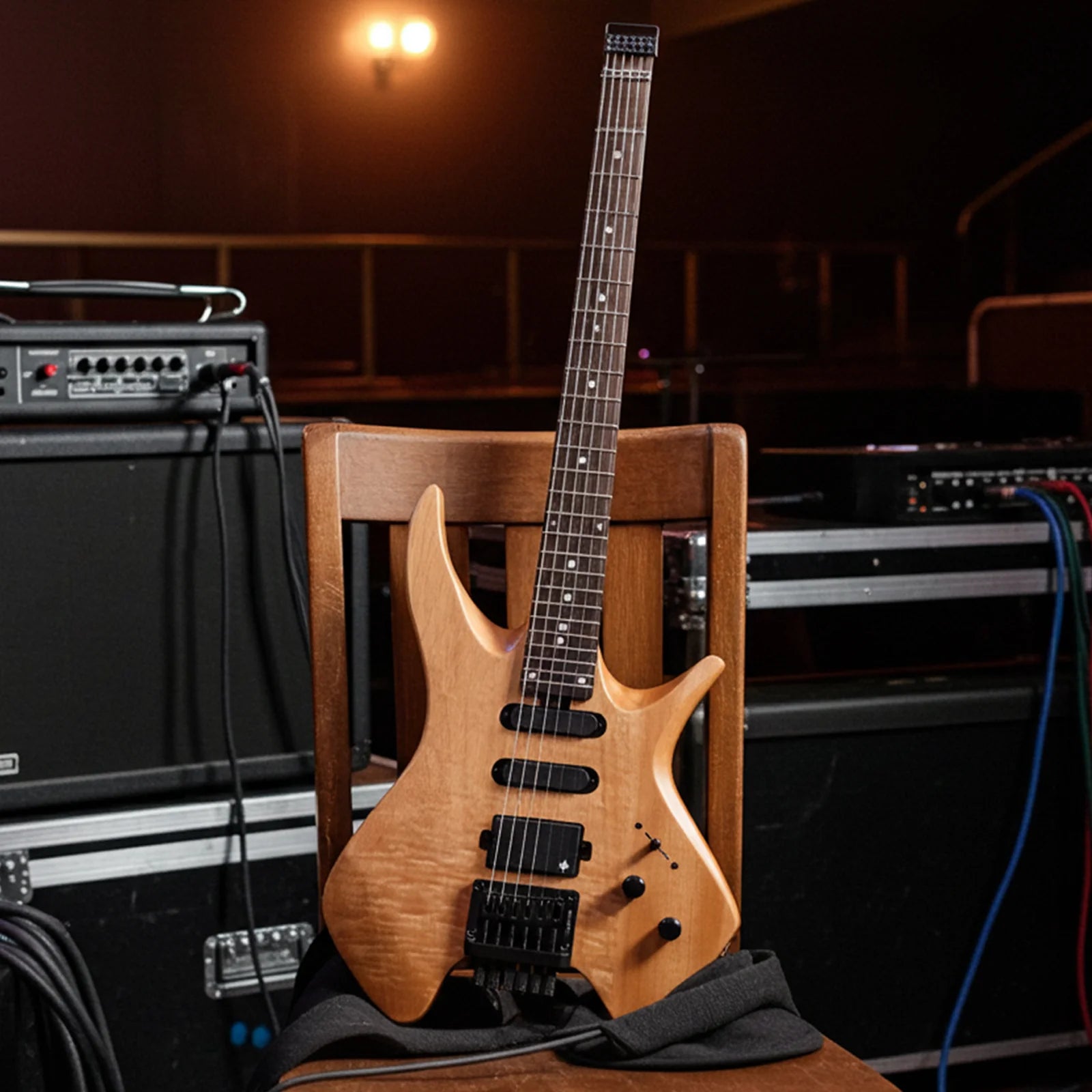
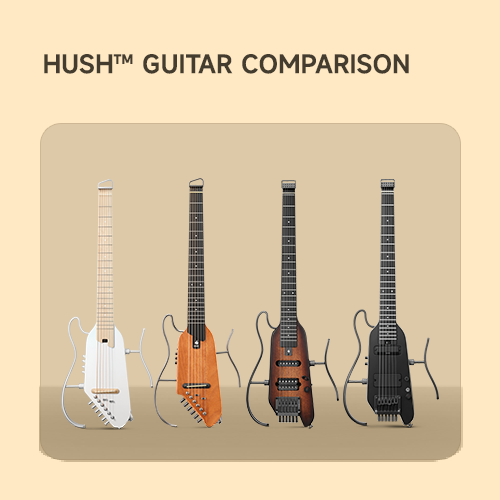
If the electric side of this comparison sounds right, Donner makes three options that cover different player scenarios rather than a single best pick. One is an all-in-one compact electric with onboard tones, effects, and headphone-friendly outputs. One is a compact full-scale headless electric that works with your own amplifier or a headphone practice route. One is a compact headless travel electric with a piezo pickup and a headphone output for quiet, portable practice. Match the card below to the way you plan to play.
Donner HUSH X PRO Electric Guitar Best all-in-one electric

Features
- The DXP system packs 60+ effects, guitar-model simulation, amp modeling, and IR import into the instrument.
- Quick-release frames and a slim C-shaped mahogany neck make the headless design easy to pack and play.
- Custom Alnico V single-coil and humbucker pickups with a 3-way switch cover a wide tonal range.
- 1/8-inch, 1/4-inch, USB-C, and OTG outputs handle headphone practice and recording.
- A deluxe travel gig bag, earphones, strap, cables, and picks are included.
The Donner HUSH X PRO Electric Guitar is the all-in-one pick for players who want the electric experience packed into one compact instrument. Its DXP system brings 60+ built-in effects, guitar-model simulation, amp modeling, and IR import support into the guitar itself, so you can shape tones without a pedalboard. The headless body with quick-release frames and a slim C-shaped mahogany neck travels easily, custom Alnico V single-coil and humbucker pickups with a 3-way switch cover a wide tonal range, and the 1/8-inch, 1/4-inch, USB-C, and OTG outputs handle everything from headphone practice to recording on the go.
Donner HLX-500 Headless Electric Guitar Best compact full-scale electric

Features
- A full-scale 25.5-inch neck with 24 frets and a zero fret fits a compact headless body.
- SSH pickups with a 3-position switch and Donner Hush headless locking bridge tuners cover versatile electric tones.
- Compact Pearl White or Wooden Nature bodies are easier to carry and store.
- A custom gig bag, strap, and pick are included.
For players who want a familiar full-scale electric in a small package, the Donner HLX-500 Headless Electric Guitar keeps a 25.5-inch scale, 24 frets, and a zero fret in a headless solid body. Its SSH pickup configuration with a 3-position switch and Donner Hush headless locking bridge tuners covers classic electric tones, and the compact Pearl White or Wooden Nature body is easier to carry and store than a traditional electric. Bring your own amplifier or a headphone practice route and it slots straight in. Note that HLX-500 is the current official name; Donner identifies NHL-500 as the former name of the same product.
Donner HUSH I EVO2 Travel Guitar Best compact travel electric for quiet practice

Features
- Tool-free removable body frames make the travel format easy to pack.
- The HPS-II preamp with a custom undersaddle piezo pickup shapes the plugged-in tone.
- A 3.5 mm stereo headphone output, built-in chromatic tuner, and low-battery alert support private practice.
- A 5-piece maple and mahogany neck with an HPL fretboard and 3-layer binding keeps the build light.
- A gig bag, strap, and magnetic T-wrench with onboard storage are included.
When quiet, portable electric practice is the priority, the Donner HUSH I EVO2 Travel Guitar is a headless six-string built for it. Tool-free removable body frames let it pack down quickly, and the HPS-II preamp with a custom undersaddle piezo pickup delivers a plugged-in electric voice through the 3.5 mm stereo headphone output. A built-in chromatic tuner and low-battery alert keep practice simple, while the 5-piece maple and mahogany neck with an HPL fretboard and 3-layer binding keeps the build light and stable. A gig bag, strap, and magnetic T-wrench with onboard storage come with it.
How to Choose Between Bass and Electric Guitar
Settle it with two questions: what do you want to play, and where? Choose a bass guitar when you want to anchor the low end and groove in a band and enjoy single-note rhythm playing. Choose an electric guitar when you want to play melodies, chords, and solos on your own, with a wide tone palette and lighter-feeling strings. There is no universal winner — the right pick is the one that matches the music you want to make first.
If you are leaning electric, an electric guitar set bundles the starter essentials so you can focus on playing instead of assembling gear.
FAQ About Bass Guitar vs Electric Guitar
Is bass guitar easier than electric guitar?
Many players find the bass easier at the absolute beginner level, because it usually plays single notes rather than complex chords and those lines can sound musical quickly. Mastering it is just as demanding: bass strings are thicker, the longer scale asks for more finger strength, and rhythm has to stay tight.
Which is better for beginners: bass or electric guitar?
Neither is objectively better — pick by your goal. Choose the electric guitar to play complete songs with chords and melodies, or the bass if you are drawn to rhythm, groove, and playing in a band. The skills transfer between the two, so the first choice does not lock you in.
Can you play bass lines on an electric guitar?
Yes, in a limited way: the lowest four strings of a six-string electric guitar correspond to the four strings of a bass at the same open-note relationship. A bass is tuned one octave lower, so its tone and role stay distinct, and playing bass lines on an electric guitar works for practice but is not a substitute for the bass’s low-end role in a band.
Can you practice a bass or electric guitar quietly?
Yes — both can be practiced through headphones using amplifiers or interfaces with headphone outputs, and compact electrics with built-in headphone outputs are designed for private practice. You will still hear some string noise when playing unplugged, but the amplified sound stays out of the room.
Should I learn bass or electric guitar first?
Start with whichever matches the music you want to play. Many players start with the electric guitar because it is more self-contained for solo playing, and adding the bass later is a common, manageable transition since fretboard and music fundamentals transfer. Starting on the bass is equally fine if rhythm and groove are what draw you.
Start Playing the Guitar You Choose
Let your goal be the tiebreaker: bass when you want to hold down the low end with a band, electric when you want to play songs on your own with a wide palette of tones. Either way, regular practice matters more than which instrument you start with.
Donner’s mission is to make music approachable, and Donner Music builds electronic music instruments for every stage of that journey. If quiet, portable practice is part of your plan, the travel guitar collection is a good next stop on the electric side.